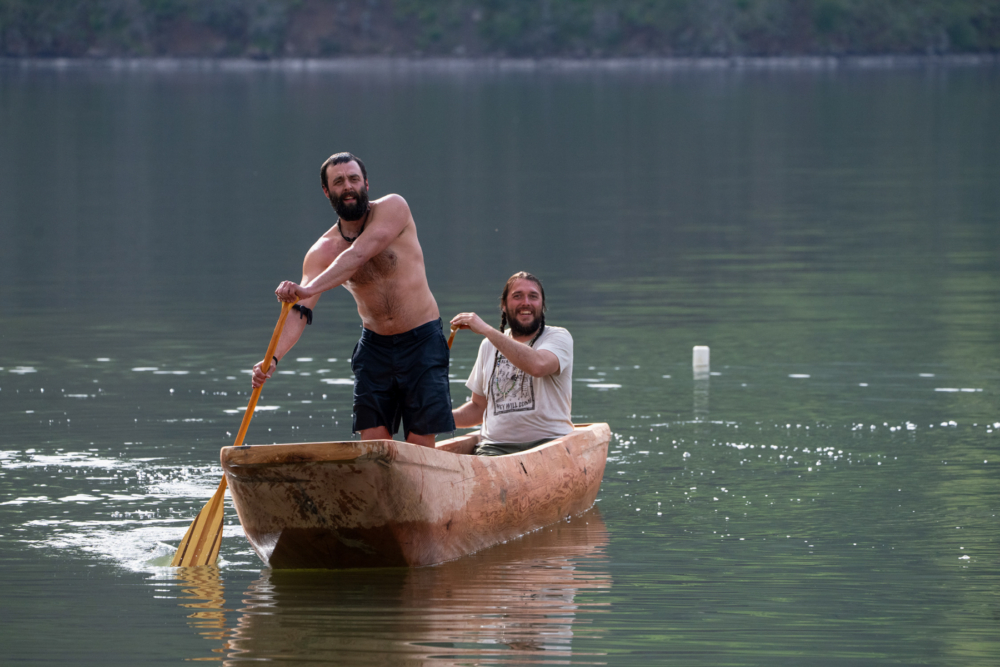
While I travel along the Snake River in a traditional shovel nose dugout canoe, I look for ways to connect with the water, air and lands that help us to share our organization’s (KHIMSTONIK) vision. I take in: the peace and excitement expressed on the faces of our youth, each holding onto their paddles and giving their attention to the instructions of their Skipper and Bow for a safe experience. I imagine other seasoned individuals providing similar spaces to continue our connection to the Wana—River.
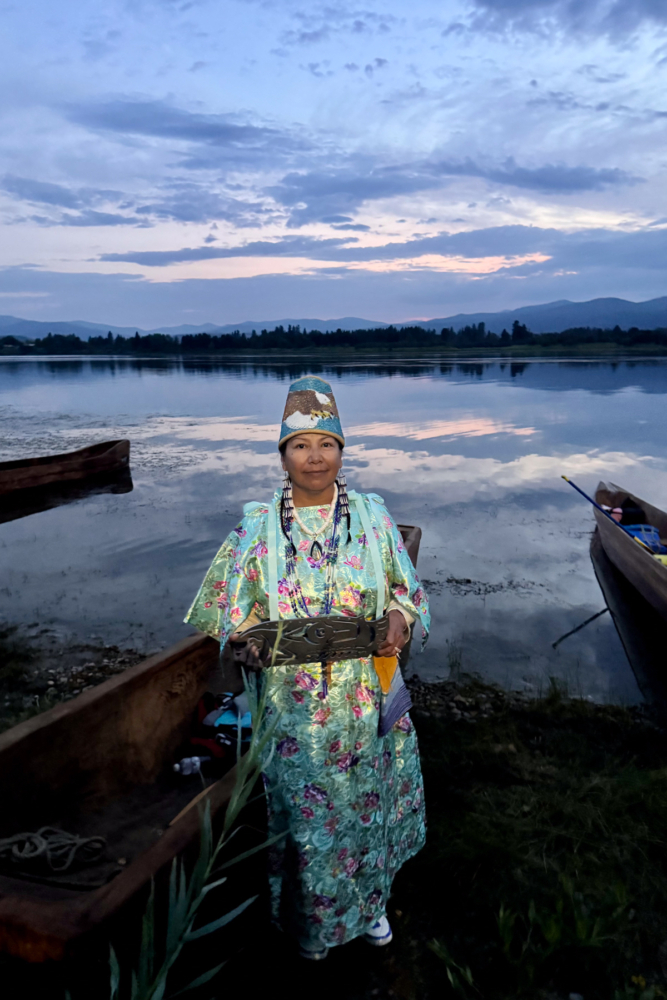
KHIMSTONIK is named after my Kuthla (grandmother). She was one of the many families displaced from her home, along with her children, by the U.S. Army Corps of Engineers to make way for the four lower Snake River dams. Sixty-six years later, our organization engages with our local and surrounding Tribal and non-Tribal communities in Southeastern Washington to create opportunities for intergenerational healing and safely practicing rematriation along our ancestral homelands.
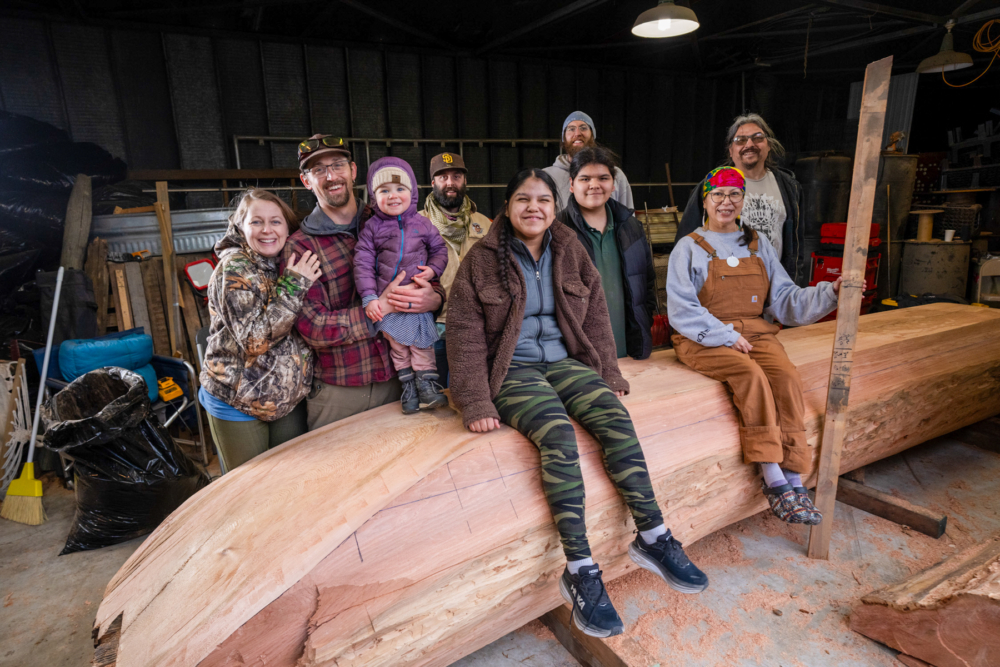
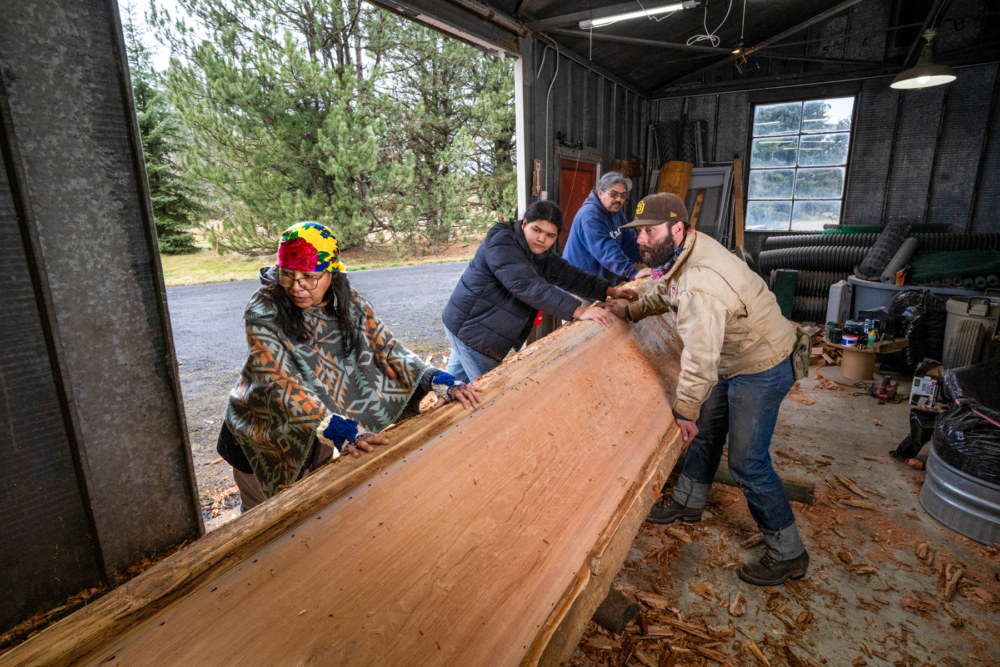
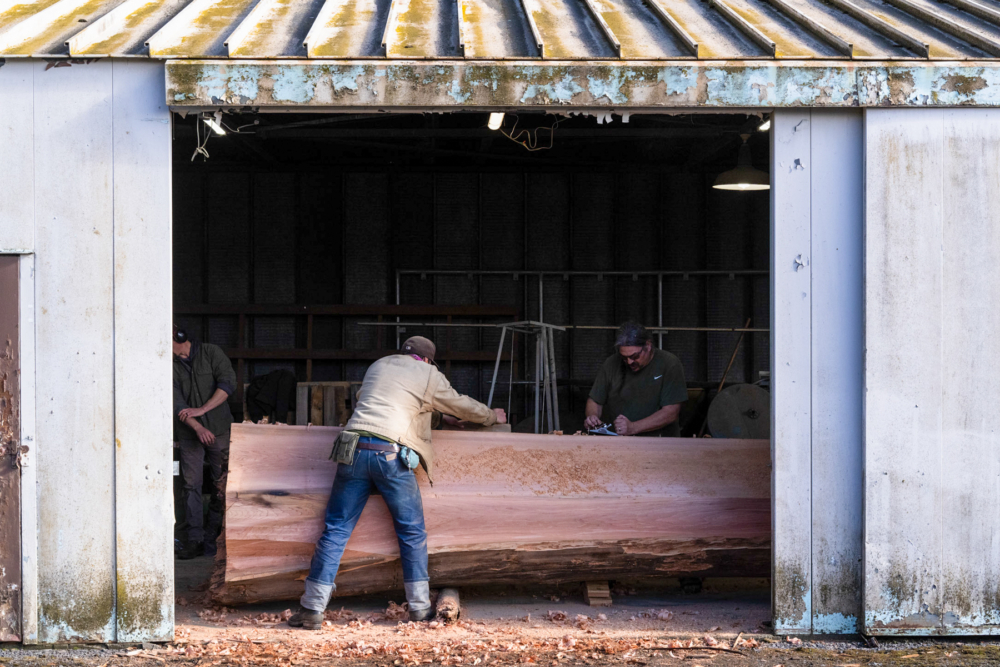
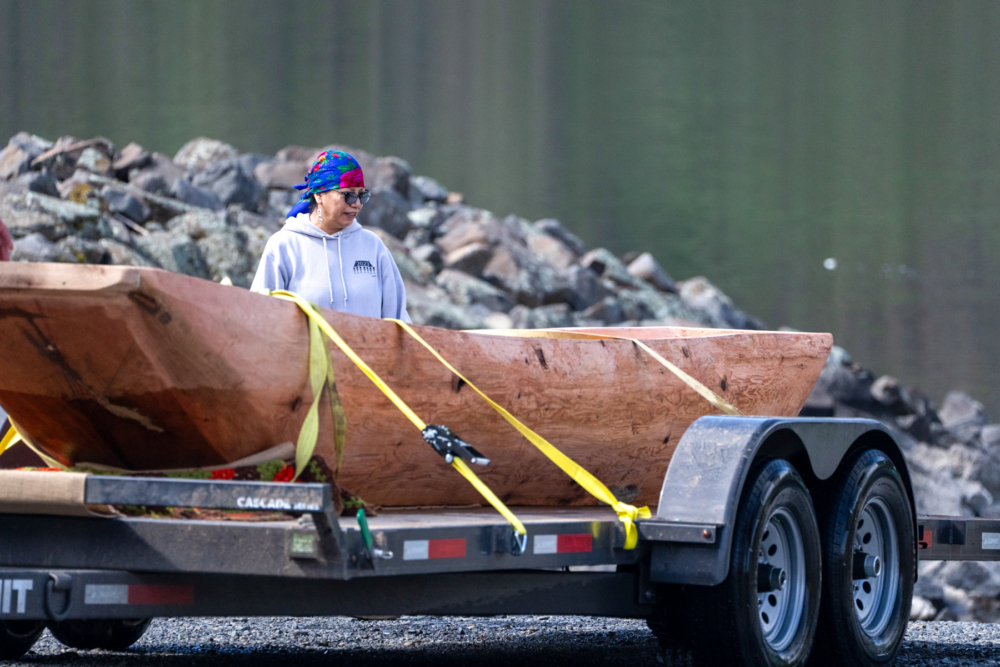
For the last three years, we’ve been bringing people together to take part in canoe journeys, cultural traditional ecological knowledge (CTEK) activities, planting native species and carving our first dugout canoe along the Snake River to heal people, land and River.
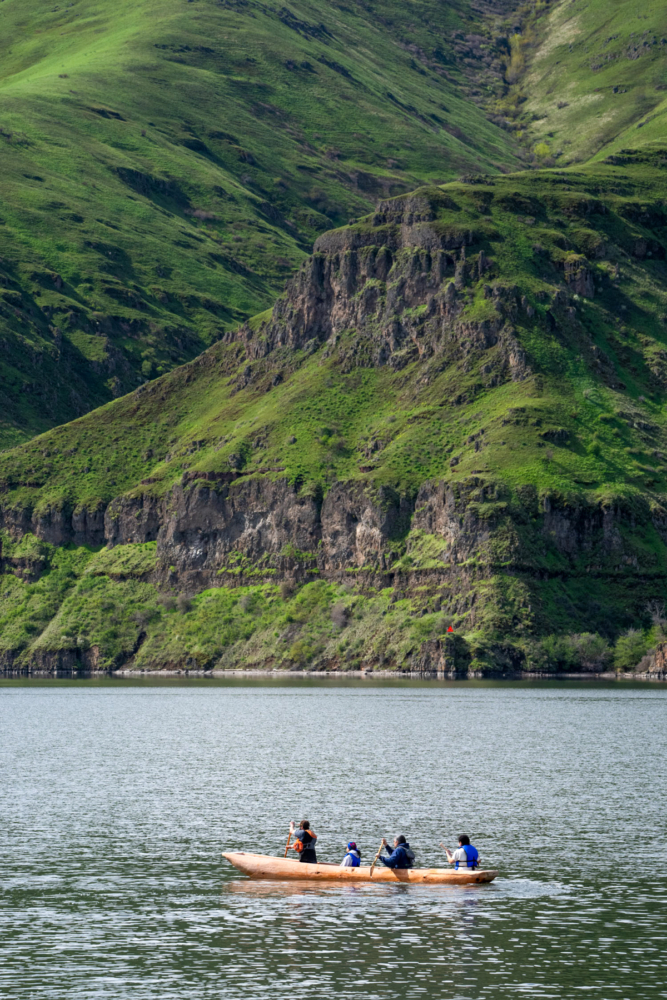
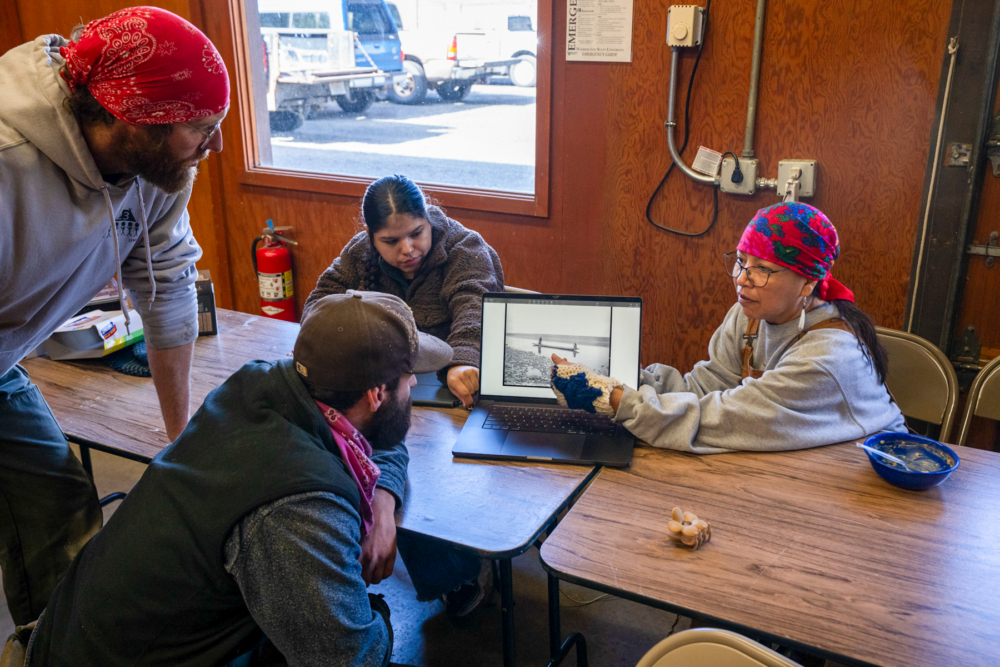
As I float by, the view of the high rising plateaus along the Snake River makes me feel like I’m in a different world and perhaps a different time. These public spaces once held Tribal families whose living connection to the Snake River was undisturbed. We see these areas through maps dated around 1877.
Most of our ancestors resisted immediate enrollment into one of the surrounding federally-recognized reservations, so our family’s land claims are a bit different from others in the area (The Palouse People, Eminent Domain and the Snake River, 2023). For some of us, forced out of homelands now submerged, these maps to the original village sites are the only legacy we have to share with our Tribal communities.
The maps provide a timeline of transportation used along the River. Our families used horses and traditional shovel nose dugout canoes made out of large trees, mostly cedar or cotton depending on the availability of species within the area of the Blue Mountains. I look intensely for any evidence or remnants of the ancestors to follow them into a trail that takes me to the abundance of what we miss: our people, our community, our healing ceremonies, our foods and our medicines. Our ways of living as stewards to all our relations in a safe co-created space.
I cannot imagine not having access to the River, never visiting space once filled with Tribal families or not being able to breathe the air while moving downstream in a cedar log carved by my family’s hands. The canoe journeys we partake in help us understand the areas that need proper stewardship. And yet, paddling along the waves would be so much more meaningful if we were not dealing with all the modern ecological and political challenges surrounding Snake River.
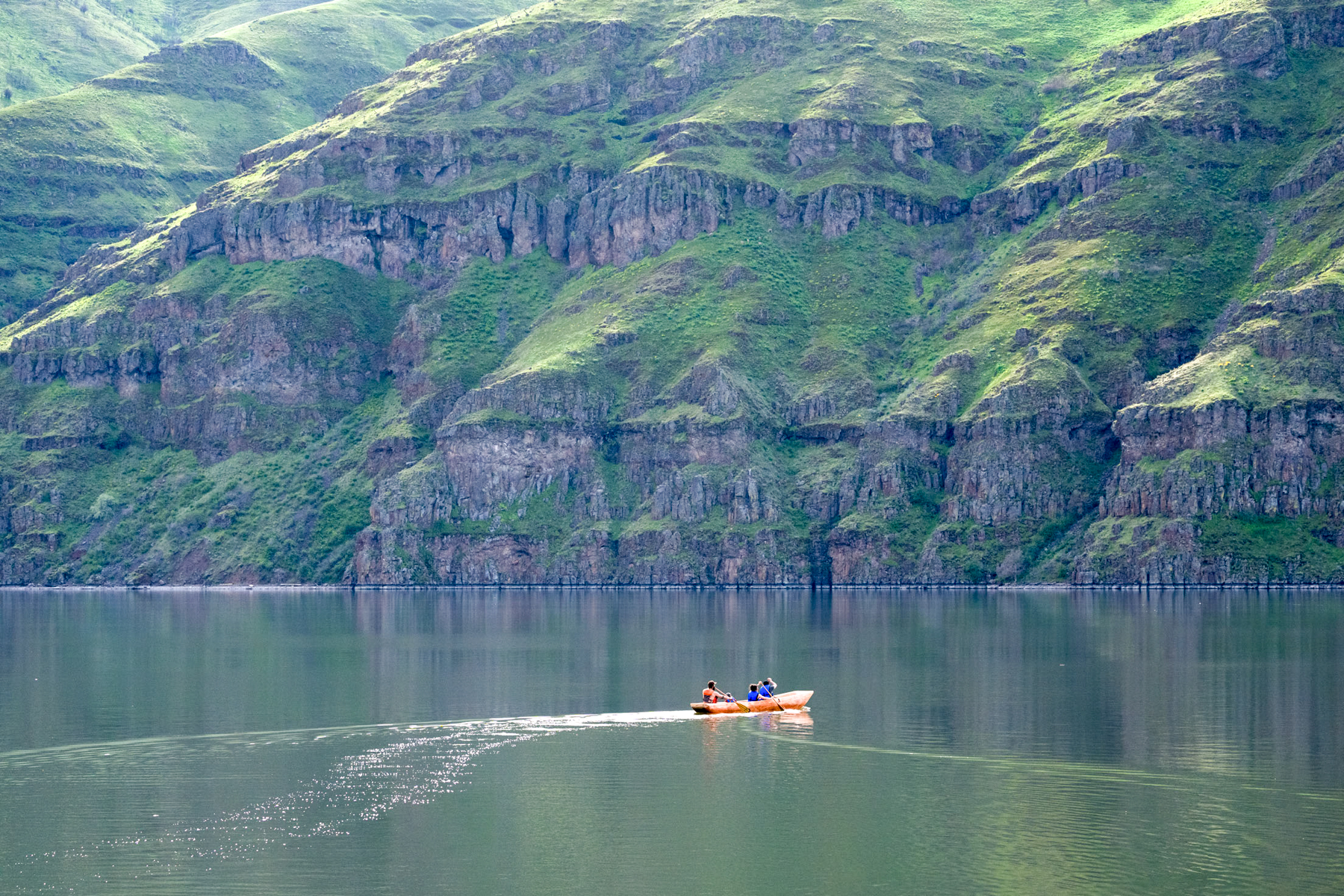
At times, I am unsure if I should be allowing my family to swim because of the questionable colors growing visibly from the bottom of the River year after year. If we do not interpret daily toxicity reports properly, I am afraid someone will get sick from elements like negative impacts from agriculture runoff or unmanaged habitat units along the River. In other moments, I witness the limited spaces we have to share with our CTEK or the relatives who won’t make it past the four dams on the Lower Snake River.
Everyone should have the freedom to share the experience of yearning to be on the River and outdoors in a traditional shovel nose dugout canoe or their choice. With KHIMSTONIK, we are seeking ways to paths that were once traveled and traded for centuries by Original Peoples and Persons to invite our Tribal families with limited access to off-reservation outdoor activities back home.
For these journeys, we ensure that all our Tribal families and youth need to bring is their openness to connect. We sponsor and provide education and equipment like PFDs, so that others may go out on their own time or schedule with the proper resources to keep safe outdoors. Volunteer guides and safety boats, normally kayaks or modern River Voyager canoes, offer additional on-water support, providing a variety of ways to experience the River. The key for us is that others return to ensure that these CTEK activities continue and motivates others to keep these spaces active independently.
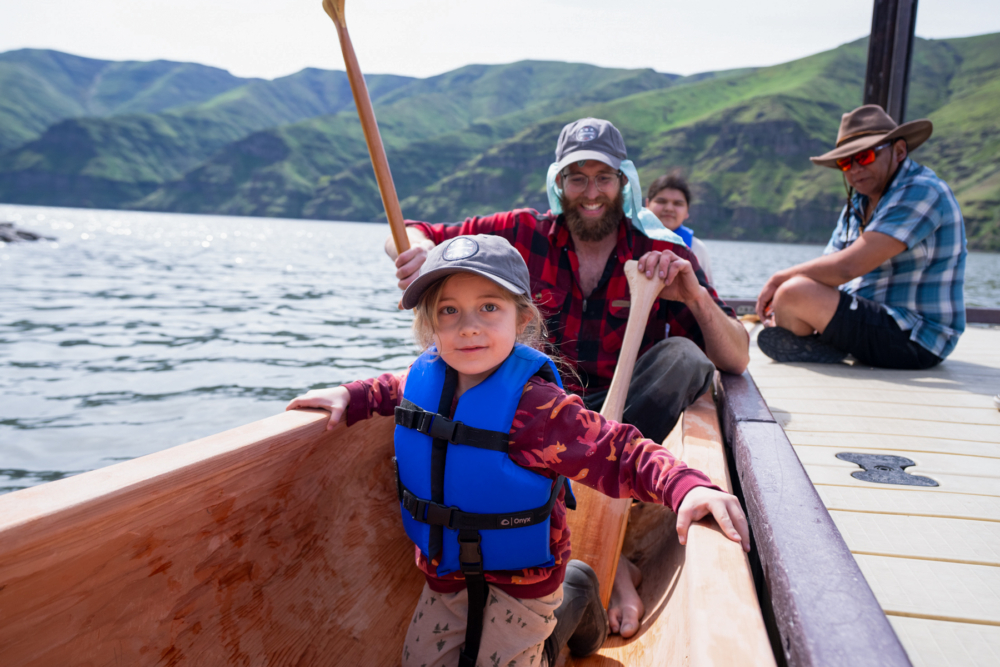
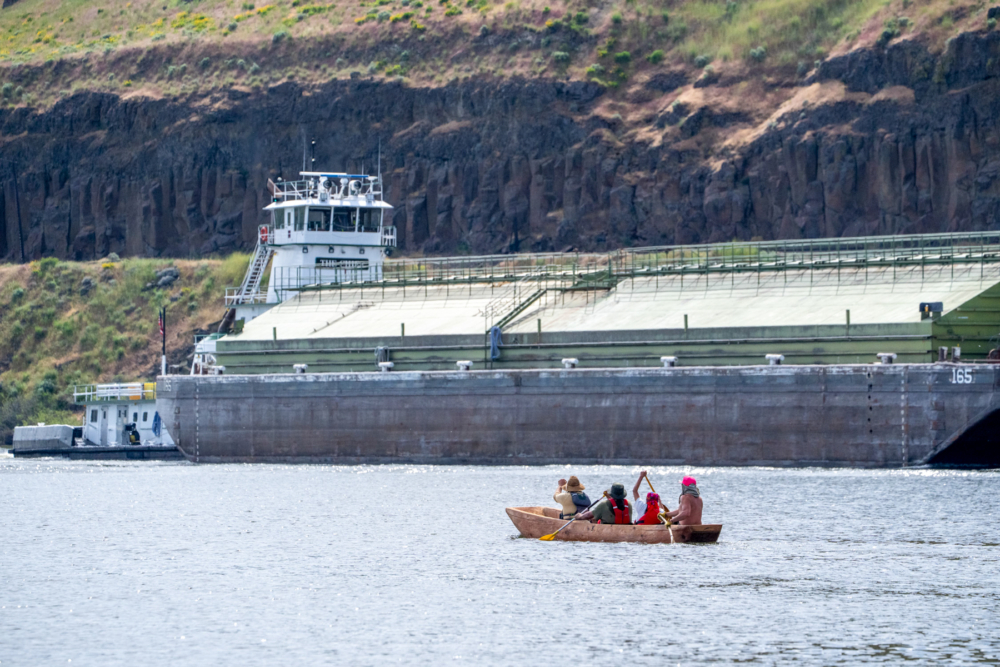
On my latest canoe journey, another barrier stuck out to me. Many people do not know how to be in relationship with our Rivers. You cannot hear the River’s voice over the ceaseless droning of motorboats and jet skis; you cannot be present to all the living relations along the River when you are scrolling on your phone. You cannot understand how incredibly important you are to healing the River when you are unable to heal yourself.
My heart breaks for those who choose recreation over relationship. Recreation treats water as a backdrop for human activity. But relationships require more. They asks us to pay attention and to recognize the River as a living entity. The Original River People remember the practice of relationship. The presence required for it calls for attentiveness to the subtle shifts of new currents and the awareness of ancestors carried forward in sediment and stone.
When I think of all we are moving through, I think of the dominant culture that often frames rivers as commodities or playgrounds, and how relationality frames them as one. We must move beyond recreation toward relationship. Only then can we honor the Rivers and all our natural sites not as resources to use, but as neighbors to live alongside.
So here is my invitation for you to be in relationship with the River. I want you to enjoy the experience of feeling the water running through your fingers as you open your arms over the gunnel lines. I like to close my eyes and imagine that I am the flowing swift current. The water awakens something instinctual in me. I take in the coolness, the sharp twists and turns of the water. I invite you to sing that River a song and then put your feet in the shallows to listen to the River’s song. The River will speak if you offer your heart.
***
Guest contributor ILL-LAH-WAH-LITZ-TUN-MYE (Lady who does tasks quickly) (Ione I. Jones) has dedicated her life to continue her family’s mission of land return for the hundreds of acres taken by the US Army Corp via eminent domain in 1959. Ione is a lineal descendant of the WOW-YICK-MA NAH-KHEE-UM NU-SHWA, the Palouse People from Snake River. She is also an enrolled member of the Confederated Tribes and Bands of Yakama Nation. She is the Executive Director and Co-Creator of charity KHIMSTONIK.
Editor’s note: Remembering the story of the Palouse People from Snake River as a distinct history is an important aspect to ensure this history is not erased or culturally appropriated. In her work with KHIMSTONIK, Ione uses historical context to create culturally shared healing processes among those in the communities bordering federal reservations and those building lives around returning to their ancestral homelands and Tribal lifestyles. Her goal is to weave connections between the current checkerboard approach to the land management of the Original Lands and Tribal initiative programs through programs that are sustainable and resilient for everyone. Learn more about Ione and her work here.
Images courtesy of KHIMSTONIK, Ione Jones, and Ben Herndon.