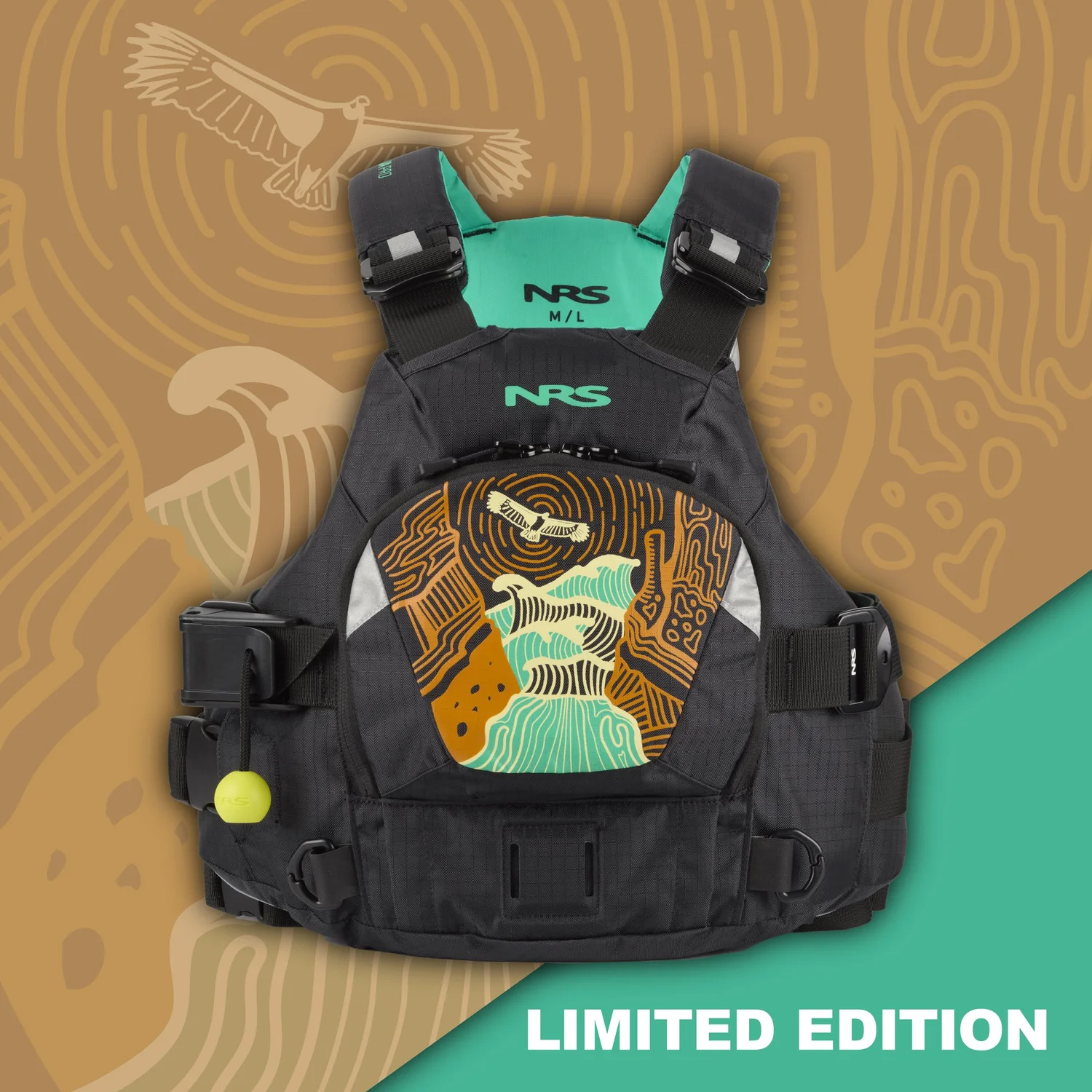
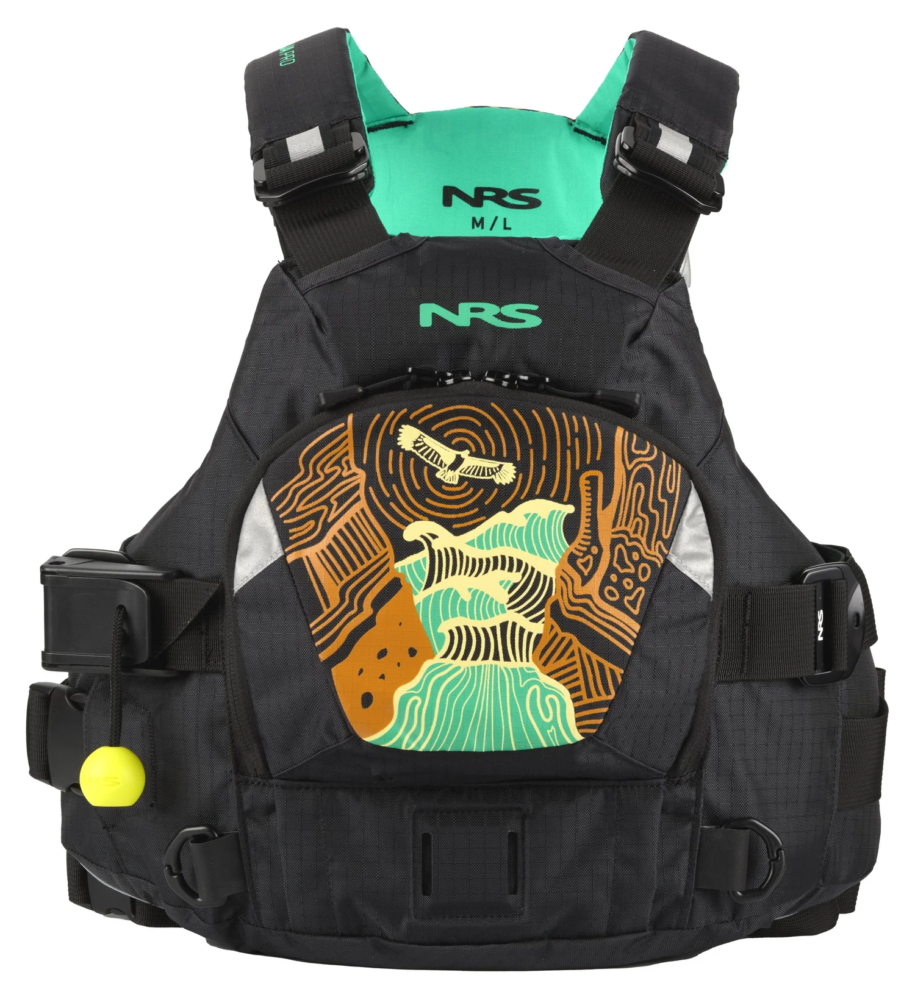
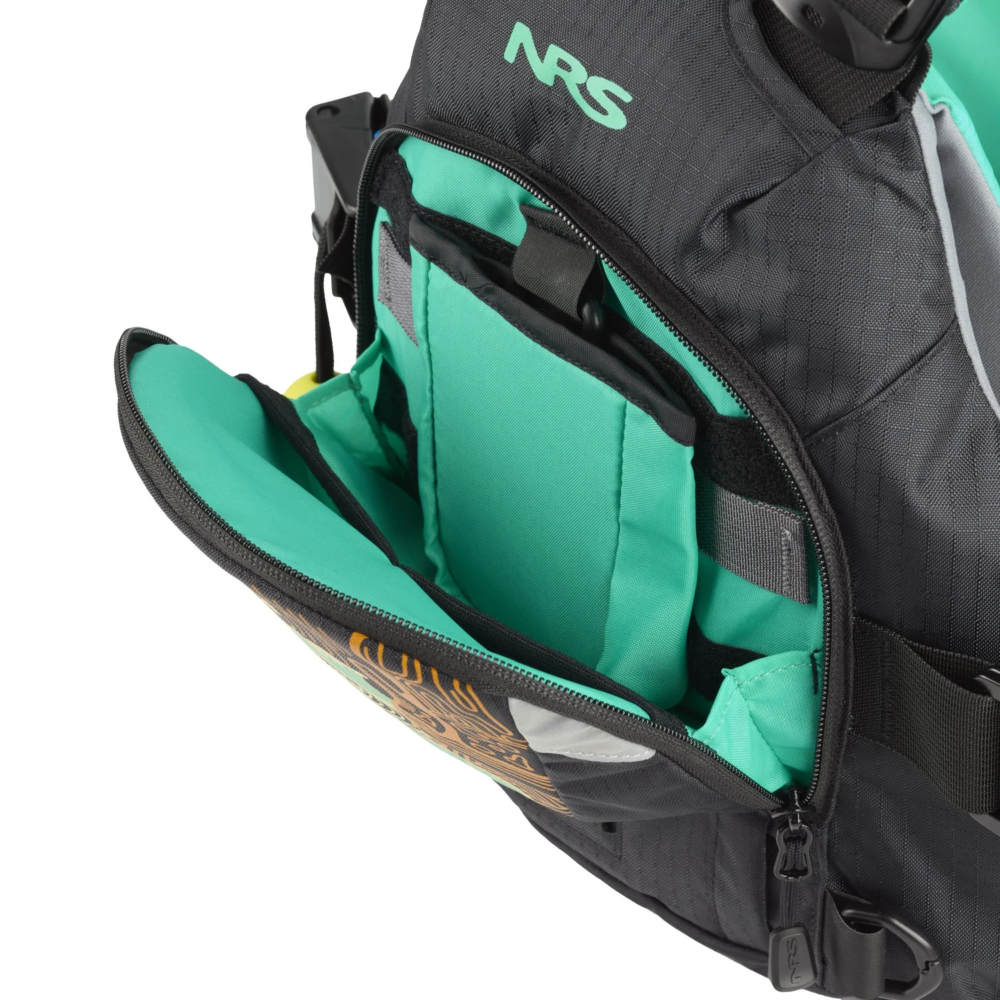
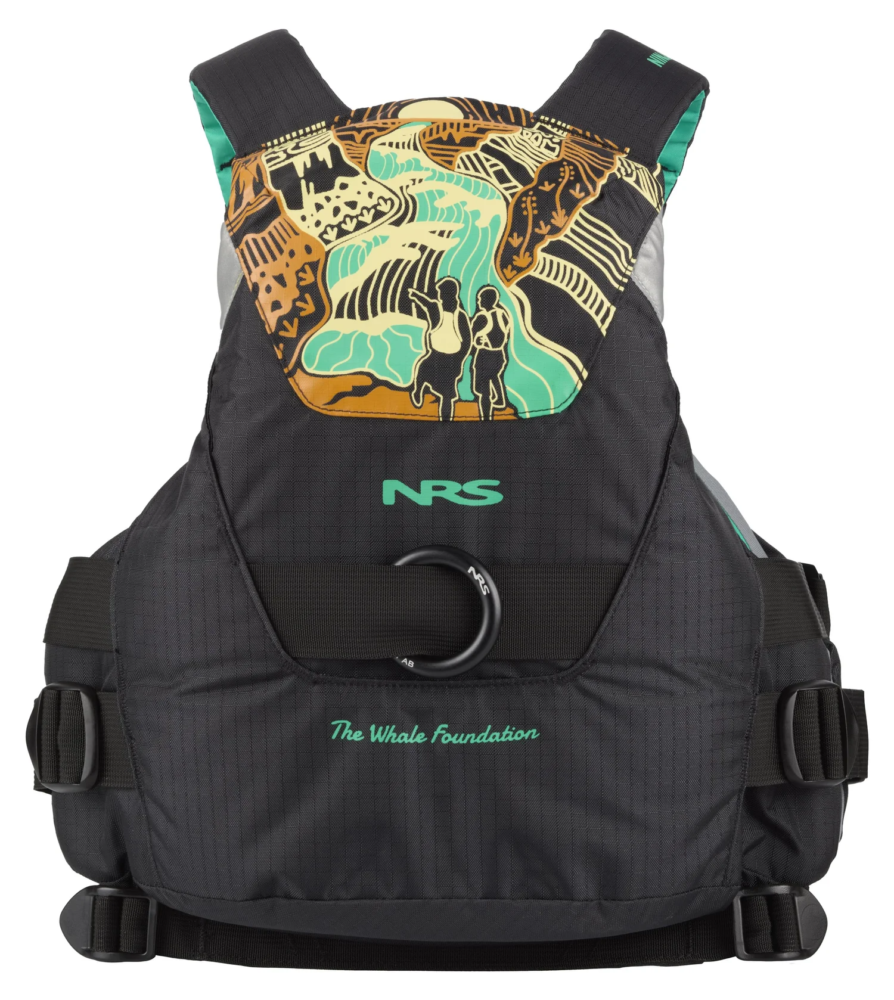
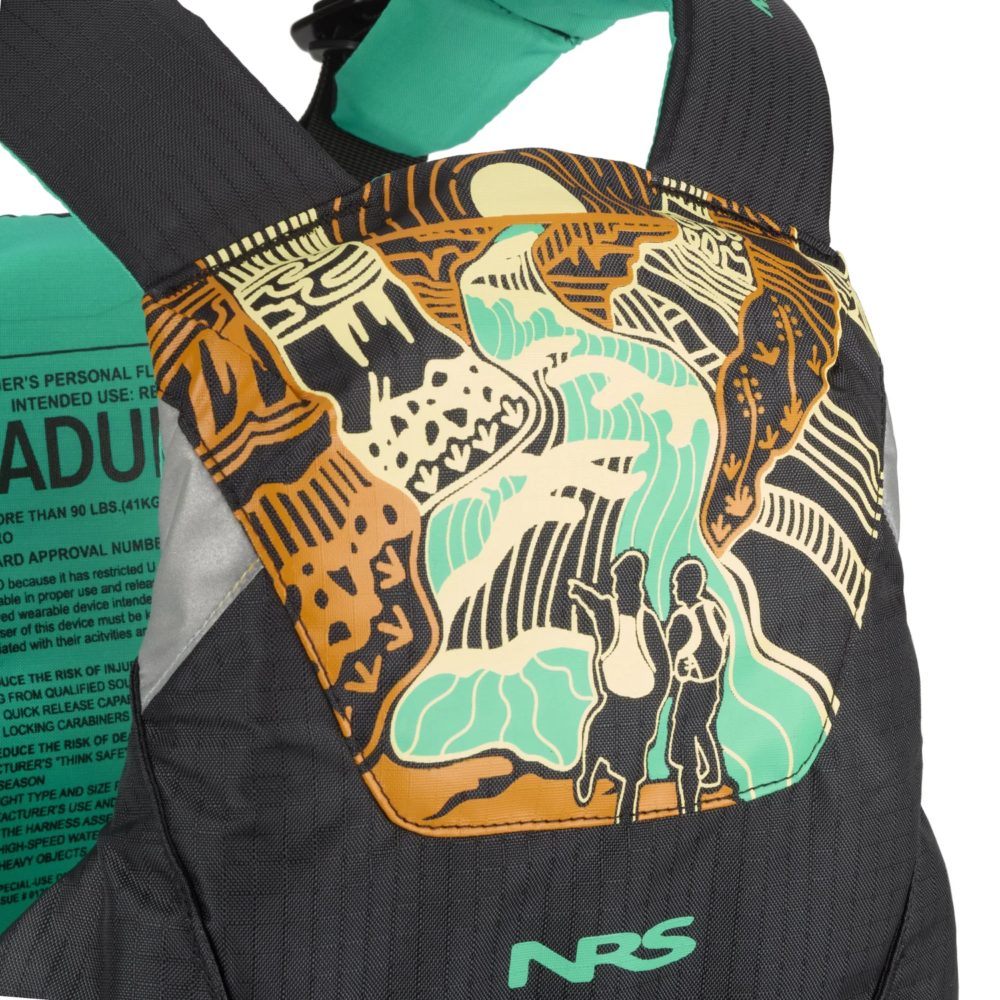
This spring, NRS released their first-ever Limited-Edition PFD in collaboration with the Whale Foundation. Named in honor of Hatch Expeditions guide Curtis “Whale” Hansen, the Whale Foundation is a non-profit dedicated to providing services that promote, restore and celebrate the health and well-being of the Grand Canyon river guiding community. Proceeds from the LE Ninja Pro, which features a unique design from artist and river guide Summer Doss, will directly benefit the Whale Foundation. We met with Summer to get the story behind her beautiful custom artwork and what it means to share her work through this platform.
***
NRS: Summer, can you tell us a bit about the art on this PFD? Are there specific elements you’ve chosen to incorporate or a location in the canyon that inspired the design?
Summer Doss: The design on this jacket was inspired by the Whale Foundation logo, which features an image of guides scouting together. That design has been used by the Whale Foundation for decades and encapsulates the community and camaraderie that is an essential part of guiding to me.
A project like this limits the amount of information you can include, so it’s not based on a specific part of the canyon. However, I included elements that felt essential to me, like the California Condor on the front image, agave on the shoreline, and some specificity in the drawing of the rock layers (the crossbedding of the Coconino sandstone, or the chunky textures of the conglomerate rocks, the horizontal shelves of the tapeats sandstone).
How did you get started guiding?
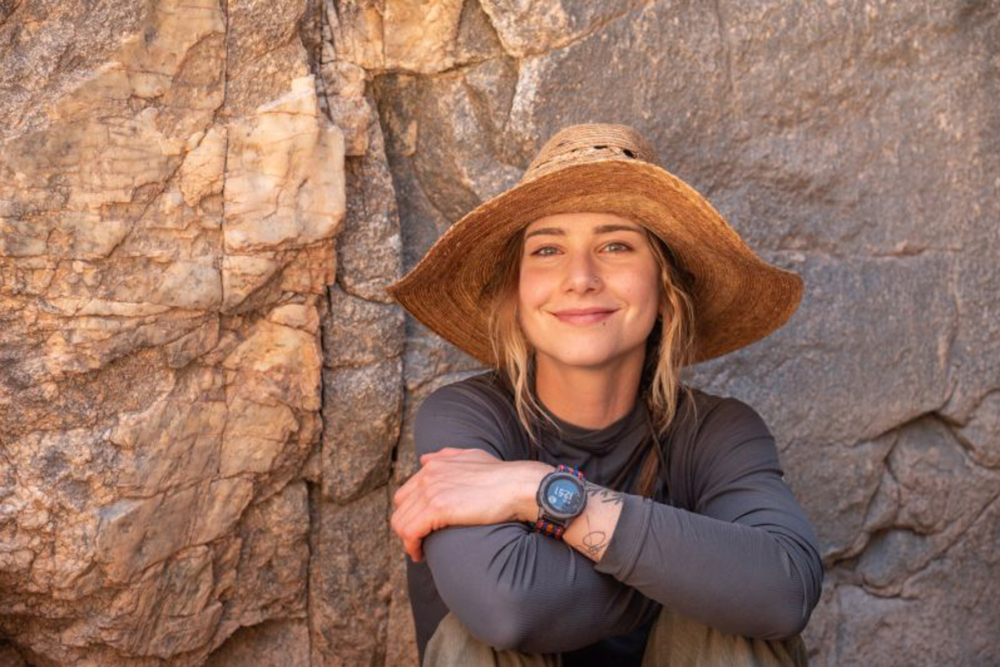
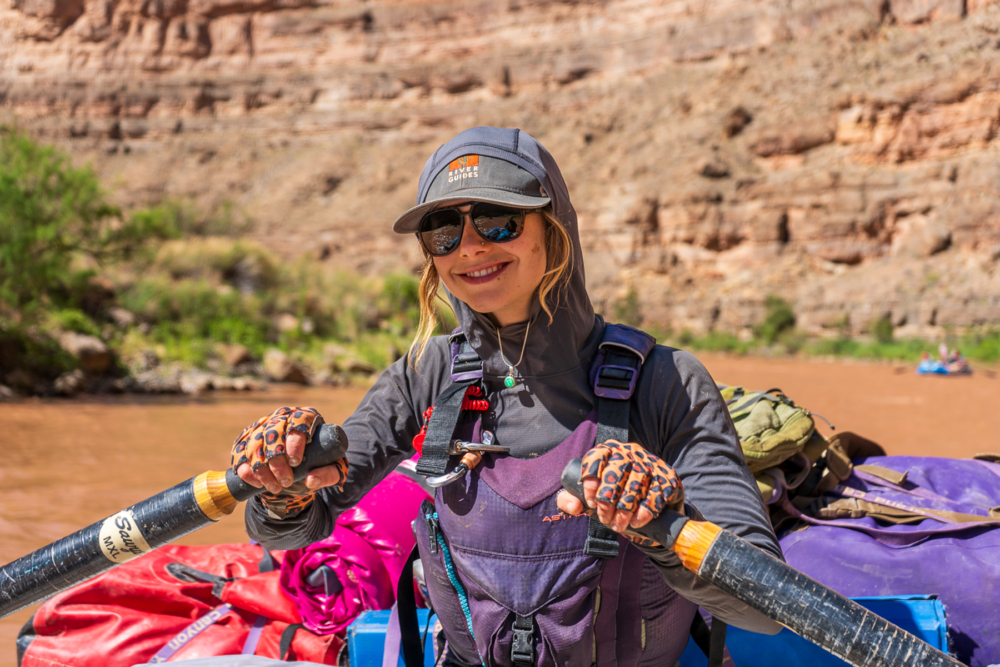
My story is somewhat atypical. My introduction to outdoor guiding work came when I was in college, through my school’s Outdoor Adventure Program. I knew immediately that I was hungry to find more meaningful work outside. My opportunity came during a Canyoneers river trip in 2018. I was sold. I’m so grateful for the privilege of going on that trip and to Canyoneers for taking a chance on hiring and training me. It changed my life.
How familiar were you with the Whale Foundation and their work prior to this collaboration? What does it mean to be the artist they chose to partner with?
I’ve known about the Whale Foundation since my first season guiding in 2019. I’ve used their counseling services, received scholarships for continued education and health insurance stipends, and was the featured artist for their annual WingDing auction in 2021. It’s an honor to use my work to support a cause that I not only care about deeply but have personally benefitted from.
What is your art background? Were you always drawn to painting and drawing as a way to connect with nature?
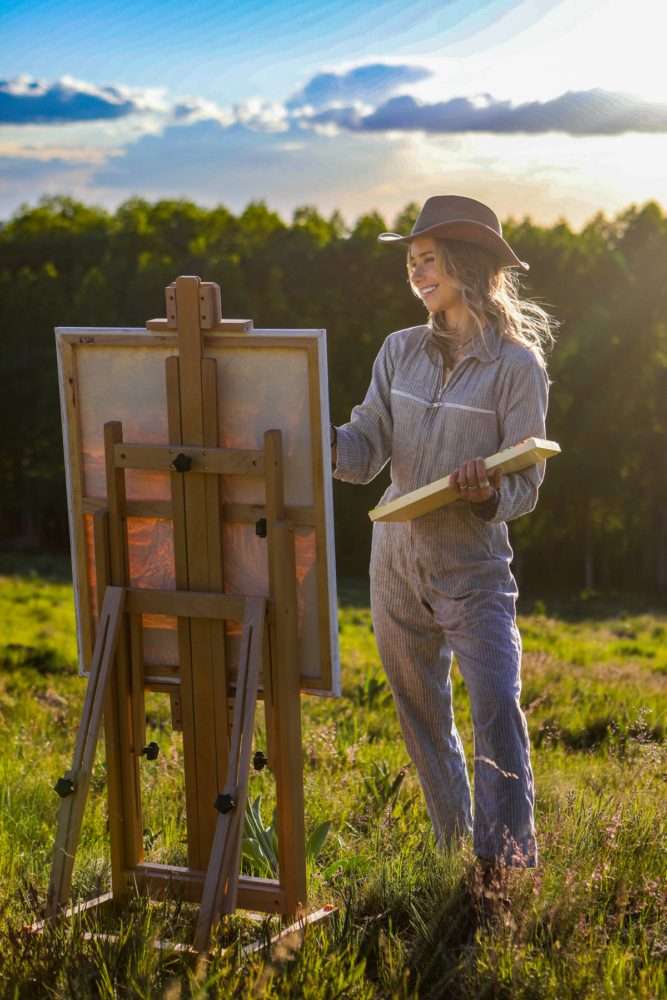
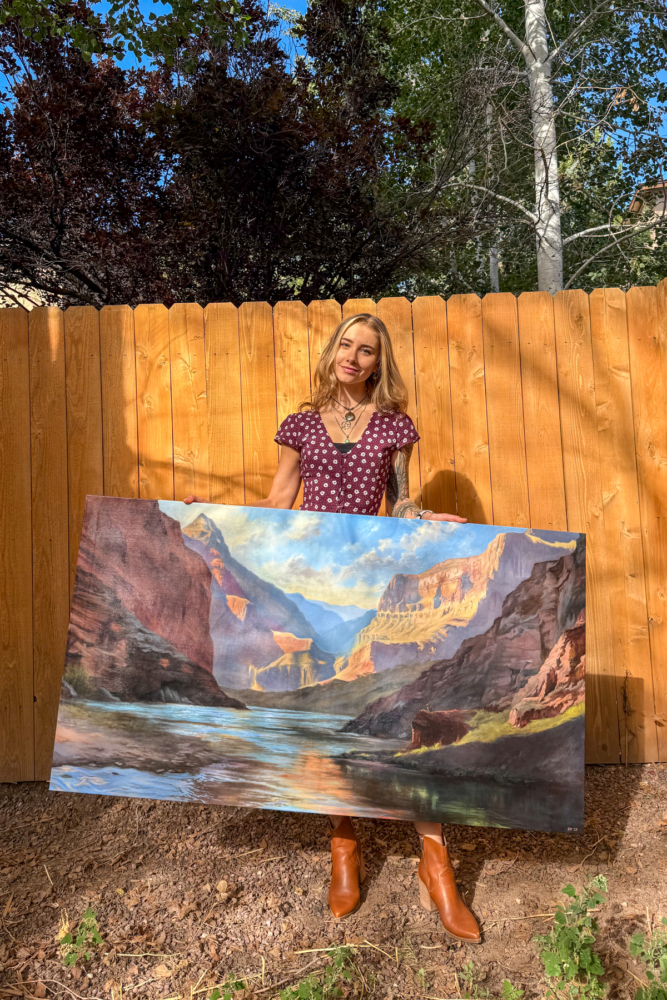
I’ve always loved making stuff, and painting has been my primary outlet since I was a kid. I got my BFA in Communication Arts and was planning on going into Graphic Design when I found my love for outdoor recreation. After that, it felt inevitable that I would combine those two passions into landscape painting.
Do you have a preferred medium to work in?
Oil paints will always be my medium of choice, although I enjoy experimenting with others.
Was it challenging to adapt your vision to the form of the PFD?
Having never designed artwork for a PFD before, there were definitely specific parameters I had to work within. Those technical constraints often direct your creative process in interesting and surprising ways. At the end of the day, I was just trying to design a life jacket that I’d want to wear!
How has your time on the river—guiding or otherwise—influenced your art?
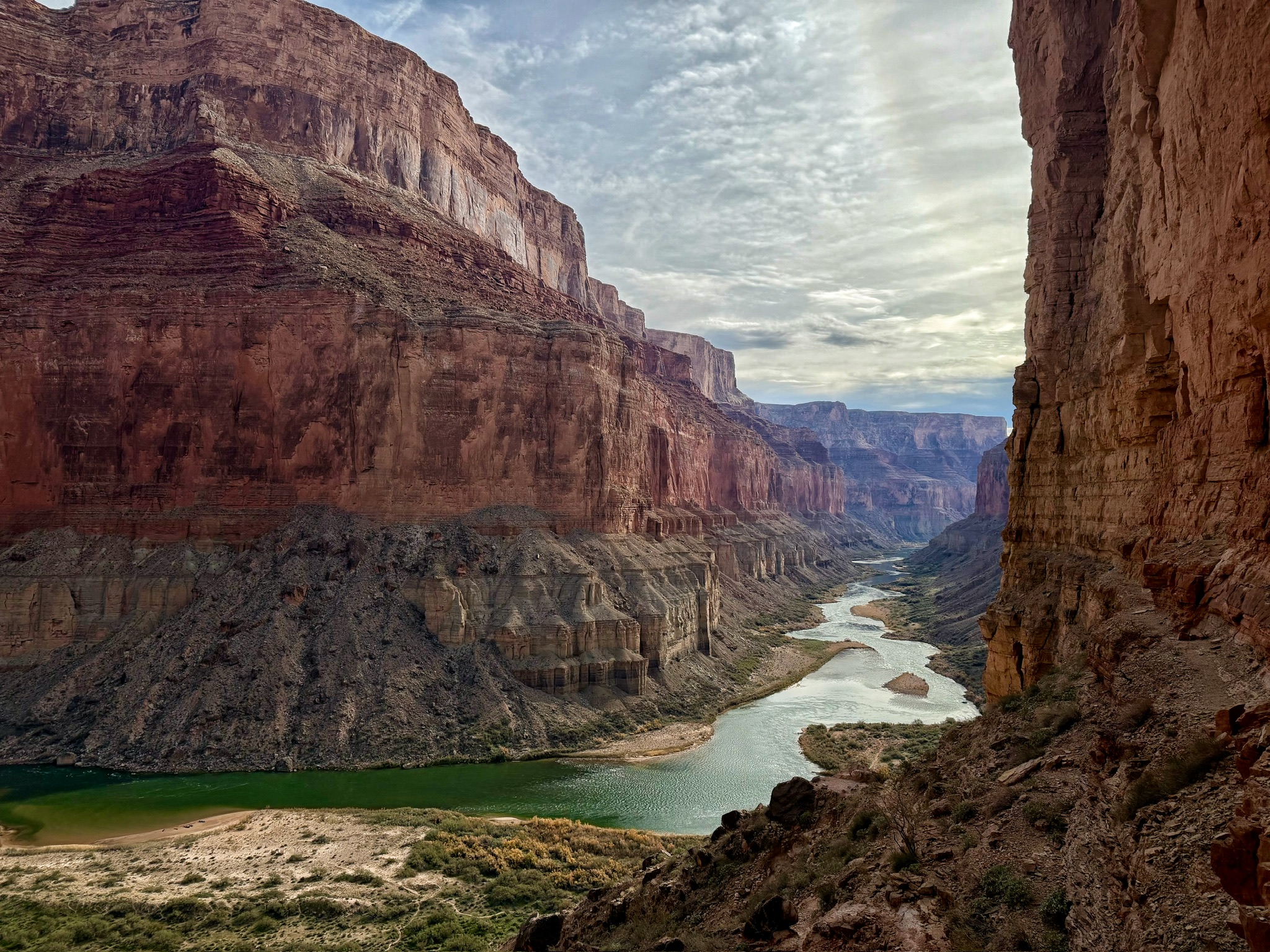
Grand Canyon is one of my favorite subjects to paint, and one of the most challenging. For me, it’s another way of trying to wrap my head around a place whose scale is fundamentally incomprehensible. I’m trying to freeze moments in time when the shadows cast on the walls by the clouds are just right, or how everything is a soft purple and orange in the Muav gorge in the morning. The Canyon has inspired me endlessly to meditate on these ephemeral and precious experiences through painting.
Do you have a favorite spot or viewpoint on the canyon?
Upper Stone Creek Falls and Carbon/Lava Chuar are the first two places that come to mind. There’s a magic there, like you’re nestled in the very heart of the canyon, witnessing something that seems too improbable to be true.
What does canyon mean or signify for you, personally? Any stand-out moments or memories from your time guiding?
Oh man… that’s a tough one to answer. I never knew what an intimate relationship I could form with a place. There’s such familiarity in knowing the mileage, the stories, what time different camps get shade at different times of year. But, like human relationships, it’s so dynamic. You can’t take anything for granted. The canyon has held me through so many different seasons of life, and I haven’t had a single day down there that hasn’t taught me or surprised me in some way. The canyon is an indifferent companion, and I like to think that she witnesses my own changes just as I witness hers.
I’ve got so many stories from my time down there that are far too long for this interview. But many of my favorite moments are the small ones: seeing a waterfall for the very first time through the eyes of your clients, people surprising themselves at how capable they actually are, back of the boat banter, the moon cresting over the canyon walls when you’re cozy in bed, the cheers when everyone has clean lines through the big stuff, the fierce power of a monsoon, and moments when the only sound is the descending trill of the canyon wrens.
Both art and guiding can introduce people to the healing powers of nature and the power of nature generally. How do you draw from your time in nature within your art? What do you hope people take away from it?
I believe that time spent in nature is a way for us to directly experience ourselves as part of the world around us, especially during a time when it’s easy to live in the illusion of control and separation. But we can’t always have transformative experiences outdoors. My ultimate hope for my paintings is that they serve as a portal for myself and for the viewer to remember that beauty, presence, and connection always exist, are always true, even when we can’t directly access them.
How do you manage the transition back to life and the real world after a river trip?
This transition is what led me to seek counseling through the Whale Foundation in the first place. No matter how many trips I work in a season, the transition back into the real world is always hard. It’s like straddling two incompatible realities and I’ve often felt like I’m not sure how I fit into either. But I think the human experience is defined by paradox, and learning to find grounding and belonging within myself and my community wherever I go is one of the greatest gifts guiding has given me.
Do you see any parallels between being an artist and navigating the struggles of seasonal employment and/or lifestyle of commercial guiding that the Whale Foundation works to support?
Absolutely! In a lot of ways, guiding has given me the confidence to pursue my fine art more seriously. I know that I’m adaptable to unpredictable circumstances in both metaphorical and practical ways. I’ve learned how to work hard, to anticipate fat times and lean times financially, and have grown strong enough not to just sit with uncertainty but lean into it.
Tell us more about the Flagstaff community. It seems like there’s both a strong guide community and a vibrant art scene. What attracted you to the area?
Growing up on the East Coast, I never felt like I had much community. I didn’t have any role models of how many varied ways people can make a living and make a life. Flagstaff showed me a different way of existing. So much feels possible because of the community there. People are eager to share opportunities, to bring you into the fold. I’ve been so incredibly fortunate to find my family out there of friends who truly know me and will meet me where I’m at. It’s a gift to receive, and a greater gift to reciprocate.
In 2021, you were the featured artist at WingDing, and now, your art will be sold at this year’s event via PFD. What is WingDing? Why go? The WingDing is such a great time! It’s a fundraiser for the Whale Foundation, so all proceeds from auction items directly support the Foundation. But more than that, it’s an annual gathering of the [Grand Canyon guiding] community during a time of year when people often scatter and hibernate. It’s like an off-season river reunion and just a great time to come together.
Do you have any specific hopes for this PFD?
I hope that this PFD elevates the visibility of the Whale Foundation and can further expand on the ongoing dialogue around mental health, stability, and sustainability in the guiding industry. I also hope that people think it looks cool!
How can people support the artists and guides in their communities?
So many guides and artists alike have multiple streams of income to cobble together a living. I’ve heard of every side hustle imaginable, and we’re making it work, but it’s hard. As much as you can, shop local, hire local, and as general guidance, act on whatever kind impulses you have.
Any final advice for aspiring artists, river guides or both?
Everything is done one day at a time, and nothing is truly done alone.
***
Editor’s note: Summer Doss is a painter, designer, and river guide based out of Flagstaff, Arizona. Her work, in the studio and in the field, centers around the fundamental belief that experiences out of doors have the power to remind us of our inextricable connection to nature, our shared humanity, our resilience, and our capacity for fun. Through her art, Summer hopes to enable her audience to reconnect with outdoor experiences and core beliefs of their own. Learn more about Summer and view her work at Summerdossart.com
To pre-purchase* a LE Ninja Pro with Summer’s art, visit https://www.whalefoundation.org/shop/whalefoundation-x-nrs-ninja-pro-guide-pfd .
Contact Admin@Whalefoundation.org for a pro deal price code— Guides eligible to purchase for $169.
*Pre-PURCHASE ONLY – DELIVERY NOT UNTIL APRIL 15, 2026 (expected).