In July 2025, Heather Smallpage, Kelly Fields, Shira Biner, and Natalie Afonina traveled to Baffin Island in the Canadian Arctic for a five-week, human-powered exploration of the island. A cache of climbing and paddling gear, food, and extra supplies were sent to their base camp in advance.
The crew departed from Clyde River, a small Inuit community, and skied across the frozen Arctic Ocean before entering a fjord named Arviqtujuq Kangiqtua. Over the next seven days, the crew traveled on sea ice until they entered the fjord with their climbing objectives —a little over 100 miles in total.
After setting up base camp, Kelly, Heather, and Shira spent 49 hours establishing a first ascent on the mountain Eglinton Tower. They named their ascent Lemnos in the Clouds (5.11 A0). It was the first technical ascent in Arviqtujuq Kangiqtua, notably by a team of female+ individuals.
As the weather veered from the forecast, the group decided to leave base camp early to avoid travel through the ice as it began to break up. With hundreds of pounds of gear, including the extra supplies from the cache, the group moved towards Ayr Pass—a 6 km pass that began as a moraine, slowly changing into loose talus, slippery lichen-coated rocks, and finally, a meadow that sapped nearly all of their momentum. To get their gear across, each crew member had to traverse the pass five times in total.
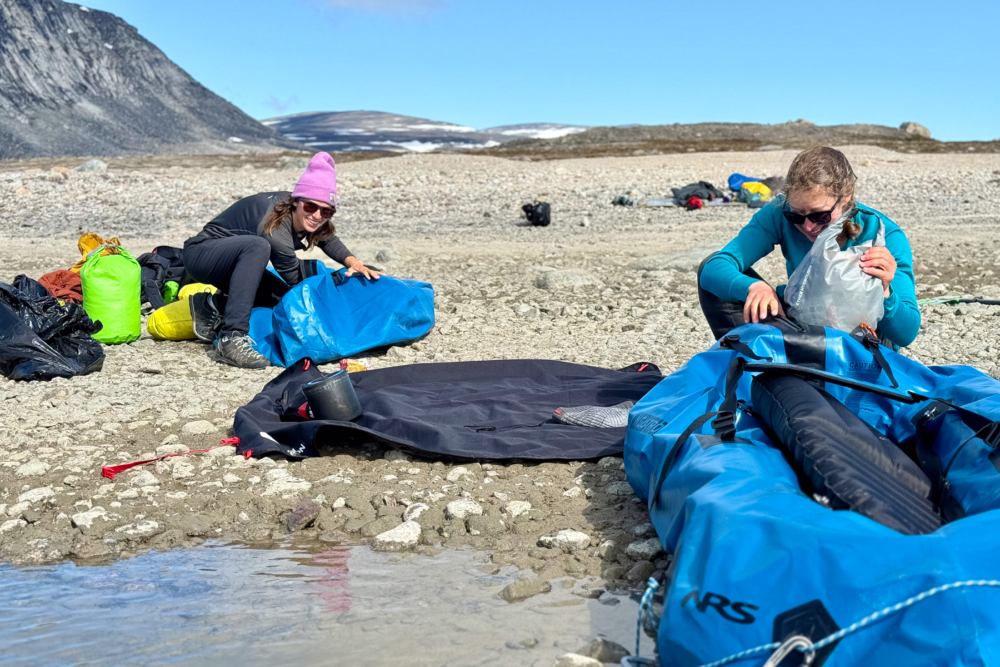
After the pass, they walked across Ayr Lake, still frozen and much easier to transport their gear across. The lake ended at the mouth of the Kuugaaluk River, where the group took a few days to rest. From here, they descended the Kuugaaluk via packraft. Much of the river was still frozen; they were forced to endure an icy mix of paddling and portaging. Finally, the crew walked the last 26 km back to Clyde River.
In total, they traversed more than 300 km of ice, rock, and water by ski, foot, and boat—and made history as the first team of female+ individuals to establish an alpine-style big wall in this area.
***
“To be alive is the biggest fear humans have. Death is not the biggest fear we have; our biggest fear is taking the risk to be alive—the risk to be alive and express what we really are.”
– Don Miguel Ruiz, The Four Agreements
I read this paragraph for the first time a few days into the expedition to Baffin Island last summer. Tucked into my sleeping bag, exhausted from another day of skiing dozens of kilometers across the frozen Arctic, my nerves kept me awake as I recalled the massive polar bear footprints we had seen earlier. I was wondering what motivated me to make this journey to the Canadian Arctic, and found my explanation in these words.
I was there for an experience that would remind me of everything life can be—the risk, and the reward.
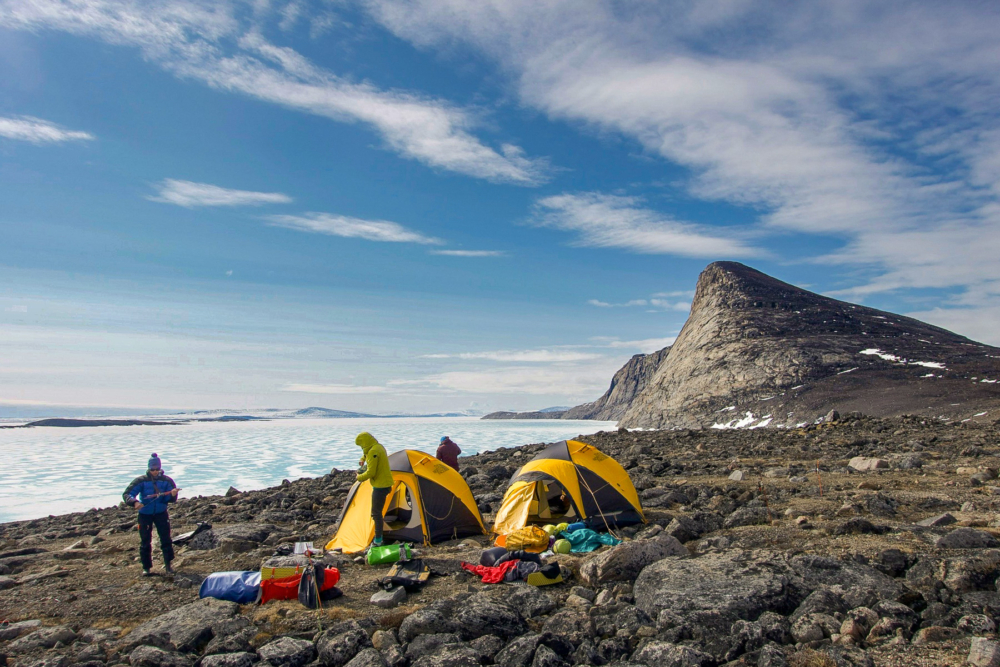
Nothing in the Arctic comes easily. Even my decision to embark on this adventure was stagnant, debated, and re-assessed for many different reasons. I went, open to the possibilities, challenges, lessons, and beauty of this landscape, unclear of my motivations yet certain that spending five weeks in one of the most remote and isolating landscapes would likely do me some good in one way or another.
I was, in part, running—from parts of myself I didn’t want to face, and from a world that felt saturated in grief, division, and violence beyond my control. An expedition could be a productive distraction that, in the past, had rewarded me with gifts from nature or a deeper connection to other humans and the earth. I knew going to Baffin Island wouldn’t be easy, but I was in need of a challenge; something to remind myself of my humanity; to feel the body I exist within, explore its limits; to reconnect with myself in a new landscape. I needed a break.
The farther away, the better.
I know I’m likely in the minority of people who would make that decision—going to one of the most remote and hostile places on earth to see if I’d feel better. Yet I was feeling claustrophobic in society, unable to escape my anxiety and the constant bombardment of distractions, decisions, plans, and goals. Escaping that noise felt impossible.
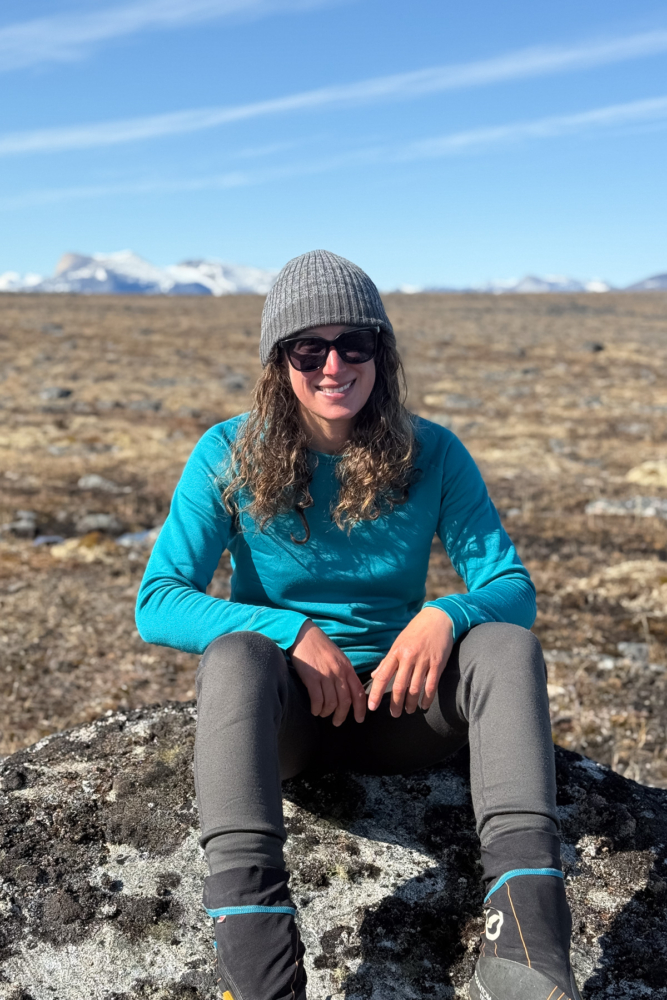
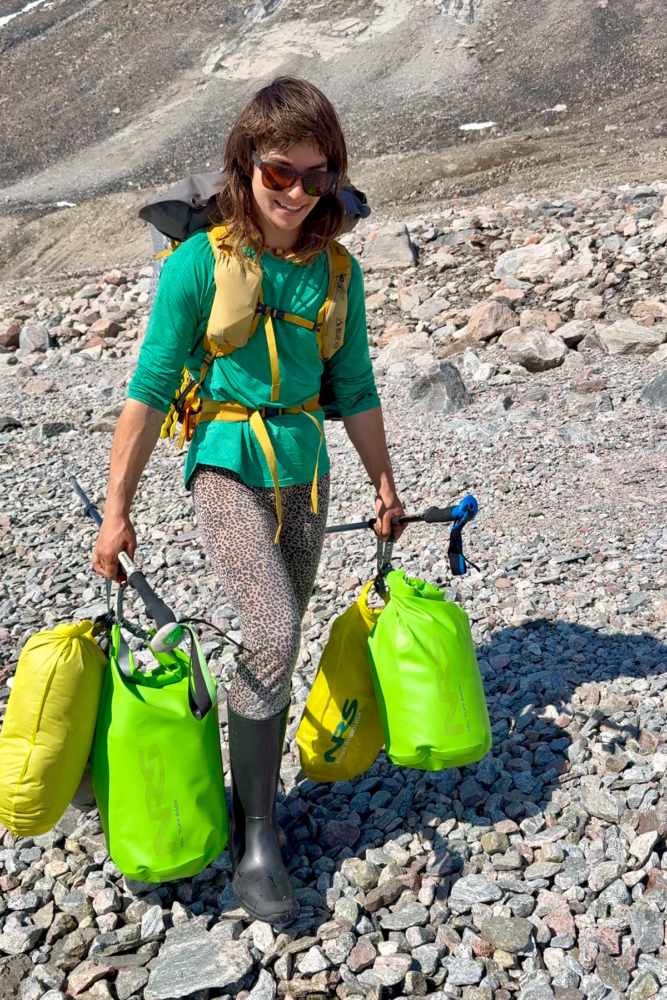
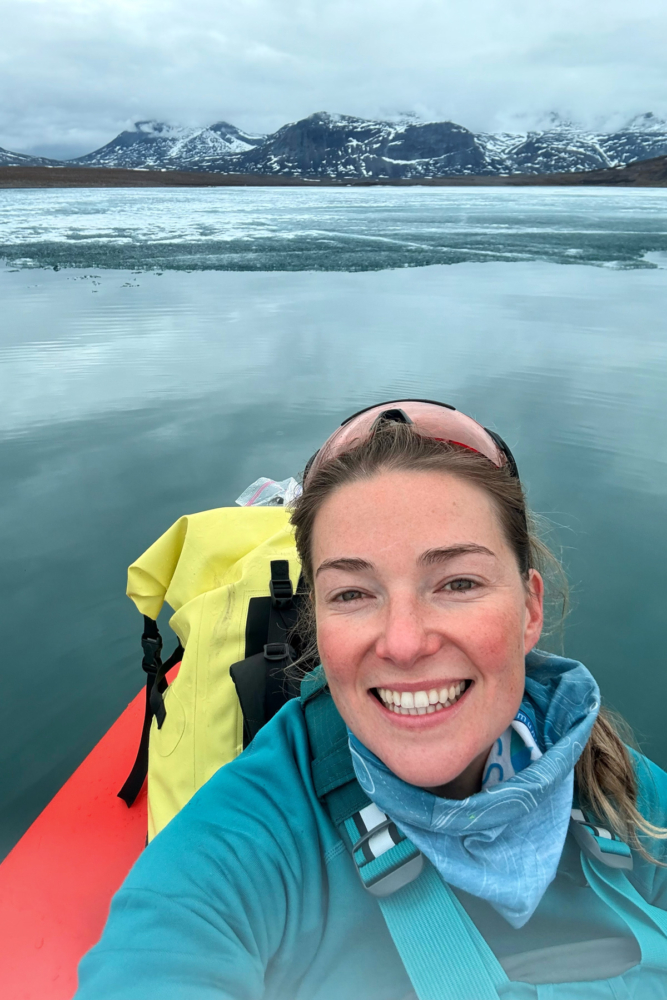
I’m an introvert. Being in social situations taps my energy and I prefer to recharge alone or with a small group of close friends, preferably outside. Moving and being in good company offers exactly the kind of reset I need. For these reasons, Baffin Island intrigued me. Another motivation was our group’s make-up: an all-female+ team.
I’ve learned over the years that in intense situations I prefer to have women, queer, or other gender fluid people by my side. I feel more comfortable navigating fear and doubt, and more encouraged to express myself, without pressure to perform or prove my capabilities. Here was an opportunity to be amongst women who have encountered the same challenges or barriers I’ve faced in outdoor spaces.
Although I didn’t know much about them yet, I was curious who else had the drive to embark on an endeavor of this sort, and trusted that everyone else, too, knew how rare of an opportunity we had. After all, we would have plenty of time to get to know one another over the next five weeks.
“Something that stood out to me while skiing was how good it felt to be constantly moving. To have too much time and openness to be with whatever it is that comes up. And I was. I was present with myself and sat with, listened to, or emoted about whatever it was. Nothing to turn from, just flowing with what is. Lots of time my mind was quiet, while my body took in my surroundings. I move, therefore, I am.”
– Excerpt from Heather’s journal.
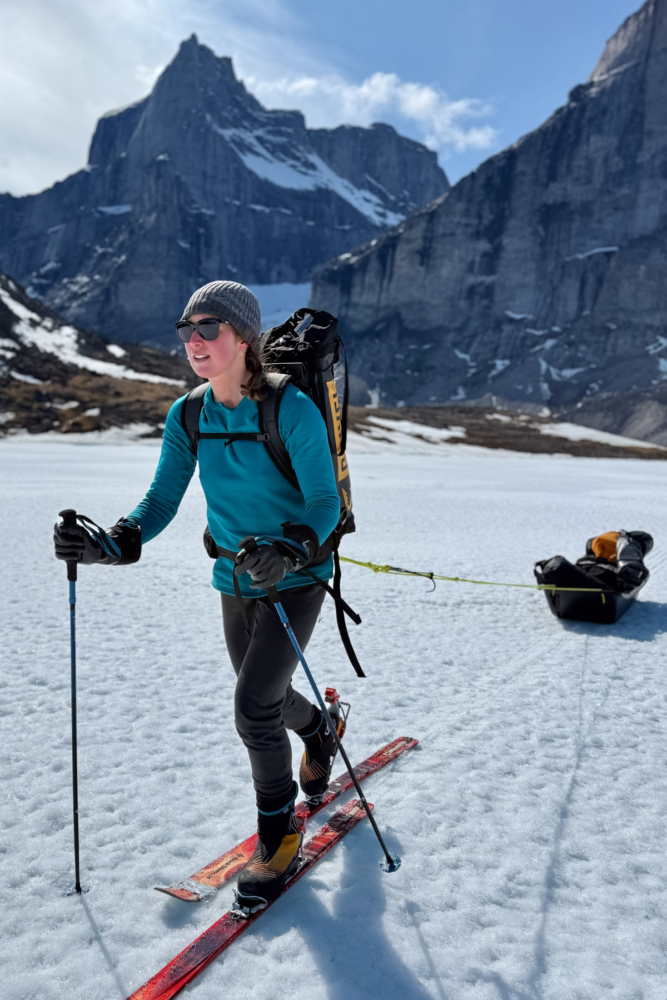
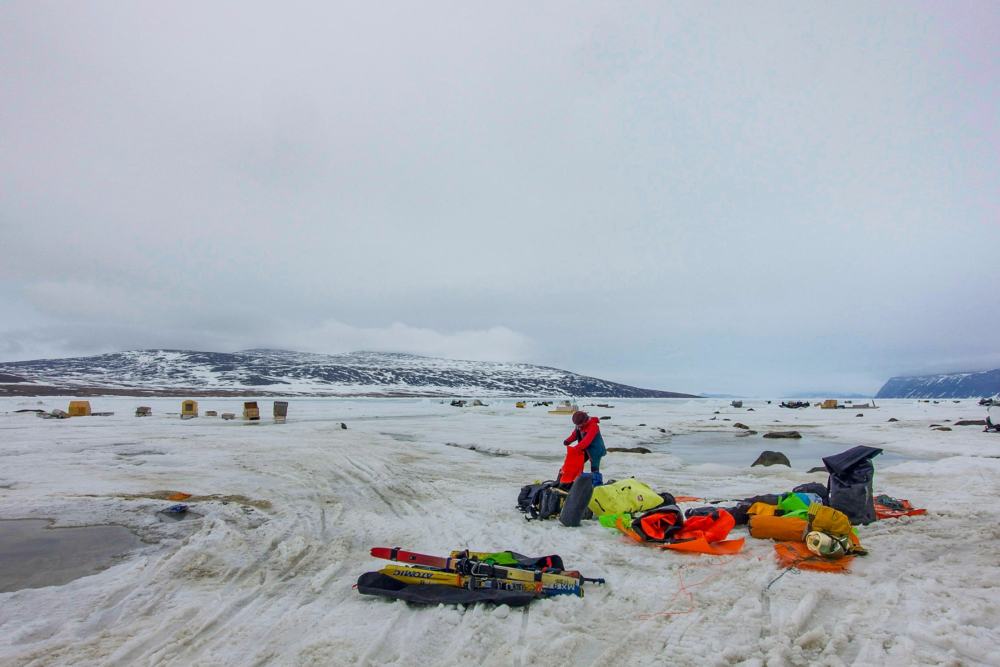
That last sentence became my motto out there. Time was dictated by our movement, and I grew to appreciate my relationship with it—despite the hundred or so pounds of gear I was dragging behind me. It felt like the more I moved across the icy landscape, the more capacity I had to process much of the grief that was weighing on me.
In a way, the farther I traveled out of the confines of society, the more space opened within myself to be able to think productively about it all. Having that space, or perhaps having no choice but to listen to my body clarified what I can control for myself, and what I can do to minimize the noise of the world around me.
The Arctic is an extreme environment, and I noticed after a few days of skiing that it did not allow me to ignore my body’s needs. Of all places, I found the thing that I had been missing for so long: connection. The sea ice gave me no choice but to care for myself and connect with who I am in important ways.
“I have a belief in my body. A knowing that it will carry me and tell me its needs. It feels different out here. There is none of the indecisiveness I get constantly when my life is distracted by everything else. Life isn’t directed by night and day, it’s by what we need. If I feel hunger, I eat. Tired, I rest. Thirsty, I drink. There’s no question: it’s what I need, so I do that. My body speaks what it needs, and I listen and act—no questioning from outside forces. It’s easy to listen to my body here.”
I’ve gathered from conversations, and from taking a general pulse of the world, that I am not alone in these sentiments of feeling like there is no escape from the happenings that are out of our control. Unfortunately, if I were to broadly suggest taking a vacation to Baffin Island, I fear it wouldn’t be widely accepted. Thankfully, there are simple ways to connect with ourselves in the world we exist in.
You move, therefore, you are.
I’ve gotten creative with the word movement, and the many forms it takes. Physically, it can dance, run, and stretch. Our minds move when it emotes, perceives, adapts. We can observe how the earth moves, in destruction or in beauty–a breeze or a tornado. We can see movement in our relationships with other people–how we mold one another, learn from, support and grow. How we come together or drift apart, just like the slow change of the sea ice we traveled upon.
Movement is all around us. I saw this clearly when my environment for a week was ice: seemingly solid, but in reality, an ocean just a few feet under our skis.
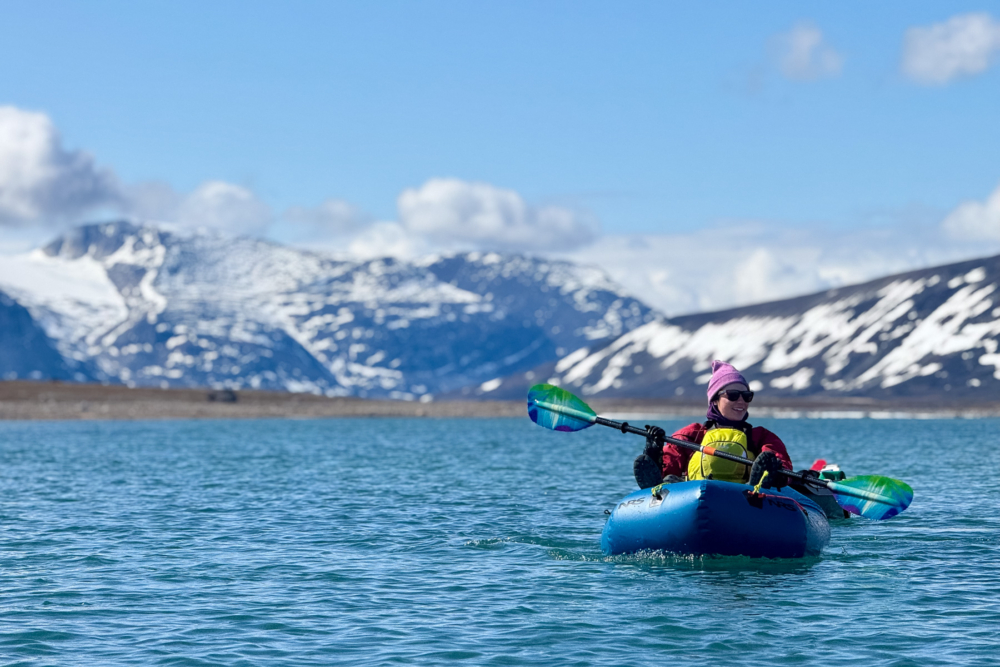
That environment taught me about change, how it’s all around us, how we can’t avoid it or control the tides. But we can listen to our body’s needs and act, ask for help, or carry more if the people around me need it. We can adapt this weight into something that feels bearable – and continue moving together.
The ice does not have a heartbeat. Yet the ocean underneath keeps a pulse.
“To be out here in a wilderness so far feels right. Like, I don’t have to try to be anything other than what each moment asks.
Like it should.”
***
Photography courtesy of Heather Smallpage, Natalie Afonina and Kelly Fields.
Guest contributor Heather Smallpage grew up in Wisconsin where they explored the many lakes and rivers, which instilled in them a deep appreciation for the natural world. They moved out west after graduating from the University of Minnesota, and have been pursuing adventures in the vertical world ever since. They are non-binary, a climber, a singer, writer, and lover of loons. You can follow along with their adventures and find more of their thoughts and writings on Instagram: @hsmallpage.