I look at the time: 5:57.
It’s the end of another long summer day in the Columbia River Gorge. I park along the Hood River waterfront, where the midweek timing and cool evening temperatures keep the crowds away. Just below me, a sandy bank gradually rolls into the river.
In a few minutes, the first roll session of the Diversify Whitewater Kayak Progression Program would begin. This was the second year of the progression, and my first time volunteering for it.
5:59
I fidget with the keys in my hand, looking for a spot on my truck to hide them. Then one by one, I watched cars loaded with brightly colored kayaks turn the corner and join me on the side street. Familiar faces popped out to say hello, including the freckly Kallie Kurtz, who expanded Diversify Whitewater’s single-day kayaking events into an entire six-week progression. For every meet-up, she wrangles together volunteers—some join once, while others stay around longer. Friends who helped with the last cohort said only positive things about the experience, and I was curious if I could be part of the self-sustained community as well.
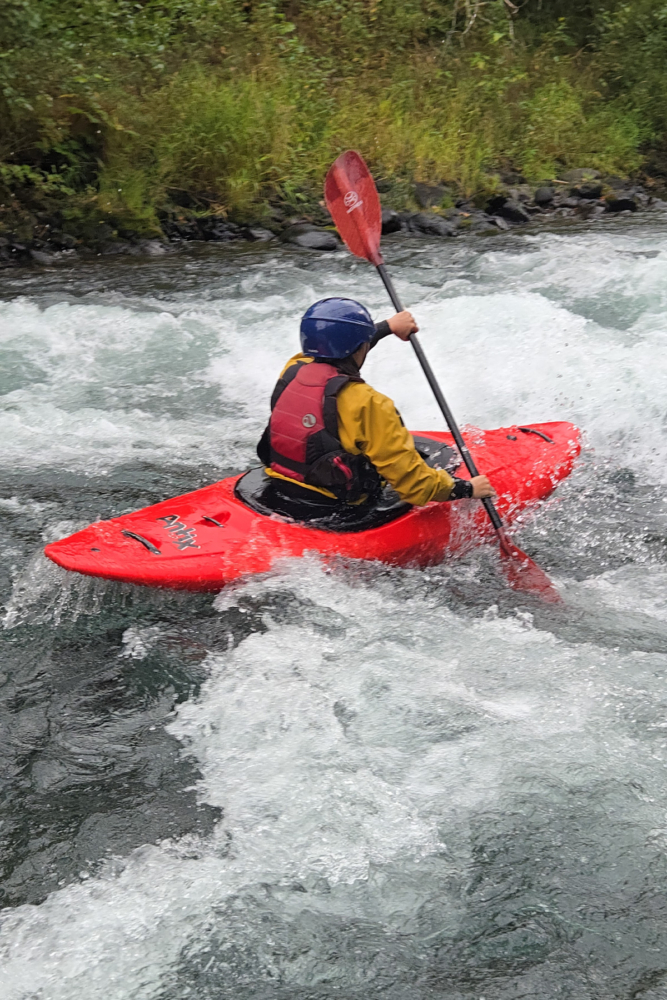
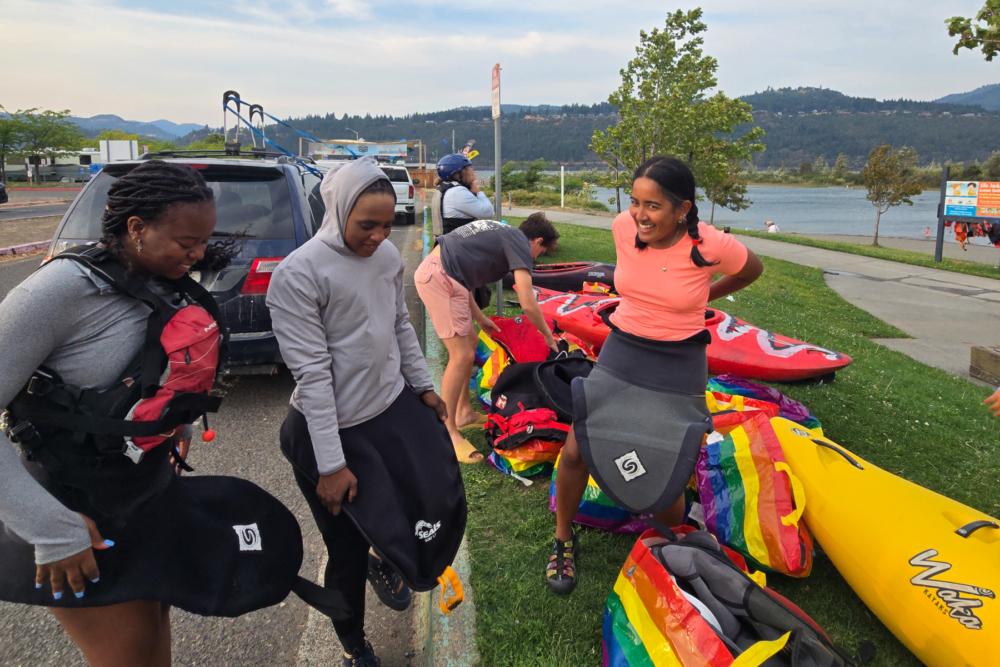
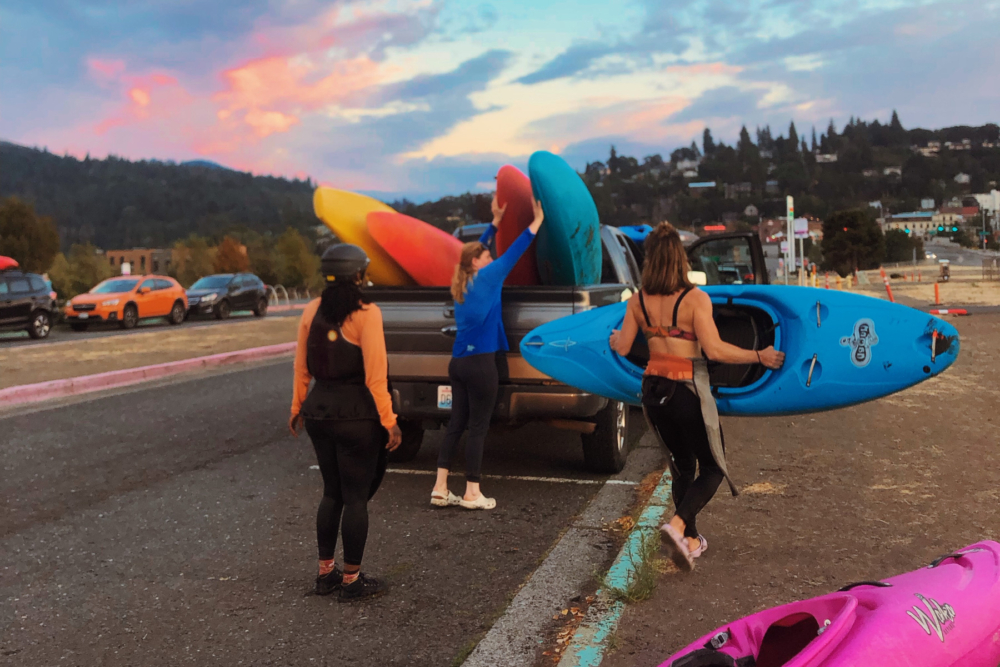
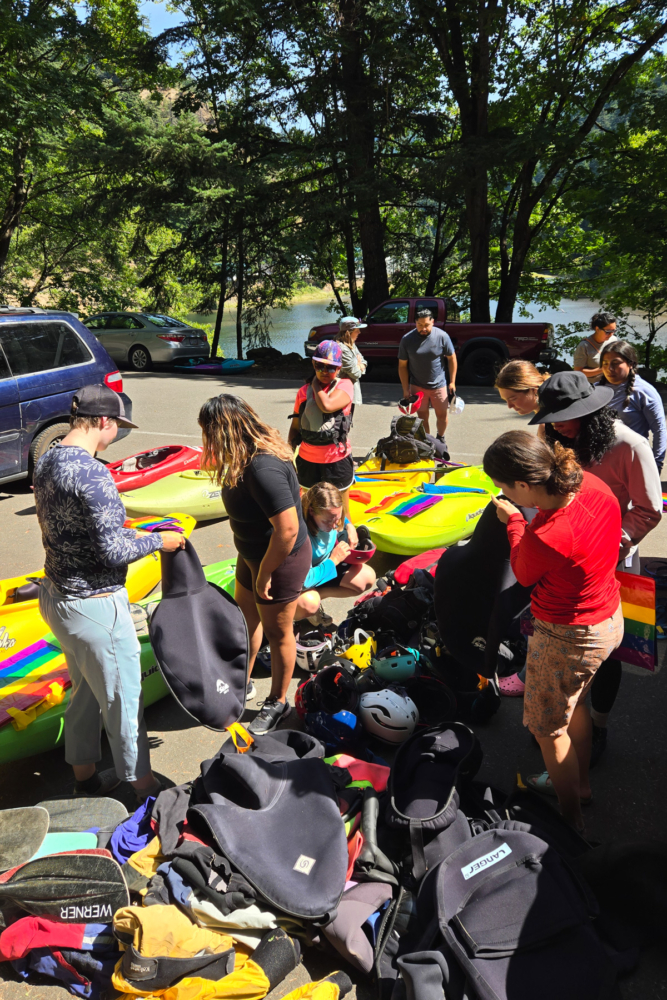
We unload the kayaks, borrowed from various local boaters, and bring them down to the water. In the meantime, rainbow gear bags filled with PFDs, spray skirts, helmets and dry tops come out of the trunk, each one sorted for a specific person in the program.
Probably past 6:00.
We circle up on the grassy knoll for introductions and to partner up. There are so many volunteers, we actually outnumbered the participants. I link up with Dhava, who is outfitted with a red slicey boat similar to my own.
“I really don’t want to flip my boat over,” she confessed.
Nodding, I told Dhava that we didn’t need to. Besides, I replied, “I’d genuinely worry if you already felt comfortable inverted, upside down, and underwater.”
To ease her worry, I told her about the first time I practiced a roll. I would clumsily pull my skirt off and on, nervous that I wouldn’t be able to do the same after I flipped over. Considering Dhava had already done a wet exit, I said she was already ahead of me when I started.
We continued to go through the basics of hip snaps and head movement without fully submerging. Slowly, Dhava relaxed into her boat and decided to paddle around the inlet, enjoying watching others practice their rolls, attempting the counterintuitive sweep motion of the paddle with varying degrees of success.
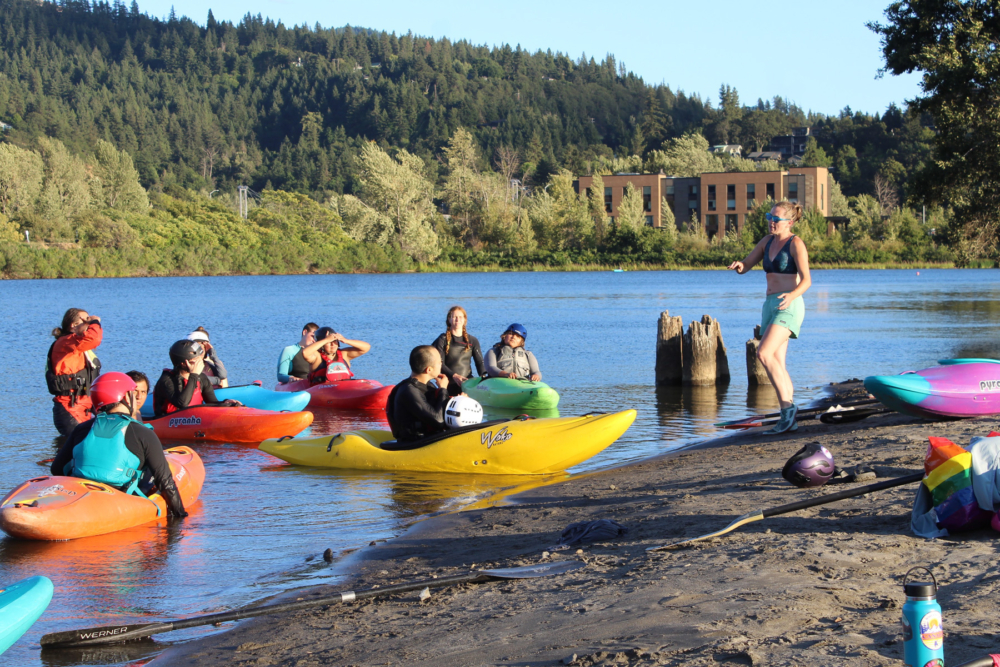
At one point I heard a cheer: another participant had gotten their first roll. He looked surprised, then back up at the instructor. “Are you sure you didn’t touch my boat?” He asked.
The answer was yes—and we watched as he successfully flipped over and completed another roll.
***
By the time we’re out of the water, it’s chilly enough to throw on a sweatshirt. The hour-and-a-half flew by and the clouds in the sky were starting to reflect the pink shades of the evening sunset. We carefully strap the boats back on the cars and make plans to see everyone next week.
A few of us go out for dinner on the waterfront, less than a minute’s drive away. We carve out seats at one of the local restaurants, chatting about everything under the sun. At one point I smile at Kallie and say, “This is so fun hanging out!”
She looks back, nods, and says: “This is half of the point.”
Building relationships is at the heart of the progression, and whitewater is the glue that connects it together. Over the next couple of months, Wednesday meet-ups and weekend paddles down Class II–III would lay the foundation for everyone to become paddling pals and real friends.
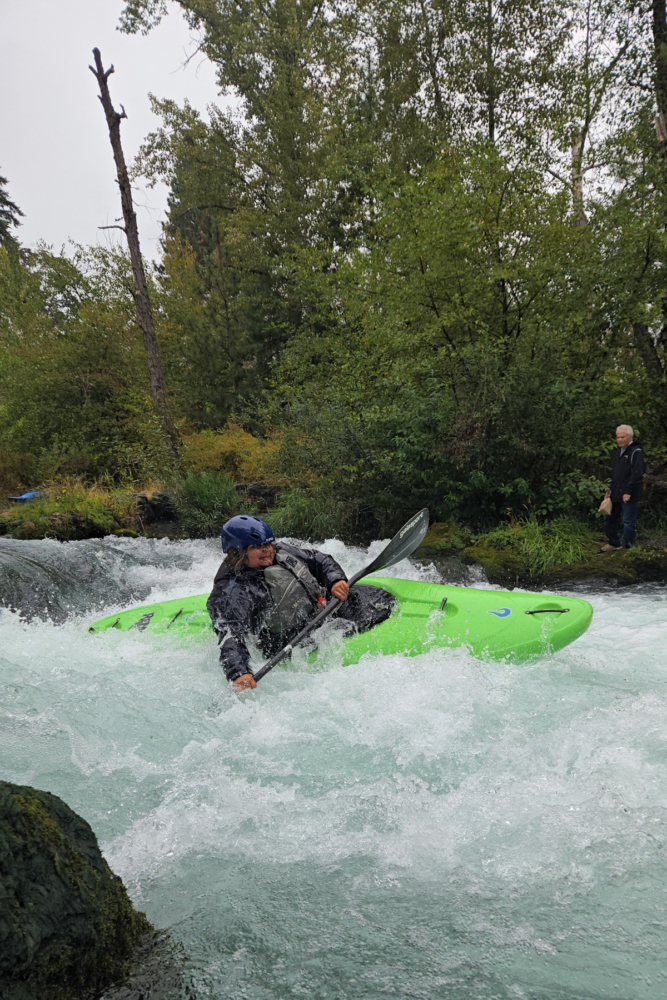
“This program is all about social connection. You need someone on the river to show you down, teach you, and be there when you mess up,” Kallie explains. “If you donʻt have that community that allows you to be on the river, then you won’t have the space to be able to learn and get better.”
Kallie designed the progression with that one thought at the forefront: community. Her goal is to have each person in the program feel supported by one another, as it significantly impacts whether or not someone will continue to progress long-term.
“People’s physical skills are better when they have that psychological and emotional safety,” she says. “That’s what is going to make people feel safe when they’re trying hard things.”
Diversify Whitewater’s mission includes building a network of boaters that can mentor the next generation. Volunteering with the progression isn’t based on skill alone. Kallie wants the space to be inclusive and intentionally cultivate a group who recognize the systemic barriers that exist around race, gender, sexual orientation, or income.
“Not dance around it,” she adds.
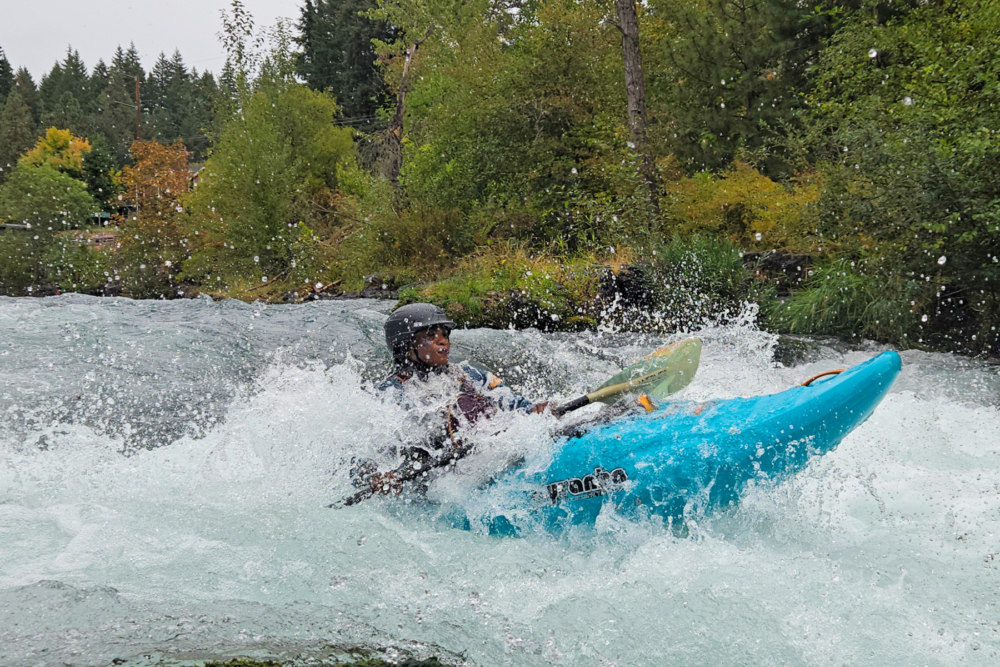
While we practiced rolls in the warm waters of the Columbia River, up north, in the Seattle area, another Kayak Progression Program was simultaneously taking place. Splitting off from the Columbia Gorge group, Noah Larky leads the Puget Sound cohort, which successfully completed its first season. Following the same progression schedule, the group practices flatwater rolls each week on at Lake Sammamish, then heads to nearby rivers for weekend paddling trips.
“I think if we’re trying to actually improve diversity in the sport, we need to have something more like the progression,” Noah says. “They’re learning the skills, they’re being introduced to members of the community they can then paddle with afterwards, and they’re getting support throughout the process.”
He paused before adding, “Because whitewater is not an easy sport to learn.”
Noah, like Kallie, feels that building community can be considered a more important aspect of paddling than learning the technical, hard skills.
“When the progression ends, skills don’t necessarily make it easier to get on the water,” Noah continued, saying that building relationships with others who are willing to teach, join at a pool session, or get out and boat is the most important part.
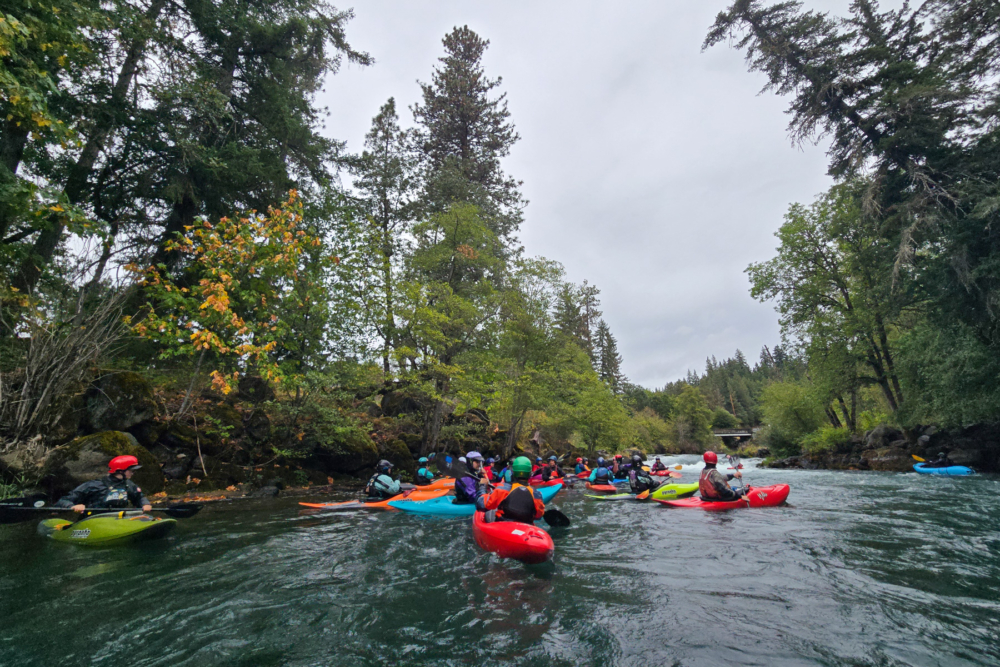
“One instructor said: we need more kayaking and less yapping,” Noah said, laughing. “But yapping is kind of the point!”
The sentiment rings true for the other volunteers, such as Miguel Mesa, who is from Colombia and now calls Eugene, OR his home. He described how tricky it was to find people to boat with as a beginner, until he met his current crew. The progression has made him passionate about volunteering, even with the long drive.
“It’s all built in a way to create and foster community, which is super important,” Miguel said. “In trying to add diversity to a sport that’s white-dominated, you need to give people a starting block of community so they’re going to feel more at home.”
Beyond instructing others, Miguel stated that the impact of whitewater and kayaking on his life cannot be understated. He wants more people to experience that as well and plans to spearhead the first Willamette Valley cohort this coming season.
“Some of the closest friends I have right now, I met through whitewater. Some of the best people I’ve met through whitewater,” he said. “It’s led me to be able to go to really cool places, meet really cool people.”
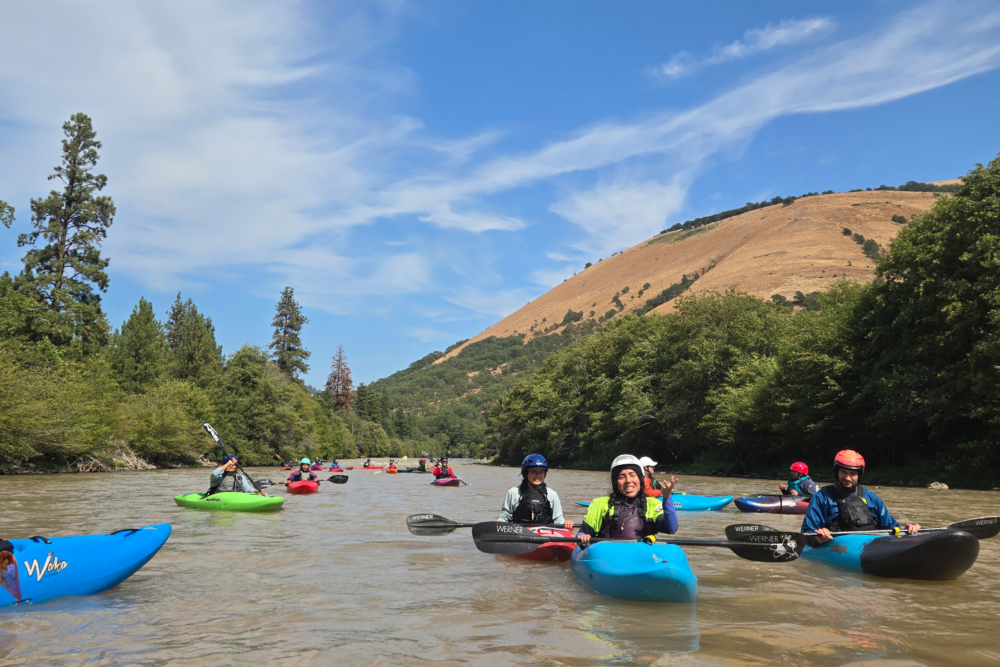
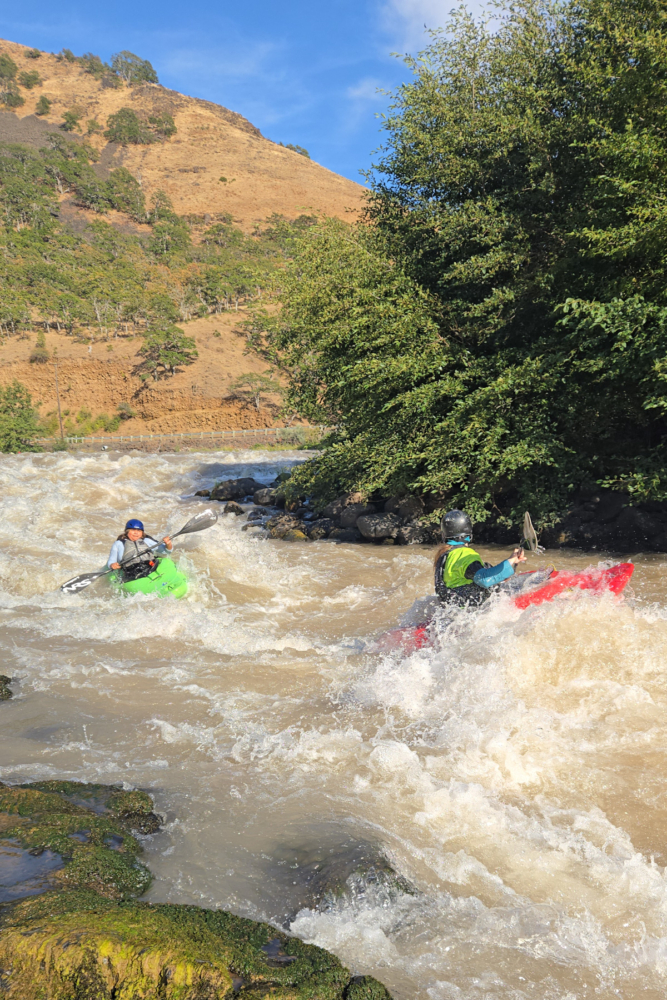
On the last weekend of the progression, both the Columbia Gorge and Puget Sound cohorts met for a paddle on the lower section of the White Salmon River, a Class II run with plenty of interesting rapids to keep a beginner on their toes.
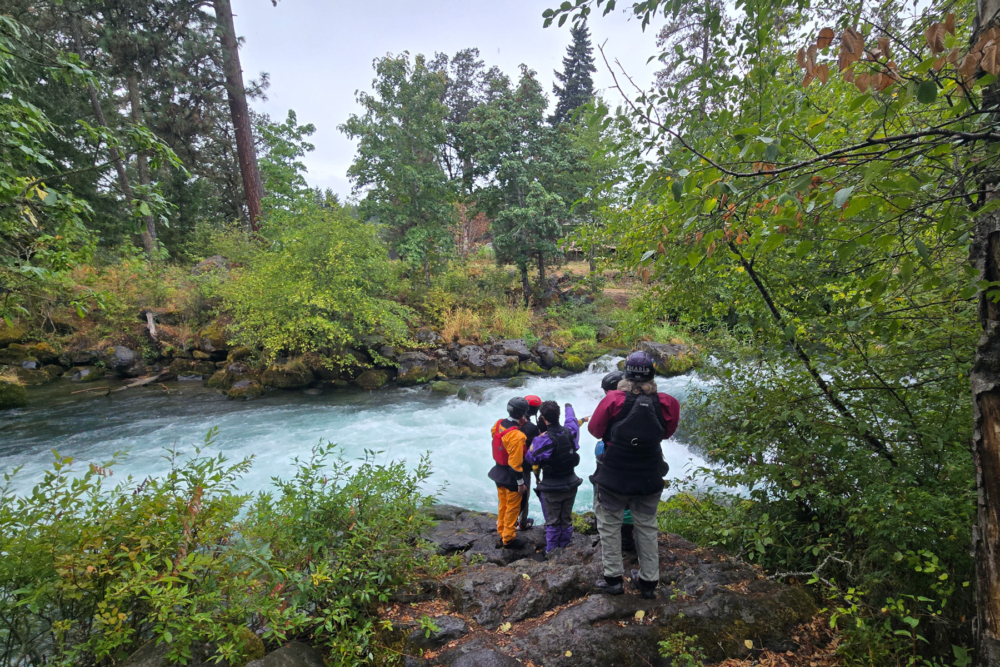
Before getting into boats, everyone scouted Rattlesnake Rapid, a river-wide Class III hole, to decide if they wanted to run or portage it. There was hesitation, as the best line was to punch the large crunchy hole just right of center.
While some volunteers set safety in the eddies below, others set the line, and the less confident paddlers following behind in a colorful train. Despite the pre-rapid jitters, everyone who wanted to paddle the rapid did—with a couple of quick swims cleaned up in the calm water below.
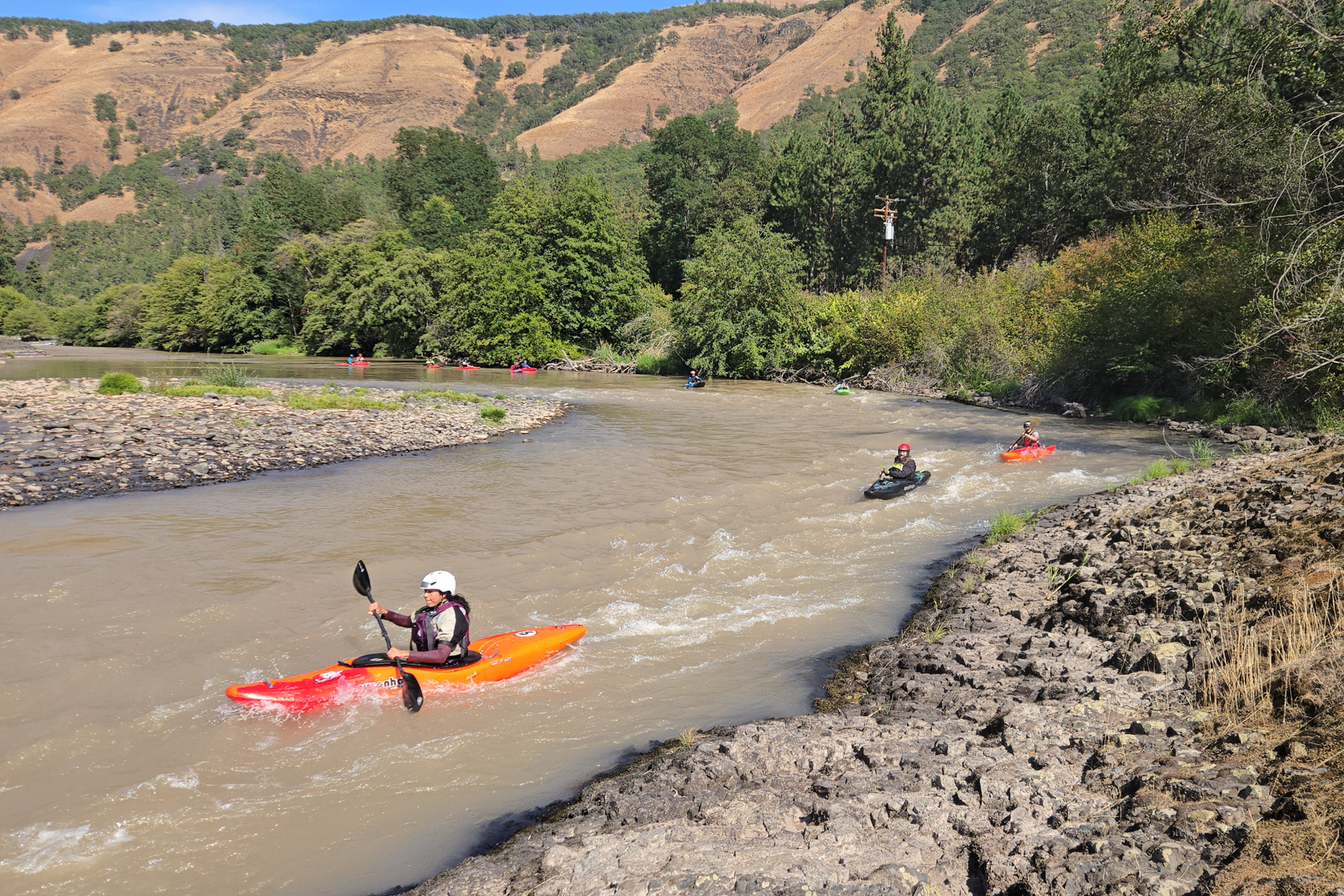
The first rapid down, with the rest of the run to go. The Klickitat and Clackamas Rivers were forgiving, but on the White Salmon, missing the intended line or finding a strange eddy could mean an imminent, cold swim for a new paddler. But it’s all part of the process.
As soon as someone flipped, they were helped by a volunteer in getting to shore and draining their boat. With a deep breath, they’d sit back in their boat and push off shore to rejoin the group, shaking off the nerves with each paddle stroke.
“One of the women said that something everybody learned about was dealing with fear and finding confidence,” Noah said, who drove from Seattle for the paddle. “I think that was a cool moment to see how much of an impact it had, beyond just learning to kayak.”
After the run, a BBQ celebration for the end of the progression took place at Kallie’s house nearby. Over the meal, the group swapped stories about running rivers and excitedly exchanged numbers to paddle together again. There was a glow in the air, full of possibilities about where a kayak can take someone. Many of the volunteers were seasoned Class IV–V kayakers, but everyone was then happy to make plans paddling easier sections.
It’s here, in the liminal moments of running whitewater, that the community is built.
Months have passed since the progression officially ended but messages from the group chat still ping my phone. There’s always a recent post about discounted gear for sale, free gear up for grabs, or news about a kayaking event to join.
It’s wild to remember how earlier that summer the progression group was just learning how to put on skirts correctly. They’ve since turned into full-blown whitewater kayakers not just excited to paddle, but interested in paying it forward next summer by helping the next cohort learn how to paddle as well.
***
Diversify Whitewater is a nonprofit organization with the mission to expand access to kayaking, rafting, and other paddlesports among Black, Indigenous, People of Color, and other underserved communities. For more information, visit diversifywhitewater.org.
For inquiries specifically about the 2026 Kayak Progression Program, email progression@diversifywhitewater.org.
Guest Contributor Emma Renly likes rivers and the people she finds on it. When she’s not pitching a freelance article to write, you’ll find her looking at soil or working at the local elementary school.