There’s a moment on the flats when everything goes still in your head. You’re standing there, rod in hand, scanning water so clear you can count the blades of turtle grass on the bottom, and the only thing that matters is that weak shadow circling. Maybe it’s a fish, maybe not…
Now imagine the serenity of that moment: you’re standing on a paddleboard, steady wind blowing from your back, line piled around your feet, cooler strapped to the back with lunch and a cold drink… that’s SUP fishing.
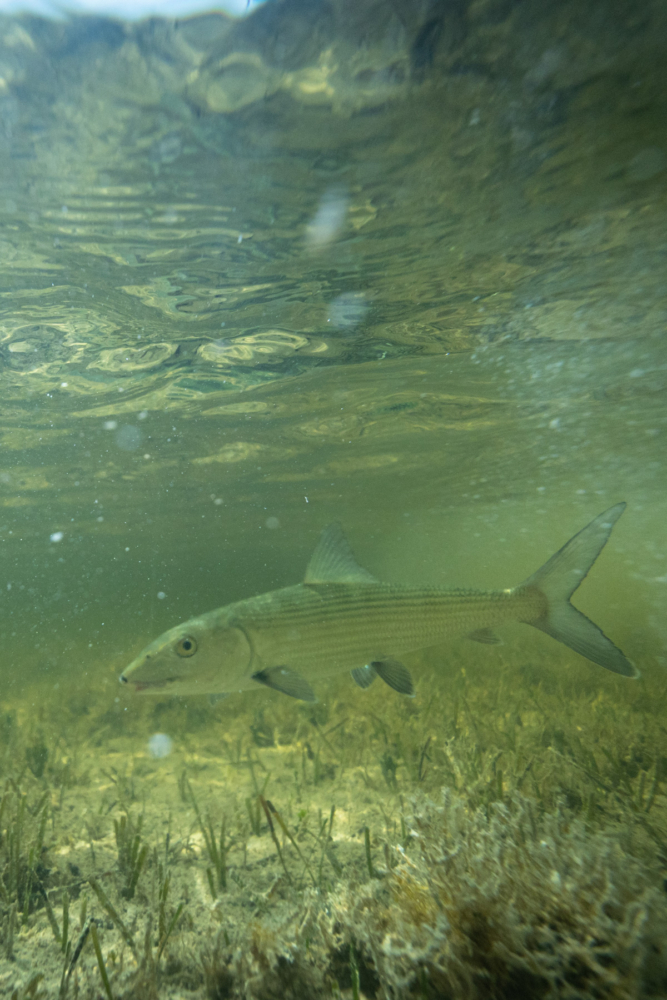
I got to spend a couple days in the northern Bahamas, at a small chain of cays that most people blow right past on their way to some well-trodden destination. There’s a small “creek” that winds through the interior of the island for miles; skinny, wide flats open up between narrow channels some 10 feet deep, others only a couple inches. The fish are jumpy in water that shallow, the way all bonefish are. But they’re there, and they’re not as pressured the way fish in heavily guided destinations tend to get over time.
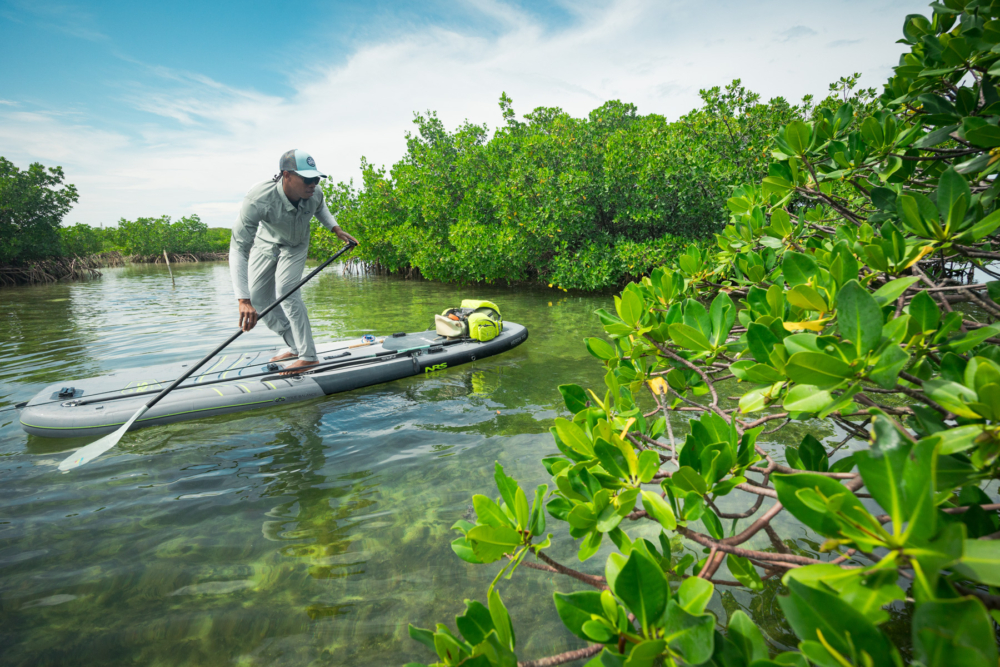
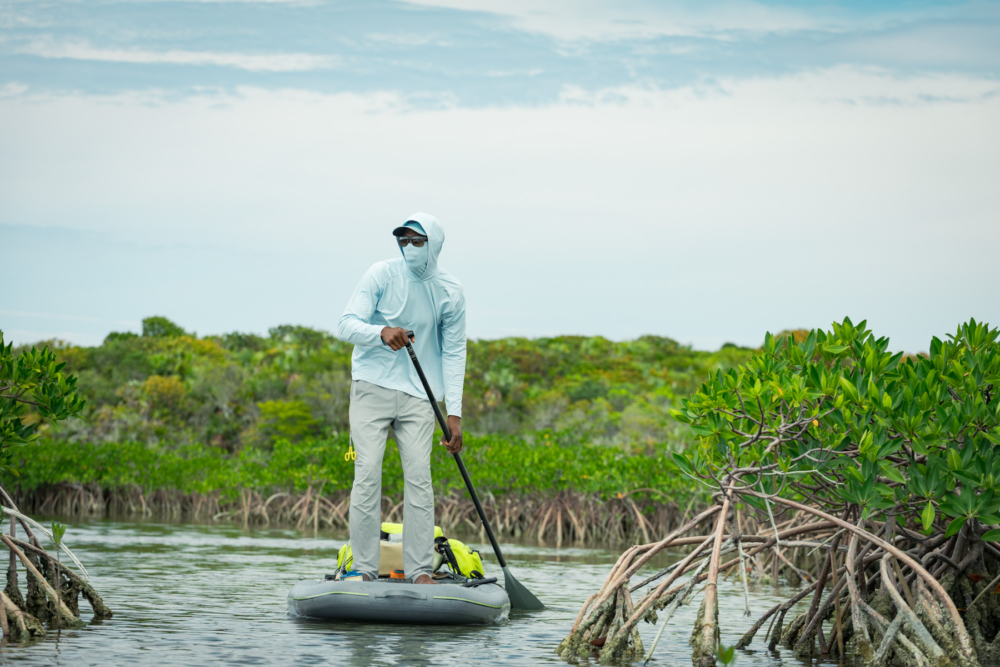
I dragged my Heron down here to see how it would do chasing bonefish, and it didn’t disappoint. Neither did the company I had for the day. LJ, a young but long-time flats guide, had a day off so he joined me to see how this rig would do out in the creek. Usually on a skiff drafting several inches, LJ was quickly getting into zones so skinny the Heron’s Grass Fin was leaving streaks in the sand.
This is the practical case for a SUP on the flats. A skiff, even a well-poled one, pushes water and casts a shadow. Bonefish in a few inches of water notice both. A paddleboard at slow speed moves across three inches of flat with almost no disturbance. You’re elevated enough to see fish at a reasonable distance. And you’re quiet in a way that’s genuinely useful when the fish are so close and the water is calm and clear. Sometimes we got too close and could even strip line to make a cast.
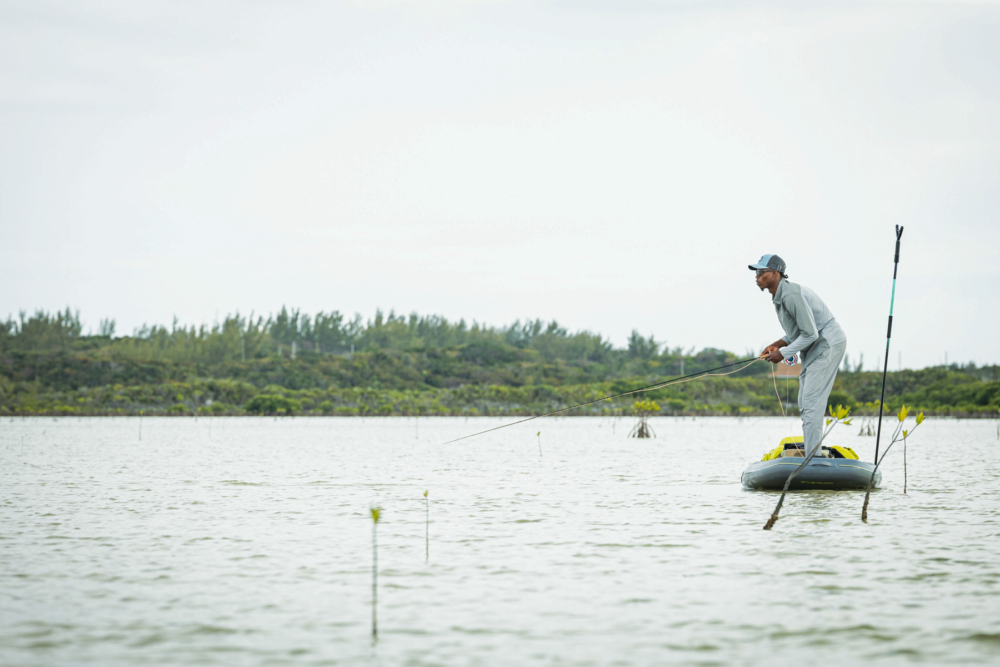
The trade-off is that your platform moves with you, so developing some strategies once you see a fish is super important. We ended up using a “sandspear,” basically a short pole to push into the sand and anchor the SUP quickly and quietly. After some practice—and some failed attempts—we had it dialed in and we started getting some proper shots on cruising fish.
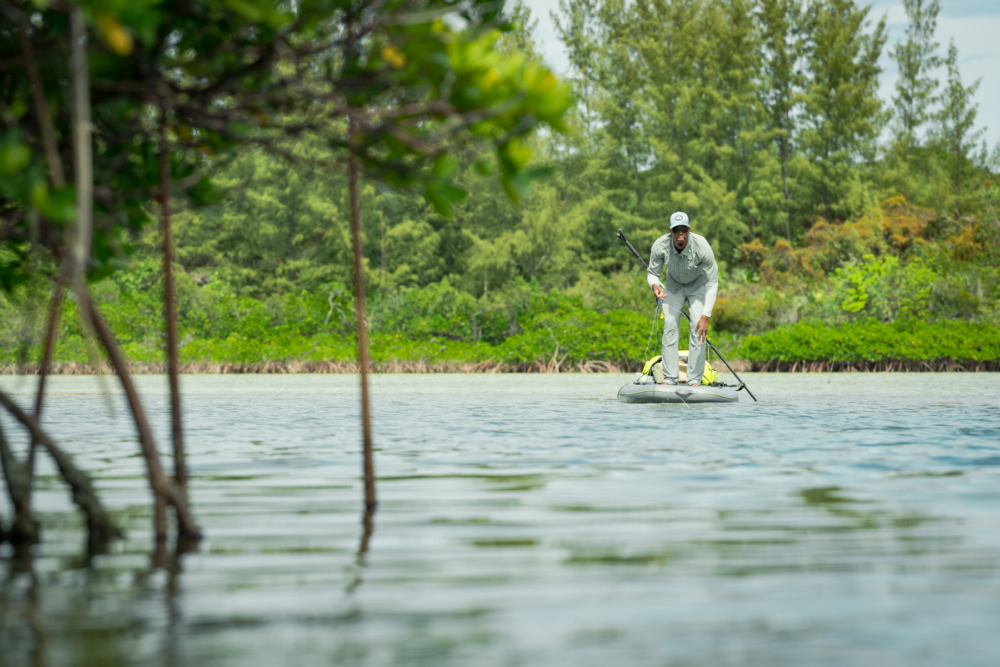
Casting a fly rod from a paddleboard will identify problems in your casting stroke pretty quickly. You can’t brace against anything. Your weight shifts, the board shifts. If your cast is tense or rushed, you feel it. Thankfully I didn’t need to make any long shots, and LJ takes casting to another level.
This creek we were working through gets fished by some guides, LJ noted, but those skiffs can’t get into it except on those big tides. Today the tides were meager at best, keeping boats out and letting us really test how shallow a Heron can go, and wow—it can get into some skinny water.
Using the Grass Fin, the Heron drafts about three inches of water. If you stand up by the bow you can work through probably two inches or a little less with no problem, weighing more than 180 lbs. The first fish I caught was happily tailing way in the back of some flat in three inches of water. It had no idea I was around; after a few sloppy shots I was able to tease a shrimp into the feeding zone.
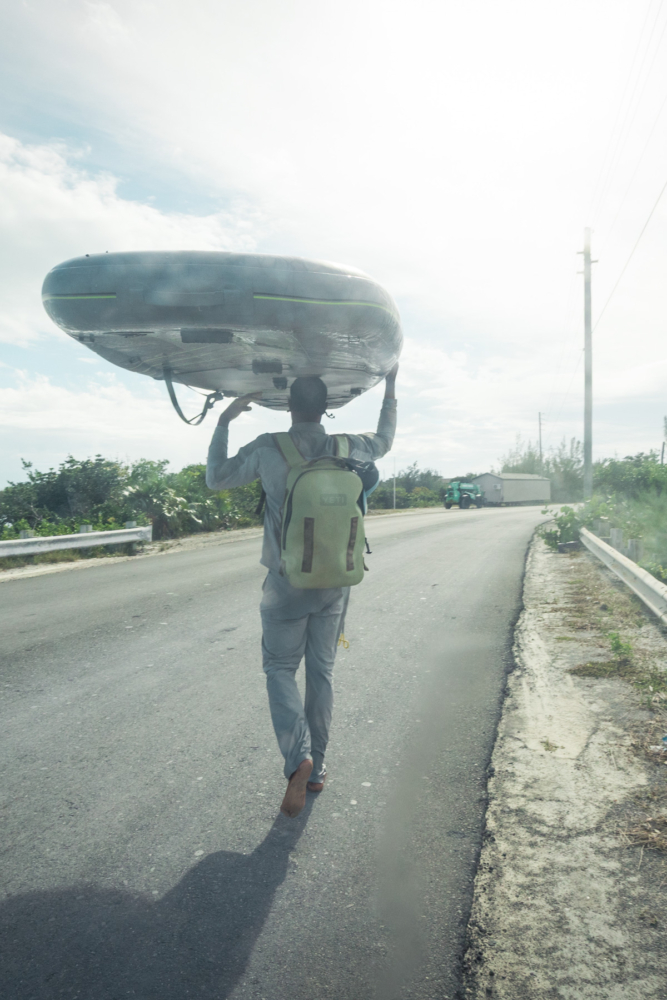
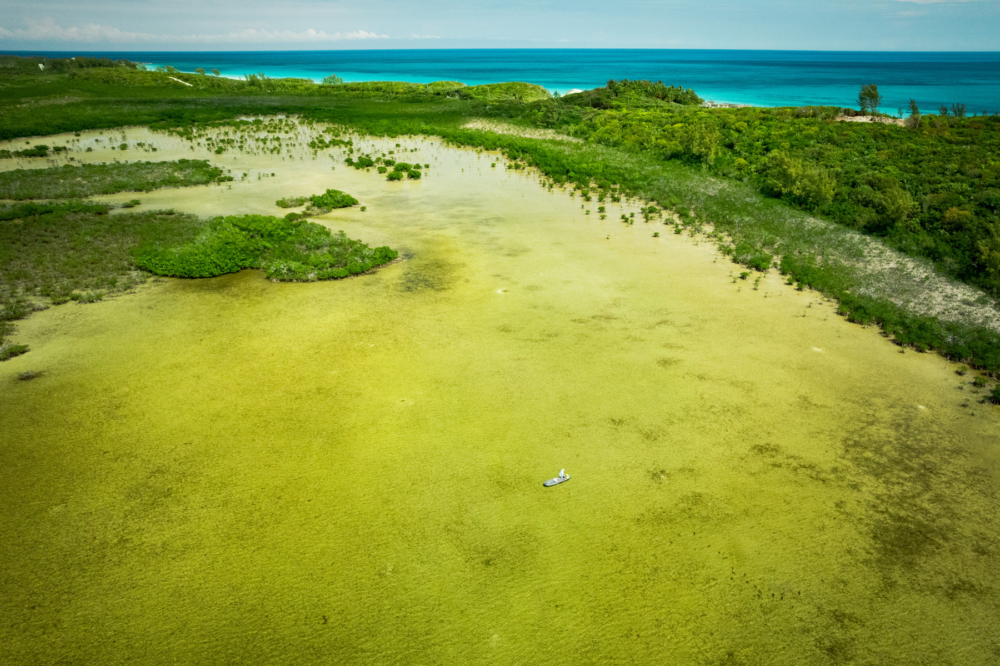
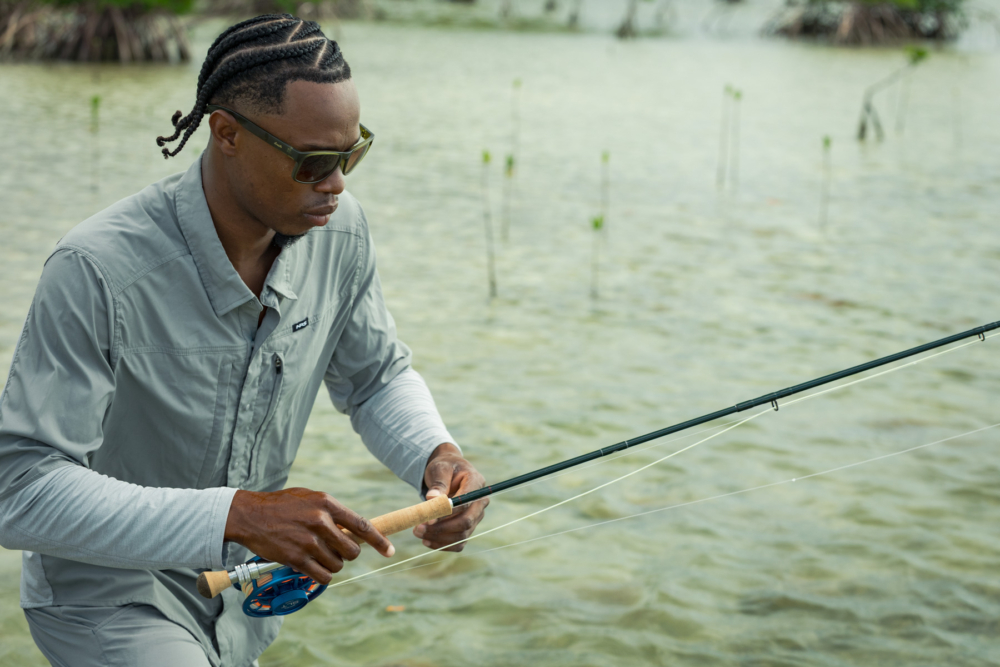
The wild part of floating flats on a SUP is how close fish will get. If you’re not paying attention or you’re looking the wrong way while sliding along, a big bone will take off with a swirl and a splash, spiking your heartrate for a few minutes and probably setting off a string of random curses.
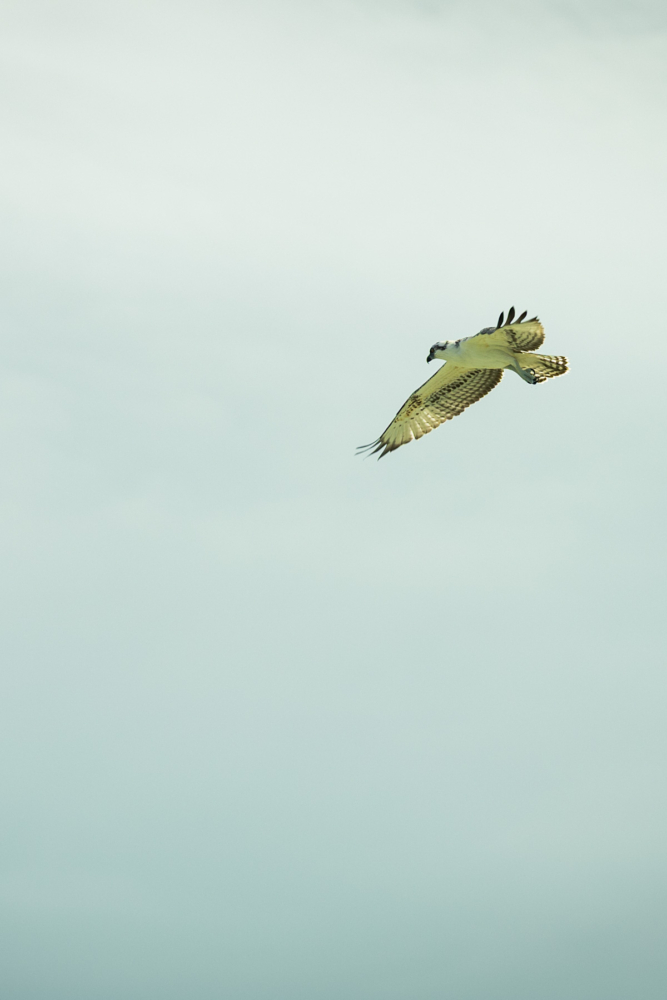
Beyond bonefish, you get to sneak up on all the other life in the flats: rays, sharks, mangrove snapper, turtles and clouds of baitfish minding their own business. It’s truly mesmerizing how smooth and subtle it is traveling on a SUP in the flats. Both days we had light winds at our backs in the morning so we moved truly effortlessly for miles, deep into the creek’s farthest reaches.
Eventually we made it to the end where the mangroves got thicker and the water too shallow even for our SUPs, but by then we had hooked enough fish to float for a bit, have lunch and enjoy a cold Kalik.
Most days after lunch the wind picks up and today was no different; not enough to make it unmanageable but enough to make us earn our fishing. Turning south, we put our faces to the wind and paddled for a few miles until we got into some more sheltered zones and stripped out some line, rested and waited for some fish to commute through. LJ staked his board out and threw to a few fish, all of them snubbing him and his fly choice, but they kept meandering and feeding. A quick fly change and a solid long-distance cast put the fly close enough to get a grab.
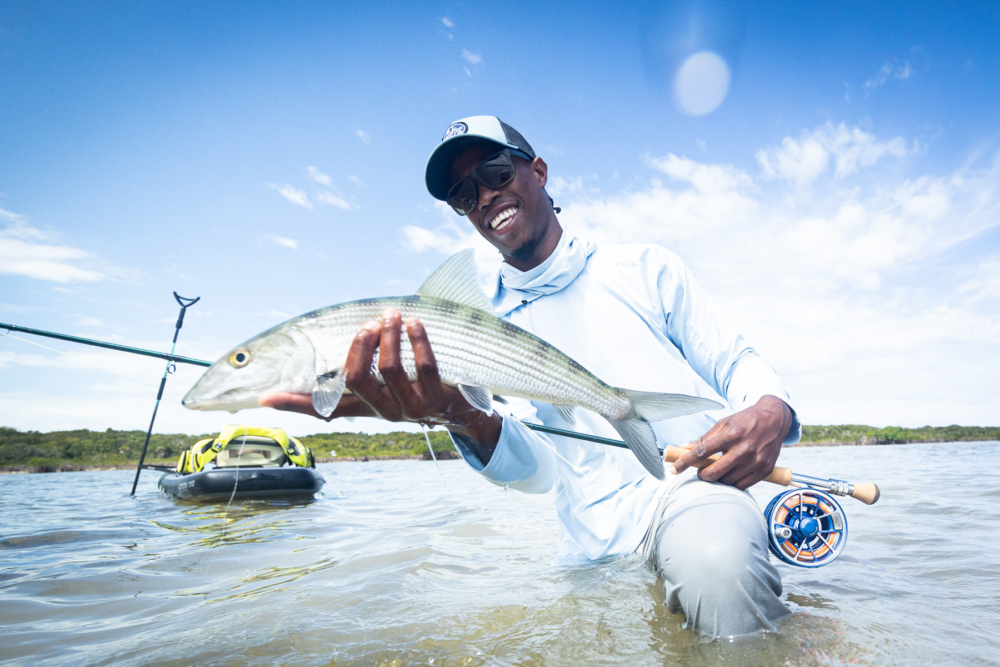
The rest of the story is why people stand on tropical flats in the heat and get frustrated when fish refuse to eat, or scuttle at every well-placed cast. The fish ate, turned and ran, the line came tight, and another big smile shot across LJ’s face as the backing was peeling off the reel. It was a perfectly ordinary bonefish fight by most measures—maybe 200 feet of line out at the peak of it, a few good runs, and a slow recovery. Nothing record-setting. Just a healthy wild bonefish doing what bonefish do—make us smile.
What I keep coming back to is how uncrowded it feels. Not just the water, but the whole experience. There’s no one telling you which flat to fish or what fly to throw. You read the tide, pick a direction, and go. Some mornings you find fish quickly. Other mornings you spend two hours paddling beautiful empty water, and that’s fine too. The place has a pace to it that’s easy to settle into.
The SUP fits that pace. Slow and quiet, covering water without rushing it. You see things from a board that you’d miss from a boat: small nervous water, single fish pushing along a grass edge, the shadow of a tail just barely breaking the surface.
You’re close to the water in a way that feels right out there. There’s something about finding your own fish on your own board on water you navigated yourself that sits differently at the end of the day. On the other hand, all fishing takes some effort and failure, even more so in new places and for species you don’t regularly chase, then add all that to being on a SUP. It’s a challenge, but most fly anglers enjoy a good challenge.
If you’re heading to the Bahamas to fish, connect with some local guides or lodges and find out how you can get on some water that doesn’t impact their livelihood or break any rules or customs in the area. Most of the time SUPs don’t overlap on the water that gets guided, but being proactive and courteous goes a long way to making it a great day out.
The great thing about this creek was that it was a pretty straightforward location for traveling, no real way of getting lost out there, perfect for someone new to the area. I also had LJ, a great local guide on his day off to share the water with. And for me, having the right person to fish with is the most important part of the day.
Have some charts, food, water and some way to get in touch with friends or locals in case things go sideways out there. For me, the highlights are being in places miles from any other boats, and figuring out the tides, currents and flies, all the while balancing on a couple inches of air.
***
Guest contributor Joe Klementovich is a freelance photographer happiest near any kind of water. Not too many years into an engineering career he realized he would rather be on the bow of a boat or knee-deep in a mountain stream than sitting in a cubicle, so he dove into photography. Over the years he has worked for The New York Times, The Wall Street Journal, Adventure Journal and even The Fly Fish Journal on occasion. Joe keeps his work interesting by taking on projects that run the gamut from Atlantic salmon restoration in Maine to centuries-old barns being restored and rebuilt, with a fair bit of chasing fins out on the water. You can find him living in the mountains of New Hampshire not far from a clear, cold brook trout stream. Dive into more of his work at www.klementovichphoto.com.