Gene Crosby is standing on a bridge at a rest stop along Maine’s Highway 4, explaining what he’s waiting for at 9 a.m. on a Saturday in mid-April. “I heard about these lunatics, and I was like, ‘no way,’” he says. “We have to go see that.”
Then, with wide eyes, Gene interrupts himself: “Oh, someone just came down. Holy shit! Oh, that is awesome. Oh shit. Wow. That’s crazy!”
It’s hard to describe the timbre of his voice, but the feelings are awe, wonder, and joy. The time I’ve spent on rivers has been in pursuit of just those emotions. To see them so easily and freely shared feels like cheating. Life can really be this fun?
To that, the organizers of the waterfall kayak race, known as Smalls to the Wall, would likely answer, “Yes. As long as you set up enough safety.”
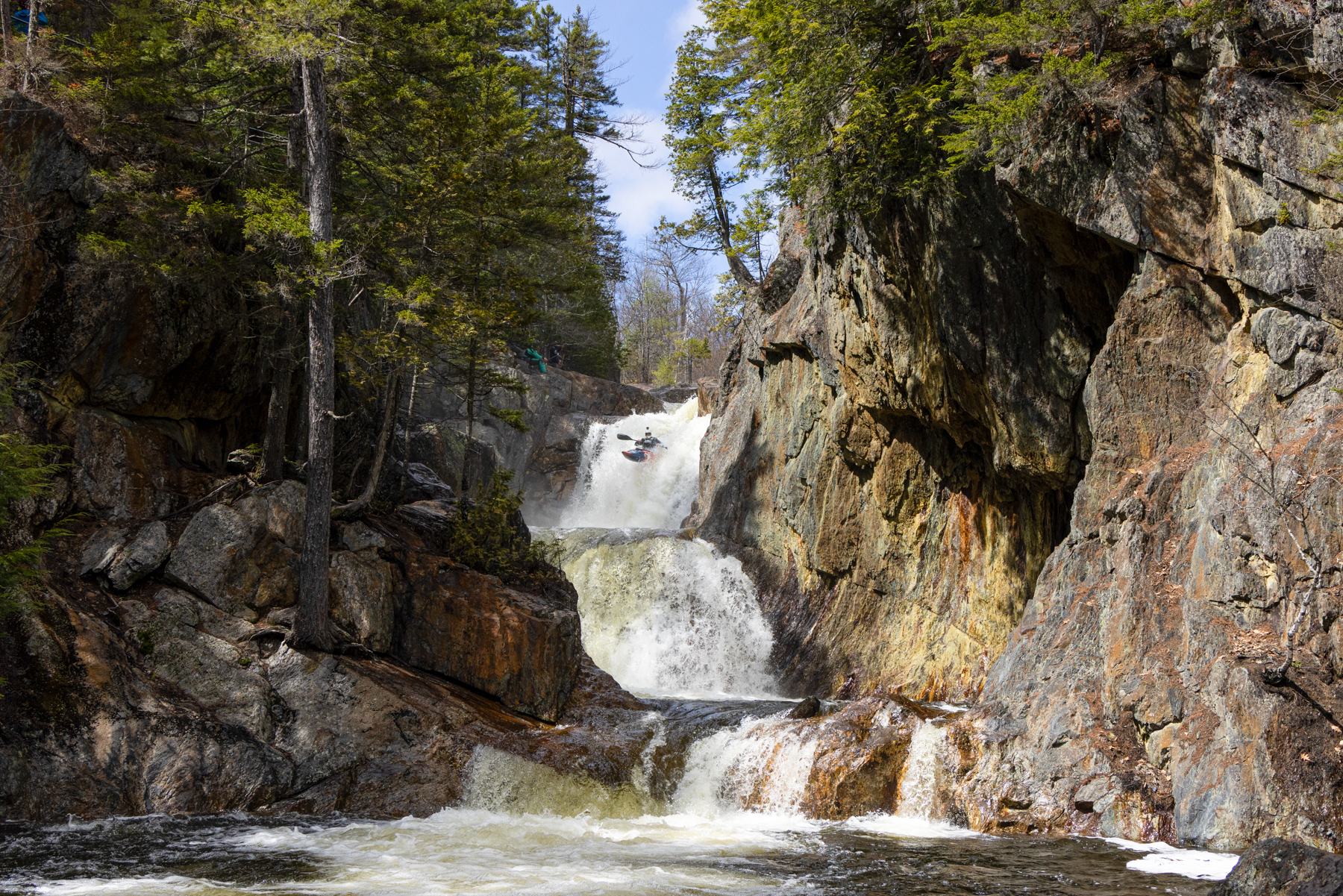
Gene is facing Smalls Falls, which, from his vantage point, looks like a three-tiered cascade crowned by a 20-foot waterfall and quickly followed by a 14-foot drop and 5-foot ledge. It’s an eye-popping sight even without the candy-colored boats plunging down amid the spray. And this is just the warm-up. Paddlers are running laps of the course, which includes four falls in total, to prepare for the 1 p.m. race. Since the Sandy is undammed, the event relies on natural water flows. Most competitors haven’t had a chance to run the section since last year, if ever.
It also means that conditions are never guaranteed, a crazy-making detail for organizers Matt Jameson and Alex Horne. “If we could get guaranteed water,” says Matt, “this would be one of the biggest events in the country. There’s nothing like it. It’s so unique to have a race on such a steep creek with such big waterfalls stacked one right after the other. It’s… it’s awesome.”
And, as mentioned, it’s roadside, which makes it a uniquely popular event. “It’s park and huck,” says Taylor Walker, a local paddler, knife-maker, and founder of the Maine Whitewater Championship series. ”Once the race starts, there’s gonna be hundreds of people here. It creates exposure that whitewater kayaking doesn’t have in a lot of places.”
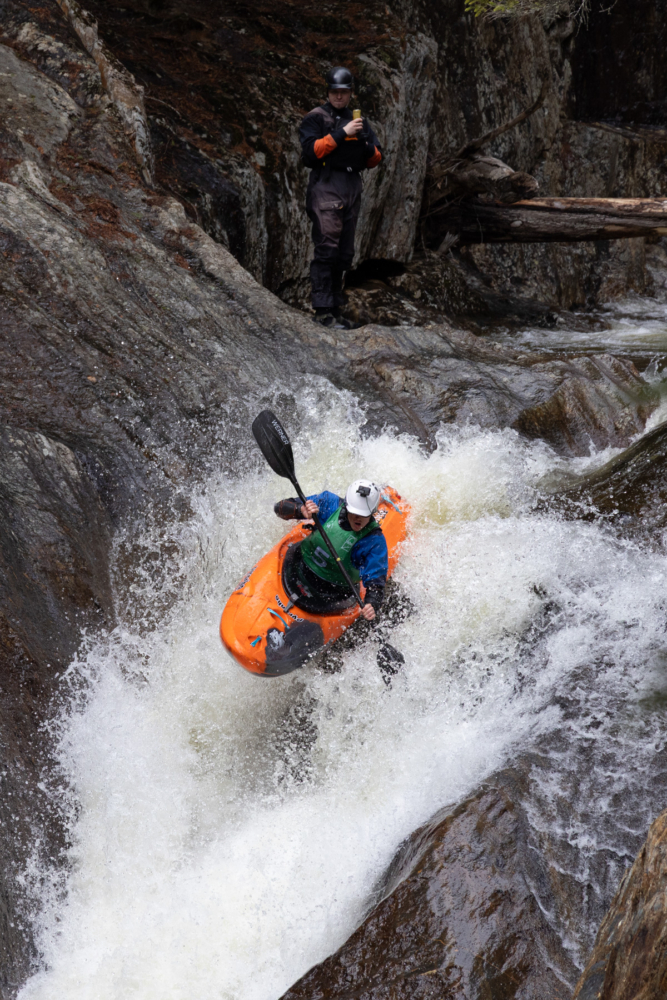
Low flows are a threat to the race, but if they’re too high, there’s another extremely convenient option: Chandler Mill Stream, another thundering cataract separated from Smalls by ~100 feet. Both waterfalls are part of the 400-million-year-old Smalls Falls Formation, a rusty schist outcrop that runs 250 miles southwest from northern Maine to New Hampshire. I navigate the five minute walk between them by following the cheers rising just barely above the sound of rushing water.
Chandler Mills
Chandler is a more forgiving run than Smalls, and more easily managed at higher flows. Today, though, water levels are pretty much perfect. ”We’ve gotten insanely lucky the last four years,” Matt says. They aim for the same weekend every year and hope for the best.
When Smalls is running, Chandler serves as a warm-up for veteran racers and a stepping stone for new ones. “The Chandler side is really like a giant slip-and-slide made outta granite,” explains Taylor. “It’s super friendly. It’s fun. It looks a lot crazier than it is.”
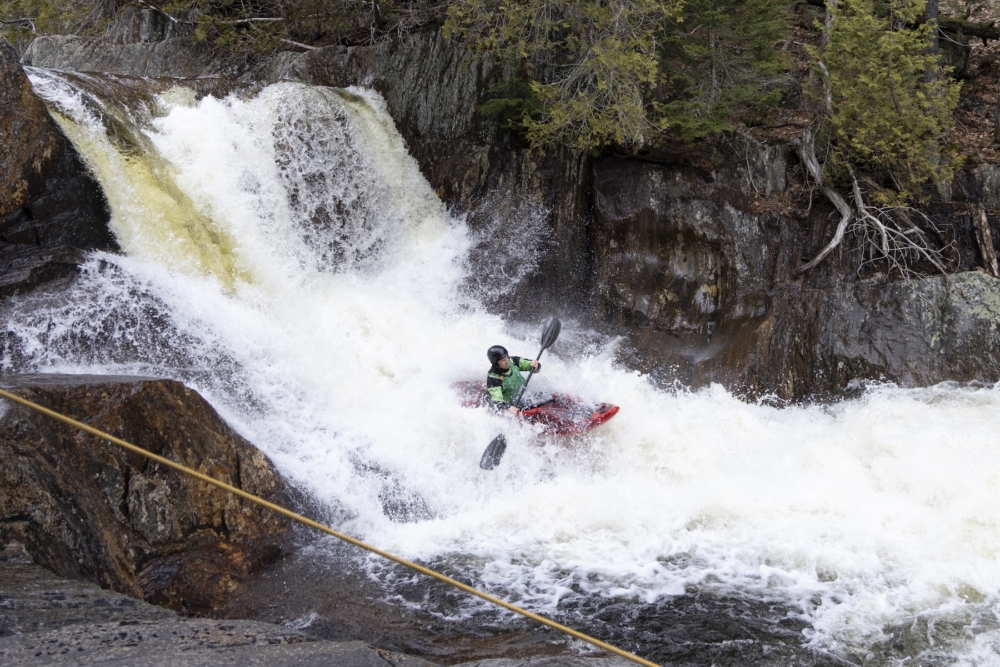
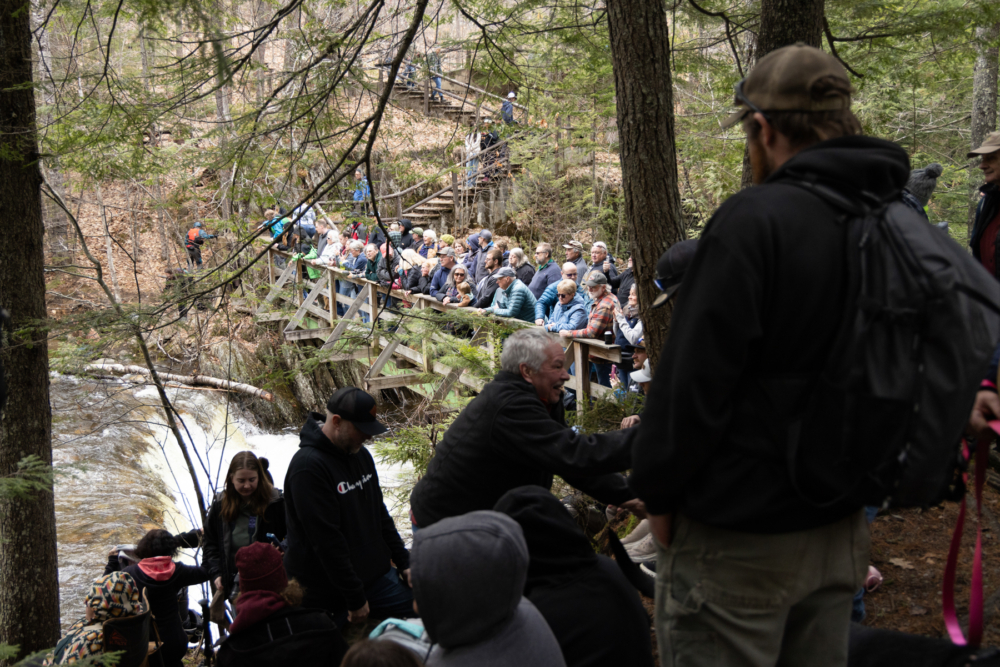
It definitely looks crazy (AW rates it as a Class IV–V), which makes for excellent viewing for the spectators perched along the near edge of the gorge. Matt is across the water on a granite ledge that serves as a starting gate with a walkie talkie. You can just hear him call out the name of each racer and give them a countdown. The crowd seems to corral itself with little direction and muted, Maine-style fanfare. The cheers of encouragement seem loudest for anyone who falters.
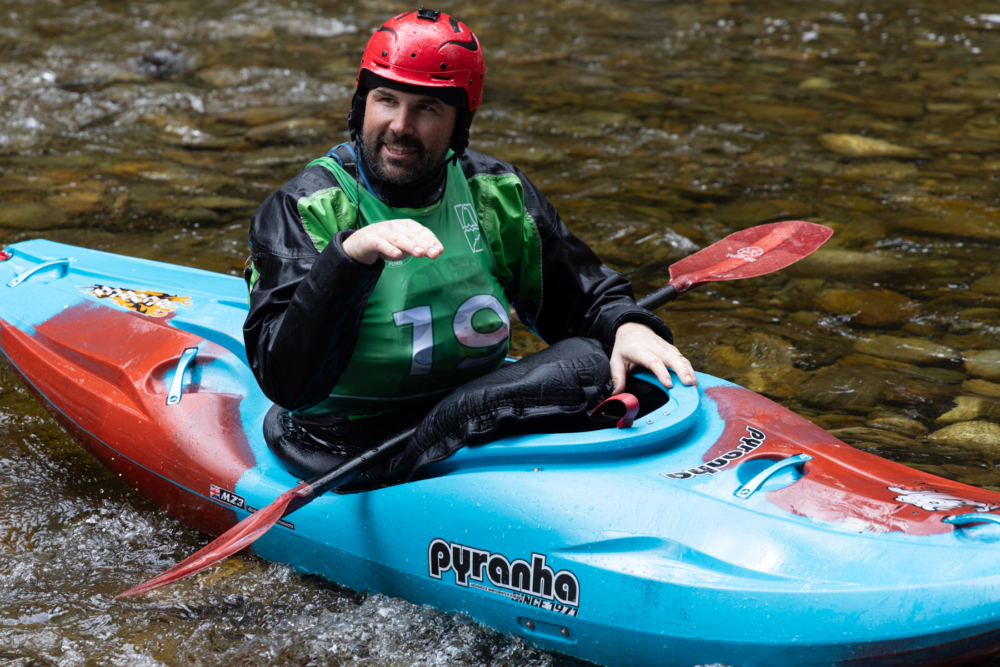
I reach the bottom of the run as Rachel Nieckarz-Thibodeau paddles hard to the finish, a huge grin beneath her helmet. The sole woman in either race, I give her a mental fist pump for representing. While her first run didn’t go to plan, this second one leaves her feeling “exhilarated.”
“I cleaned it,” she says. “So I’m stoked.” Used to big water rivers, steep creek runs are new to Rachel. While Chandler is an exciting victory, Smalls still feels too stout. “ You know, baby steps,” she says. “This is a good starter.”
Then, the primer race is over. I know this because the guy with the clipboard climbs the bank to cross over to the Sandy River Watershed, and Smalls Falls proper.
An Epic Race for the Rest of Us
“ What’s the line?” Taylor parrots my question, “Uh, clean.”
“The fastest time is like 44 seconds or something. It’s a short race. If you make it down right-side up and you were on your line, you’re gonna be fast. And I’ve seen a lot of carnage over these falls, which is great because it’s a friendly place for that to happen, and there’s really good safety. It’s an exciting race.”
That sounds wild to me, so I ask the guy behind it all, Andrew Cooper, just what he was thinking when he founded the race over a decade ago, in 2014.
“I wanted to create an epic kayak race for the rest of us,” Cooper explains. Cooper grew up driving past Smalls Falls, so when he got into kayaking and was looking for new runs, the rest stop with the dramatic waterfall came to mind. “I had no planning or event experience. But, it’s like, well, ‘I think this is doable.’ Roadside access, walking bridge, parking facility kind of in place. You know—whip up a banner and some t-shirts and get some swag.”
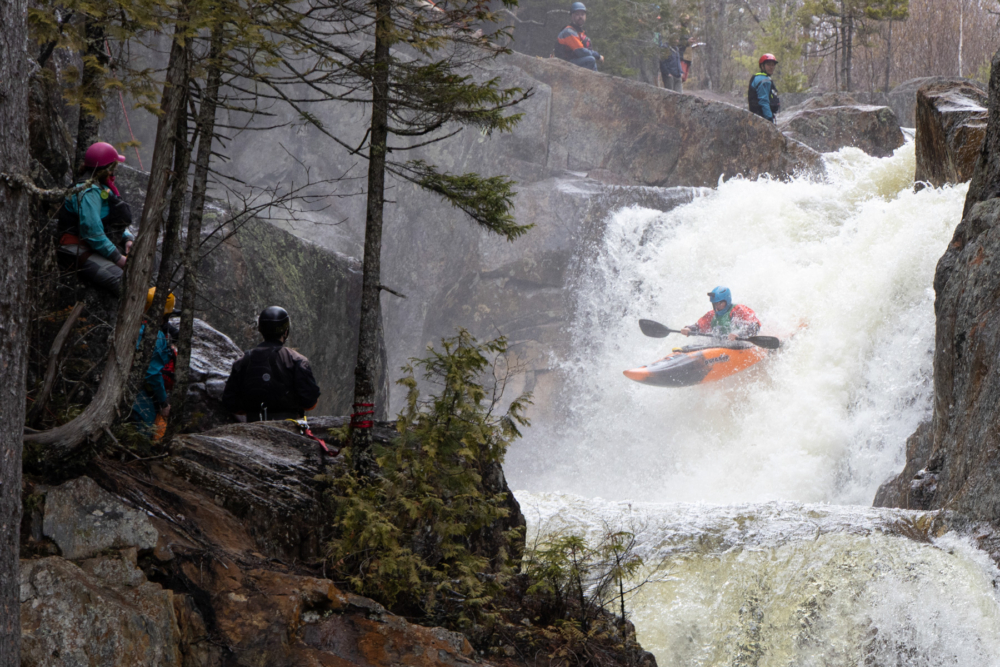
“It’s supposed to give the local crowd a little taste of that extreme race feel. So just, kind of, your hometown little extreme race.” It took a few years to put the pieces together, but then the event took off quickly, with over 20 racers showing up in year two. “The amount of spectators that would show up kind of gave me some positivity there that this thing would last.”
The Race
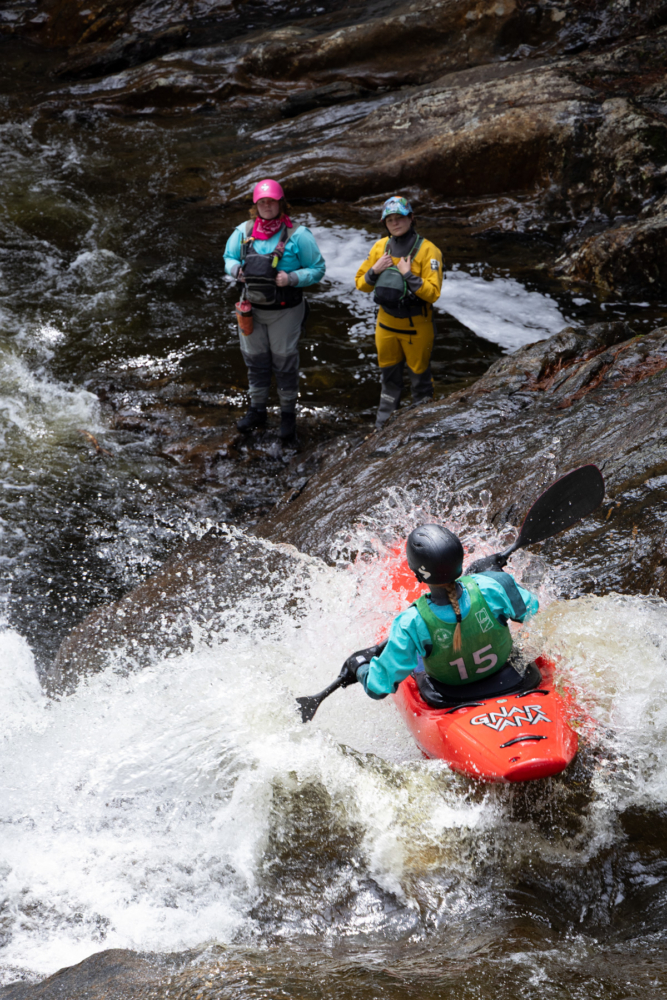
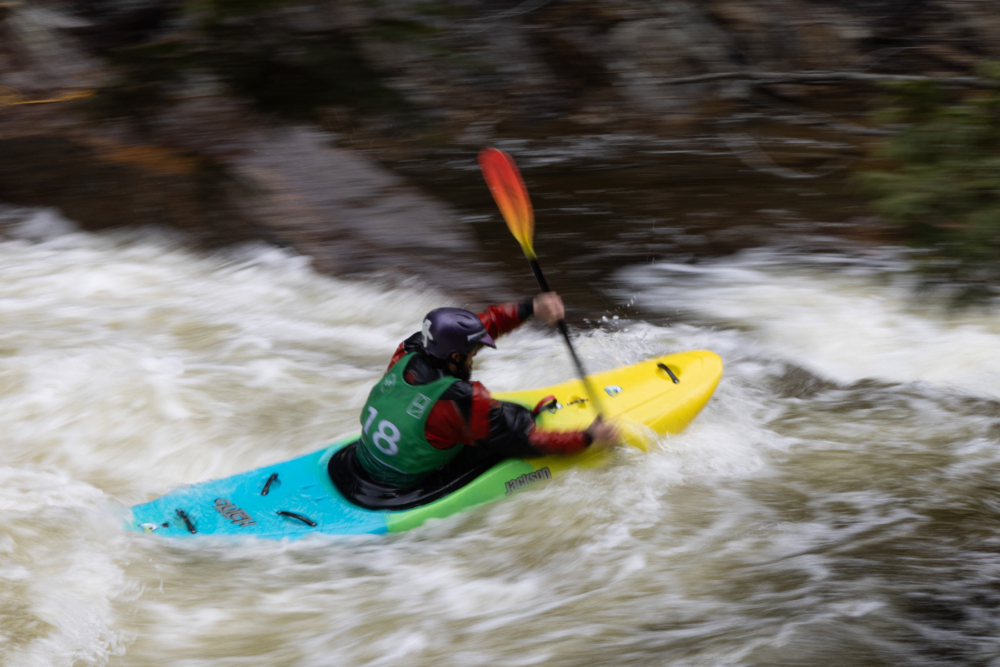
After everyone settles at Smalls, it just starts. This time I stand at the end of the race, wading in the water beneath the falls. Crowds line the bridge and bank. Someone sees the flash of a paddle blade. Here they come.
If there are cheers, I don’t hear them. I’m trying to capture the feeling of watching these athletes do something so extraordinary that it made Gene catch his breath. You’re watching what’s possible in the world, if you decide to take that last big paddle stroke, and launch.
I think David Richard, a longtime attendee, gets to something like the heart of it, saying: “I don’t dare to do something like this. But the little voice says, ‘boy, that looks like fun.’”
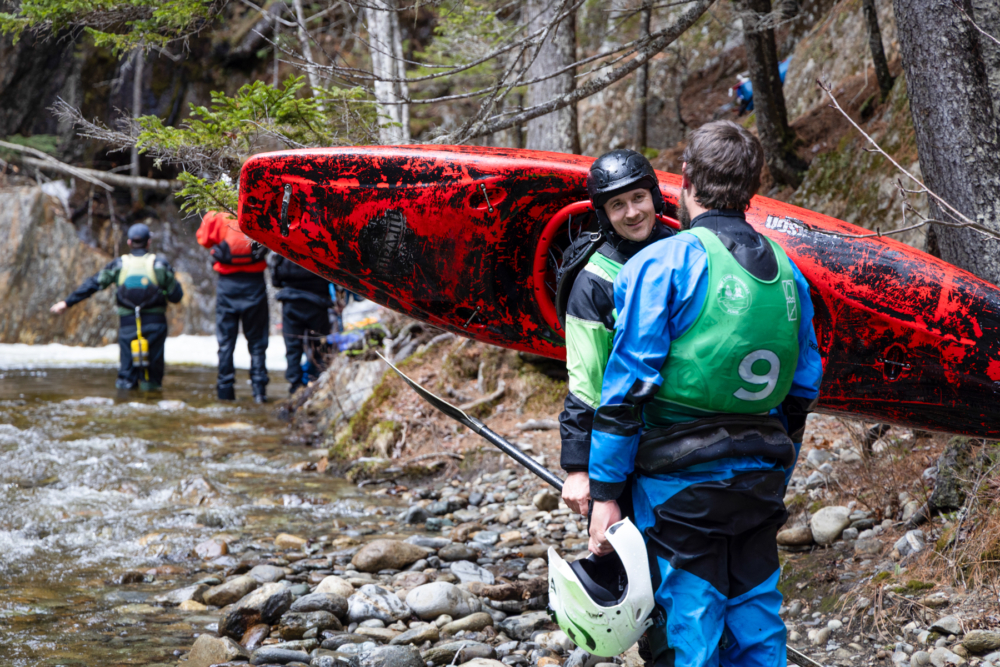
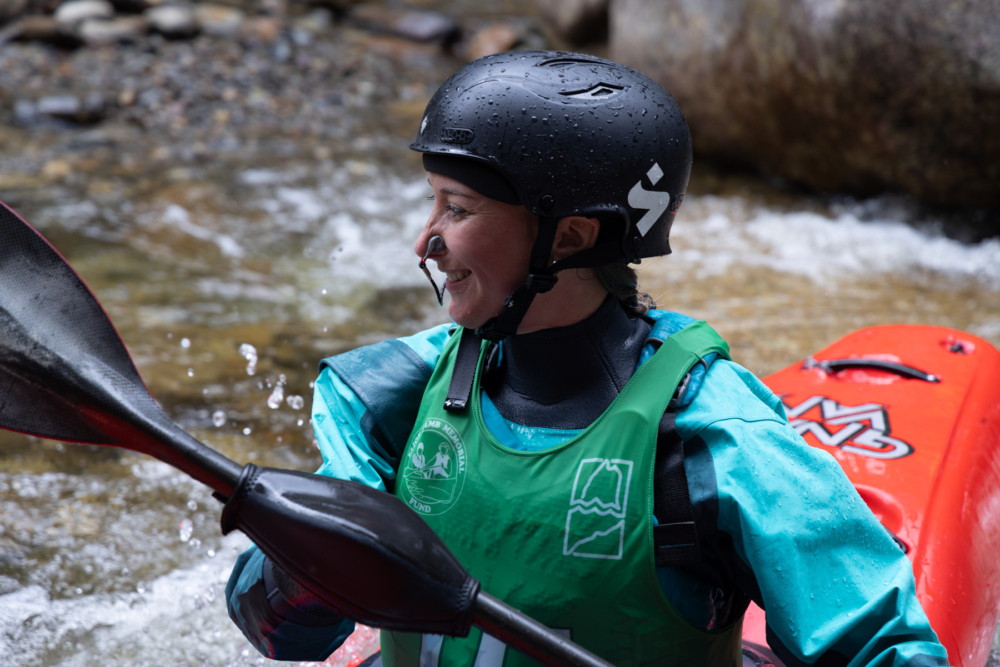
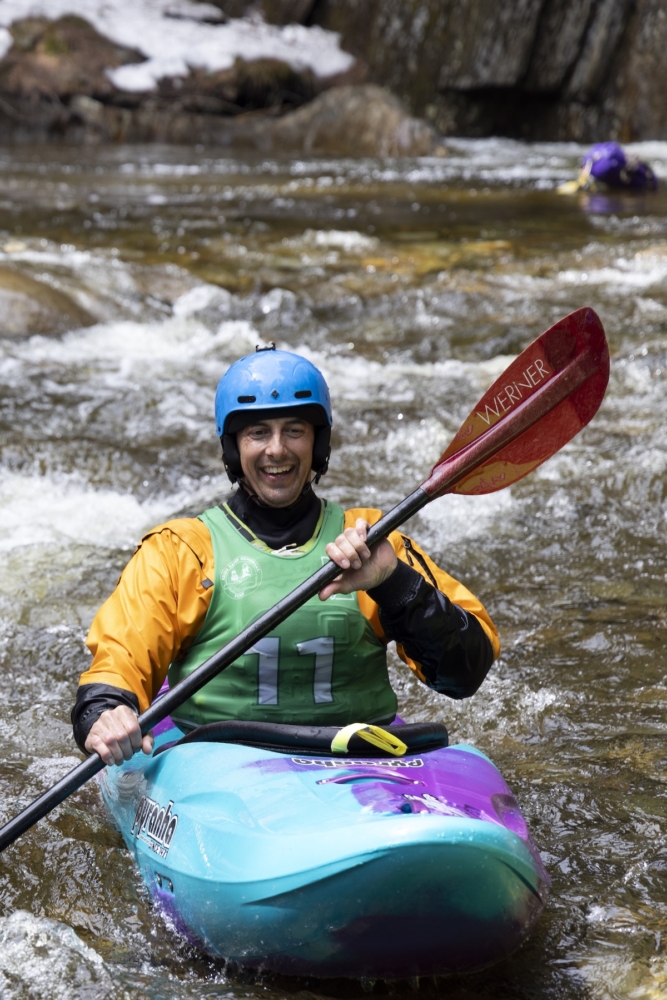
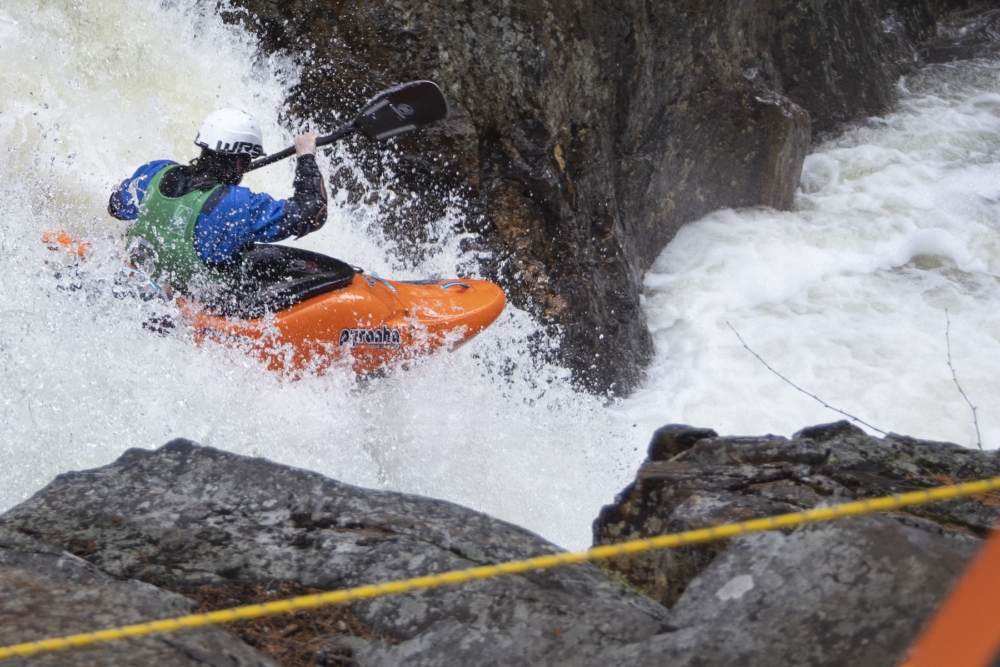
Given the grins I saw on racers’ faces all day, it sure seems to be. But there’s also the buzz of nerves, and the stony expressions I see paddling to the first drop when I hike up to the starting line. “There’s an adrenaline factor, a puzzle factor, you know? Trying to pick the clean line, but a safe line,” says Matt Wolfe, a second-time racer from Pennsylvania.
“I just like getting the jitters, and getting stoked,” says first-time racer Clay Gregg. “And Smalls gets me stoked.” After the race, he explained: “once I got in the start eddy, my jitters went away, and I was locked in.” The jitters seem to sharpen your focus, and your joy.
And then there are the cheers. For some, that’s one of the most unique and memorable draws. “It’s always fun coming down to a little coliseum like this,” says Wolfe, “and all the locals coming out and cheering you on.”
The Young Guns
There’s also the promise of sharing your passion with the next generation. “Maine’s always had this really cool culture of kind of passing the sport on,” says Taylor, “and you really see it at this venue. Some of these guys were, I don’t know, 14 years old when they started showing up and they’re throwing down and competing.”
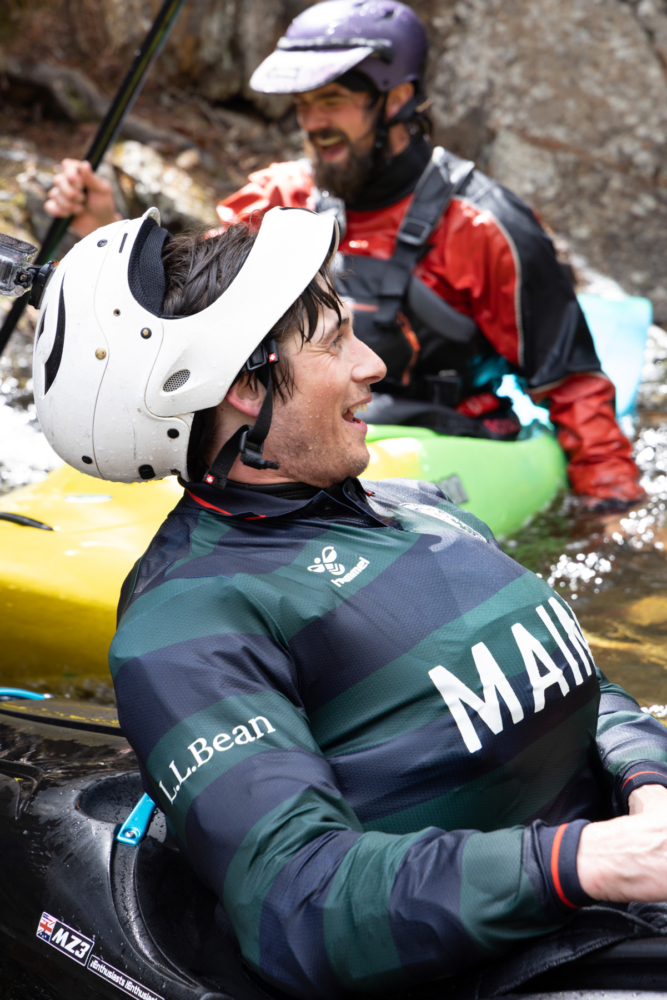
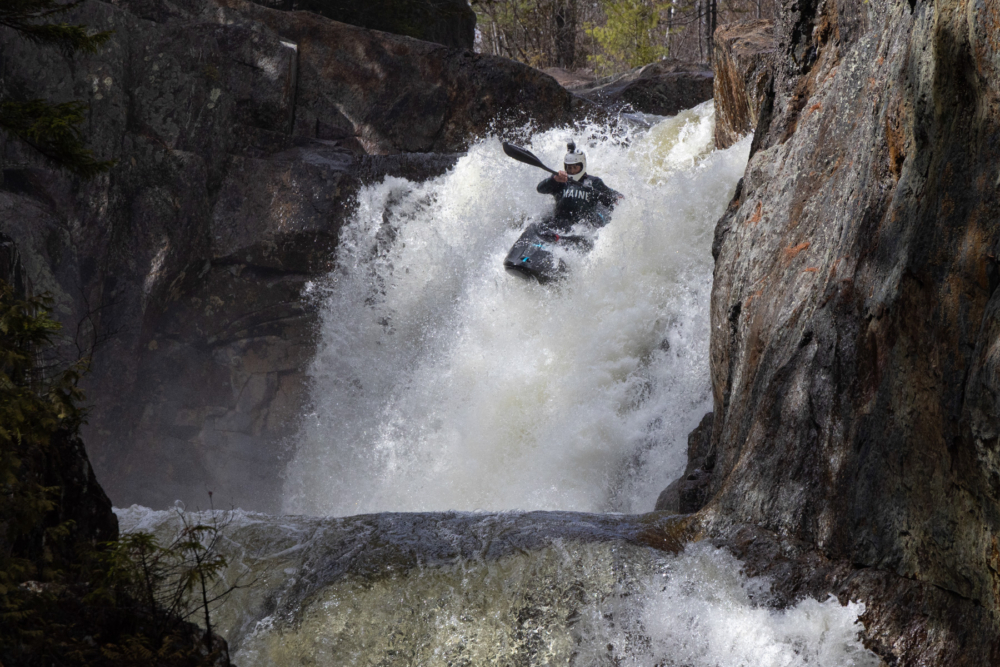
Miles Pulieo, who won both races, has been running the waterfall since 2006 and the race since the beginning. This year he helped shepherd two younger members of the field, Clay and Avery Dicentes—who placed second in the Chandler Mills Race—into the fray. “ I just bring ‘em around to some of these runs to pass the information along. And then, it’s like, you have more boating partners and they’re really rippers,” he explains. “So it’s fun.”
Maine Woods and Waters
“I think Maine is just a really special place in general,” says Taylor. “As boaters, we’re really in tune with the water, and we have a really great appreciation for the outdoors. And this is a hunting, fishing, outdoor recreation, tourism community. So it’s just cool to kind of see that all come together and culminate in a sport like whitewater kayaking on Smalls Falls.”
And then it’s over. As we climb the stairs to the parking lot to head to Sarge’s for food and awards, I pass Matt and ask him how the day went. “Phenomenal,” he says. “Thumbs up. Two thumbs up. We even had the perfect amount of rescue. Perfect amount of excitement. Just enough for the people to go home and tell some stories about watching a kayaker-less kayak come over the falls. He made it out fine, and rescue got to show off why they’re here. So, yeah, it’s perfect.”
***
L. Clark Tate is a writer, audio producer, photographer, documentarian and registered Maine sea kayaking guide. Her work ranges from offshore windmills and white sharks to artists and adventurers who sacrifice for a meaningful life. Says Clark, “I can’t get enough of our world or the people in it and seek to share that sense of wonder in my work.” Find more of her work at lclarktate.com.