Chugg-ugg-ugg. My car’s engine sputtered and died. I’d just stalled out my new (to me) Ford Escape as I attempted a ridiculously ambitious parallel parking job on the steep streets of Seattle’s Capitol Hill neighborhood. But my new-to-manual-driving embarrassment faded as I entered the building that I’d braved the Seattle hills and traffic to visit. Light filtered through the skylights, illuminating high ceilings with exposed beams and warm wooden floors. And in every direction, row upon row of cedar shelves were filled with hundreds of thousands of books. Elliot Bay Books is a book lover’s paradise.
I made my way upstairs to the outdoor adventure section with one title in mind. There it is! The glossy hardcover featured a woman in a red kayak entering a rapid. Bold red letters announced the title. AMAZON WOMAN by Darcy Gaechter.

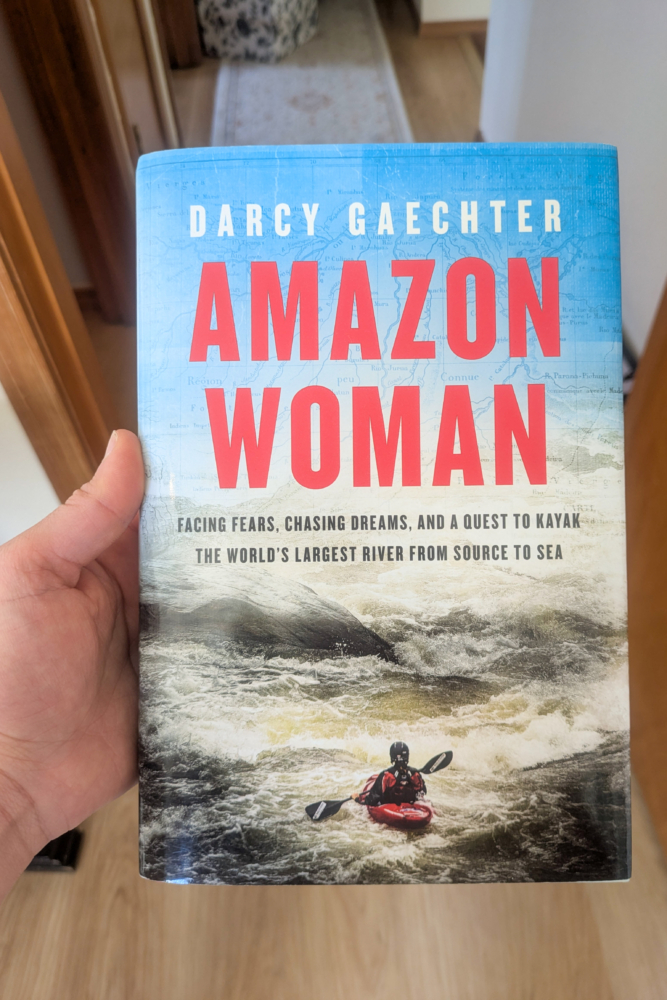
Four days later, I turned the last page of Darcy’s book. Chronicling the first source-to-sea descent of the Amazon River, Darcy describes the adventures and misadventures of paddling massive class V rapids, navigating complicated crew dynamics, passing through territories of hostile people, unending flatwater, and her own internal journey and challenges of following an unconventional life path in pursuit of kayak guiding and expeditions around the world.
“Denisa, you have to read this!”
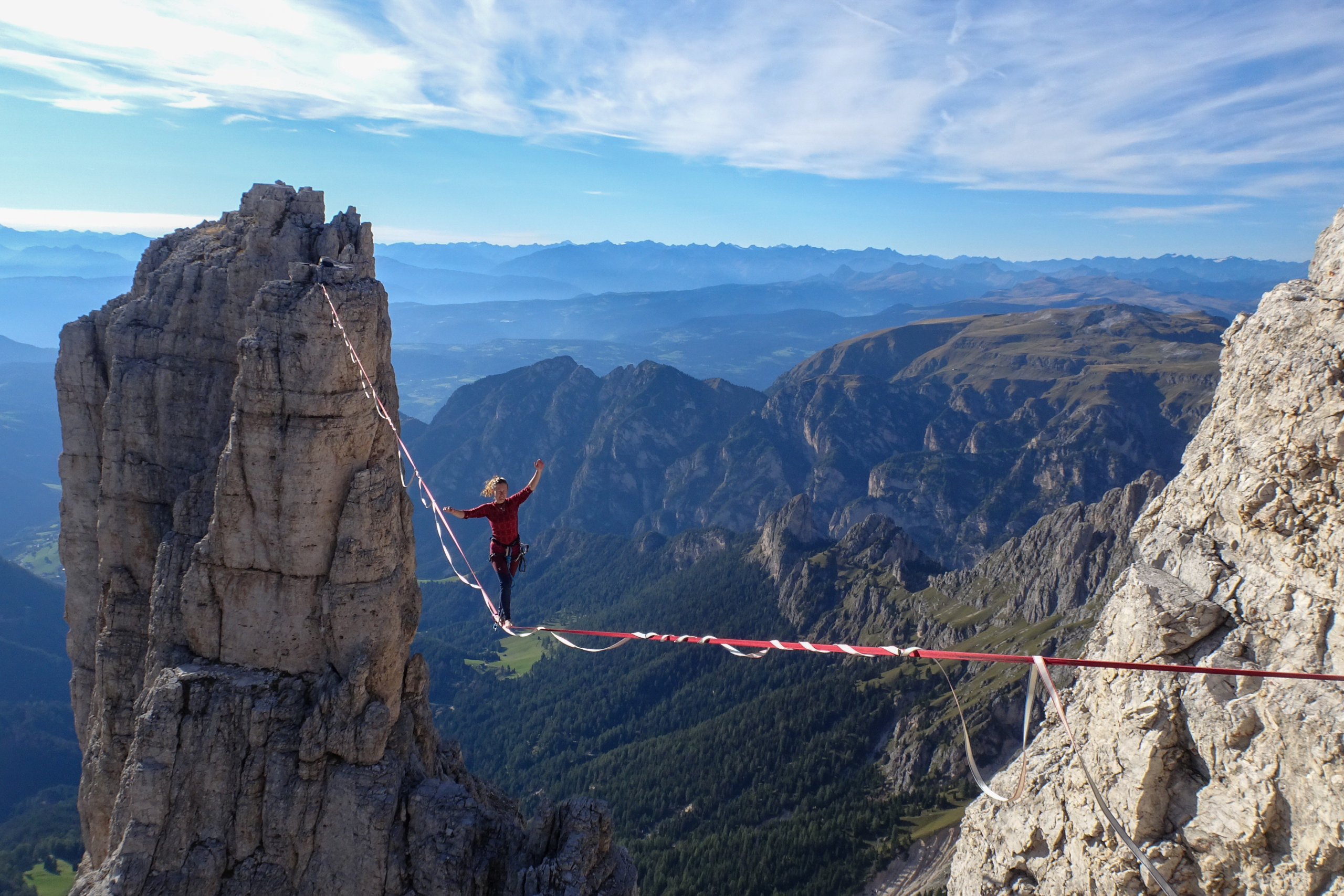
My work-from-home buddy Denisa and I had met in college years before, in the town of Bellingham, an hour north of Seattle. After graduating, I moved to her home country, the Czech Republic, where we became fast friends and spent countless days camping, hiking, and climbing in the Czech sandstone towers and the Tatry mountain range bordering Poland.
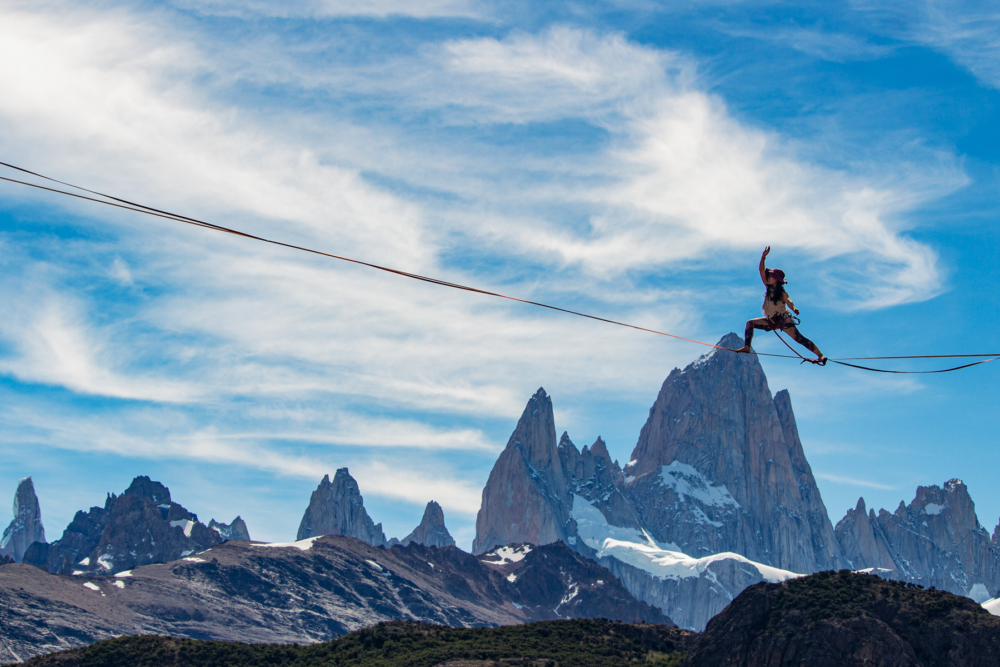
When COVID rocked the world, we each found a different outdoor sport in the early pandemic days. Denisa started slacklining, soon taking the skills she practiced in the park to new heights– rigging lines across vast mountain abysses. I moved back to the States and unexpectedly found my way to a sport I hadn’t known existed when a chance encounter with friends of a friend introduced me to the world of whitewater kayaking. A few lake rolling sessions and one lap down the river in a ducky later, and I was hooked.
That winter, I swam my way through almost every rapid on the Snoqualmie River as I slowly gained confidence and competence. I spent all of my money on boats, a dry suit, a helmet, a PFD, and gear to stay warm in the cold water. Every weekend, I cleared my schedule to practice catching eddies, ferries, and combat rolls. Kayaking even invaded my sleep, and I practiced rolling in my dreams, visualizing the movement that would keep me from swimming. I obsessively checked the rain forecast and river gauges, hoping for optimal flows.
I consumed a steady stream of kayaking content, watching videos and reading Instagram posts and blog posts about faraway kayak trips. But the bookworm in me wanted to read a full story, with a paper book in my hands. When I found Darcy’s book, I devoured it. And I wanted to read more. A quick Google search told me there were only a handful of published personal narratives about whitewater kayaking, and Darcy’s was the only one I could find written by a woman.
In Vancouver, after finishing Amazon Woman, I turned to Denisa. “There are so few kayaking books!” She laughed and retorted, “Well, there are NONE about highlining published in English.”
In that studio apartment—which was so tiny we did yoga in the closet and Denisa taught her university classes from the bathroom—we asked, Should we just write our own?
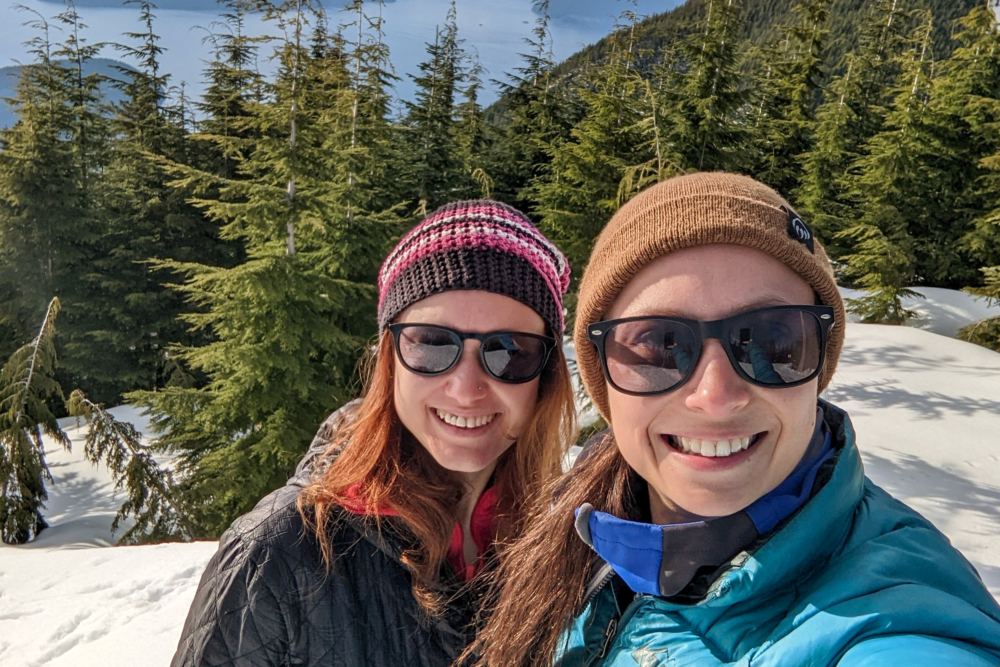
It was an exciting prospect, but still I hesitated. Who were we to share our stories? Neither of us were experts, we had only started our respective sports a year or so before. We had “regular” jobs. I was not a sponsored athlete, I had not completed an epic expedition, established a first descent, or paddled the hardest level of whitewater.
On the other hand, why not? Statistically, most people who do outdoor sports aren’t doing them at the highest level. Our personal journeys could be more representative of the (many) people who practice these sports for reasons other than achievement at the top level. If anything, maybe something in our personal narratives would resonate with other women facing similar challenges.
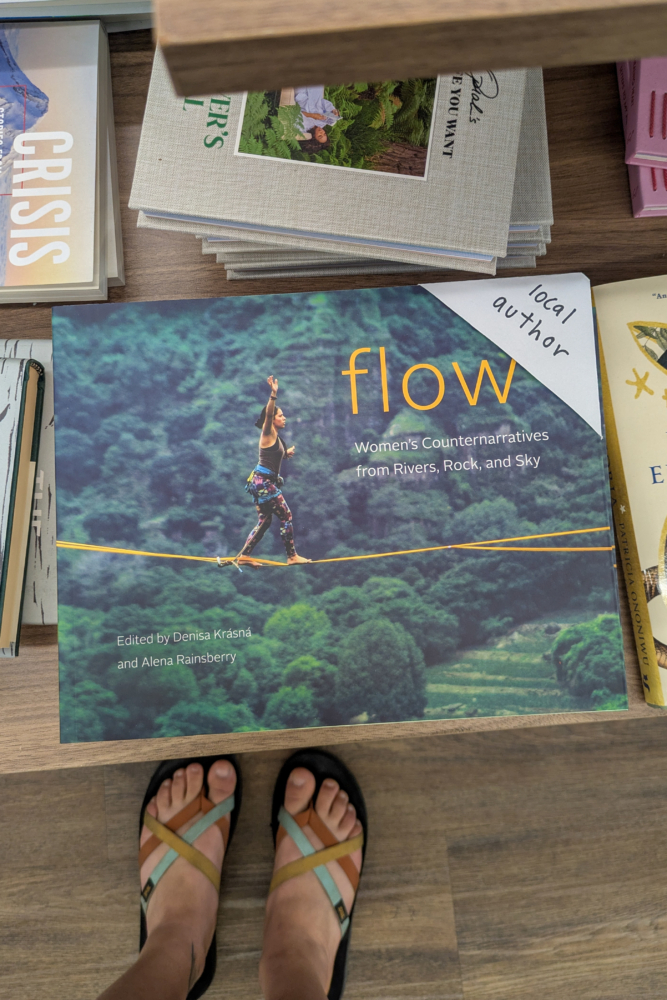
“We want to read more stories from women adventurers. We also crave narratives that go beyond the conventional tales of reaching summits or conquering projects. While those achievements are significant, for many people they are not the main motivations for pursuing outdoor activities. We yearn for stories that illuminate the diverse facets of adventures, capturing the essence of our experiences beyond the pinnacle moments.” – Excerpt, Flow: Women’s Counternarratives from Rivers, Rock and Sky – Introduction
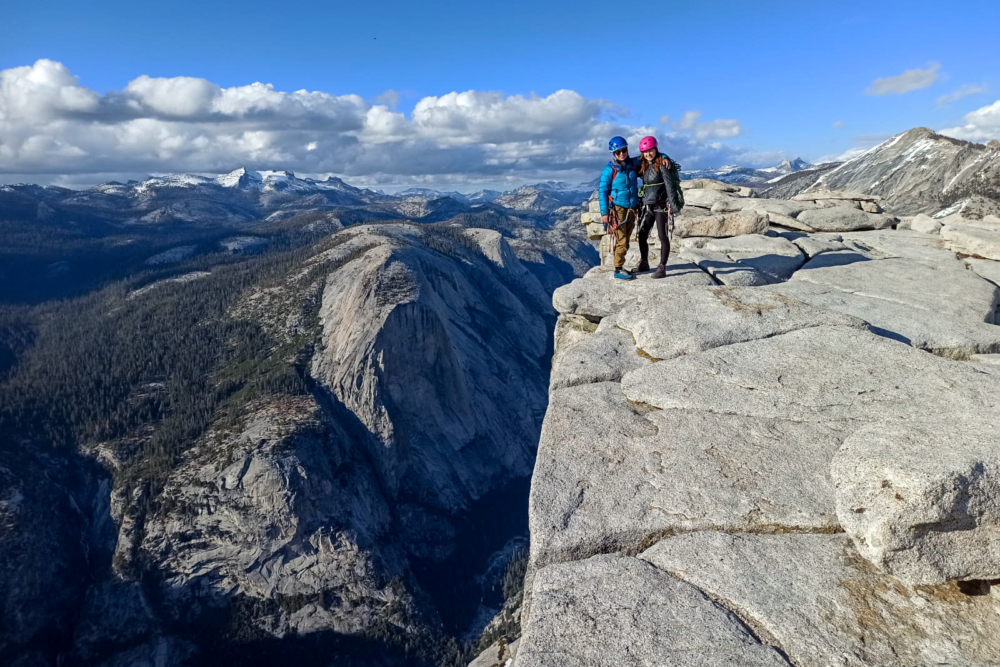
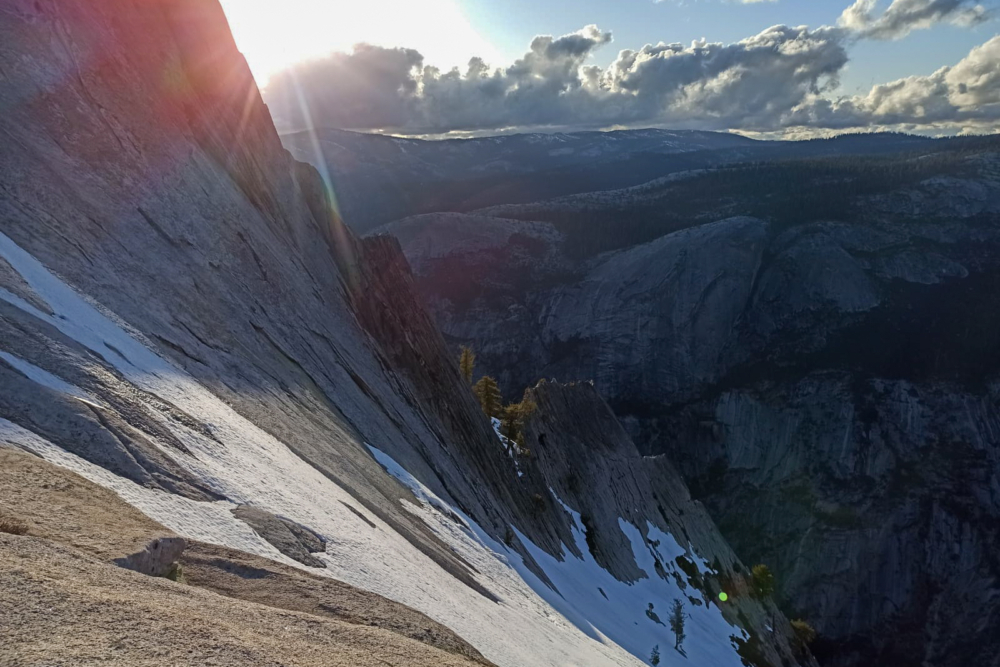
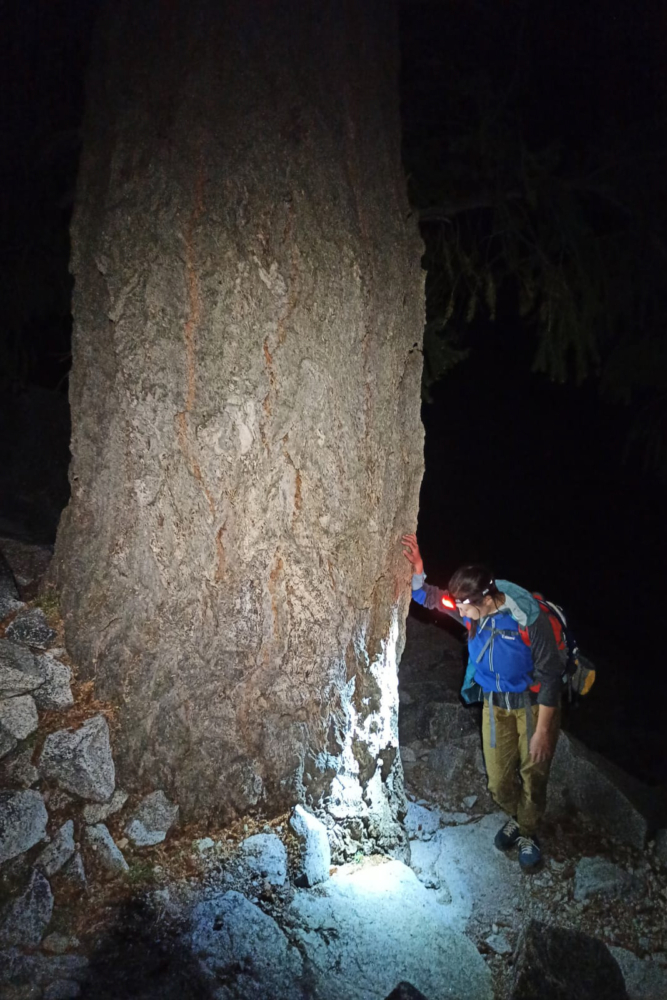
As this idea simmered, we road tripped to Yosemite for rock climbing. It would be my first time climbing since I submerged my life in whitewater. Not wasting any time, we climbed the notorious Half Dome on our first day in the park. The 12-mile round-trip hike to the climb and full day of multi-pitch climbing with the descent took us almost 20 hours to complete. After a year’s hiatus from climbing, I was so tired that I was hallucinating on the hike out.
The following day, we were exhausted. Physical activity was out of the question (we could barely walk), so we spent the day talking about the book we wanted to create. We kept returning to one question. Why include just our stories? There are so many amazing women out there doing these sports who could share their perspectives and experiences. That day, we started writing the book proposal and reaching out to potential authors.
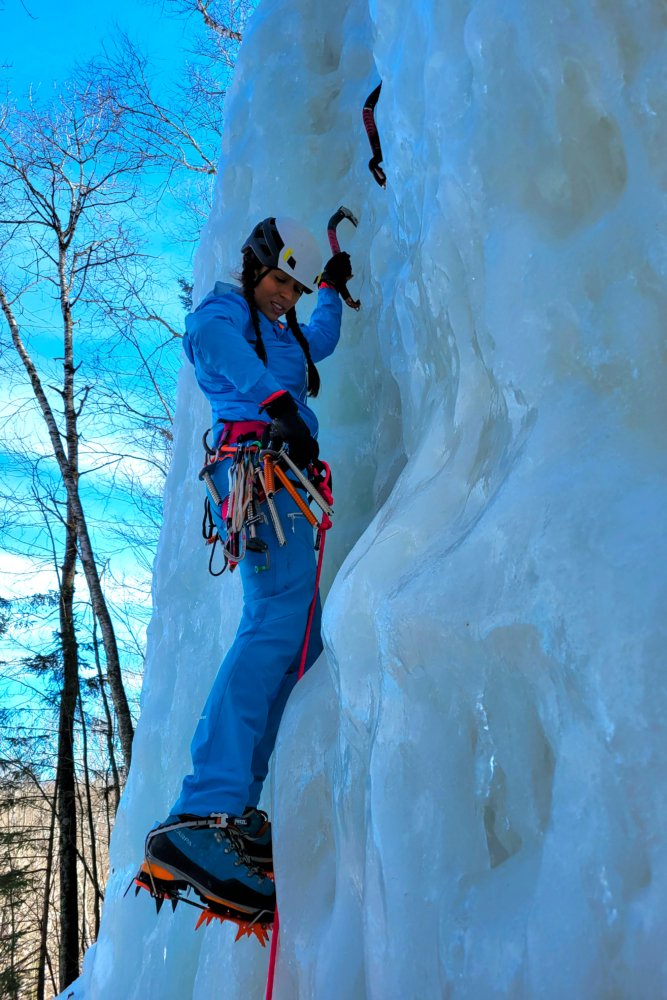
We decided to include stories from our two main sports, kayaking and highlining, as well as climbing– the sport that we both share. It is an homage to our Half Dome climb, and we wanted to include a sport that a general audience would already be familiar with. We organized the book to ascend the natural landscape, from rivers (kayaking) to rock (climbing/mountaineering) to sky (highlining).
Between the three sports, there are many language similarities, including “the line,” “having stoke,” and “sending it.” Additionally, a huge motivation for people who practice these sports is reaching the coveted “flow state,” which inspired our title.
The rhythmic harmony of the activities mirrors the seamless mental state of being in flow, creating a synergy between physical engagement and mental absorption. But flow extends beyond the elemental and physical aspects; it encapsulates the broader concept of moving with or against flow. The significance of flow in its myriad manifestations, whether in the gentle current of a river, the subtle movement of air, or the dynamic motion of physical activity, underscores the essence of this book. – Excerpt, Flow: Women’s Counternarratives from Rivers, Rock and Sky – Introduction
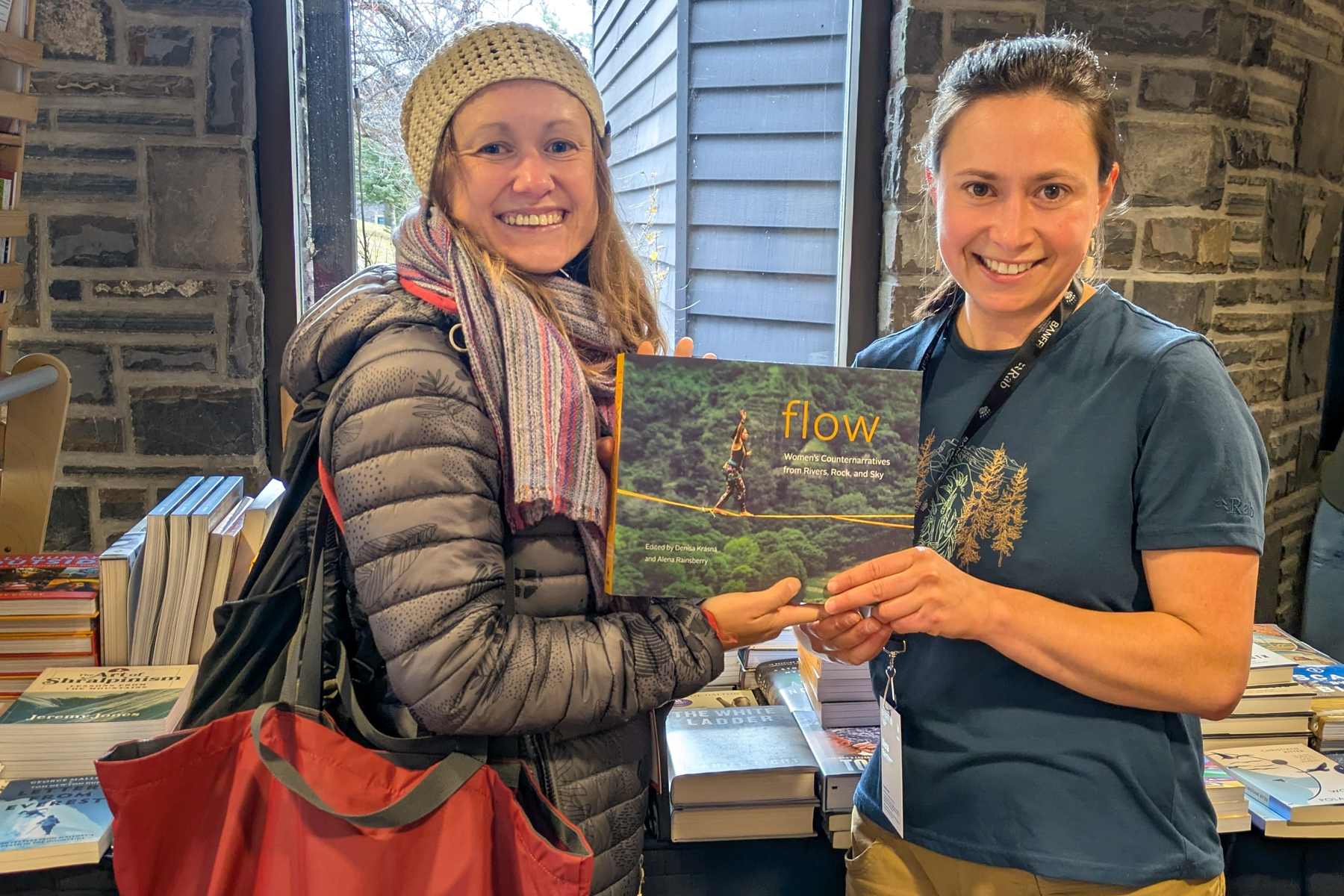
Over the next two years, we found women who wanted to share their stories, collected the essays, secured a publisher, edited each chapter, completed the manuscript, and proofread, proofread, proofread. In the spring of 2025, we celebrated the release of Flow: Women’s Counternarratives from Rivers, Rock and Sky and in the fall, we presented the book at Banff Mountain Film and Book Festival in Banff, Canada.
There is power in storytelling and value in diverse perspectives. We are stoked to include chapters from women across the world, at different stages in their journeys, from ambitious rising stars to trailblazing pros who have been practicing their sport for decades. The contributing authors come from different backgrounds, cultures, perspectives, and languages. We are beyond grateful to them for their vulnerability– sharing with readers both the joys found in these sports as well as an honest look into the barriers and challenges faced.
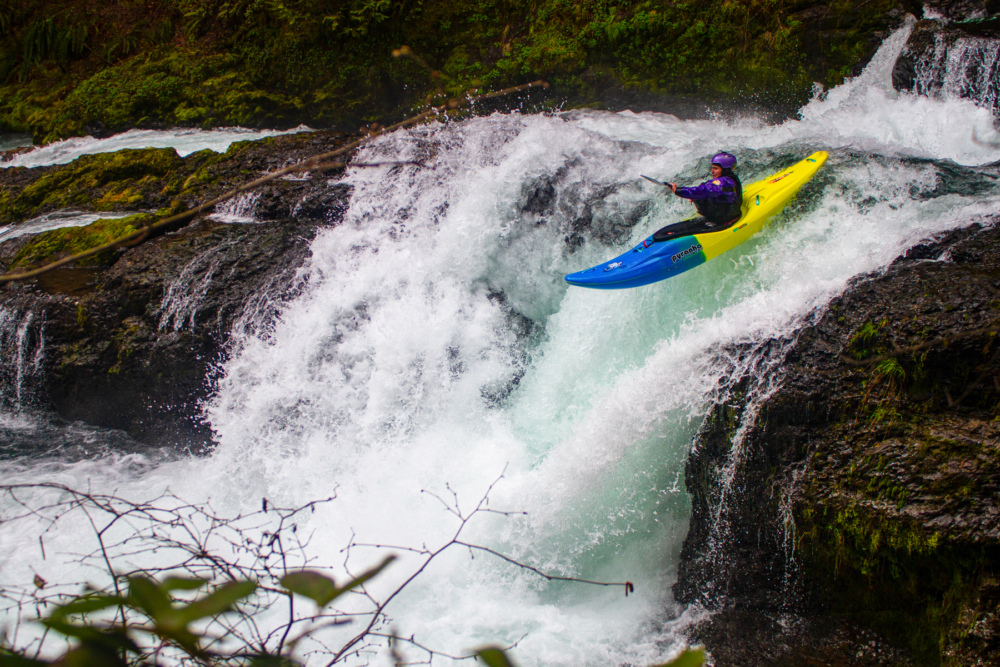
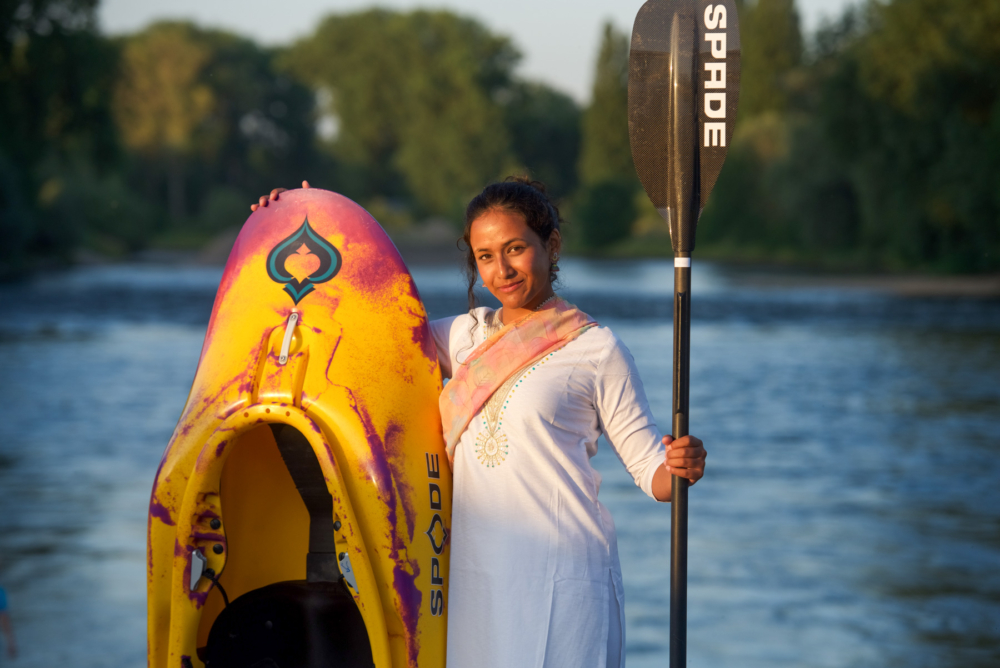
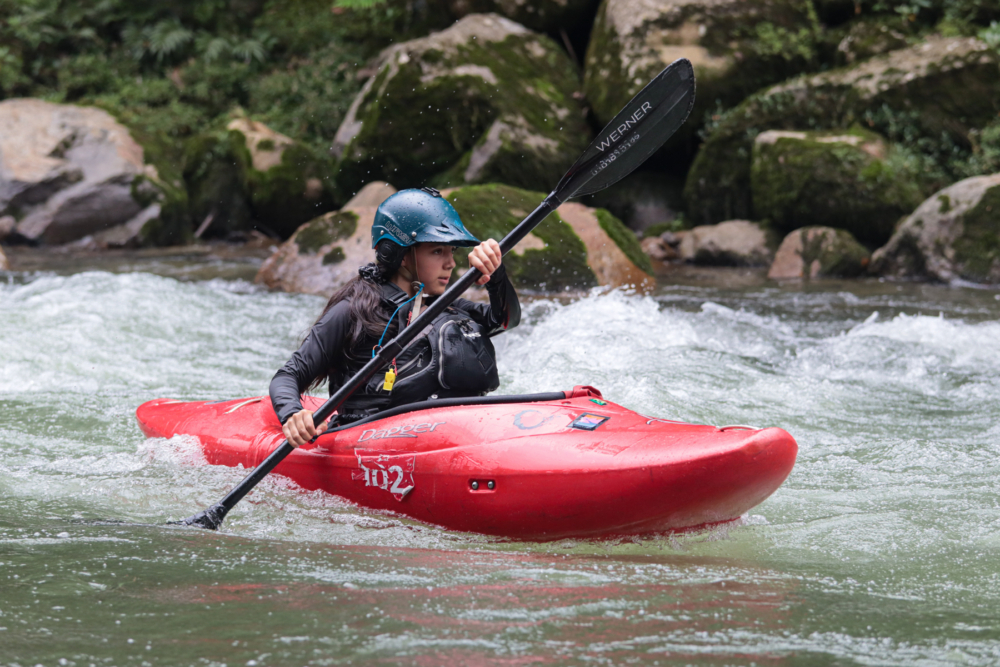
Their narratives reveal intersections of gender with class, sexual orientation, race, environmentalism, age, mental health, and immigrant backgrounds. Many explore themes of dealing with fear or expressions of femininity as female athletes. Every chapter is as unique as the voice and story of each author. The contributing authors for the Kayak section include Maddie Kimmel (USA), Naina Adhikari (India), Darcy Gaechter (USA), Gemma Vasquez (USA/ Colombia), myself, and Rafaela Sanchez (Ecuador).
***
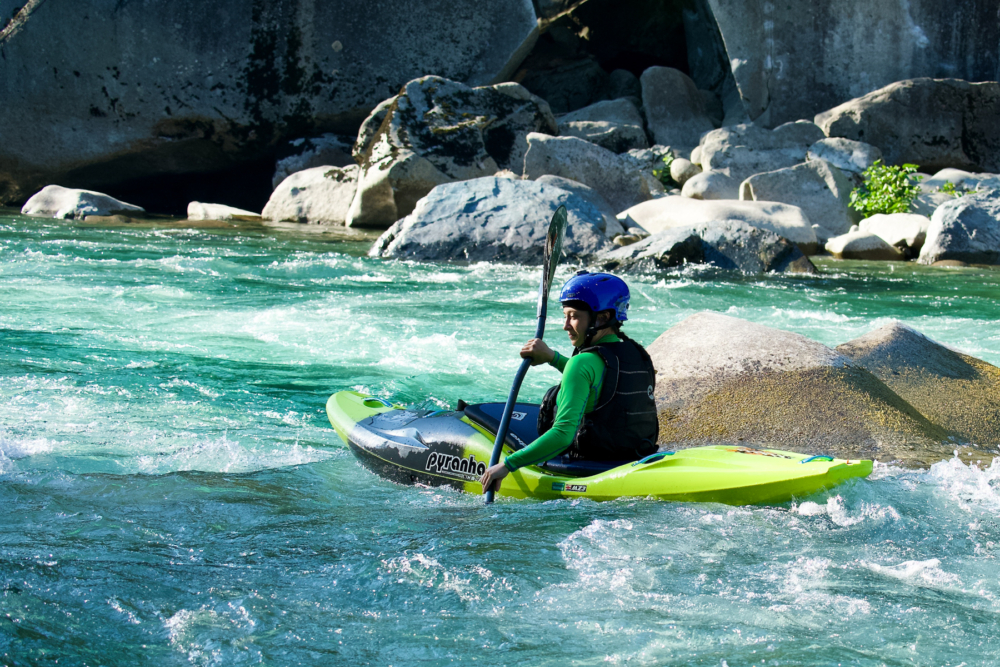
The first rays of cold morning light are just starting to peek through the treetops. Icy streams trickle down from the forest above, weaving through the moss-clad rocks of the canyon wall, finding their way always to the waiting river. Gemma and I snap our skirts over our cockpits without speaking, our breath forming miniature clouds in the early morning air. We slide our boats into the water and steer our bows into the current.
We both have work in a few hours. There will be co-workers to chat with, spreadsheets to organize, and emails to send. But the early morning is ours. We carve in and out of eddies, flowing over and around the rocks, using the current to move our boats and to move us.
Sometimes we paddle quickly and efficiently in the early mornings, and other times we savor the quiet moments between rapids like sipping morning coffee. Today we linger and in a calm section we drift gently apart. I lean back, rest my head on the stern of my boat, and close my eyes, letting my mind drift too. My body fills with gratitude for this regular Wednesday morning. But no day is regular if it starts like this, and I know the rest of my Wednesday will carry a little extra magic, captured in the frosty morning. Tasks to be completed at work. Groceries to be shopped for. Taxes to be filed. The river rinses away the flurry of thoughts and slips each one into the cold water with a plop.
More than yoga, I prefer this surrender on the river. I am content as a temporary part of this moving landscape. In moments of fear in big rapids, I have to dig deep to find resolve and strength to power through. Sheer stubbornness keeps me trying to roll up when it feels like the river is holding me down. I love tapping into that fire, fueling the adrenaline-filled moments of pure focus and commitment. But I also cherish these hushed moments gently flowing over water-worn rocks.
I sit up, breaking my reverie, and see Gemma paddling ahead of me. She is a bright splash of Gore-Tex against the living backdrop of moss, water, and stone. I dig my paddle into the water to catch up, ready for the next rapid. – Excerpt from Part I – Rivers: Chapter 5 by Alena Rainsberry
Editor’s note: To purchase a copy of Flow: Women’s Counternarratives from Rivers, Rock and Sky, visit Rocky Mountain Books. Also available for purchase on Amazon.
Stay tuned for Flow- the Film. Coming June 2026.
***
Guest contributor Alena Rainsberry is an American kayaker who wants to explore rivers all around the world. Introduced to whitewater kayaking five years ago, she quickly fell in love with the joys and challenges of the sport. She is a passionate advocate for increasing representation, getting women into the outdoors, and encouraging people to experience new skills. She is from the Pacific Northwest, where she currently lives and kayaks.