“By such a river it is impossible to believe that one will ever be tired or old.” – Wallace Stegner.
But as any rafter worth their salt knows, one could still believe that one might die… which is why all nine of us were trudging down a rattlesnake-infested trail to scout Goat Creek Rapid, a long and complicated set of rapids at mile 11.5 on the Selway River.
It was the second day of a seven-day river trip. We were a party of nine men in six rafts and one cataraft. Our group launched on May 31st from the Paradise Launch Site, at the confluence of White Cap Creek and the Selway River. We all recognized our good fortune: a Selway permit at perfect water levels, with a perfect weather forecast. Like tumblers in a lock, everything about this trip had aligned, which is maybe why I was ill at ease. It was, after all, a rafting trip—something was going to go wrong.
Sporadic reports of wood in the river had kept us at the ready throughout the first day. There hadn’t been any mishaps, but the speed of the river, the water temperature, and the continuous nature of the rapids had prompted enough comments for me to suspect that most of us were wondering if we were up to the challenge. We had plenty of river experience between us. Two of our crew still guided, and a few more had at one time in the past. But none of us had ever run the Selway.
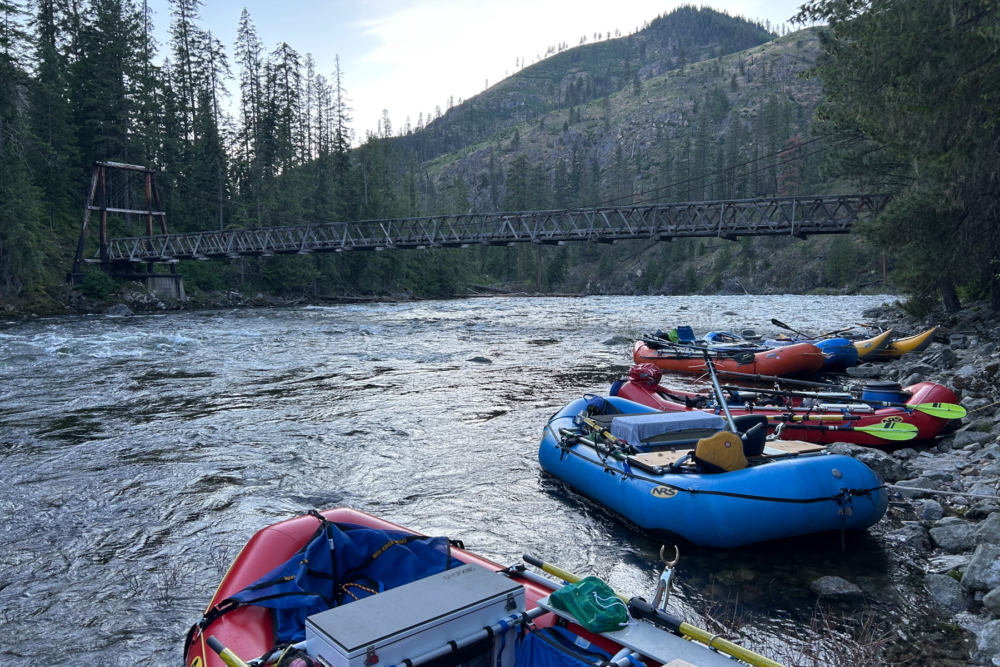
Staring at the complicated moves and scary consequences of Goat Creek Rapid, my apprehension felt justified. There was a right-left sequence required just to set up for the rapid and then there was a right-left-right move through the bus-sized boulders that blocked the channel.
Brad, a guide on the Gauley River in West Virginia, pointed out a cheat that might take some of the worst consequences out of play. We all gave it a look. It did get rid of the side-to-side moves, but to enter the “cheat,” you had to make a cut in front of a rock that could cause a pinned boat. After some group consultation, I opted to follow the by-the-book route. I wasn’t feeling up to any experimental rafting.
“It was right-left-right-left-right? Right?” I asked Justin, my passenger. He shrugged. Justin and I were running sweep. We watched the boats peel off the bank and drift into the quickening current, one by one. Then it was our turn.
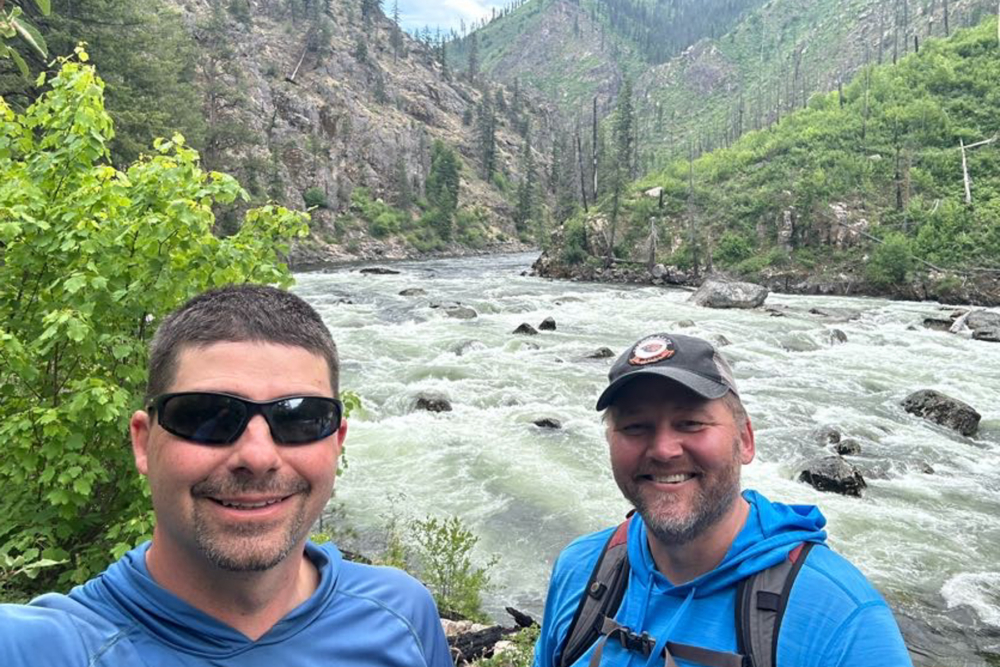
The river was fast, and the rapid came quickly, but once on the water, the moves made sense. We dodged a couple of features and then rounded the top boulder when we saw Brad’s black raft upright but pinned, blocking the entrance to the cheat as if he had positioned himself there to prevent us from attempting it. He’d lost an oar, but he looked to be okay—just stuck.
Justin and I were moving too fast in the wrong direction to do anything to help. So, we did the next best thing: we made it through the rapid.
We found an eddy downstream and parked with the other rafts. There was some talk of tying up the boats and digging out the Z-drag. But Jon, who was on the cataraft, had slipped into an eddy alongside Brad and was able to reach him with a throw bag. A couple of yanks and tugs, and the boat was free, sacrificing only an oar to the river gods.
I think the group breathed a collective sigh of relief. Yeah, there was going to be trouble, but we were going to deal with it.
A Middle-Aged Guy’s Trip
As far as I know, the intention of the trip wasn’t a middle-aged man retreat. At no point in the weekly Zoom meetings did anyone suggest shirtless drumming or talking about our feelings. The trip roster had mostly been the product of pragmatism and opportunism.
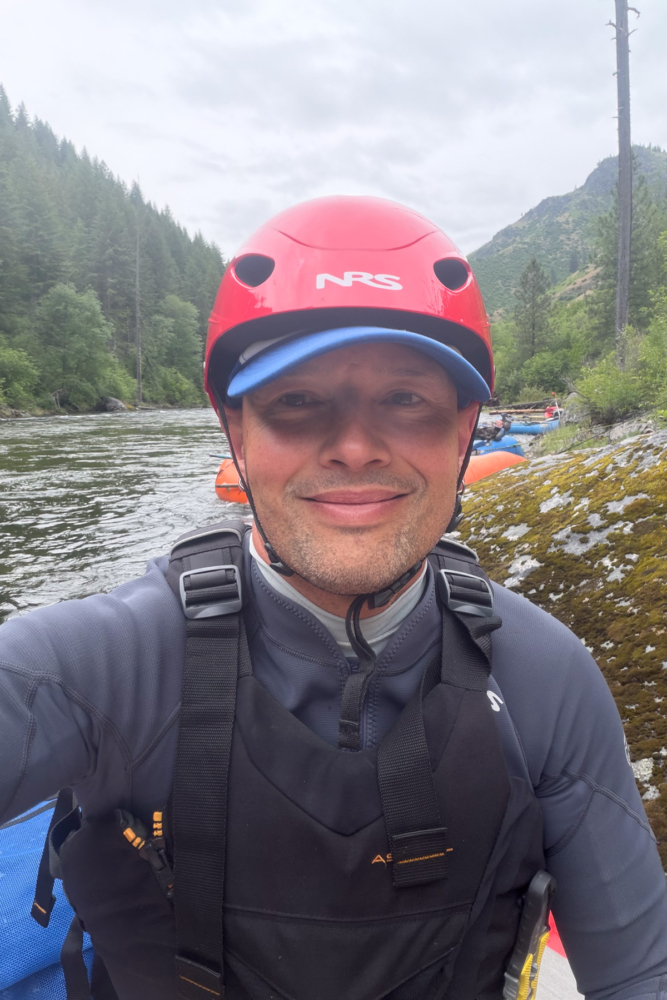
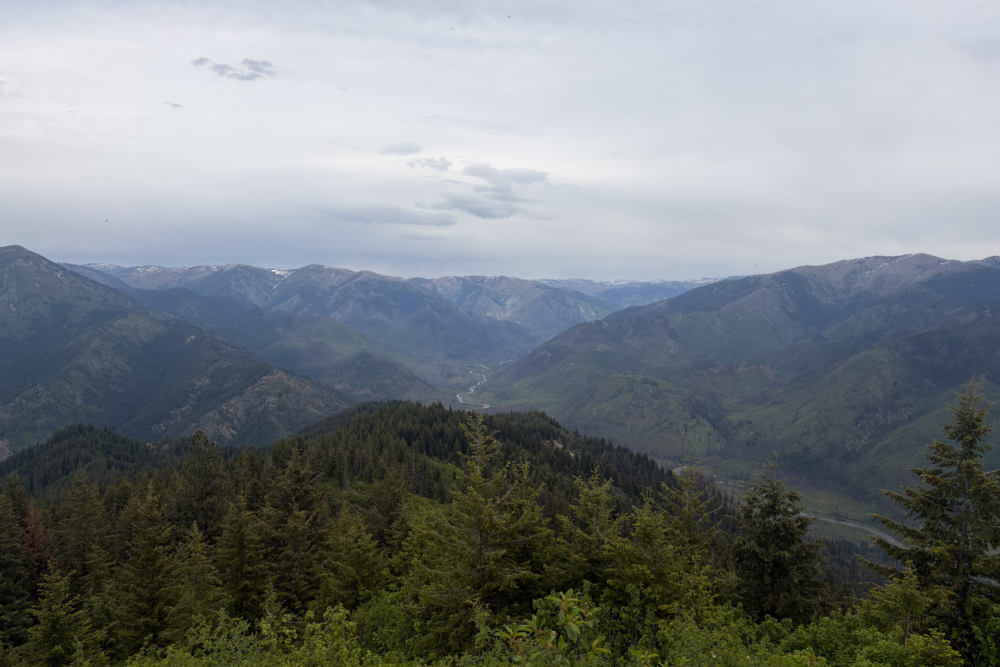
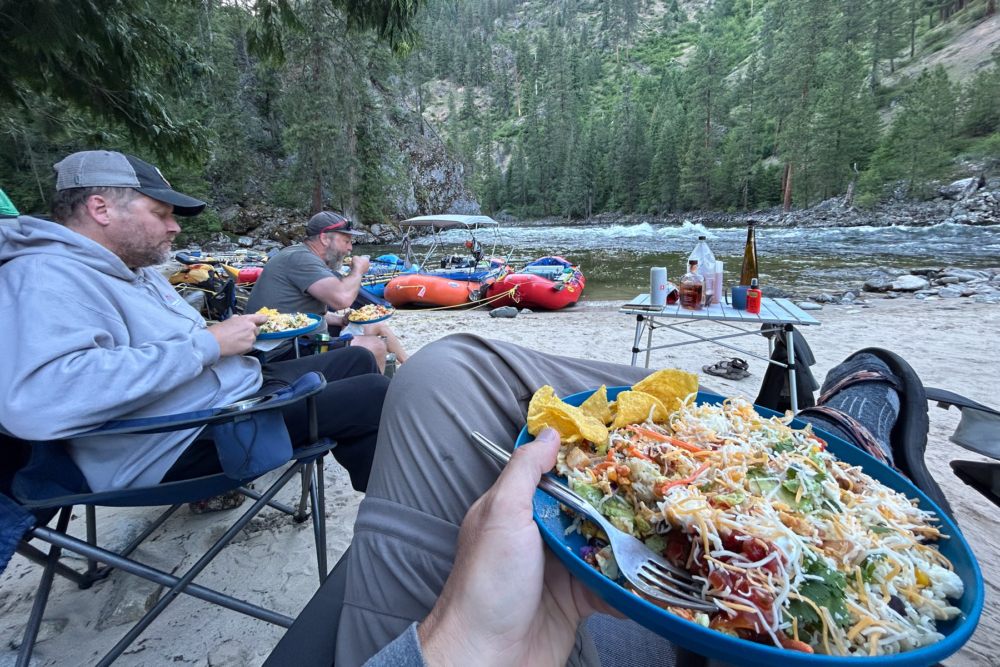
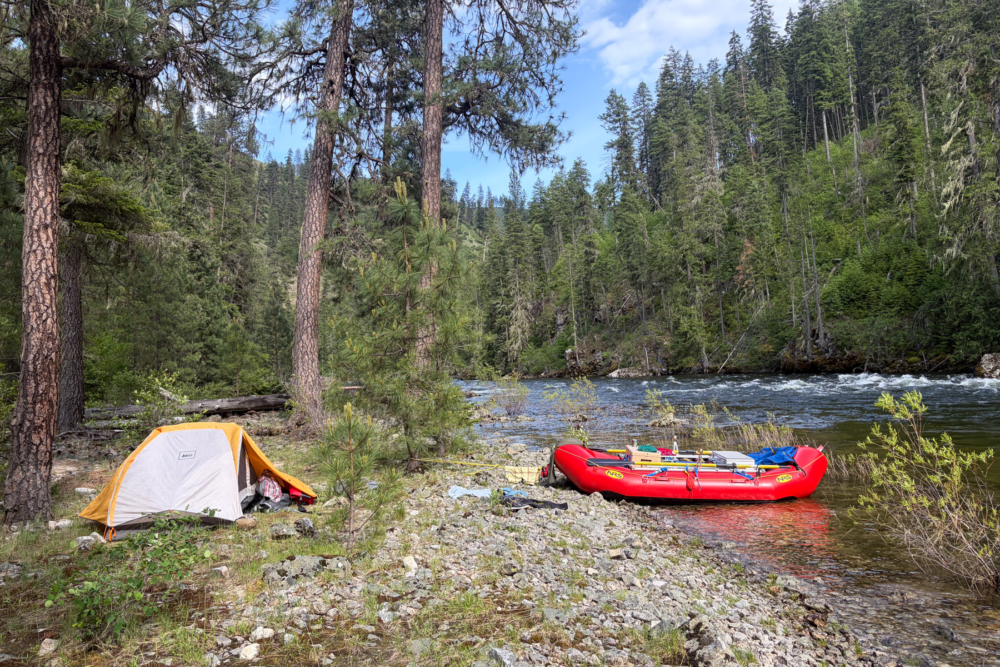
Our trip leader, a doctor in Bellingham, Washington, had assembled this mostly random group of people from family, work colleagues, past river trips, and the far-flung reaches of the intra-webs. It just so happened that we were all men of a certain age, but we weren’t all one dude. Some of us were married, some weren’t. Some of us had kids, some didn’t. Some of us brought $160 bottles of tequila to share with the group, others used duct tape to make croakies for our sunglasses. One group member was a vegetarian. Several of the other men cooked group dinners without using a single vegetable. Some were into fitness and crushed some ambitious hikes while others preferred lounging in camp.
Yet, despite our differences—and maybe because of them—conversation came easy. We talked about “middle-aged man” things, kids, jobs, hobbies, gear (so much talk about gear). But we also talked about some big existential topics, solving the world’s problems in a couple of pithy sentences and proclamations.
And sometimes we didn’t talk. Sometimes the sounds of camp were just the sounds of the river, the wind and the birds. And that was nice.
Much has been said recently about the “plight” of men. According to conventional wisdom, men are, as a demographic, one of the loneliest groups of people. That may be true. The modern world has conspired to make it easy to live in a bubble: remote work, isolating algorithms and endless scrolling. But also, I think, some of the handwringing about male loneliness is a lack of understanding that some men socialize differently. My wife has a book club. I like to think I have a river-running club with rotating members.
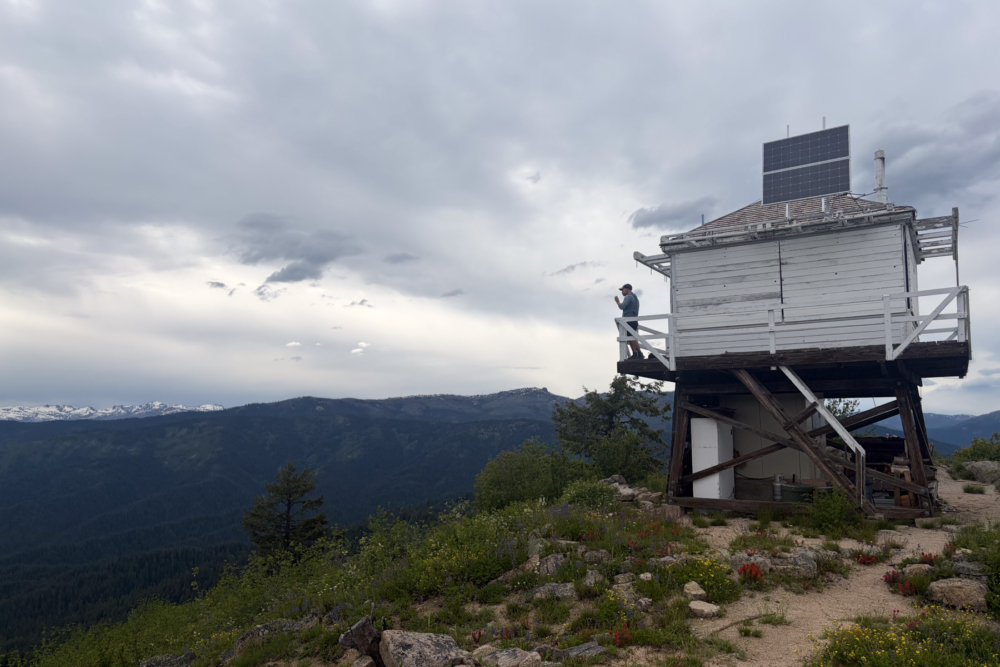
Conversation doesn’t have to be the only source of bonding. Sometimes just doing things in the proximity of others will suffice. And a rafting trip is perfect for this. On the river, there are maps to consult, fish to catch, rapids to scout and row. At camp, there is gear to unload, tents to erect, a kitchen to set up. Then more fishing. Then hikes. Then cooking. Then dishes. Then firewood. Then filtering water… you get the idea. All of this takes the pressure off talking. And… of course… when social skills fail, there is alcohol.
Most of us on the trip probably drank more than we should, but not to the same excess of our 20s or even 30s. By bedtime, more people were holding water bottles than beer cans. In any case, we weren’t on the Selway for a booze cruise. We were there to take advantage of a rare opportunity and to prove something to our aging selves.
The Moose Juice
The crux of a Selway trip is the Moose Juice section. This series of rapids begins downstream of Moose Creek, which adds a significant amount of water to the Selway, sometimes doubling the volume of the river. In less than two miles, there are four class IV rapids, including Double Drop, Wa-Poots, Ladle, and Little Niagara. To further complicate things, the river gradient steepens, dropping 50 ft. per mile, making eddies few and the rapids hard to scout from the river.
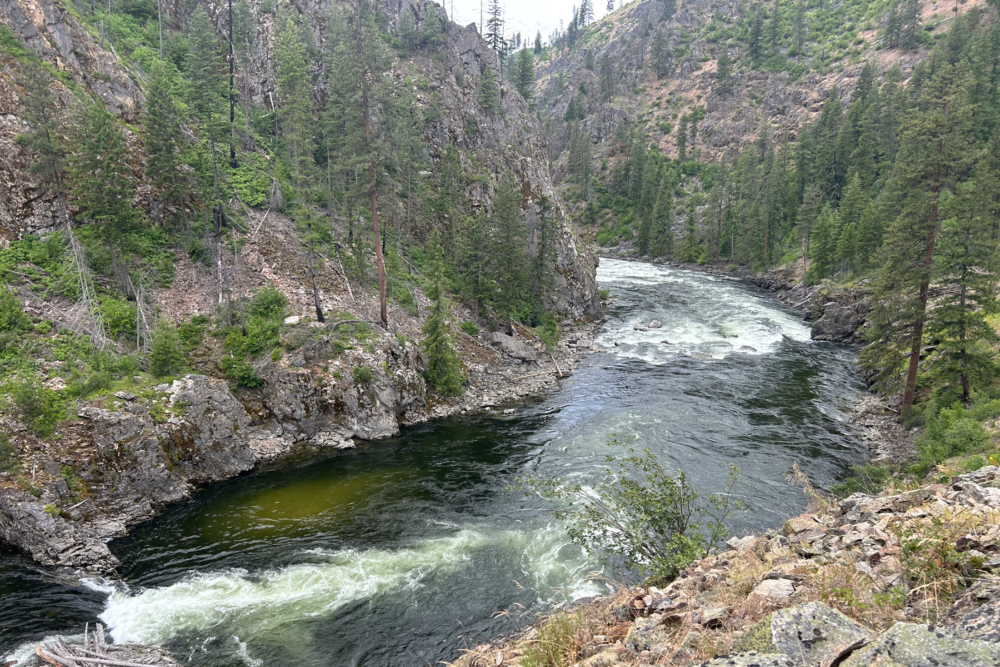
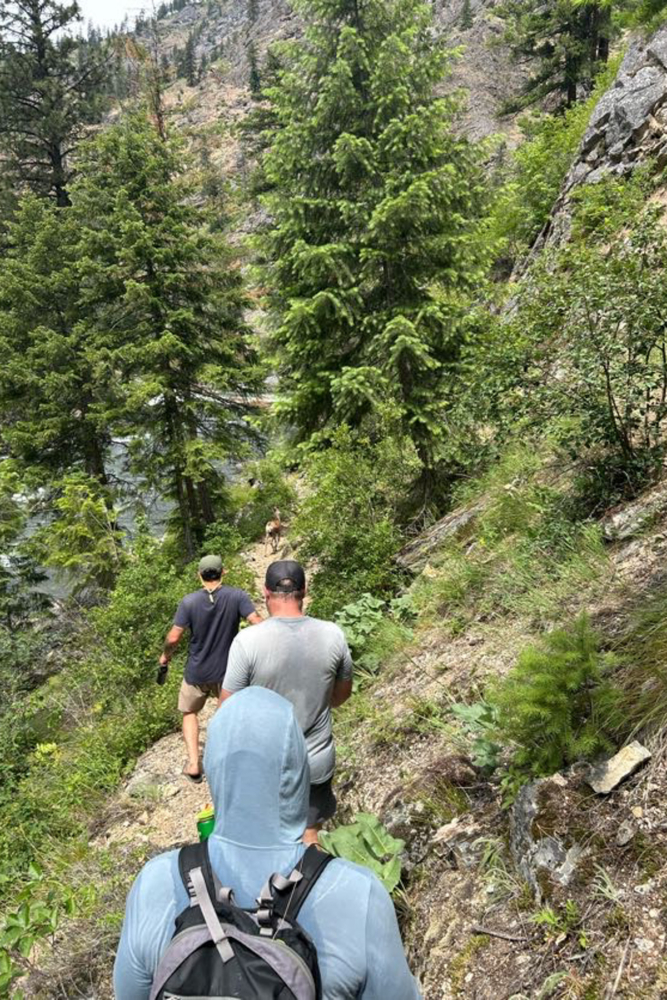
Our group camped at the Tony Point Bridge Camp, above the rapids, to scout from the river trail. The next day, after breakfast, we set out for our scout hike. As suspected, the rapids were massive and a little scary. While they all had lines, they weren’t necessarily good lines. On most rapids we agreed on a route, but on a few we differed.
Some disagreement had to do with our boats. A couple of us were rowing more maneuverable 13 ft. rafts with little extra weight, while others had heavy 16 ft. rafts with passengers. Other disagreements stemmed from risk aversion. How close was one willing to get to a dangerous feature to ensure a smoother ride? On a couple of rapids, we agreed to disagree, understanding that everyone is ultimately responsible for their own safe passage, in life and in rapids.
The next day, we set out to test our conjectures. At Double Drop, Dharma didn’t quite break the eddy line at the top of the rapid, and he got pushed into a burly lateral wave. His boat dump-trucked him out of the raft but did not flip. He was able to self-rescue.
Wa-Poots rapid didn’t cause any trouble. But Ladle was a mixed bag. As the guidebook says, “Ladle Rapid is the most complicated boulder garden on the river.” Still, everyone got to the bottom safely, albeit some with more bumping and grinding than others.
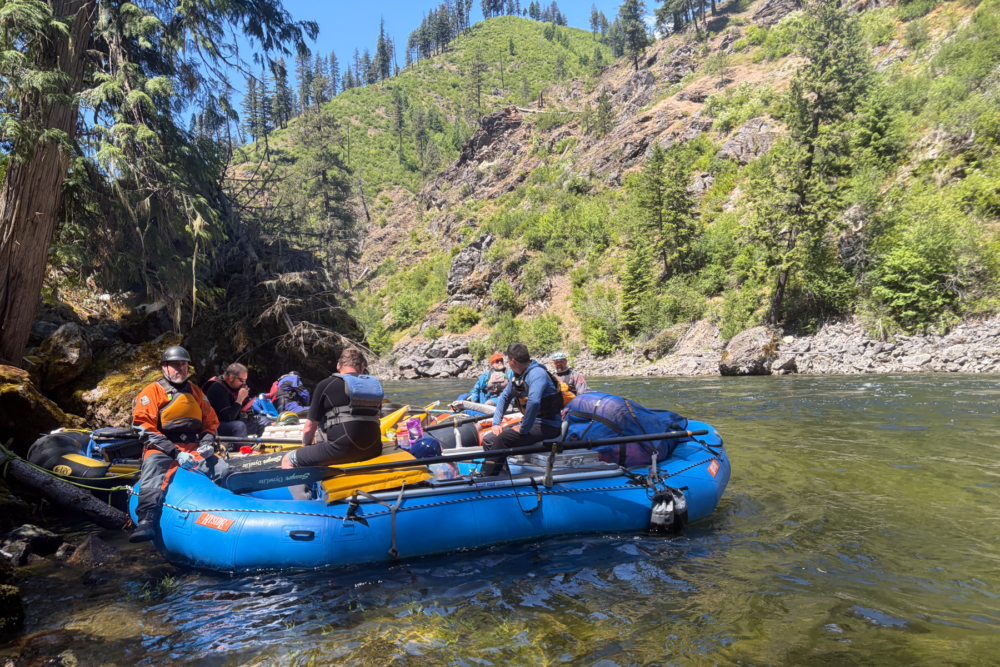
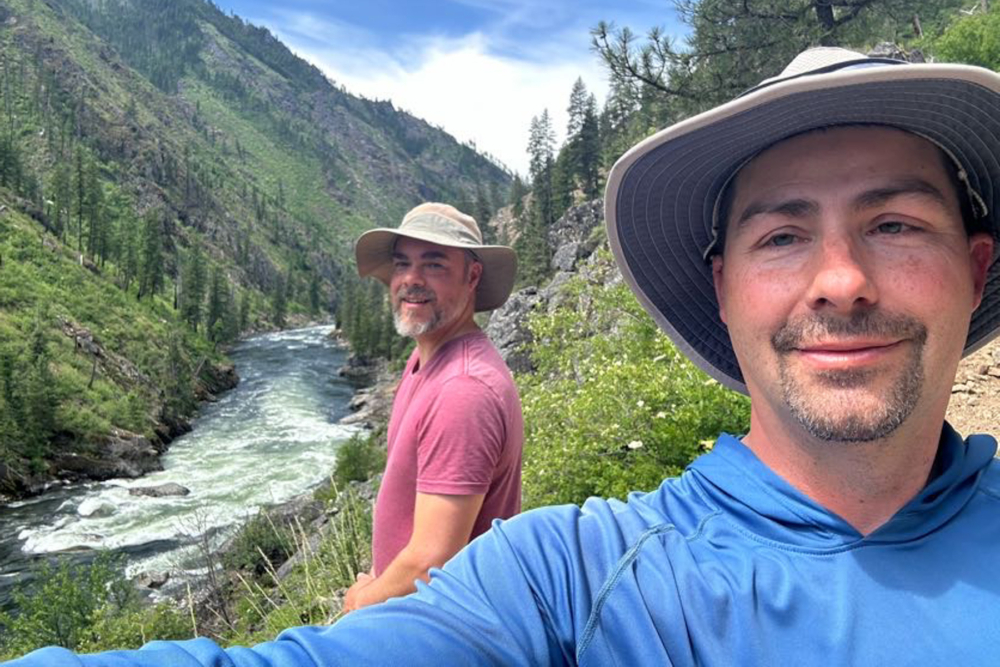
Little Niagara was scary but uneventful. I want to say the rest of the day was easy. But it wasn’t. The Idaho sandbag is real. Relaxing on the Selway happens at camp, not on the river. Our run to Tango Bar, only six miles downstream from our last camp, included at least ten more class II and III rapids that would be IIIs and IVs if they occurred elsewhere.
But we made it.
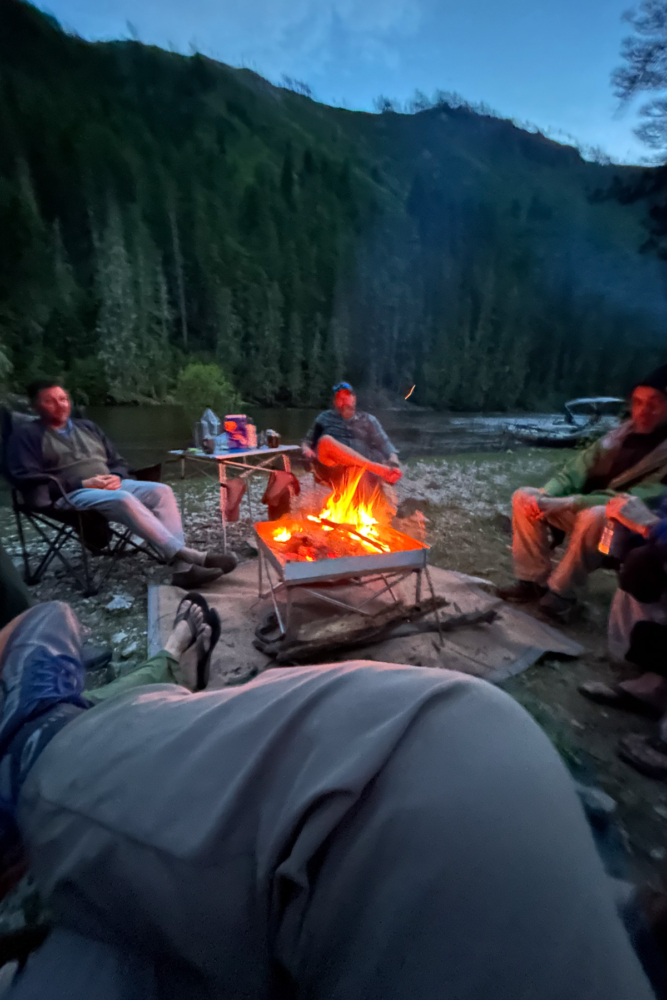
At camp, there were high fives and celebratory beers. The back slaps felt earned. I don’t want to get too Neolithic, but it felt like an ancient celebration: a small group of men moving safely, for another day, through a wild place.
Tango Bar
I don’t know if it’s like this for other middle-aged men, but the younger me whom I miss the most isn’t my (mostly imagined) badass self—it’s the younger me who looked at everything as play instead of work.
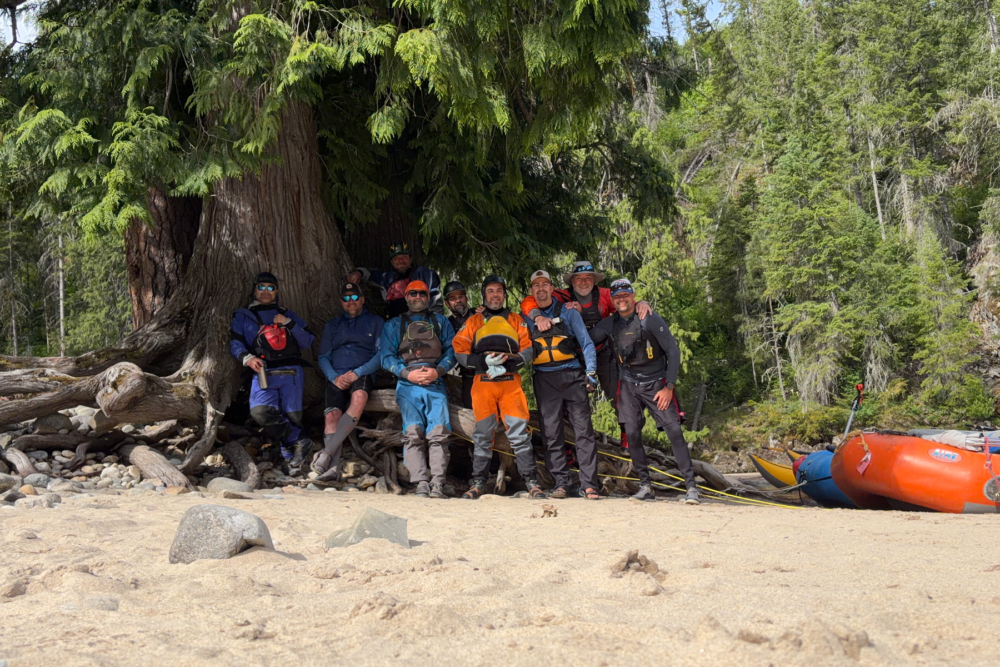
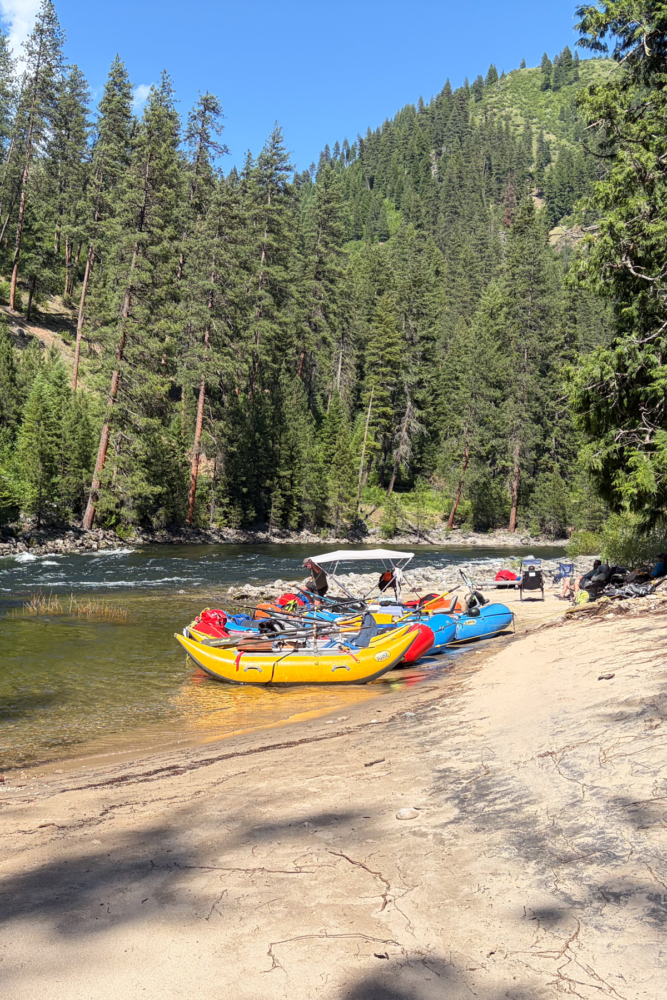
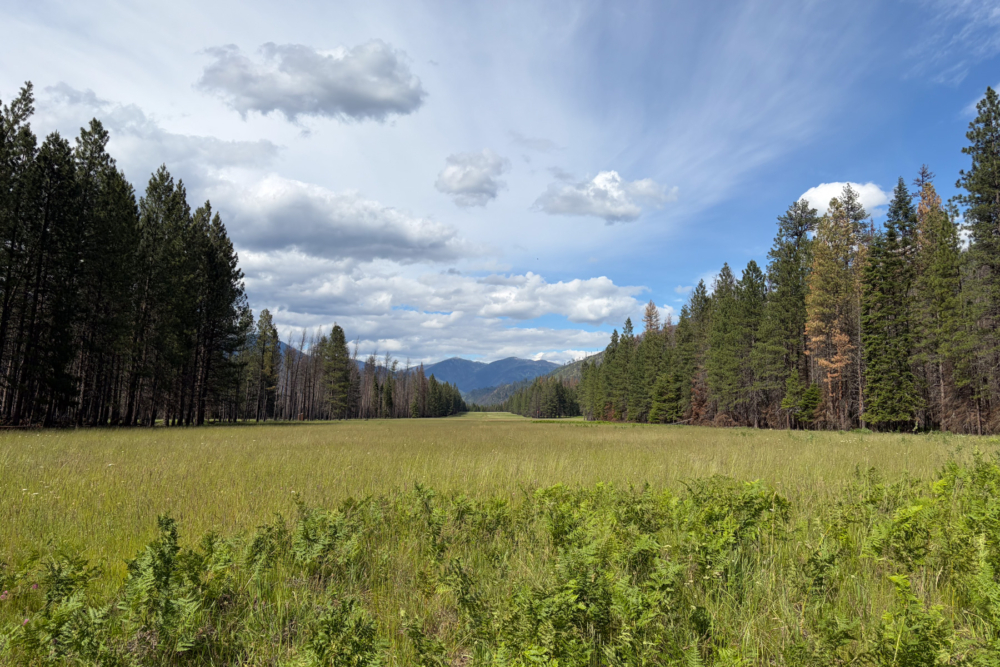
Following our run through the Moose Juice, we laid over at Tango Bar, a fantastic camp with almost everything you’d want in a river camp: big trees for shade, a sandy beach near the water, and a rare Selway swimming eddy. But no hiking.
Tango bar is a true bar. At high water, it becomes a full-on island. At our water level, it was only circumscribed by a small side channel that almost looked like a tributary creek. The bar itself is fairly large, over a football field in length and at least as wide. Even so, it wouldn’t be a good layover camp for a group that wasn’t getting along. Fortunately, we were.
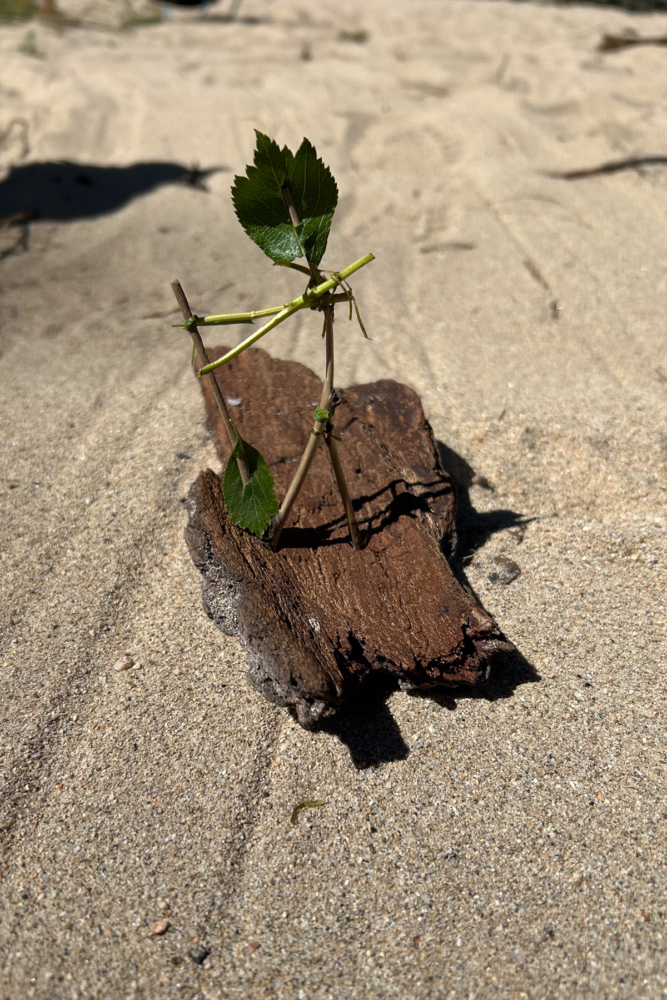
Our layover day became a day of fun and games. Nobody had brought a Bocce set, so we made do with some white round stones and some black round stones. We played cards, even a charades-type game. But the real competition of the day was the first annual Tango Bar Regatta. The rules were that your boat had to be built from no fewer than three different “natural” materials, e.g., vines, wood, stone, leaves…
Nine grown men spent collective hours building toy boats to race down the side channel. There were boats with sails, boats with keels, boats built for speed, and ones built for durability. The channel itself had a variety of obstacles and water conditions. There were riffled flats, where the big boats would struggle. Deep water pools where smaller boats could be blown off course. There were also snags and trees that could slow down any of the vessels.
After plenty of “christening,” the boats set sail under clear skies. As expected, it was a total hooting-and-hollering shit show that featured more than a little cheating. The lead changed hands several times, but in the end, Brian, our trip leader, emerged victorious. But the fun wasn’t over. We were, after all, boys by a river. As the boats entered the large eddy in the main river, we began gleefully tossing rocks at them.
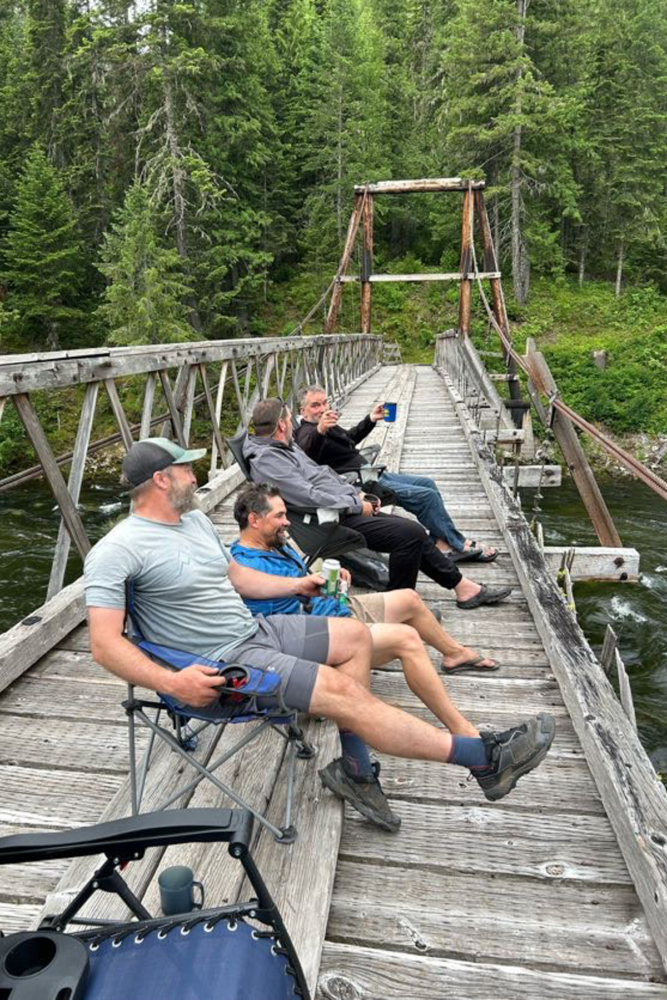
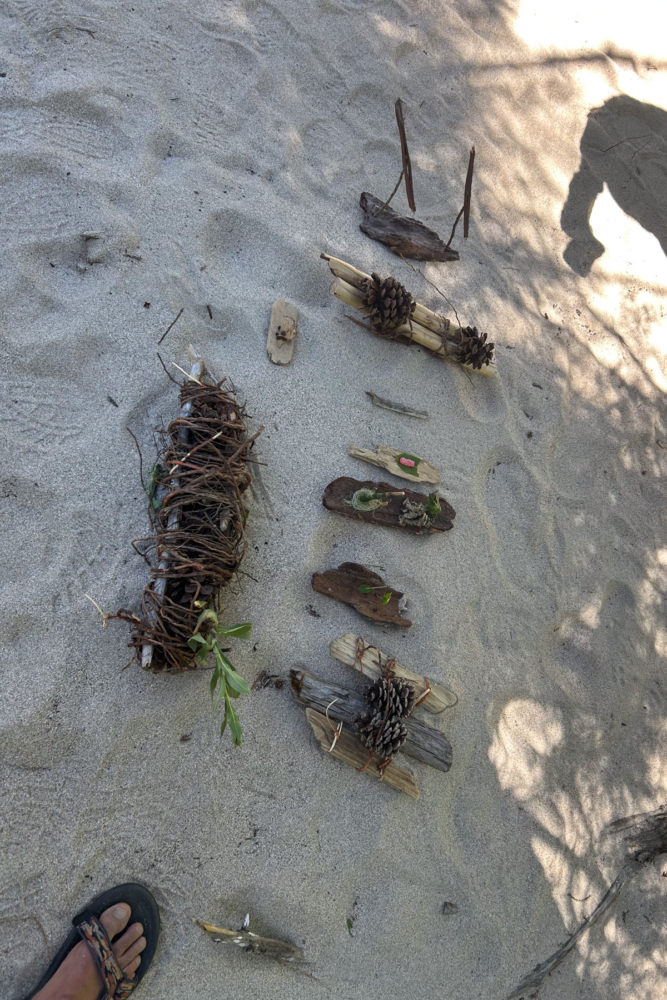
Being a middle-aged man means spending a lot of time building things—relationships, spreadsheets, maddeningly complicated instruction-less furniture—it’s easy to forget that breaking stuff can be fun too.
The Take-away at the Take-out
Rowing a raft is not a feat of athleticism. It does not require youthful flexibility, cardiovascular endurance, or lightning reflexes. And while being strong can help, know-how matters more than brute strength. Physically, it’s something most middle-aged men could do with varying degrees of success. Mentally, it’s not rocket science. Given enough river miles, most people become river literate. Don’t hit the rocks, look for downstream Vs, learn to hit eddies, but also learn to stay out of them—textbook stuff.
But there is something equally, if not more important, for successfully running a river like the Selway: the belief that you can.
That’s what gets tricky.
As I’ve gotten older, I’ve found it harder to reconcile what I think I can still do with what I can actually do. In some areas of my life, I think I underestimate my current abilities, but in others, I know I overestimate them.
That’s where rivers like the Selway simplify things. What you can do always gets answered—correctly—by what you just did.
***