Currently, there are elephants in the Grand Canyon. A whole herd of them in fact. No, I am not talking about the massive land mammals that roam the plains of Africa and Asia. I am referring to the elephants hanging around the boat ramps, swirling around the back eddies, and ravaging the campgrounds and watering holes frequented by the guiding community in the Grand Canyon.
So, which elephant should we start with here? The ongoing drought in the American Southwest? The shockingly meager snowpack the Colorado River Basin received last winter? The current situation with Lake Powell water levels? The apparent inability for state water managers to agree on anything?
Or how about this one: Motor rigs in the Grand Canyon? Yay or Nay? Shall we discuss?
While I can’t solve the current water crisis facing the Colorado, I can think of more than a few advantages motor rigs bring to the entire Grand Canyon community. Maybe there’s even one that you or your crew might appreciate one day, too. Shall we move on?
Rescues
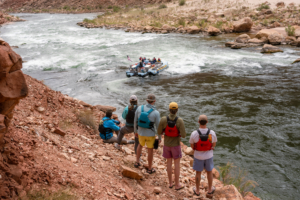
Picture this, you have just spent an hour scouting Crystal Rapid. Adrenaline and anxiety pulses through your veins as you pull out into the current and begin to set up for your run, and at that moment a motor rig comes around the corner. Is this helpful?
What if the motor rig spins out, seeing that you are in position to drop in, and gives you the room to do so? Comforting, right? Now you have a big boat running sweep, that can potentially help you should the need arise. Or, maybe the motor rig pulls over while you are preparing to push off, and offers to spin out below and watch you run it, just in case.
We have all helped nose boats to shore, scooped swimmers out of the water, and offered a hand righting upside down rafts. I have also pushed boats downstream in a stiff wind, and used wind direction to obliterate row boats in a water fight when provoked. All in good fun. It’s all part of the experience.
I know one motor guide who pulled over after running Bedrock rapid, walked back up the left shore, and helped an older gentleman—who had been stuck in the left side eddy for hours—row through the rapid. And by that I mean the left side of the rapid. The side nobody wants a part of. Literally risking his life to help a fellow river runner in a very serious predicament. This particular guide is one of the strongest and humblest people I know. He would never take credit for it. But credit is deserved. It was truly heroic.
Big Features, Big Water Big Boats
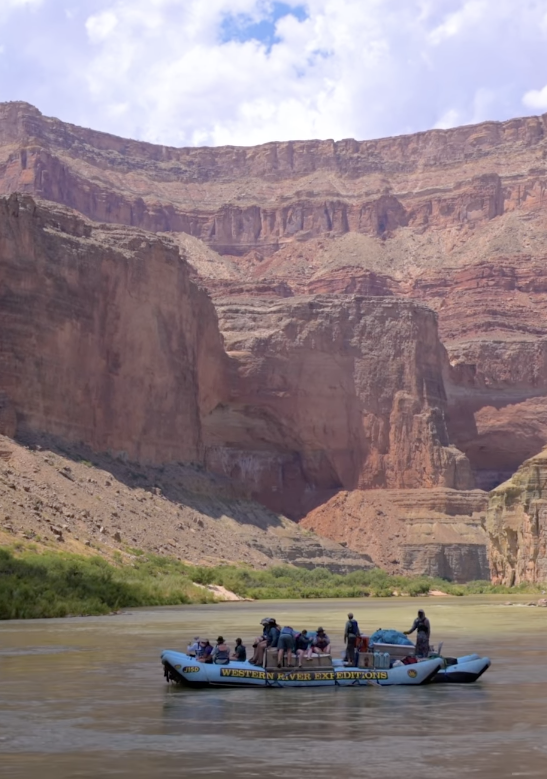
Many a mid-river interaction starts with a question cloaked in judgement. “Do you guys even get wet on those things?” “Can you even feel the waves?” “Big boats mean boring rides, right?” Wrong. I understand the assumption though. I mean, size does matter, and looking at 37 feet of rubber can be a bit overwhelming for most. Especially if you have cut your teeth running eastern rivers and think an 18-foot row rig is large.
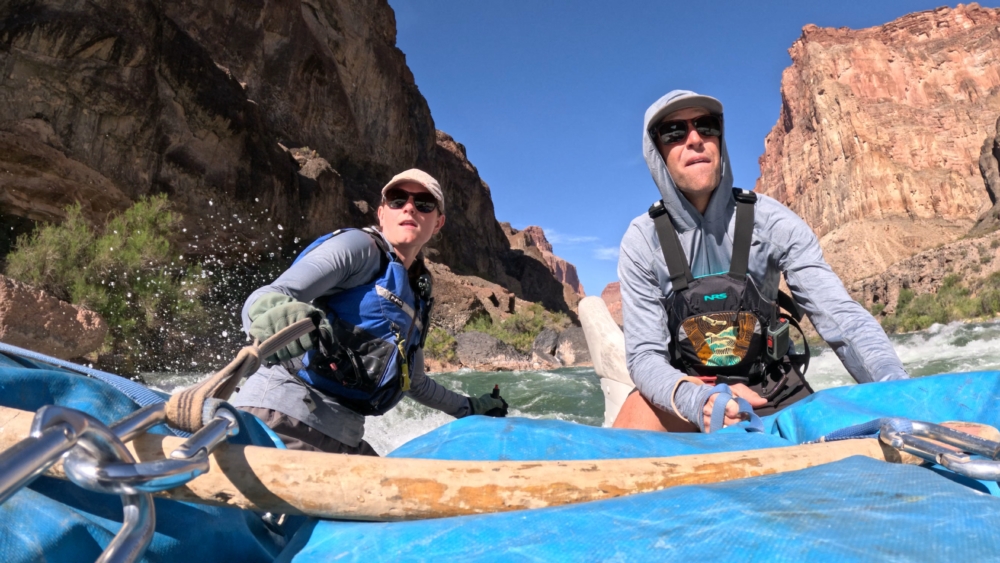
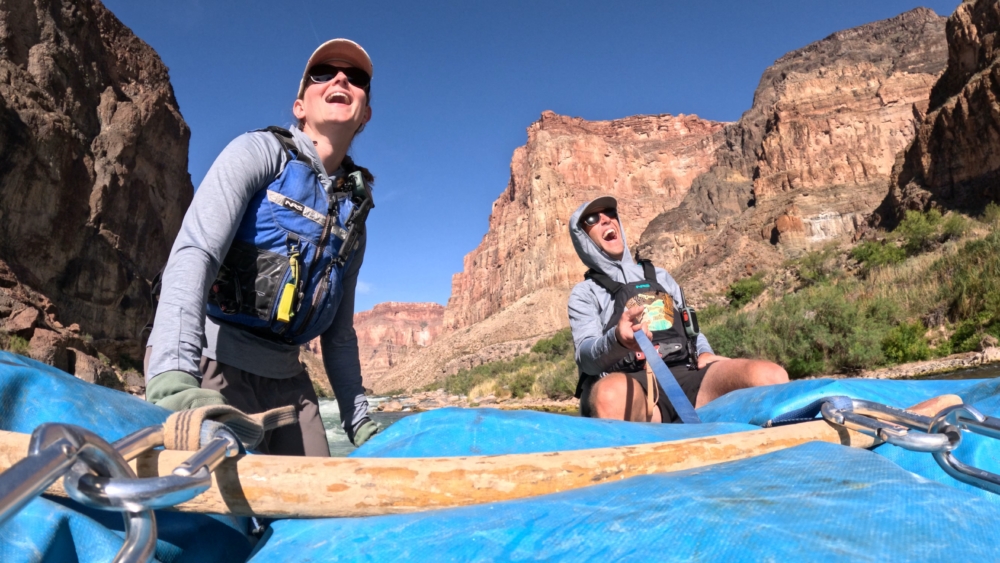
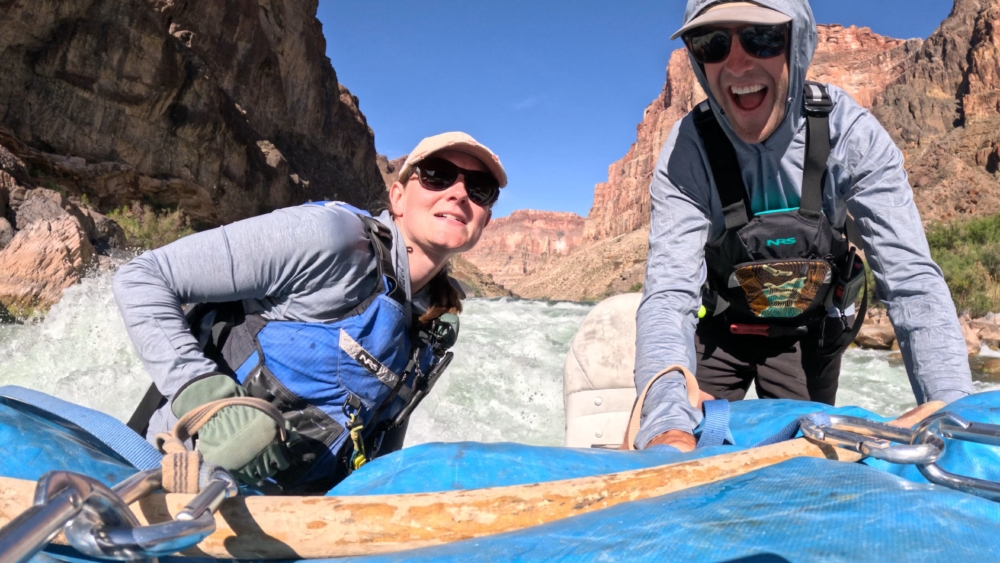
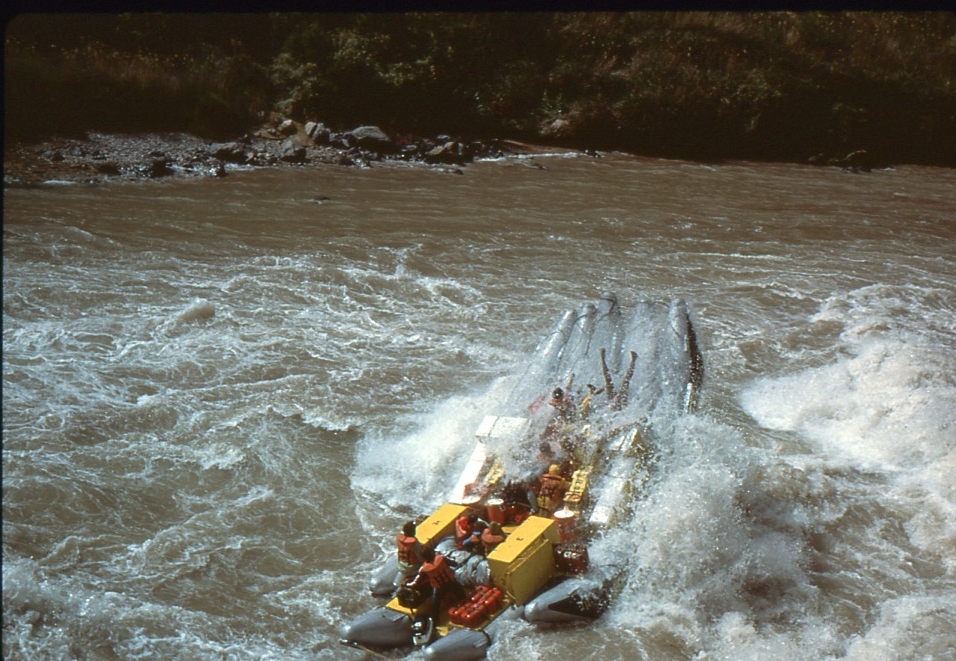
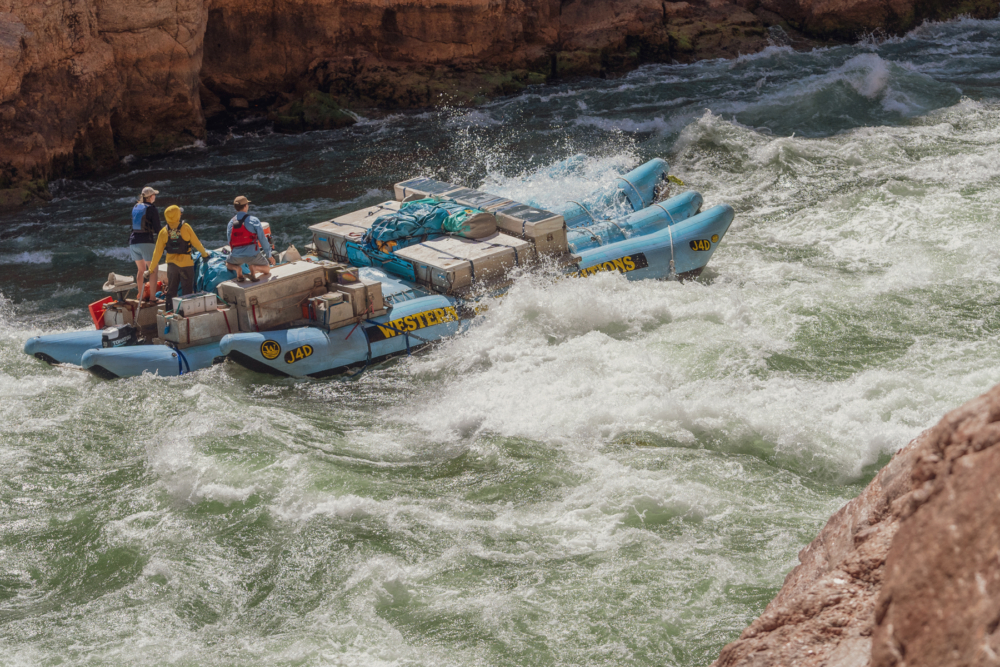
These boats were designed specifically for running the Colorado River. When it comes to the big water, the waves that most boats shy away from, or try to skirt even, we lean in. Hermit rapid at 20,000 cfs anyone? You can bet we are gonna be center punching that thing and loving every minute of it. House Rock rapid? Yeah, we are gonna be squaring up to that lateral, not trying to run away from it. Crystal? Big waves on the left please.
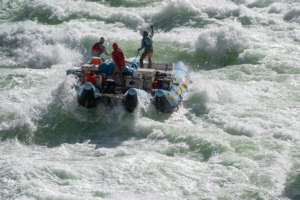
Another advantage of the J-Rig design specifically, is the boat has two independent frames, which means there are a lot of flex points available. You can definitely feel the boat folding like an accordion in some of the larger rapids, and if you happen to be riding the front tubes you are most certainly going to “get your money’s worth,” so to speak. There is no shortage of action up front for those that are looking for the high adventure experience.
I must admit, when I come around the corner and see river runners scouting one of the many Grand Canyon classics, it is quite satisfying to run these boats through the meat and potatoes and show the spectators what these boats are really all about.
Accessibility
With most commercial and private set-ups, a trip down the canyon requires a certain level of, shall we say, athletic ability and a fair bit of time. Here’s another place the motor rig shines. Able-bodied clientele? Absolutely. Otherwise? Sure. Disabled? It would be an honor.
These boats have been graced by folks in wheelchairs (and all the apparatus that requires) who have waited their whole lives to see the bottom of the canyon. Special population trips are a rite of passage for long term guides and are considered a privilege by any guide worth their salt. I have had that honor. Trust me when I say there are few experiences in life that compare to it.
A Bit of Canyon History
Between 1869 and 1949, less than 100 people went through the Grand Canyon on a boat. Let me say that again. Less than 100.
1900-1949
In 1903 Teddy Roosevelt gave an iconic speech at the south rim of the Grand Canyon, and later did a rim to rim hunting trip in 1913. In the 1920s, well-to-do east coasters would dress in their Sunday best for a photograph at the rim before proceeding down to Phantom Ranch via mule train. It was a notch on the belt for the high society types of the time.
In the 1930s and ‘40s, with roads in place and infrastructure improving, the Grand Canyon was on the “must see” list of road tripping Americans. Yet the bottom of the canyon and the river corridor remained relatively mysterious.
1950-Today
Prior to 1949, if you wanted to see the bottom of the Grand Canyon, it required a wooden boat (the best type of wooden boat still being heavily debated at that time), about 30 days of free time, and whatever “hear say” information you could gather from old newspaper clippings and previous adventurers… If you could track any of them down. There were no river maps, no National Park Service presence on the water, and no help coming. Boating the Grand Canyon was a truly wild adventure in a wild place.
Everything changed in the early ‘50s however, as Army Navy Surplus stores across the nations started filling up with excess “bridge pontoons” developed for WWII. River rats got their hands on these, and started repurposing them for a different type of use. All of the sudden, you could pick your pontoon arrangement, strap an outboard on the thing, and run the big water with the ability to bounce around a bit. This was the birth of modern motorized river running.
The S-Rig & The G-Rig
There were many pontoon pioneering legends establishing themselves during this period in river running. The most common motor rig configuration of the time was called an S-rig, essentially one extra long rubber boat with pontoon “outrigger” tubes lashed to either side. There was one famous lady, Georgie White, (who never did anything the standard way, it seems), and she developed the G-rig, which was the biggest baddest boat on the river, literally.
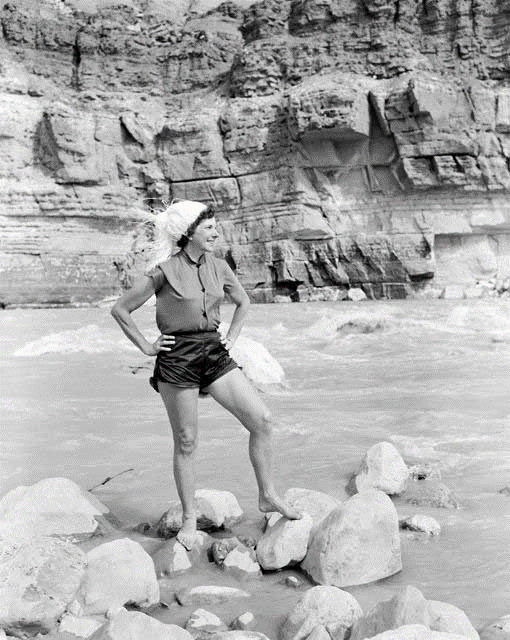
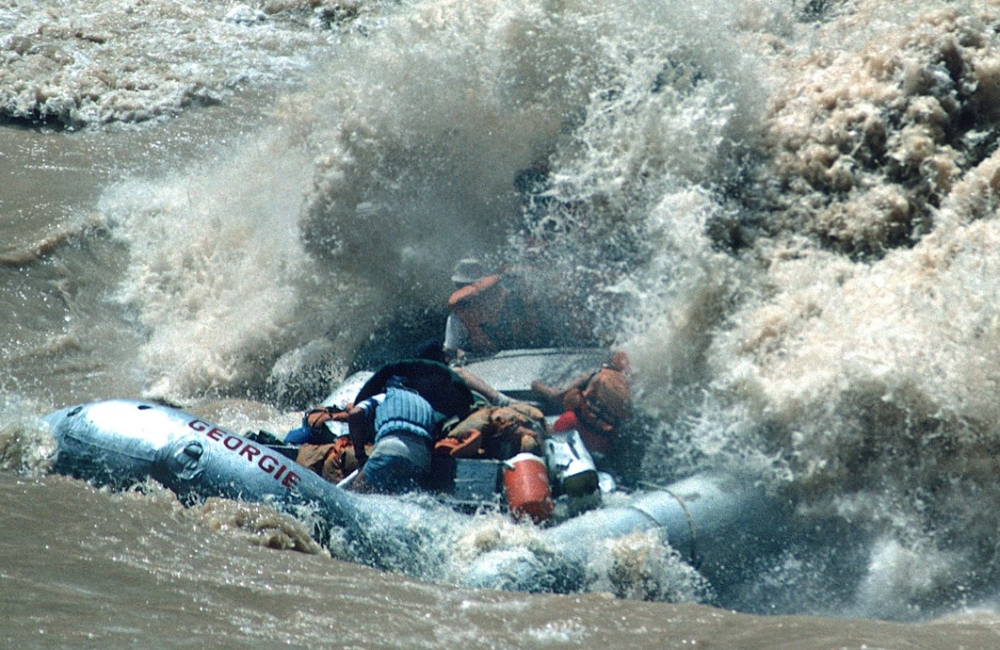
The G-rig was essentially three S-rigs strapped side by side. A floating island, if you will, with the ability to run any hole on the river, whether you wanted to or not. It wasn’t all downstream fun, though. Many a river party would round a bend in those days only to see Georgie’s rig hung up somewhere in the rocks as she waited for more water. There’s a couple of rapids in the Grand Canyon that were named after Georgie because of situations like this. Over the years, that particular configuration has vanished from the Grand Canyon but the Georgie stories continue on as strong as ever.
The J-Rig
The J-rig was invented by accident essentially. As the story goes, the founder of Western River expeditions, Jack Curry, booked a few summer river trips, and placed an order for a fleet of S-rig pontoon rubber. When the delivery truck showed up, only half of the order was on it. He had plenty of the outrigger side pontoons, but did not have the main large boat to strap the outrigger pontoons onto.
Without enough time before his launch day to place another order, he came up with a solution on the fly: Strap all the outriggers together, build some boat frames out of 2×8’s and make it happen. The J-rig was born, and after one run through the canyon he liked it so much he decided to patent it.
A little of bit of G
During this time of development and experimentation, many great bonds formed among outfitters, giving birth to legends that continue today. Jack Curry, was friends with Georgie White, and when Georgie passed on in the ‘90s, Western River Expeditions became heirs to Georgie’s river permits, and many of her boats and motors.
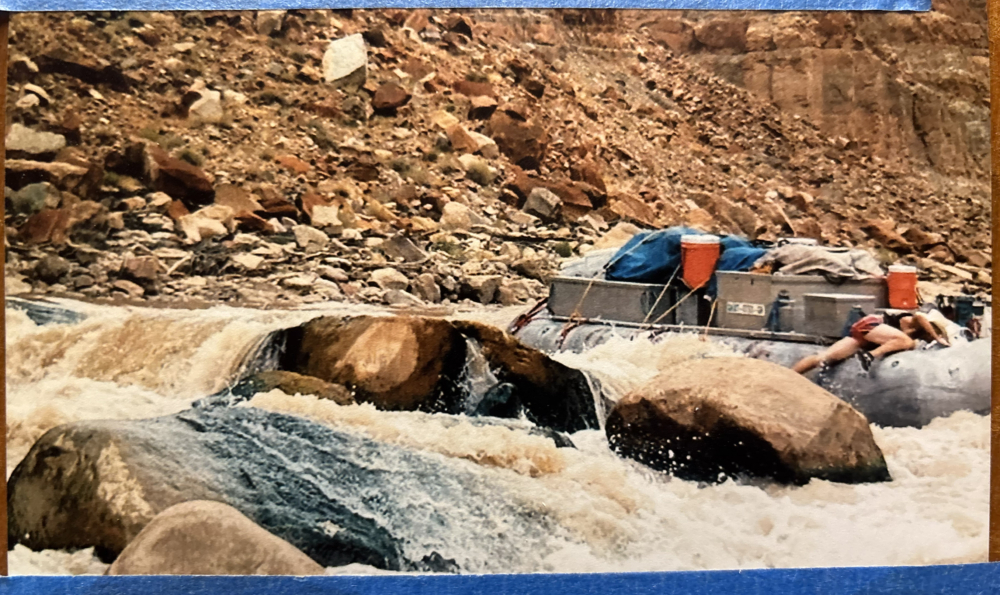
I had the privilege of running a boat with the name “Georgie” still painted on the side of it once upon a time. It was a low water trip in Cataract Canyon in 2002. True to form, I got badly hung up in Big Drop 3, but that is a story for another time.
What We Carry
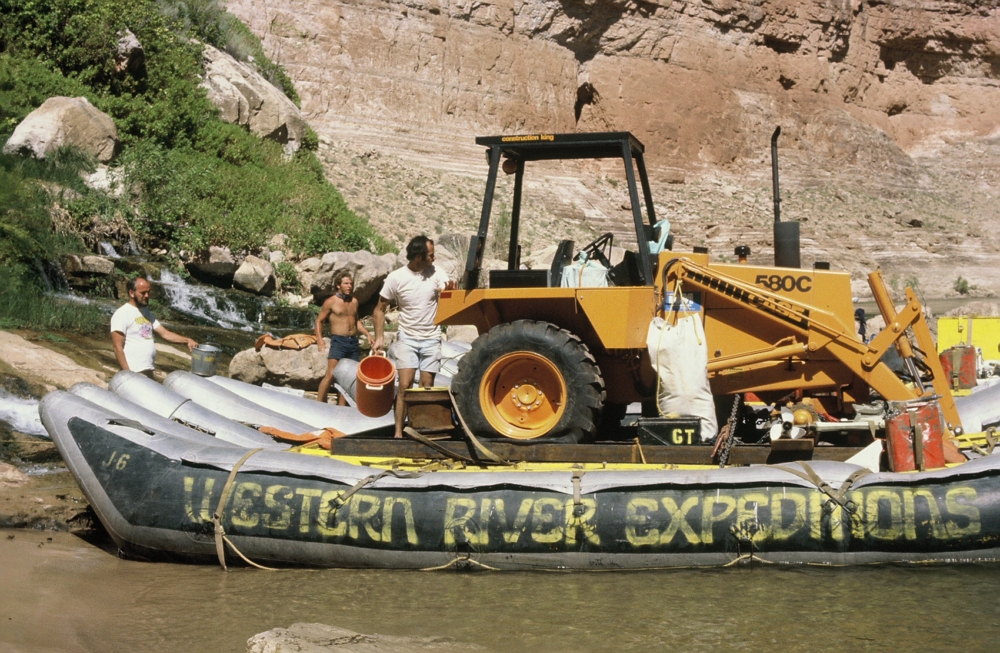
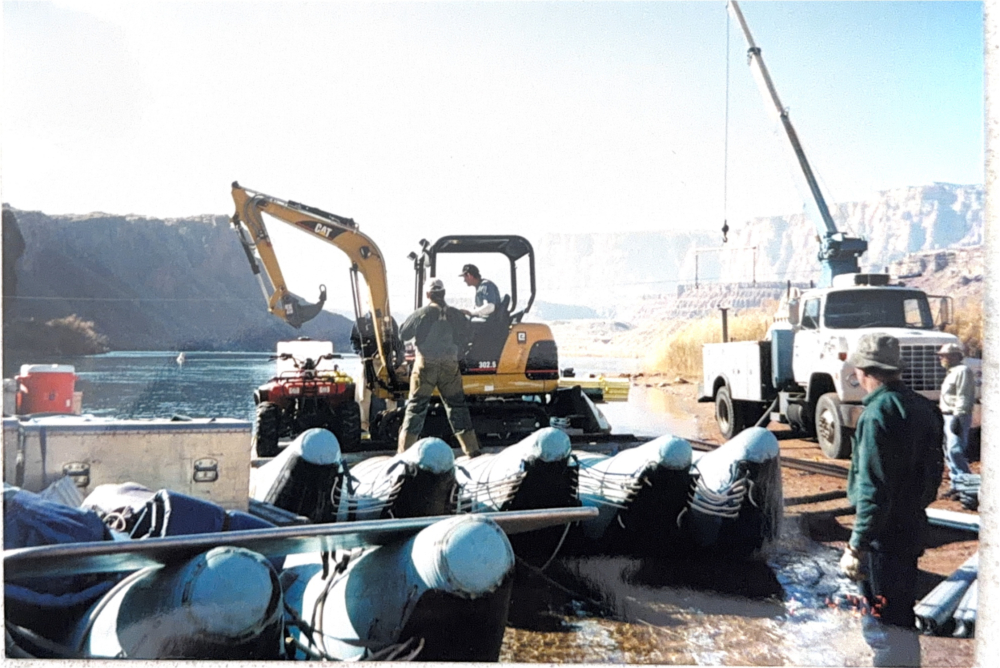
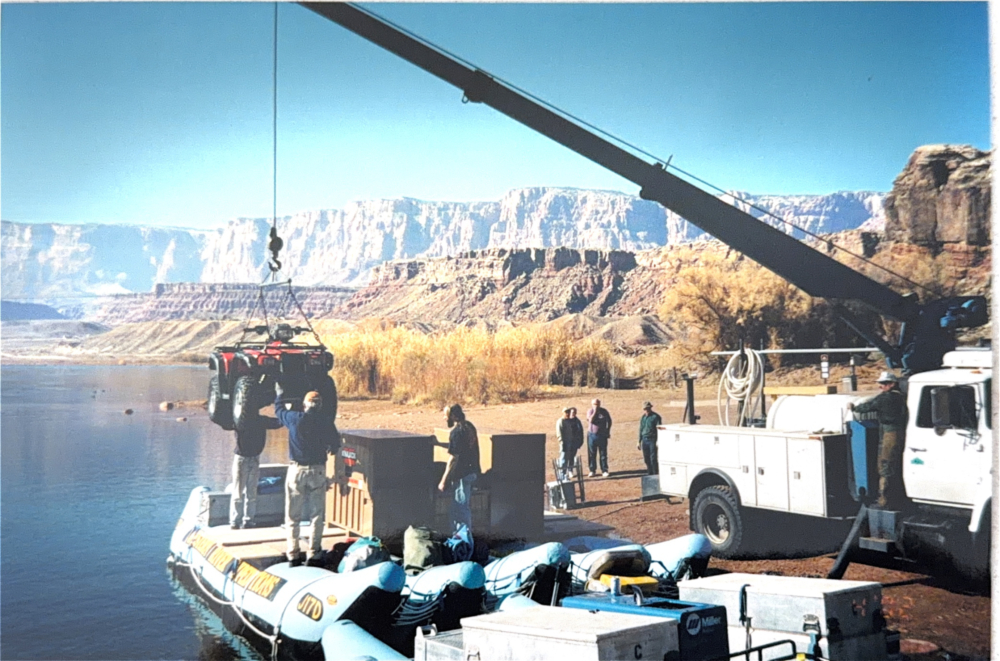
Sizeable boats provide ample space for…well, whatever it is you want to bring. For instance, over the years motor rigs have been contracted to haul heavy equipment down to Phantom Ranch for the National Park Service. Small tractors have gone through Hance rapid on these rigs if you can believe that, and if you don’t, we’ve got the pictures to prove it.
I already talked about the privilege of escorting wheelchair users or other special populations downstream safely and comfortably. This requires what I like to call “the accoutrements:” think wheelchairs, ramps, tracks, oxygen tanks, walkers, etc., often too bulky for your standard oar or paddle rigs.
But mostly, when people think about big boats, all they can think about is ice. I will spare you the suspense… The answer is yes, we have ice. We have plenty of ice in fact. Ice for water, ice for lemonade, cocktail ice, iced coffee ice, sprained ankle ice, and extra ice to put in your front pocket for air conditioning if you want.
Now that being said, any ice we carry is for the pleasure and benefit of our passengers. That is just the truth of it. Sorry. We are usually open to negotiations, however, if you can catch us at just the right (READ: unfettered, unencumbered, unoccupied) moment. Use your best judgement, though here’s a tip. Trying to wave down a motor rig that is dropping into Lava Falls is definitely not that moment…
The Boatman’s Code
At the end of the day, every vessel that leaves Lee’s Ferry becomes part of a temporary community, bound by the same boatman’s code to treat the canyon and its waters with respect, to care for one another and the passengers you take downstream.This is a long-standing canyon tradition. We are all there together, and for the same reason, to experience the beauty and wildness the canyon has to offer. Our guides take their responsibilities seriously, train to earn their place, and take pride in being part of a truly unique community.
Whether you agree or disagree with the idea of commercial motor rigs in the Grand Canyon (or commercial operations at all for that matter) the reality is that they have been, currently are, and will continue to be a way for any person that wants to, to access the beauty and wonder of that magical place.
And that matters.
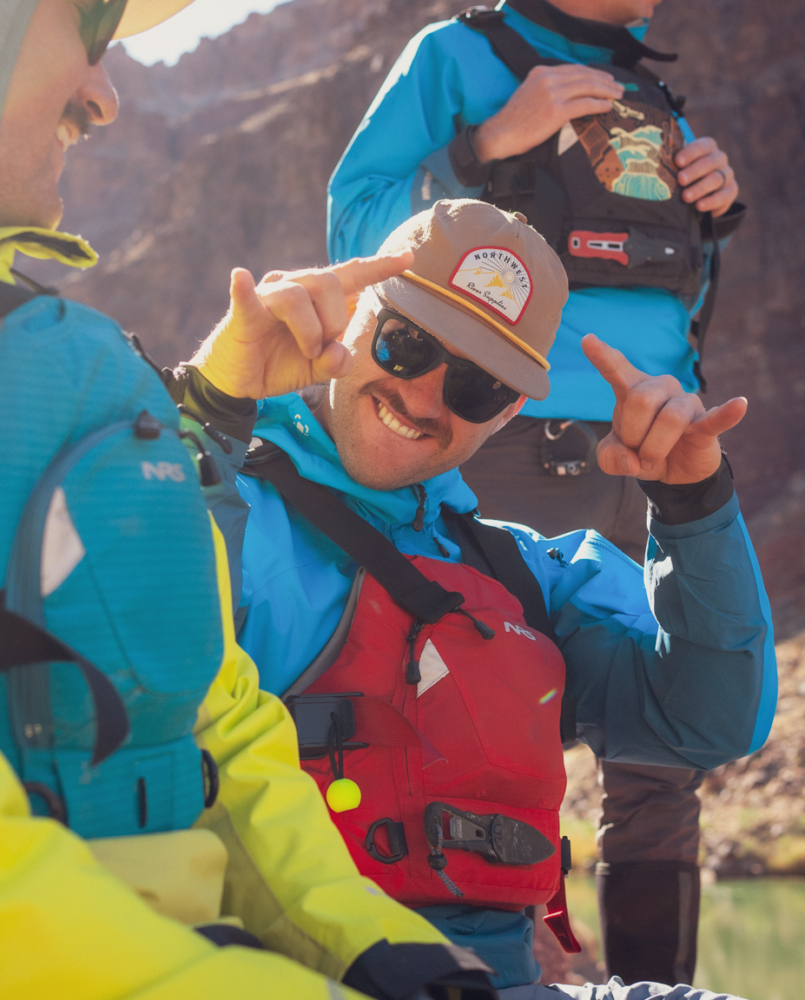
The clients on a motor-rig, like any other commercial vessel, are people who enter at Lee’s Ferry as a tourist and come out the other end as an eternal advocate for the canyon, and the preservation of the place. And I am certain that in the future we are going to need as many of those as we can get.
***
Editor’s note: Archival images courtesy of Western River Expeditions. All other images courtesy of Justin Olsen.
Guest Contributor Justin Olsen was first exposed to the magic of floating rivers at a young age, and that experience continues to shape his life today. 2026 marks Justin’s 25th consecutive season as a guide on the Colorado, with the last 20 years in the Grand Canyon.
His photo work has appeared on the covers of major sport publications including Bike Mag, Mountain Flyer, and Decline Magazine as well as National Geographic and The New York Times. His cinema work has featured in large scale snow and cycling films for Red Bull Media House, Freeride Entertainment, Matchstick Productions, and more. Currently based in Utah, Justin continues to travel as far away as his camera will take him. Learn more at https://justinolsen.com/.