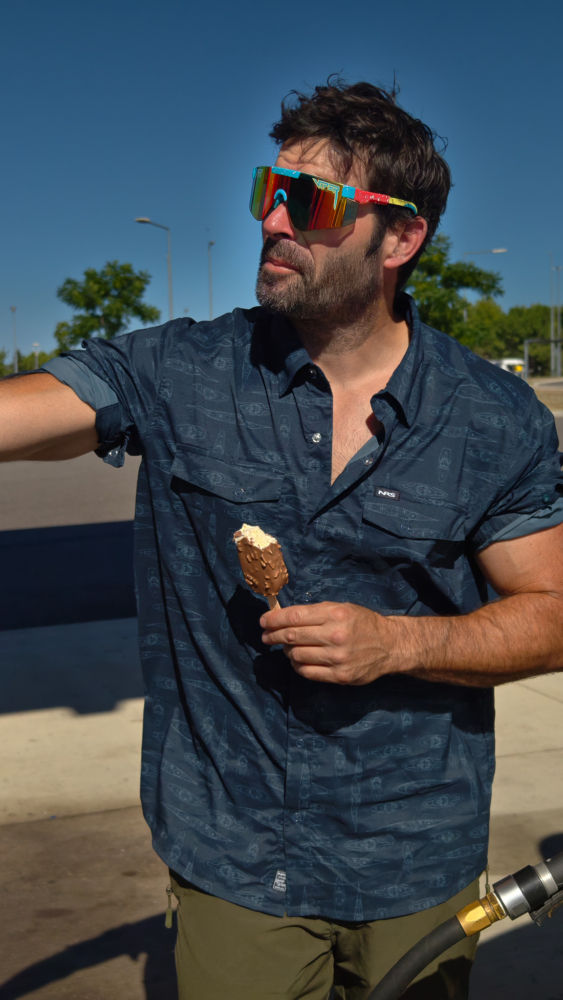
We were in the middle of a drought. Since mid-June, finding whitewater in the Pyrenees had become extremely difficult, and when the Ubayak Kayak Race came up, the Ubaye River was one of the few places within driving range with water to paddle. “Within driving range” is relative: together with my friend Cédric, a photographer, we crossed France from west to east. Nine hours on the road, ten with the stops.
The whole way, I was already mentally projecting myself into the race. What could happen, what might not happen, what water level we’ll find, where I’ll have to scout, where I’ll be able to rest, where I’ll have to give everything. While we drove, my mind churned through the possibilities, even though I know perfectly well that I won’t know anything until I’ve seen the river with my own eyes.
Between Two Apple Trees
It was raining when we finally arrived, at around one in the morning. We wanted to get to bed quickly so we could paddle at first light. I took out my hammock and strung it between two magnificent trees. A few minutes later, once I was already lying down, I realized that they were two apple trees, thanks to the apples falling on me. On my face, mostly. It was raining, it was pitch dark, it was already late: rather than move and disrupt Cédric, I had to live with it.
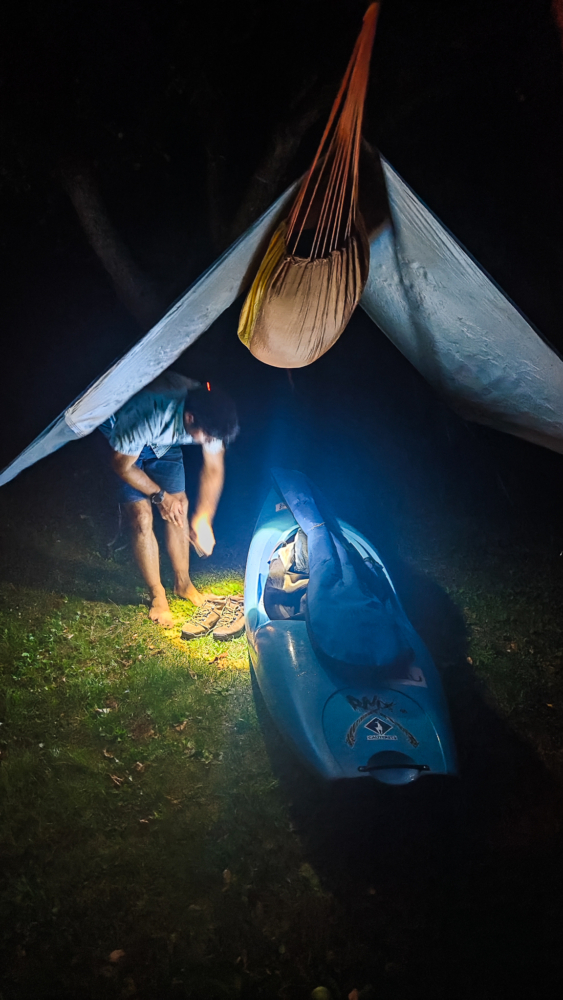
It was only one night; in the morning we could take it down and move to a new spot. At least our “camp” was spartan, so it would be quick. And, tomorrow, we would kayak.
Camping in the rain, being pelted with apples the night before a race—it’s a long way from the precision-engineered image people can have of a world champion. And yet, even with thousands of euros, I wouldn’t do it any other way. To me, that’s also part of living with the rhythm of nature.
What people don’t see in a podium photo or in a big rapid is mostly what happens at home. I’m a husband and also a dad: it takes a whole organisation for everyone to be able to enjoy themselves. When I leave for kayaking trips, it’s a matter of compromise, and of making up for my absence in other ways.
A Forgotten Valley
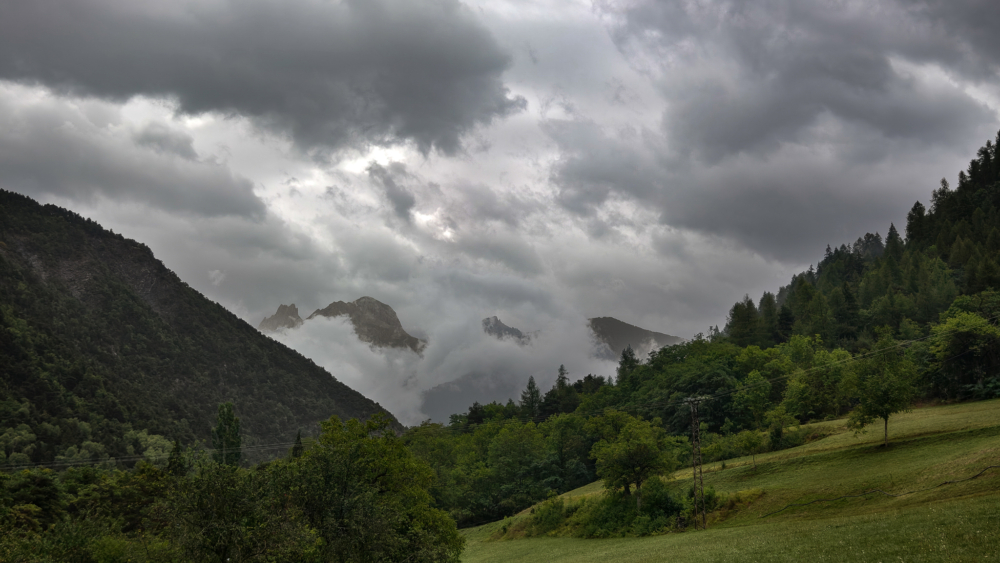
The Ubaye, to me, is a slightly forgotten valley between Provence and the Alps. What makes it special is that it runs on natural flow: no dam decides in nature’s place.
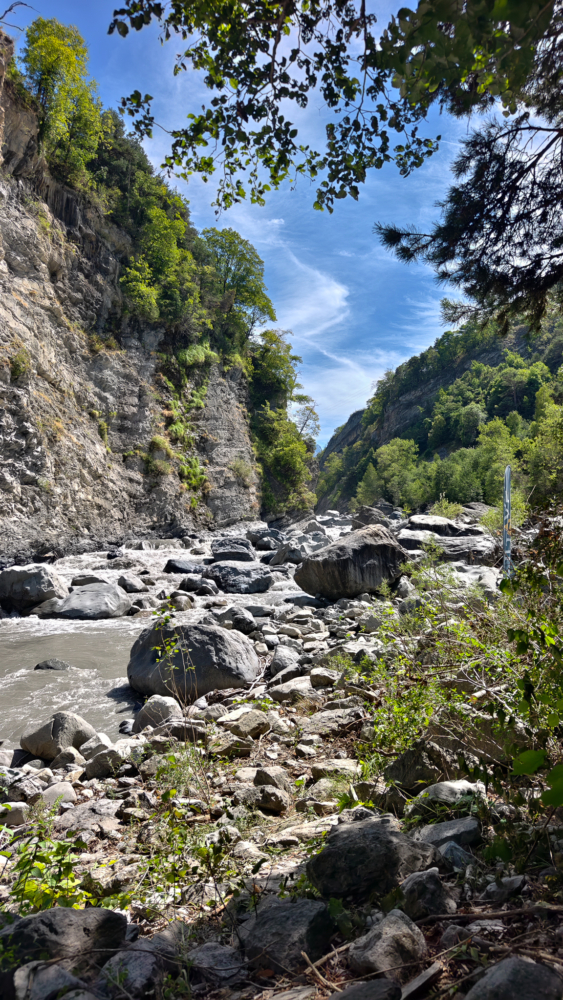
What I find beautiful there is that there is always a vantage point from which you can see the gorge. The gorge is hard to reach on foot; it’s really only from the water that you get another perspective. It’s wild, it’s spectacular, and at that time of year you’re far from the intensive tourism found everywhere else in the Alps. It’s one of the last valleys spared from those excesses.
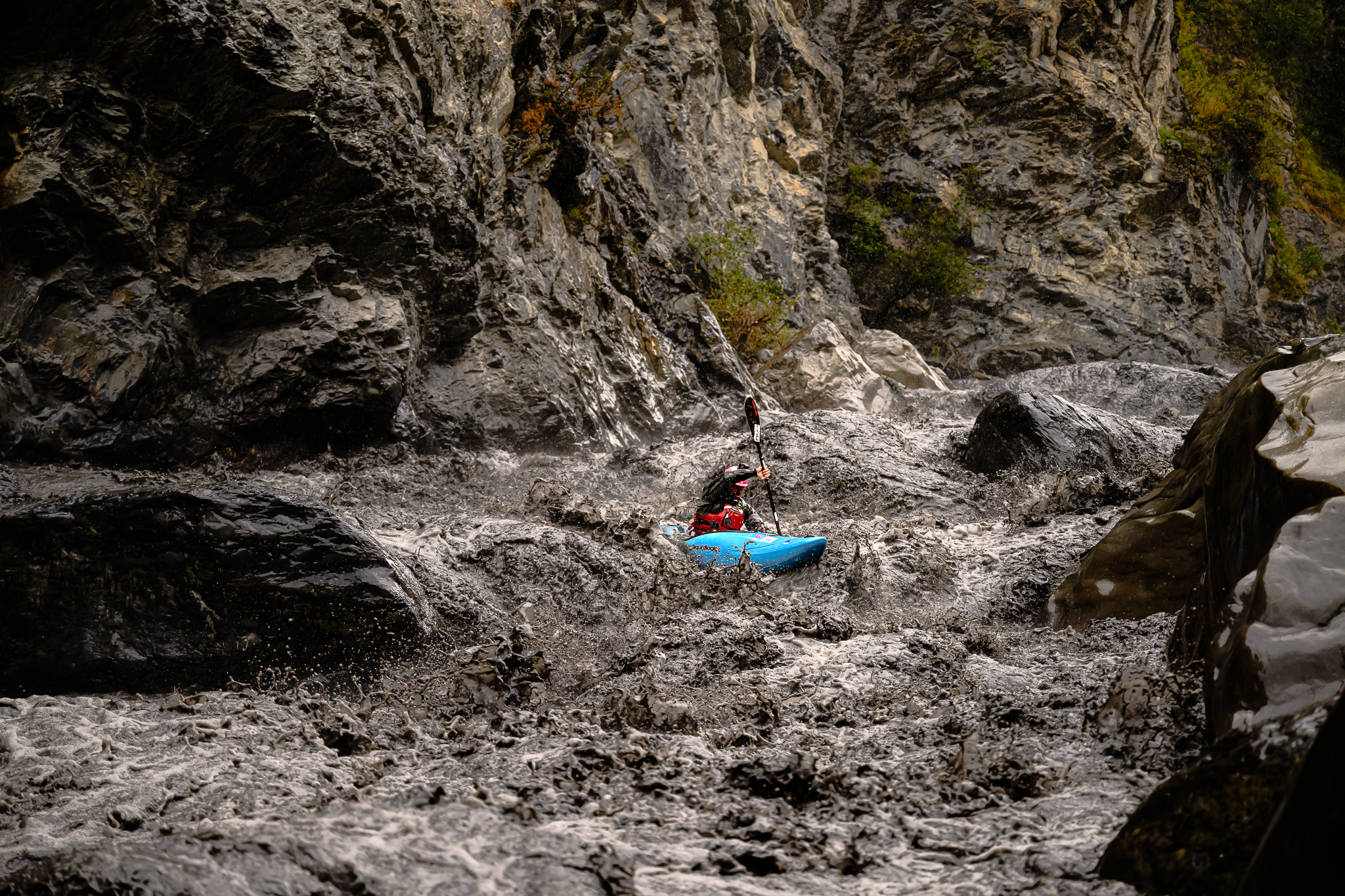
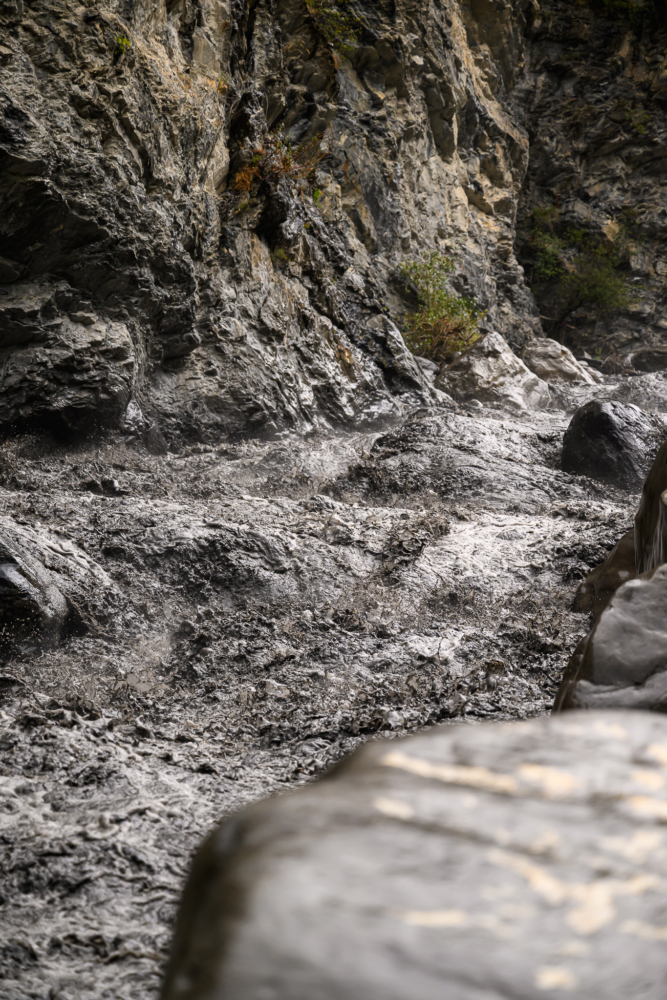
What really sets it apart from the rivers I know by heart is, first of all, its colour. In flood, the Ubaye loads up with sand and turns brown within hours, an opaque brown of diluted earth that no longer lets you see anything underneath. It feels almost exotic: you’d think you were in Peru or Bolivia, running one of the headwaters of the Amazon. And then, when you come into the lower gorge, there are boulders several metres high, polished by millennia of floods. I know few places in Europe where you find the like.
The Ubaye remains a legendary river for a lot of kayakers. Because it’s a natural river, the flows change enormously through the year, and you never know what to expect in terms of runnability. The features shift with the levels, and at every flow, you always have to get out of the boat, check, scout. Here, there is always something to learn, or to relearn.
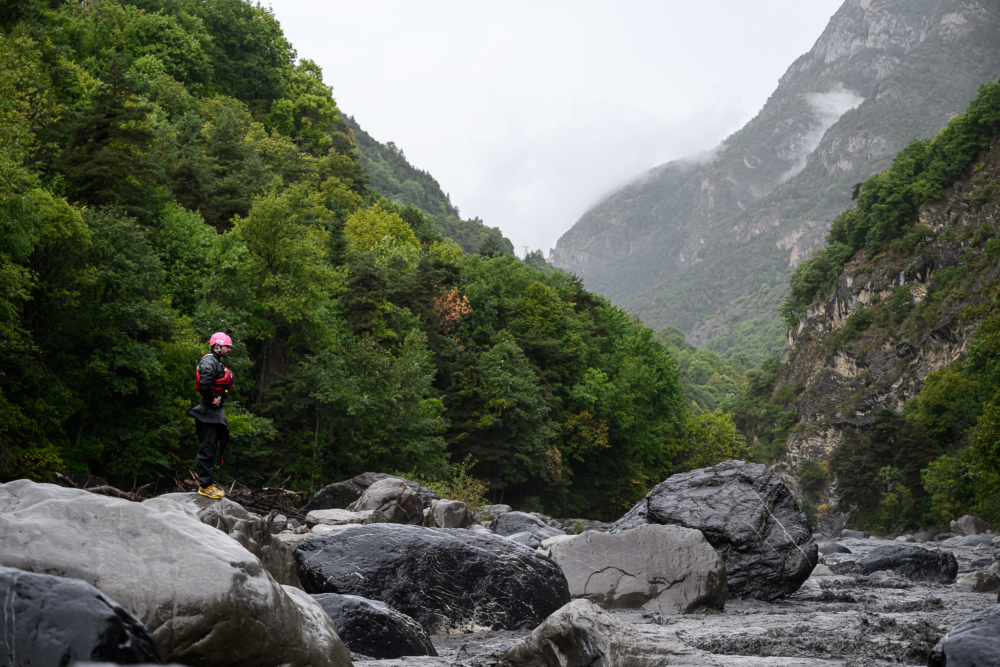
I grew up with a group of good kayakers and every summer we would spend a couple of weeks training in the Hautes-Alpes. I had plenty of opportunities to paddle the rivers around Briançon and Embrun. And yet we didn’t often come here: it was a bit out of the way, and the technical level of the lower gorge was, according to the group who were coaching me, committing. It was the river for the strong ones; too advanced for me at the time. After that, for years, I simply always had something else on at the same time.
Plaster
The storm came through Thursday night, while we were driving. A few hours earlier, the Ubaye had been at around three cubic metres per second. Friday morning, the gauge sat around twenty. A different world. Still, I was there above all to paddle. And, after those weeks without water, I was thirsty for it.
What I found looks like nothing I usually see on a river. The strangest thing is the foam: it disappears, it turns grey. It’s the shades of colour that change everything. There’s no foam any more, it’s plaster, thick, almost lumpy. Here and there, you can see there’s a hole or a wave, but you don’t know whether the obstacle will stop you or if you’ll make it through without difficulty. The first features you take on are a kind of test.
The first time I dropped in, my first reaction was to tell myself there might be rocks under there; I tried to leave a margin for error. That loaded with sand, the water no longer has the same density or the same temperature. It behaves completely differently. The way I was breathing, even the way I was blinking, everything had to adapt. I could feel the sand sliding over my hands and crunching between my teeth. I had only known something close to it once, on the Gave de Pau during the great flood of 2013.
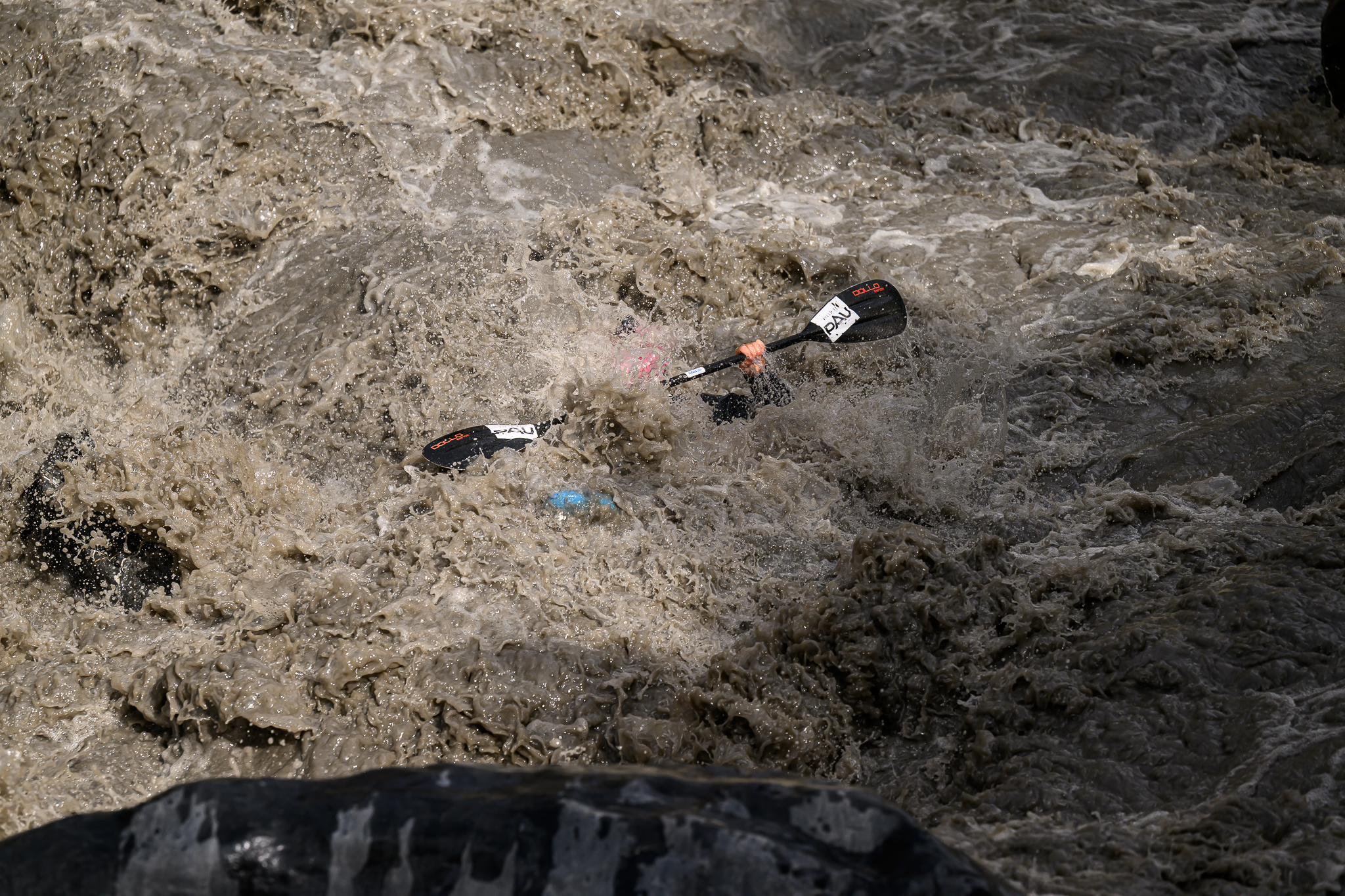
After the first cautious phase of getting my bearings, it became play. For me, paddling that flooded river was pure happiness.
The Fosse aux Lions
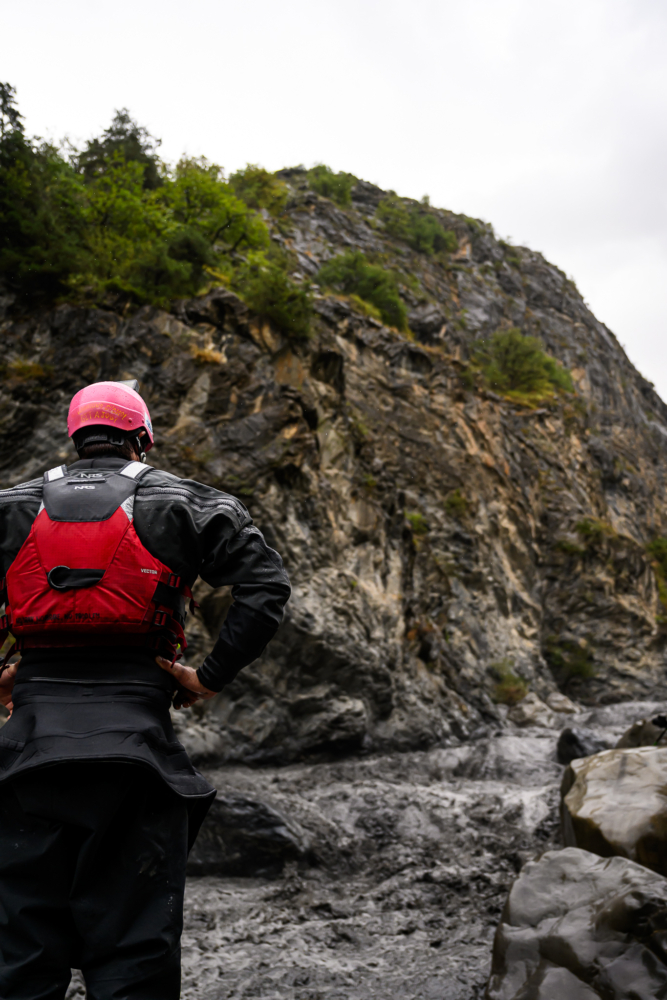
The Fosse aux Lions is the hardest section of the Ubaye, and in my opinion, it’s the one that gives it the most charm. The Fosse aux Lions gorge is where you’ll the Ubaye’s biggest boulders: rocks several metres high, rounded by the water, between which you have to find your way. That’s where the beauty is.
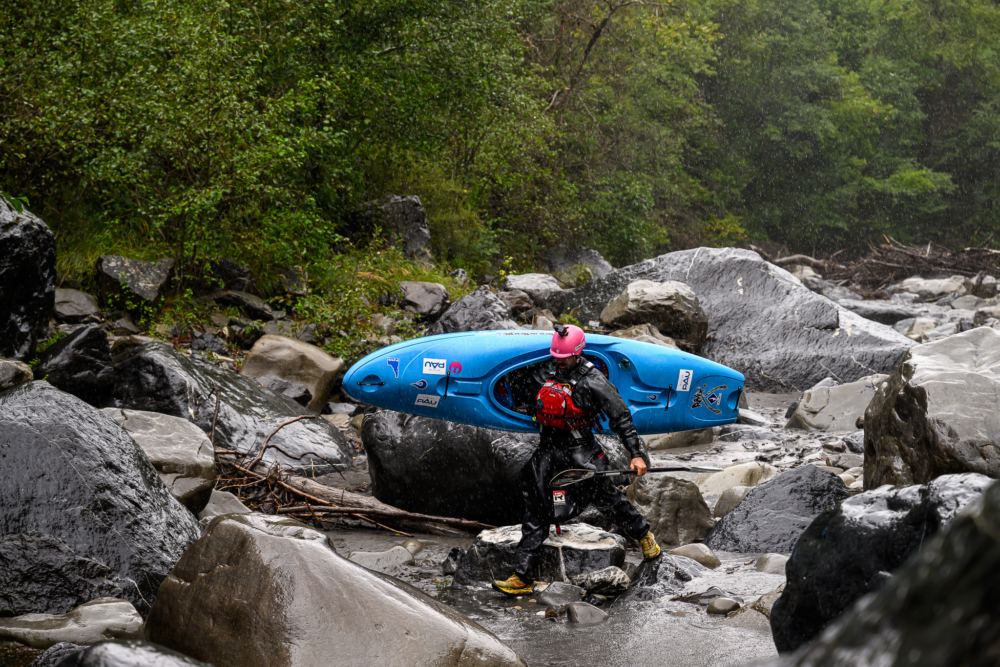
Before dropping in, I spent several minutes on the bank. I always assess the line I’m going to take and its potential consequences. If I judge that it’s dangerous, that I need someone on safety and that this safety isn’t in place, I don’t go. If there’s any doubt: I walk away. If there is no doubt at all, if option A is good or if it’s option B that has been decided, I go. There is no half-decision, and no half-consequence. Either you go, or you don’t.
That day, there were also photographers. Cédric was documenting the weekend and Dani, the Ubayak’s photographer, was working on the river as well. They both needed images of the Fosse aux Lions, so I ran the section three or four times. Repetition is precisely what you have to watch out for, because you can end up falling into a false sense of ease or comfort. Just because a first run went well doesn’t mean the next one will. If I had felt it was too exposed to run several times, I would have said: I’ll do one or two runs and then stop. Filming must never affect the decision, nor your evaluation of what you truly feel comfortable with.
A River That Doesn’t Wait for You
By Friday afternoon, the flow had already dropped. It was now less committing, but I still had to study the river again. I don’t know the Ubaye well enough to anticipate what change this level would have on the river’s features.
On Saturday morning, it was the same Ubaye, maybe a little less intense because it hadn’t rained again. The flow was still dropping. Part of what I had learned the day before was already of no use, and that’s just as well. It’s a natural river, and that is exactly what I come looking for, the unpredictability of free water, unchannelled.
We ran the team long race in the morning, in the lower gorge, with Jonas Le Morvan and Emmanuel Navarre, whom I have known for more than ten years. That gorge is stunning, and running it flat out with friends was simply very cool. We won, but what I mostly take from that run is the experience of paddling as a group. With three of you, you have to follow one another, watch each other, move fast without ever losing sight of each other. In the best moments, if feels as if each of you knows what the others are going to do before they do it.
The sprint event came that afternoon, with two runs. On the first lap, I didn’t know exactly where the start zone had been placed, which affected the line just after it. A lot of us were wondering which one would be the fastest. I chose the classic option. The run was clean, but I knew that it wouldn’t be enough for a win.
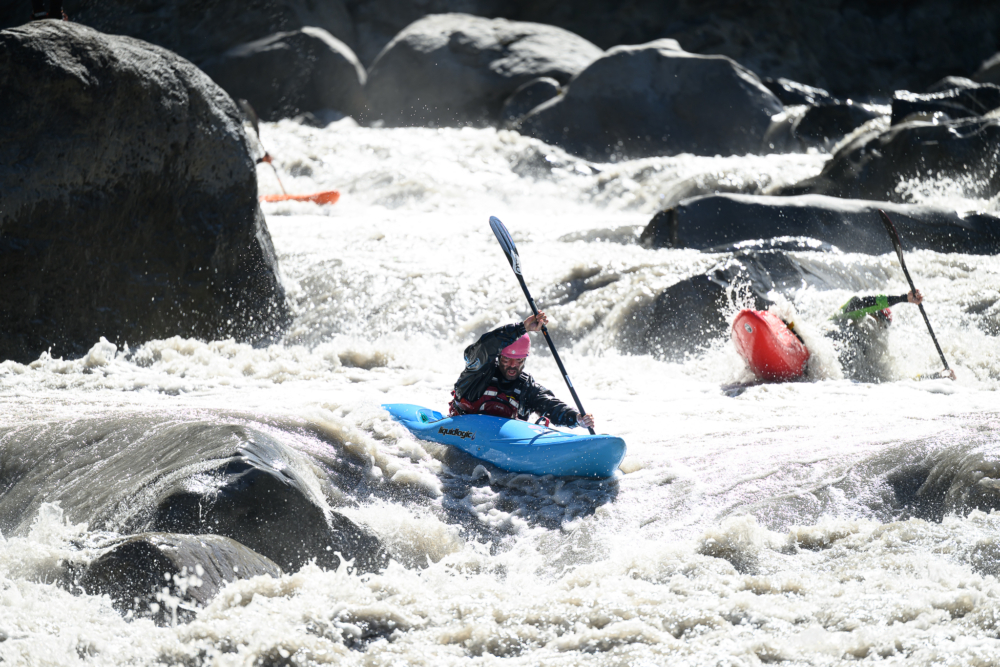
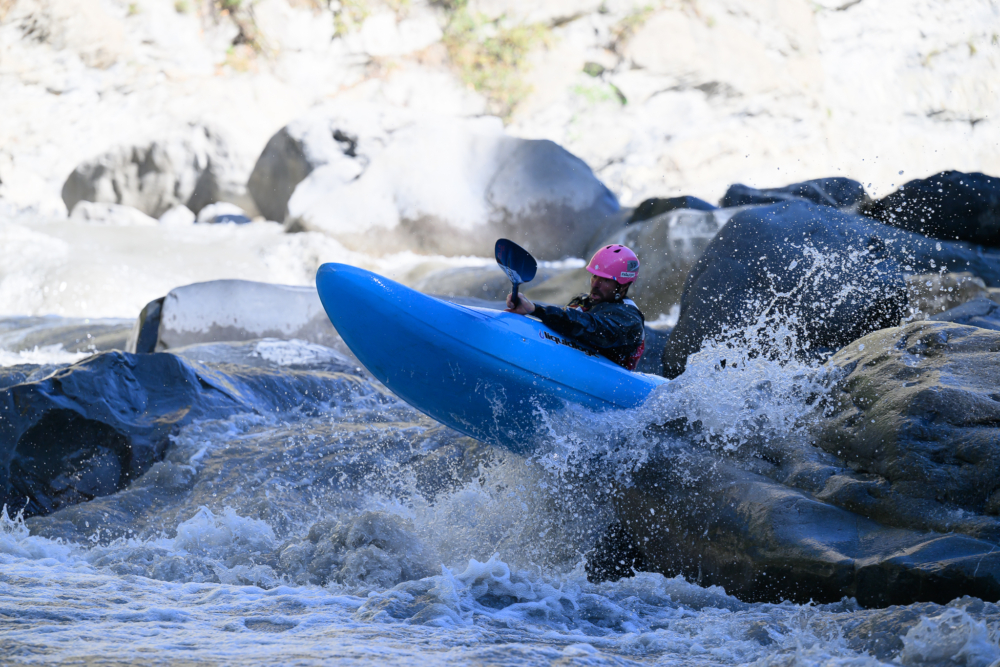
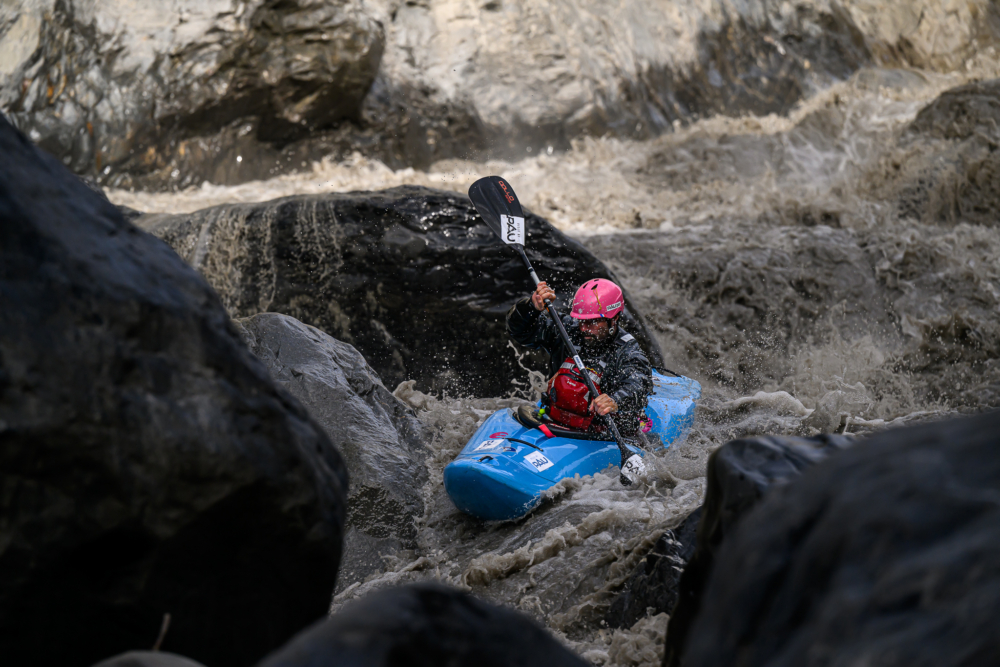
I changed a lot of things for my second run, this time taking the option that matched the water level of the moment. The flow had dropped through the day, though I didn’t know exactly how much. It was enough that even my reference points from the first run were no longer entirely reliable.
Until the results were announced, I didn’t know whether I had won. I could easily have been second or third. In the end, it was the win. And what satisfies me most isn’t my victory; it’s having been able to adapt.
The Gear
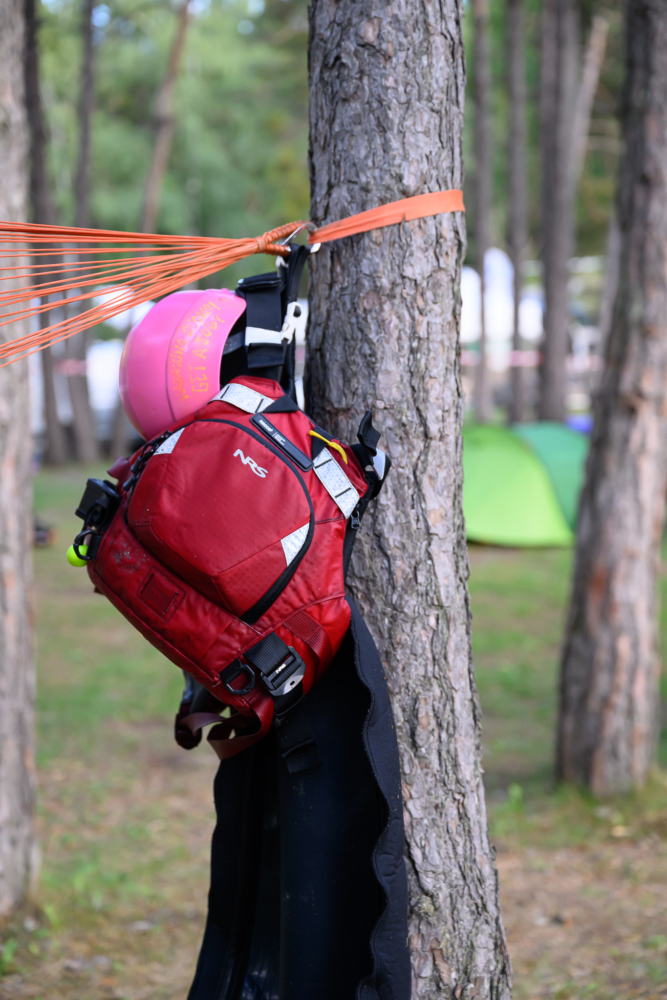
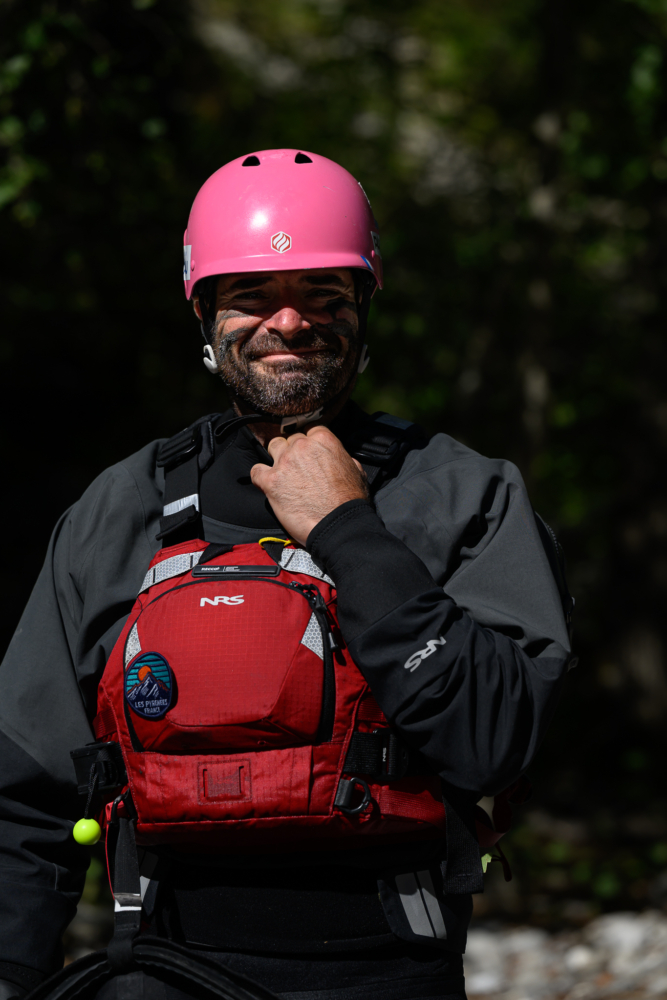
That win was also a nice surprise so soon after changing gear. I’m slowly getting to know my new PFD, the Vector. That day, I was often alone on the river, so I had to carry a lot of things, for food and for safety. I had no difficulty fitting it all, and even with a bit of comfort. Whitewater gear isn’t known for that, so it’s genuinely pleasant.
And sometimes, comfort is precisely about feeling nothing at all. That’s what I love about the Phenom. It’s like going running in a rain jacket: you don’t feel like you’re wearing a dry suit. With other suits, I’ve had the lower leg hanging loose and getting in the way. Here, from the moment I put it on to the moment I take it off, it’s like a second skin.
The Nugget of the Summer
We left on the Sunday to cross France again the other way. That day, the way I saw the Ubaye had changed. No longer the kid who heard it spoken of as “the river for the strong ones,” my apprehension has turned into something else. Now what comes is the urge to go back, outside of competition.
Ten hours of driving, a night under the apple trees, grey water full of sand, two days spent learning and then relearning the same river, runs with friends and, at the end of it, two wins. But when Cédric asked me what I really took away from that weekend, my answer was much simpler.
It was happiness. Pure happiness. The nugget of the summer.
***
Guest contributor Éric Deguil is a five-time Extreme Kayak World Champion and currently ranked number one in the world on the AWP ranking. He joined the NRS team this summer. Cédric Eyma is a photographer and filmmaker; he documents Éric’s work on the river.
Editor’s note: Words by Éric Deguil, as told to Cédric Eyma. Photographs from Cédric Eyma. Learn more about the 2026 Ubayak Race here.