In Southwest Colorado, most of the leaves have fallen, the nights are getting colder, and the rivers are starting to feel a little different. Fall is a pretty special time to be on the water around here. The crowds have thinned out, the fishing can be pretty darn good, and every warm day feels like one you probably shouldn’t waste.
So, naturally, with a sunny Saturday on the horizon, we decided to float a river that probably would’ve been easier to wade.
When I say small water, I mean just enough to push a raft downstream. The kind of river where you’re more likely to run into a wade fisherman than another boat. But we’d had some late-summer and early-fall rain that helped keep the flows up, and spending the day together on clear water, with good weather and hungry trout still sounded pretty good to me.
The Plan, or Lack Thereof
Like most good float trips, the plan for this one came together the night before. We were out grabbing dinner, trying to figure out what to do with our Saturday, when the idea was launched: “Wanna take the raft out tomorrow?”
A quick look at the flows, a little back and forth, and that was that. We’d floated this stretch before, so we knew what we were getting ourselves into. There was enough water to get a boat down, but not without a little work. A few gravel bars, shallow riffles, and some downed strainers left behind by high winds, hard winters, and bigger spring runoff. Nothing we hadn’t dealt with before.
The alarm went off at 6 a.m. At this point, I’ve got a pretty standard checklist that runs through my head before most float trips. There was coffee to make, gear to gather, breakfast to find, and a boat to get on the trailer. Oars, anchor, straps, rods, flies, net, PFDs, first-aid kit, shuttle money, drinks, and lunch to load. After enough days on the water, you get pretty good at remembering what you need.
Or at least you think you do.
Somewhere in the middle of getting everything together, I realized I’d forgotten one pretty important piece of equipment: the pump. How I managed to leave it behind when our entire day depended on an inflatable boat I still don’t know.
Thankfully, a coworker came through and saved the morning. One borrowed pump, a couple of breakfast burritos, and a few more things thrown in the truck, and we were finally on our way.
A Pretty Good Time to Be in Colorado
The drive to the put-in was worth the early morning. Sure, winter here is special, but fall in Colorado—when the aspens go from green to gold—is something to see. Most of the leaves had already turned, but there were still stretches of cottonwoods, aspens, and willows hanging onto their yellows, oranges, and reds. The air had that cold, crisp feel you only get on a fall morning, with a little dew still hanging around and the sun starting to work its way into the valley. It was shaping up to be one of those October days that makes you forget winter is right around the corner.
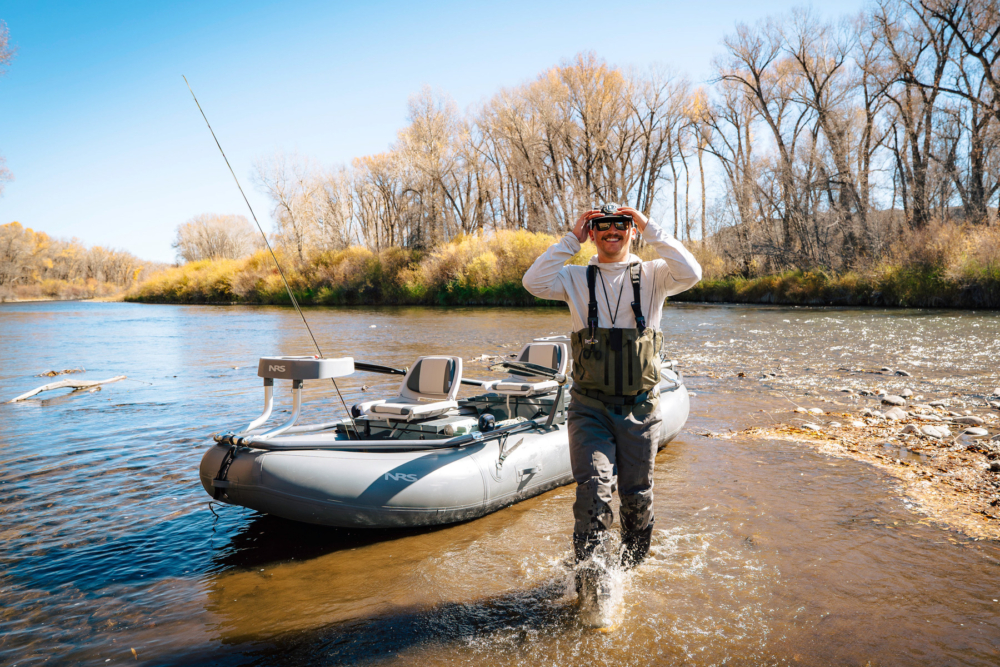
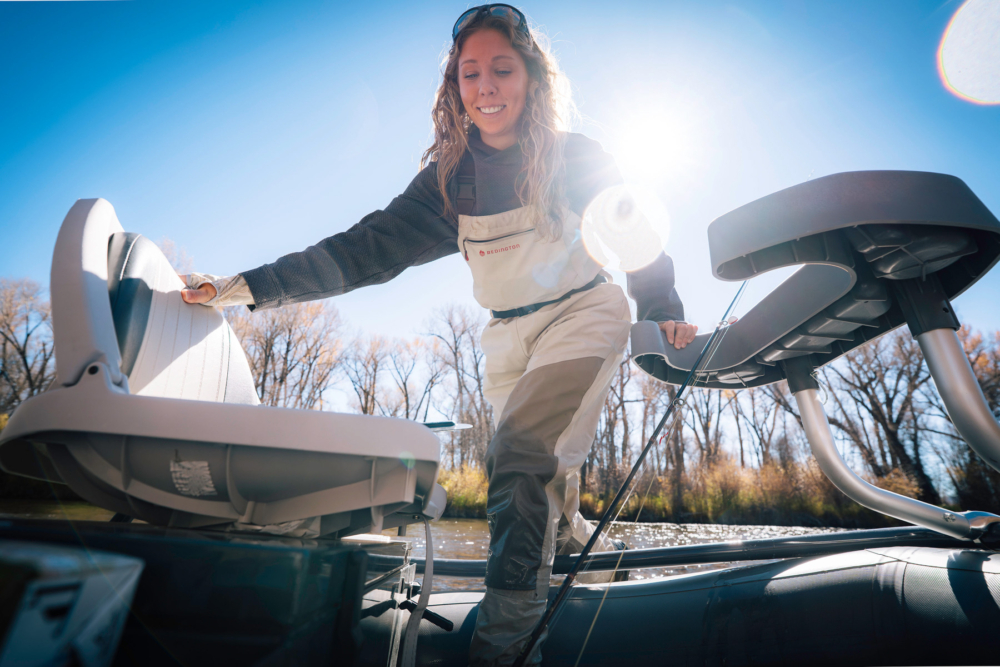
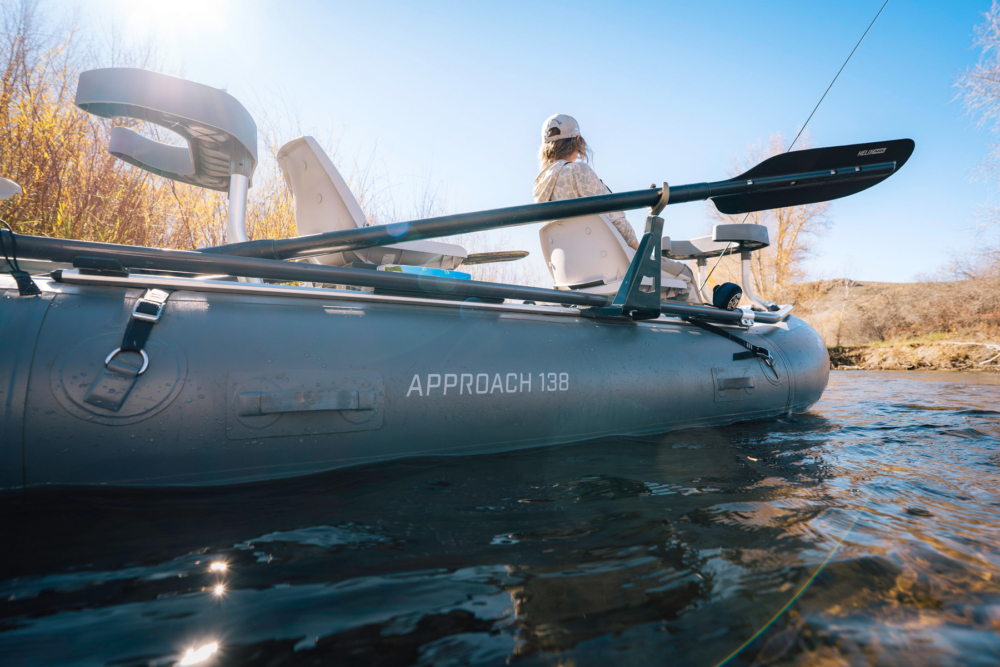
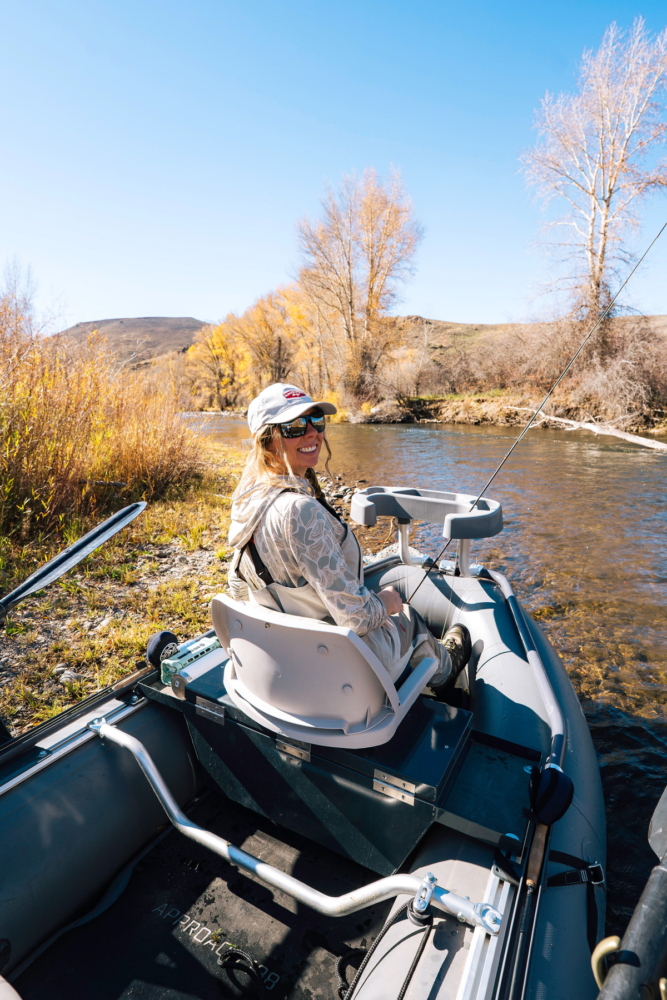
Our boat for the day was the NRS Approach 138. Ahead of us were five or six miles of prime fall trout water. Just me, my girlfriend Taylor, a cooler full of drinks, some camera gear, a couple of rods, and, thankfully, a pump.
We saw another crew launching an NRS Slipstream 129 just ahead of us, but after watching them leave the ramp, we didn’t see another boat all day. We ran into a few wade fishermen along the way, but for the most part we had the river to ourselves.
Sometimes You Have to Get Out and Push
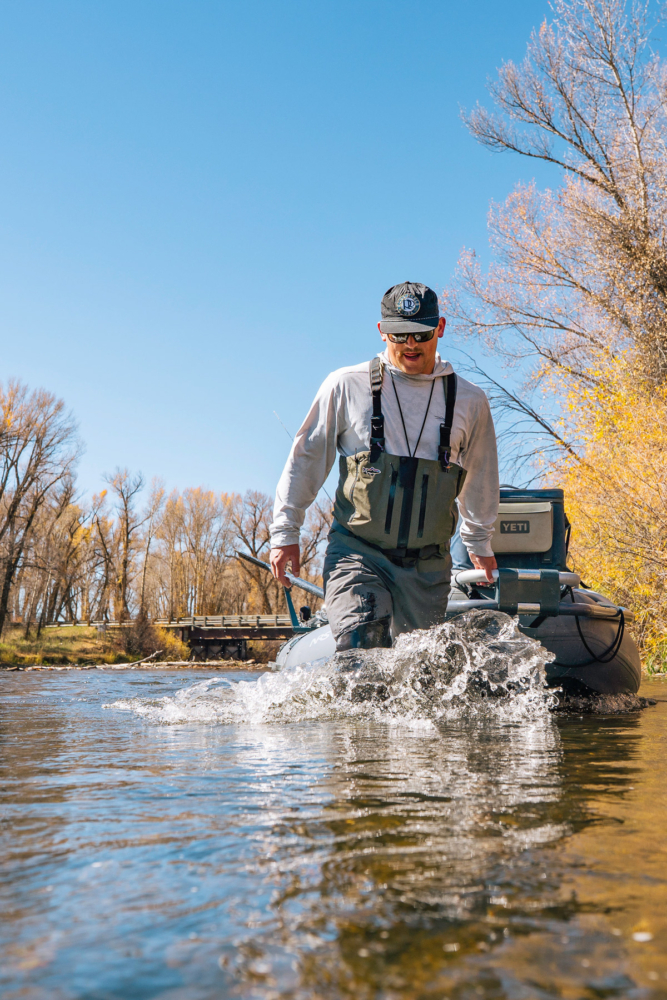
I’ll be the first to admit that this stretch is probably better suited for wade fishing at the flows we fished it. But that’s also part of what made the day fun. We weren’t trying to cover 20 miles or race to the take-out. We wanted to poke around, fish the good-looking water, and spend a Saturday outside in the weather we had.
Having a raft gave us a pretty good way to do all three.
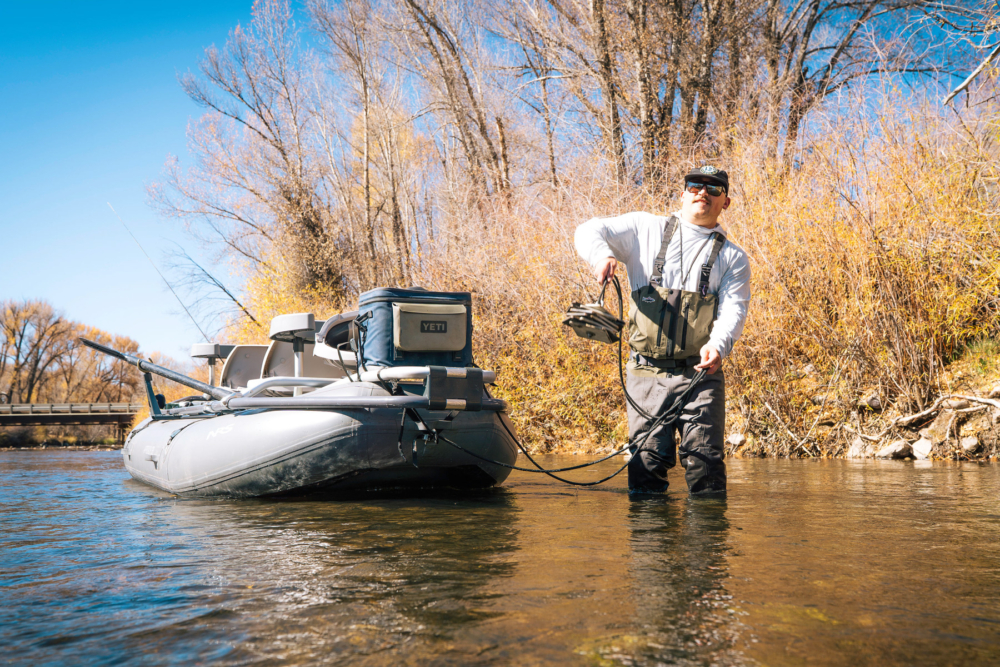
The Approach 138 carried our gear and gave us the ability to move between runs, even if that meant occasionally hopping out to walk the boat through a shallow section. My job for most of the day was pretty simple: keep the boat moving, find the right water, and put Taylor in a good position to catch fish.
With low flows, shallow water, and no whitewater on this stretch, we opted not to wear our PFDs, but we made sure we had one for each of us in the boat plus a spare. That said, low water doesn’t mean there aren’t hazards, and wearing a PFD is always the safer choice, especially around wood and moving current.
We did come across one particularly tight spot where a downed tree had created a strainer across part of the river. It looked like somebody had been through with a chainsaw and cleared just enough room for a boat to squeeze through. This was one of those moments where I really appreciated the width of the Approach. Having a narrower raft gave us more room to maneuver through the tight section, without worrying about scraping up the gel coat on a hard-sided boat.
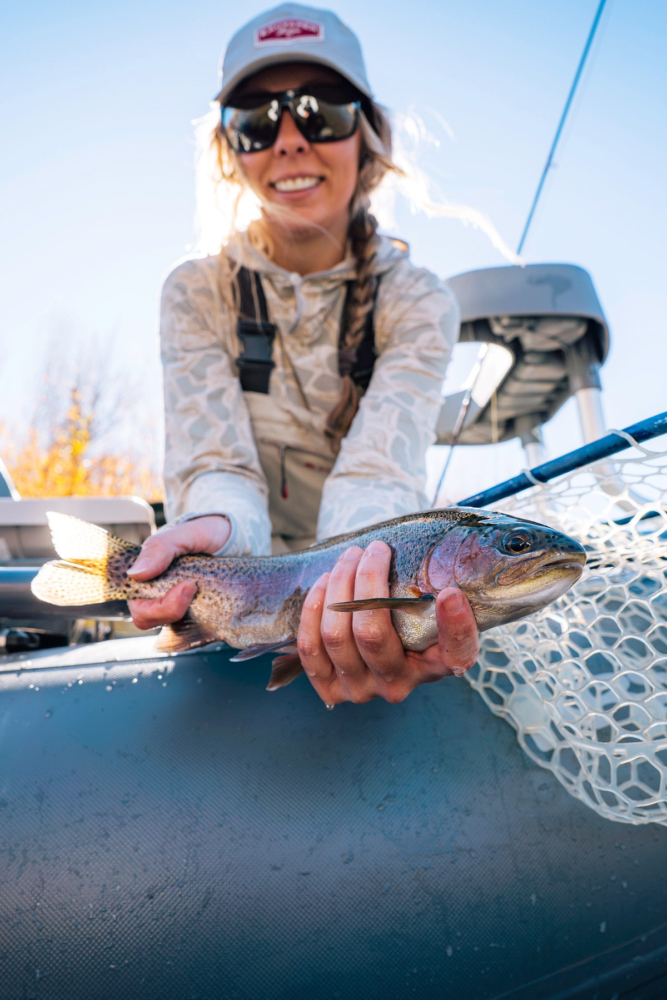
More importantly, we didn’t have to get out in the stronger current or drop an anchor somewhere it could catch and pull us toward the strainer. We were able to assess the opening, line ourselves up, and work our way through. It’s exactly the sort of situation that reminds you why boat choice matters on smaller water.
It’s a little more hands-on than your typical float, and you’re paying attention to every little piece of water, figuring out where to go next, but you’re also getting out to fish spots you’d probably row right past on a bigger river.
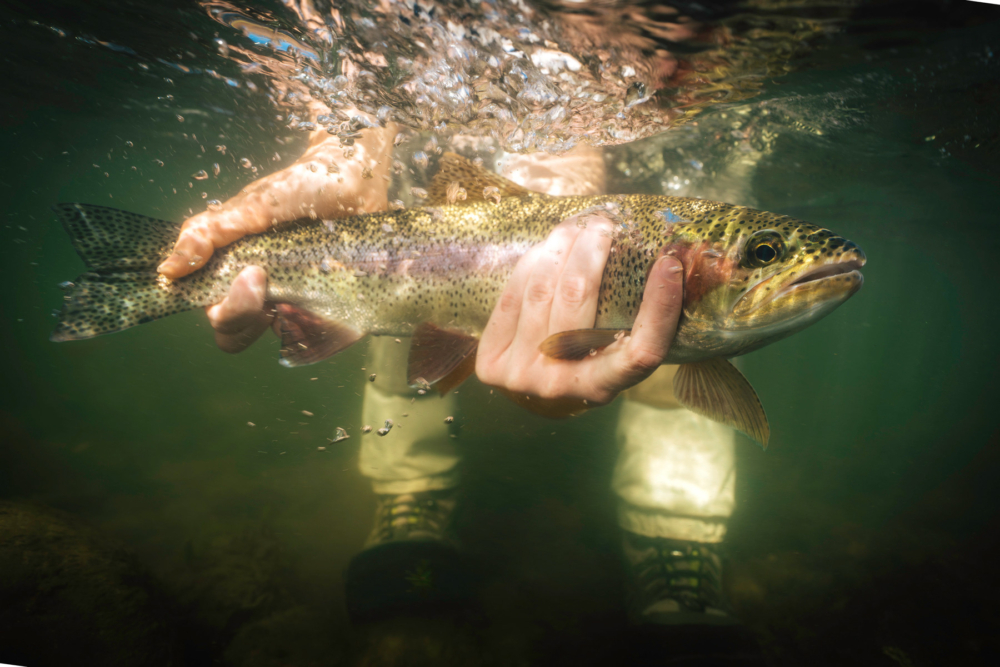
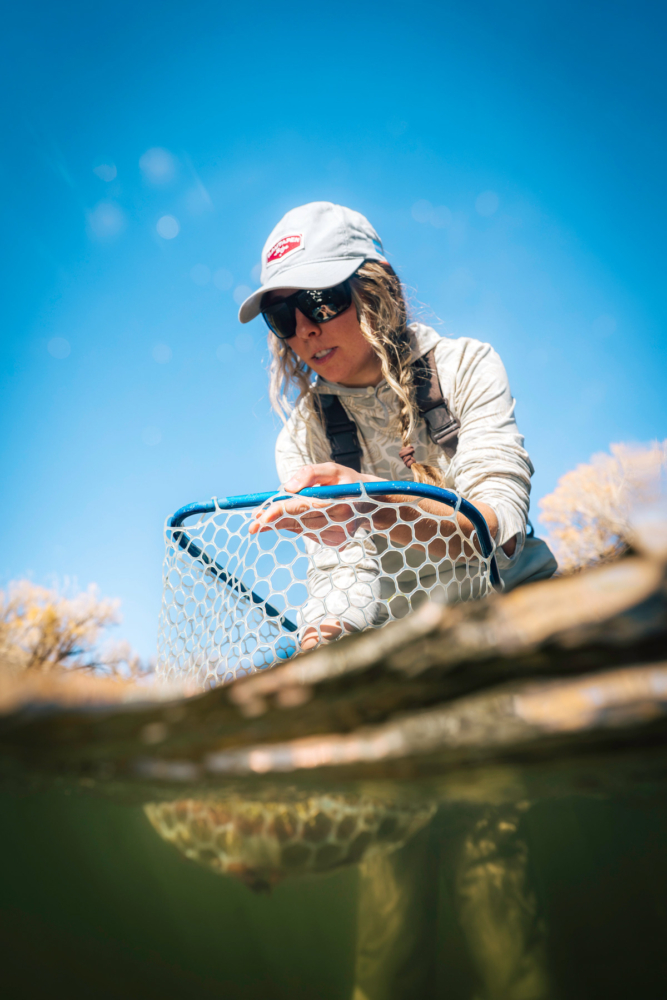
We’d find a good stretch, slow down, make a few drifts, and usually find a fish or two willing to play along. Taylor made awesome shots, I was extremely proud, and I did my best to keep us where we needed to be.
Fishing What Works
Fall fishing in Colorado can be a bit of a guessing game. One day you’re bundled up with frozen fingers, and the next you’re peeling off layers under a bluebird sky. We lucked out with the latter. Warm sunshine, clear water, and just enough flow to make the day possible.
Our setup wasn’t anything fancy: A nymph rig with a San Juan Worm, a Double Down Flashback Pheasant Tail, and Craven’s Two Bit Hooker in black.
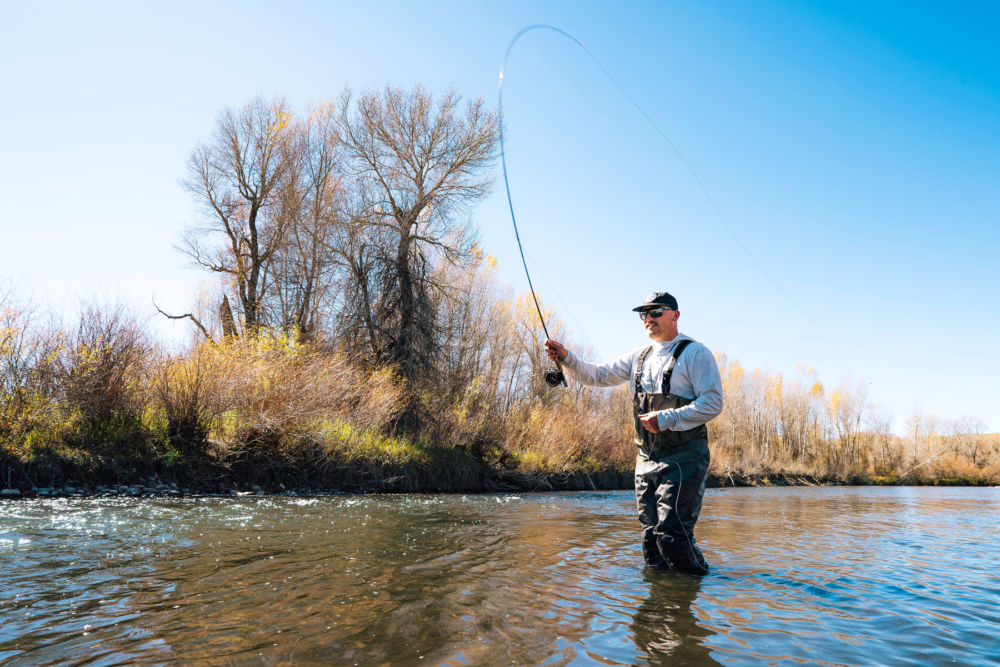
I’m sure somebody reading this is wondering why we weren’t throwing streamers or taking advantage of a fall blue-winged olive hatch. Fair question. On another day, I probably would’ve brought the trout spey and spent some time swinging flies. While there’s not much better than watching a trout come up and eat a dry (in my opinion, at least), this day wasn’t really about what I wanted to fish. I wanted Taylor to have a great day on the water, and the first rig we tied on worked pretty well for her, so there wasn’t much reason to change it. A fish here, another one there, and then we’d move on to the next stretch of water.
We did get a brief blue-winged olive hatch around midday, but there weren’t enough rising fish to convince us to switch. We also spotted a few spawning redds and made sure to give those areas plenty of room whether we were floating, positioning the boat, or deciding where to anchor. Protecting our fisheries is something we should all be thinking about. If there’s one easy thing we can all do, it’s leave the redds alone at all times and let the fish do their thing.
I’ve spent enough time fishing, guiding on a boat, and looking at a bobber to know there’s always going to be that little voice in the back of your head wondering whether another fly would’ve worked better. But sometimes it’s worth leaving something that works well alone. Especially when the fishing is good.
The Days You Forget to Eat Lunch
There’s something about a good day on the river that makes time disappear. You start the morning thinking about how much water you have to cover, what flies you’re going to throw, and whether you’ll make it to the take-out before dark. Then you find a rhythm. One good run turns into another, you stop paying attention to the clock, and before you know it, you’ve spent the better part of a Saturday doing exactly what you hoped you’d be doing.
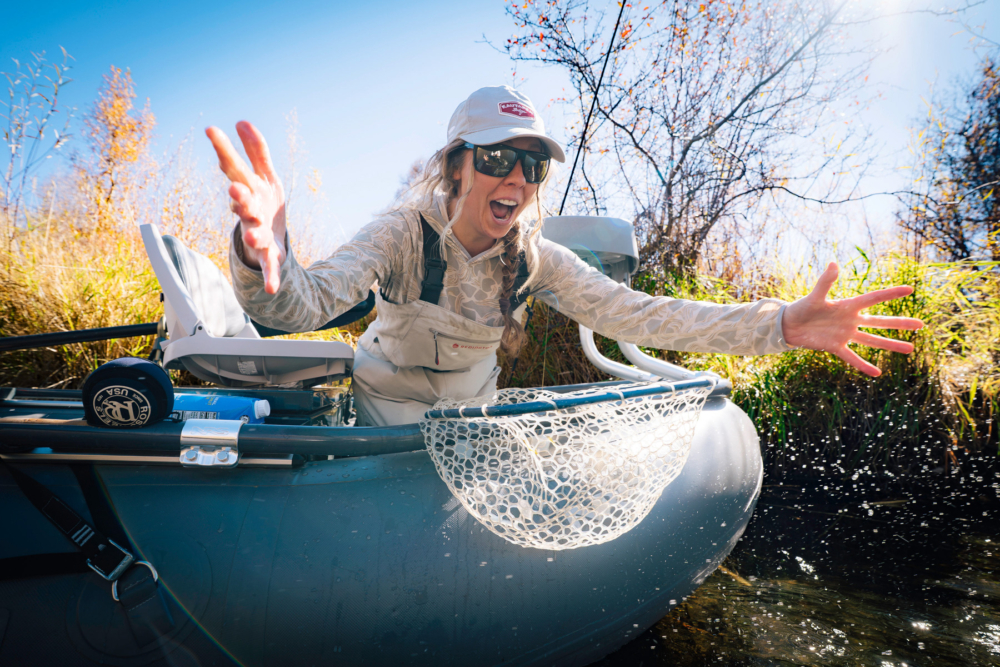
We didn’t do anything particularly groundbreaking that day. We floated a small river, walked a raft through a few shallow spots, caught fish, and enjoyed one of the last warm Saturdays of October.
The Approach got us into water we wanted to fish, carried everything we needed, and gave us the chance to fish a stretch of river at our own pace. Somewhere between rowing, walking the boat, and watching Taylor hook another fish, I was pretty happy we’d decided to make the trip.
For a last-minute plan made over dinner the night before, I’d say it turned out pretty well.
***
Guest Contributor Nelson Oxley’s passion for fishing started early, influenced by his grandfather, who managed Nelson’s Fly Shop. Originally from Tabernash, Colorado, Nelson started working in a fly shop at 16 and began guiding as soon as he got a driver’s license. When he’s not casting dry flies from a drift boat and stalking flats species from a skiff, Nelson works for Mayfly Outdoors as their Creative & Social Manager. Follow his adventures at www.instagram.com/nelson_oxley/.