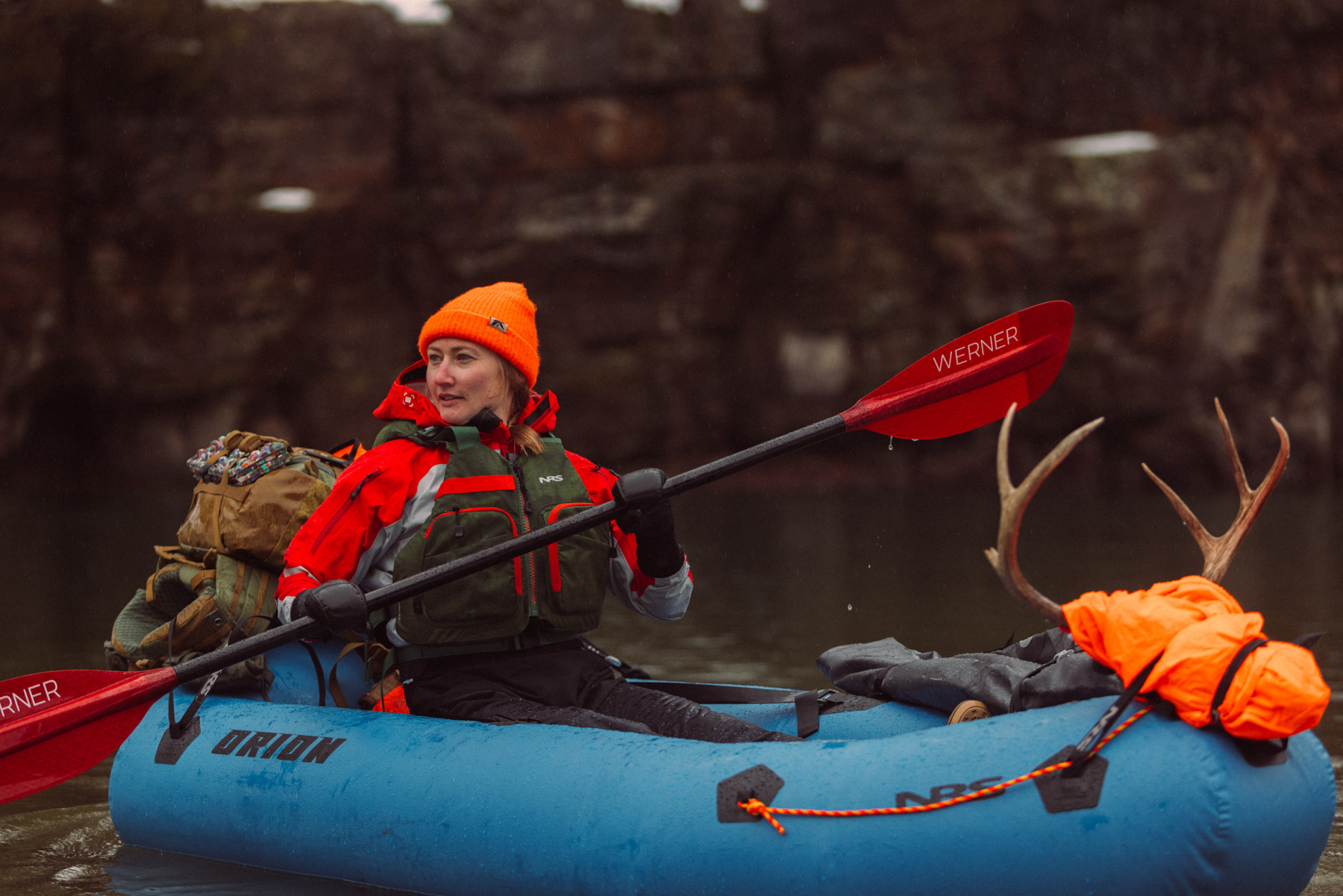
This past fall, my friends Kylie, Hannah and I planned what we believed would be an epic, multi-day packraft mule deer hunt. The plan was simple: drift through a remote stretch of river with everything we needed fastened to our boats, hunt the area’s rugged terrain by day, camp by the river’s edge at night and, hopefully by trip end, float out with meat for the year and a heavy set of antlers riding on the bow.
After fantasizing about this particular trip for years, this November it all came together: I finally had the right crew, the time off and enough hunting experience to feel, perhaps mistakenly, ready.
In the weeks leading up to departure, I studied maps and planned meals, camps, shuttles and gear layouts down to the minutest of details. I obsessed over how to distribute weight between boats, secure rifles, and strip my kit down to only the essentials, though I somehow still managed to overpack. As the trip approached, I felt a low hum of nerves, dulled by a familiar and dangerous confidence. Ignorance, I’ve learned, can be a powerful anxiolytic.
On the evening we were set to leave, the car loaded with packrafts, rifles, camping gear, and a small stash of hard liquor, I got a text from Kylie: Have you looked at the weather forecast?
I hadn’t since earlier in the week. A quick NOAA search showed wind warnings and storm systems sitting squarely on the dates of our trip. It was time to pivot.
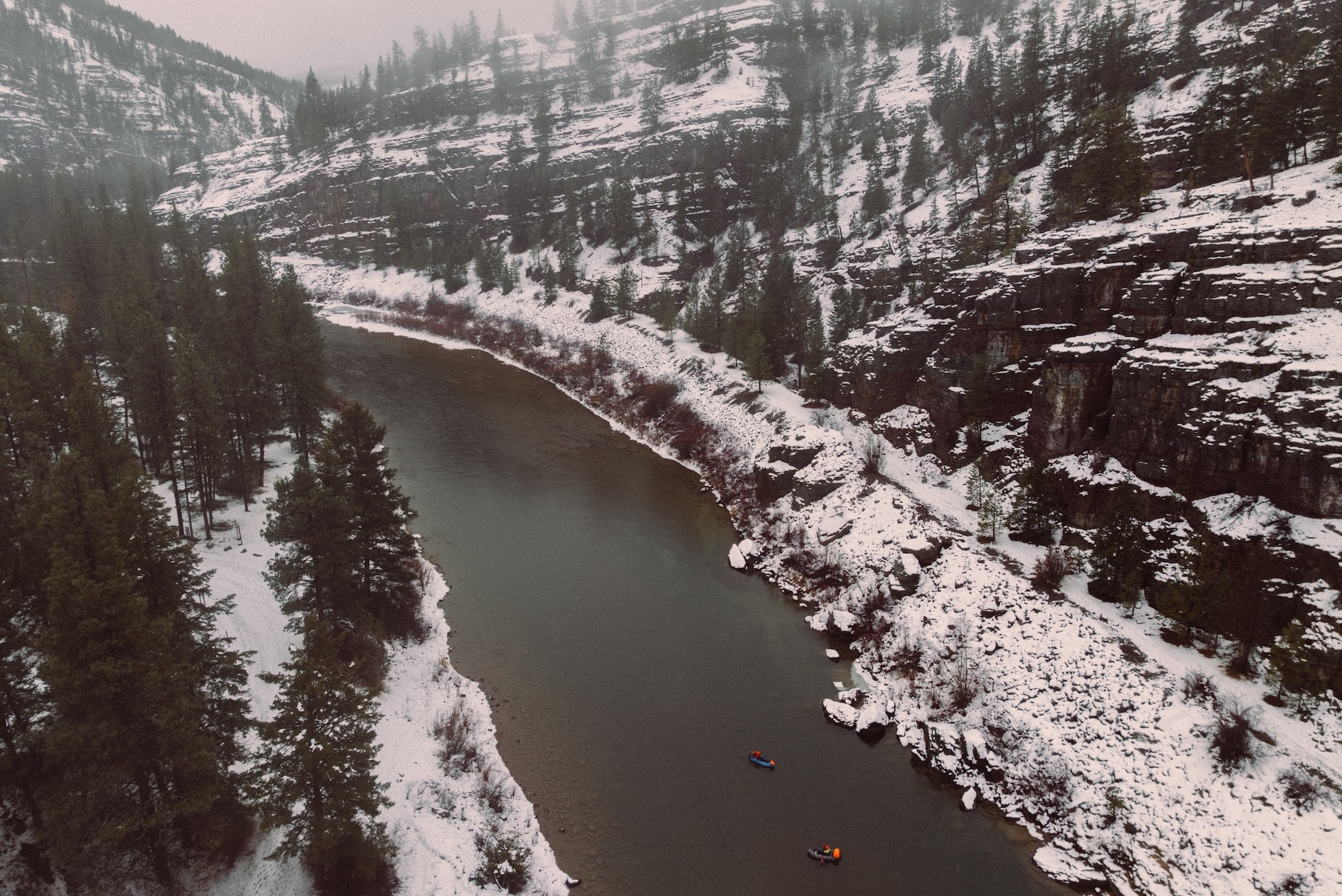
After some frantic group-chat brainstorming, we abandoned the original plan and chose something closer to home. We opted for shorter floats on familiar water, using the packrafts primarily for river crossings to access public land. We would still hunt, camp, and most importantly, spend time together.
The days that followed were filled with close encounters with elk and deer, cold mornings, wet hands, steep hikes and spontaneous riverside dance parties. We snacked on mountaintop charcuterie spreads while glassing nearby slopes for animals and laughed until we cried as we traded lengthy play-by-plays of first dates gone wrong and a host of other stories best shared in good company.
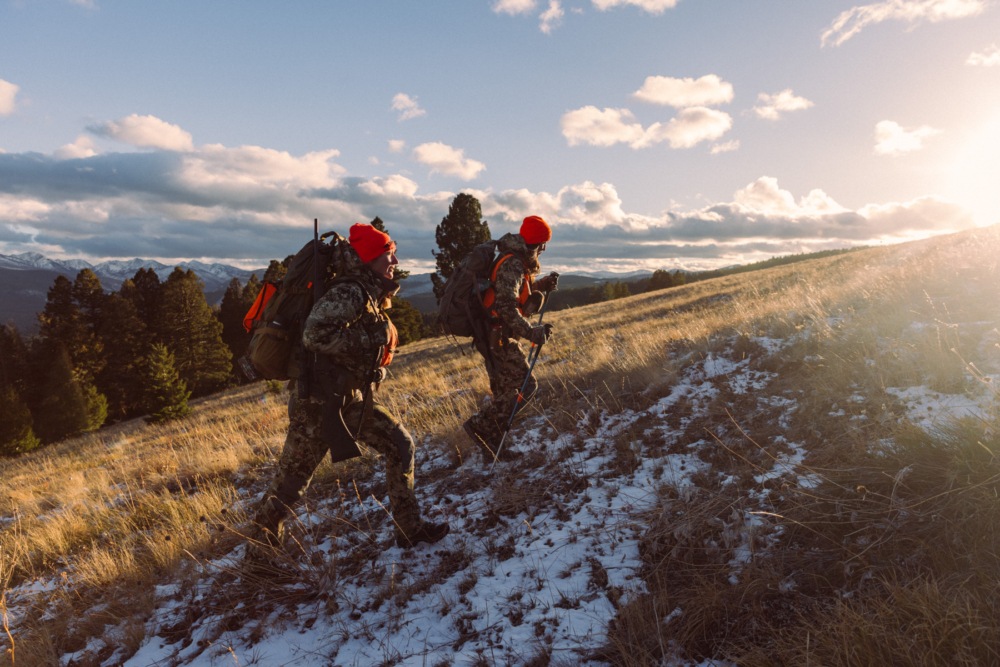
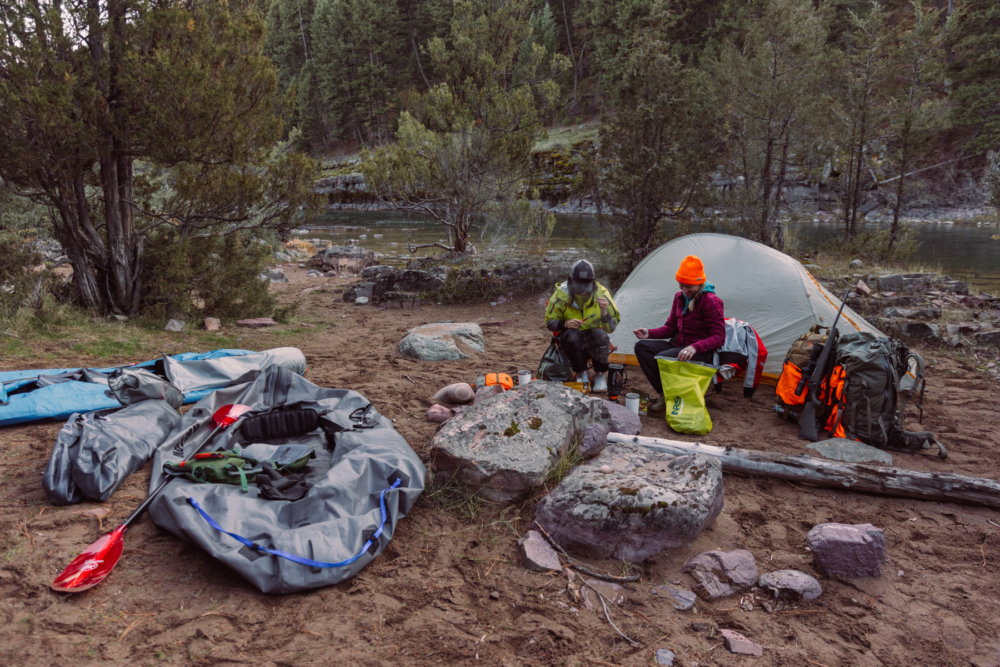
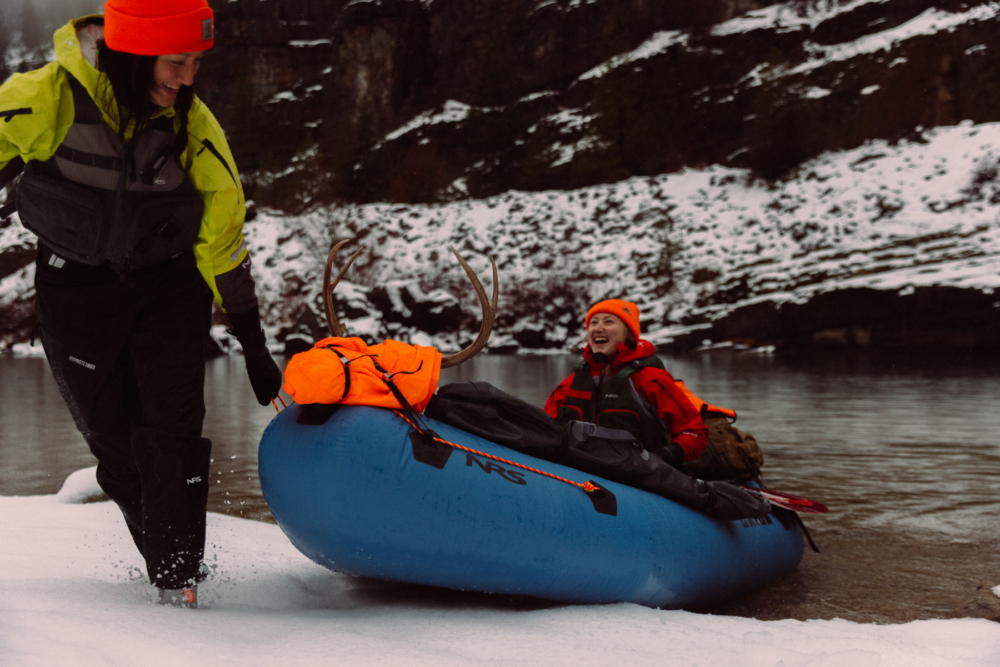
We didn’t fill our tags, but we had ourselves a grand old time and gained an immense amount of knowledge—lessons I’m deeply grateful to have learned before committing to a multi-day expedition in a remote canyon under storm warnings.
I hadn’t realized how steep the learning curve of packraft hunting would be. Now I do. And next summer, in warmer water and longer days, I plan to put in the time to practice, refine systems, and earn a second attempt at my big, epic mule deer hunt, this time with more humility and considerably more wisdom.
So, without further ado, here are my top ten lessons learned hunting from a packraft, the hard way, so you don’t have to.
Pack lighter than you think
If you’re planning a self-supported, multi-day river hunt, you need to ask one question before anything else: What happens if I kill an animal?
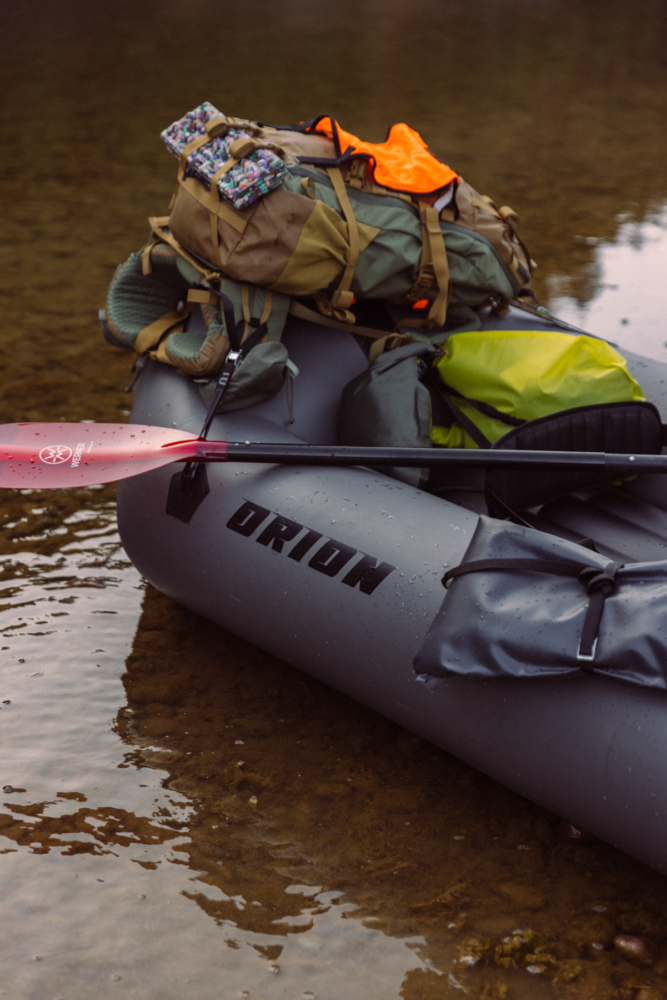
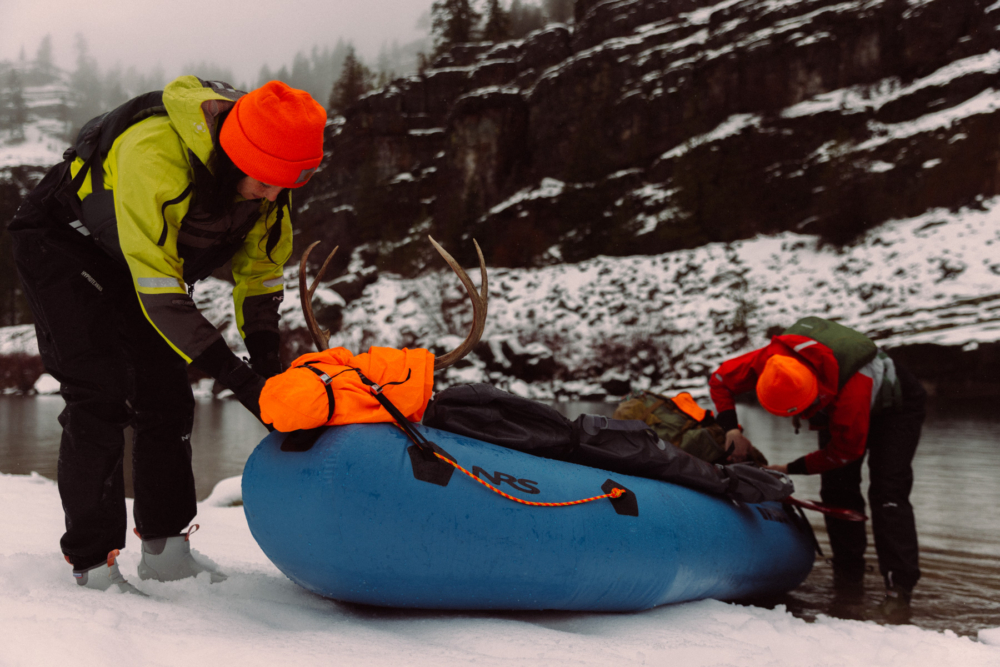
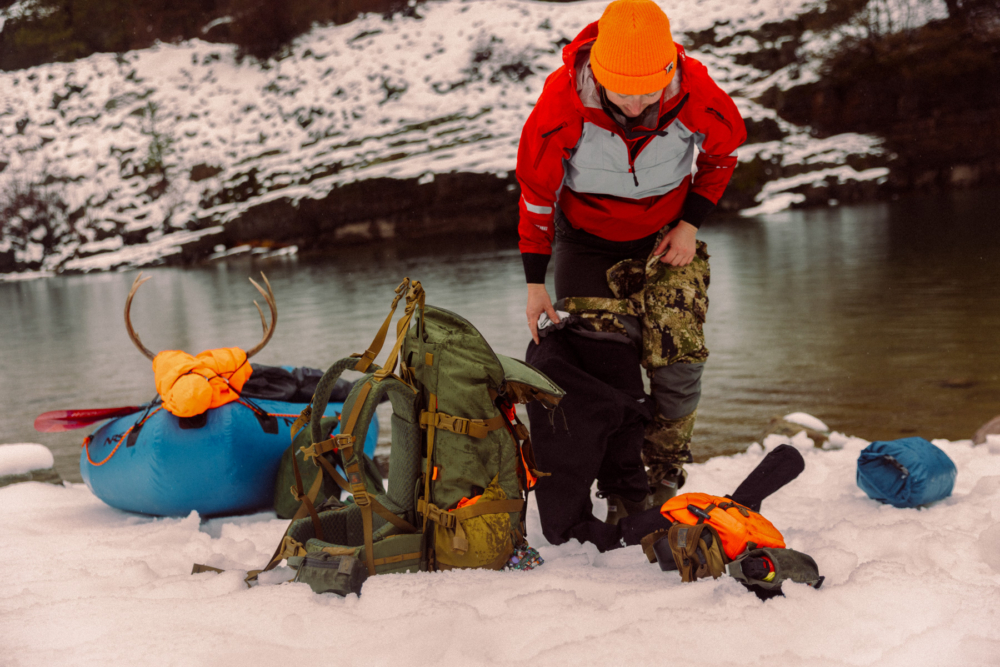
One of the strengths of the NRS Orion packrafts is their ability to carry meat inside the tubes, keeping quarters cool and protected. But that space has to exist in the first place. Overpacking makes paddling harder and can turn success into a challenge if there’s no room left to haul your hard-earned meat. If you’re someone who struggles to leave comforts behind, plan ruthlessly and bring extra straps so gear or antlers can live outside the tubes if needed.
Packrafts are not as easy to steer as they look
I spend hundreds of days on the river each year as a fly fishing guide, and I brought a bit too much ego into this trip. There was no whitewater to speak of, but packrafts respond differently than drift boats or rafts, especially when loaded unevenly. Weight distribution, wind, and paddle technique matter more than I expected. Our K-pump also proved crucial. The inflation bag worked but didn’t bring the packraft up to optimum pressure, making paddling and maneuvering that much more difficult.
You are going to get wet
Even in dry suits, we got wet. Between paddle drip, condensation, and repeated launches, I did feel the effects of the cold water by the end of each day. Especially during the fall hunting season, hypothermia can sneak in quietly. I highly recommend neoprene mitts, drip guards, bringing extra dry layers, hot beverages, and hand warmers.
Firearm transport deserves more thought
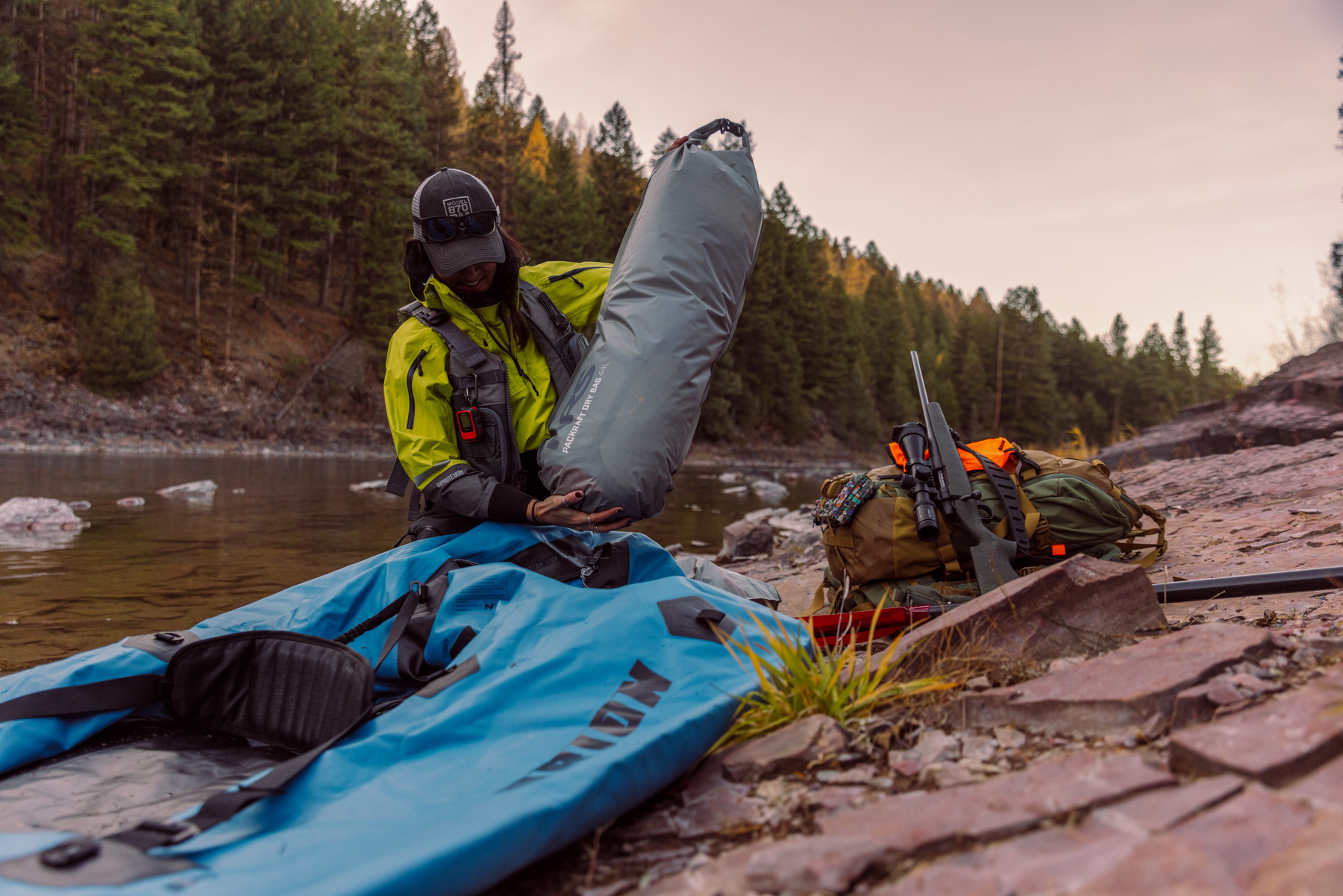
I underestimated how vulnerable my rifle would feel in a long dry bag, even with padded layers around the scope. Protecting your scope from get bumped is incredibly important while hunting so you can shoot straight if the opportunity presents itself. In the future, I’ll opt for strapping a low-profile hard case to the raft, even if it adds a bit of weight.
Weight distribution if key
Too much weight in the stern and you’ll spin. Too much in the bow and you’ll plow. Because a packraft must be deflated to access anything stored in the tubes, it’s important to think carefully about what goes where when packing. I found that the hunting day pack I kept out for quick access was the heaviest item and strapping it to the back of the raft made it noticeably stern-heavy. I will have to play around with packing and strapping gear to help even out the weight for future adventures.
Pro tip: Use dry bags like the NRS Internal Packraft Storage Bag to secure gear, distribute weight as evenly as possible and minimize weight shifts inside the tubes. Keep heavier items near your center of gravity when possible.
Water and bathroom logistics matter more than you think
Some rivers are too silty to filter effectively, which means you have to carry all your water. On a full-size raft, this is manageable, but on a packraft, it’s a serious limitation. The same goes for human waste systems; I definitely wouldn’t want to pack a groover on my packraft. This is something to consider while planning your trip.
Pro tip: Self-support kayak trips deal with a lot of similar logistics and can offer some creative solutions here. For more insight on backcountry water systems, give this article a read. For managing human waste, consider using a Wag Bag inside a dry bag or a Poop Tube. Canoe guide Matt Cuccaro breaks down more options here.
Wind changes everything
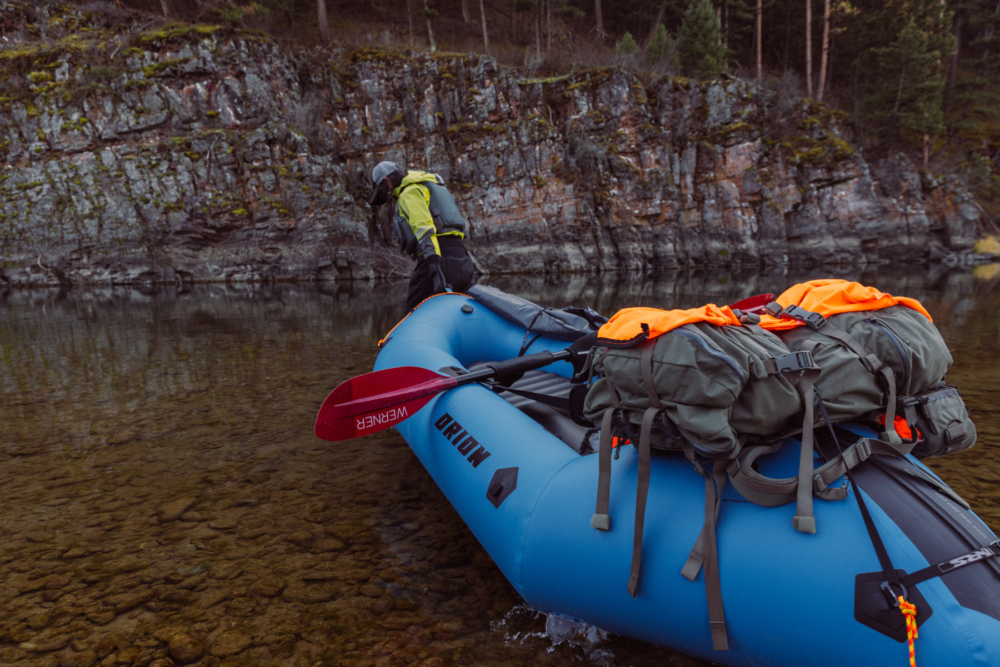
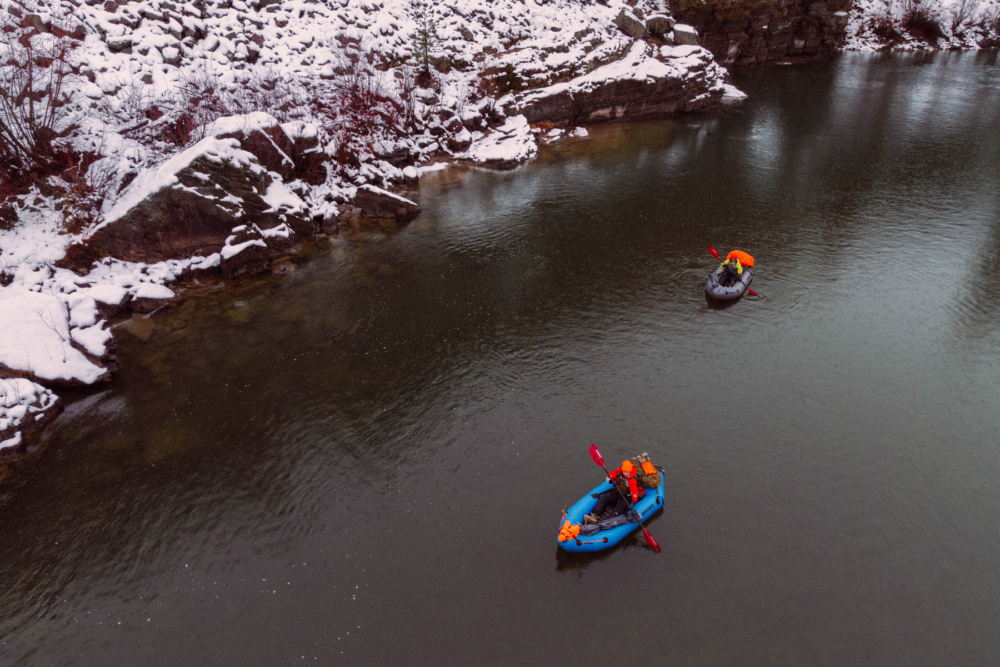
Packrafts are light, which is a gift on the trail and a liability on the water. Wind can turn an easy float into an exhausting battle and erase miles of progress. Understanding wind patterns, forecasts, and terrain funnels is important. Knowing when to pivot plans like we did, might be even more important.
Pro tip: Apps like PaddleWays offer real-time weather forecasts, including wind, for additional help when planning a trip.
Transitions take longer than expected
Switching between hunting and boating modes—unloading and securing gear, changing layers, and re-inflating rafts—consumed more time and energy than I anticipated. These transitions eat daylight and demand organization. Being realistic about how long these processes take, how much time you want to spend hunting on foot each day, and how many river miles you plan to cover will help you determine an appropriate stretch of river to tackle. I also recommend building in layover days so you don’t have to paddle at all and can focus solely on hunting.
Simplicity equals safety
Every extra system adds friction. In packraft hunting, my philosophy is the simpler the better. Fewer straps, fewer redundancies, less gear and cleaner layouts make it easier to launch, land and respond when conditions deteriorate. Treat it like backpacking, just from a boat.
Take them for a trial run
Before committing to a longer trip, especially if this is your first packraft adventure, get out on a few day floats. Short trips allow you to dial in how you sit in the raft, make necessary adjustments, and build familiarity with how it handles. Getting comfortable with your packraft before adding all the complexities of hunting, heavy gear, and cold weather will make longer, more demanding trips both safer and far more enjoyable.
Final thoughts
Packrafts don’t need to be reserved for expedition-style hunts. They are fun, powerful tools for accessing river-locked public land during big game season, crossing water with a bird dog on upland hunts, floating with a shotgun during waterfowl season or simply taking scenic floats with friends. For me, they offer something else entirely: the feeling of being on a quest. Adding a packraft introduces just enough complexity to transform a simple hunt into something closer to a grand adventure. I’m incredibly excited to add this new tool to my quiver and incorporate packrafting into more of my pursuits.