The wind—a steady chaos cutting skin, stealing sound, and fraying nerves—scatters our four-canoe convoy across the mouth of the Moose River. We hardly notice. The lake’s suddenly wide horizon draws exultations after several heavily-forested river days, where the views were limited to a slip of sky above evergreen walls.
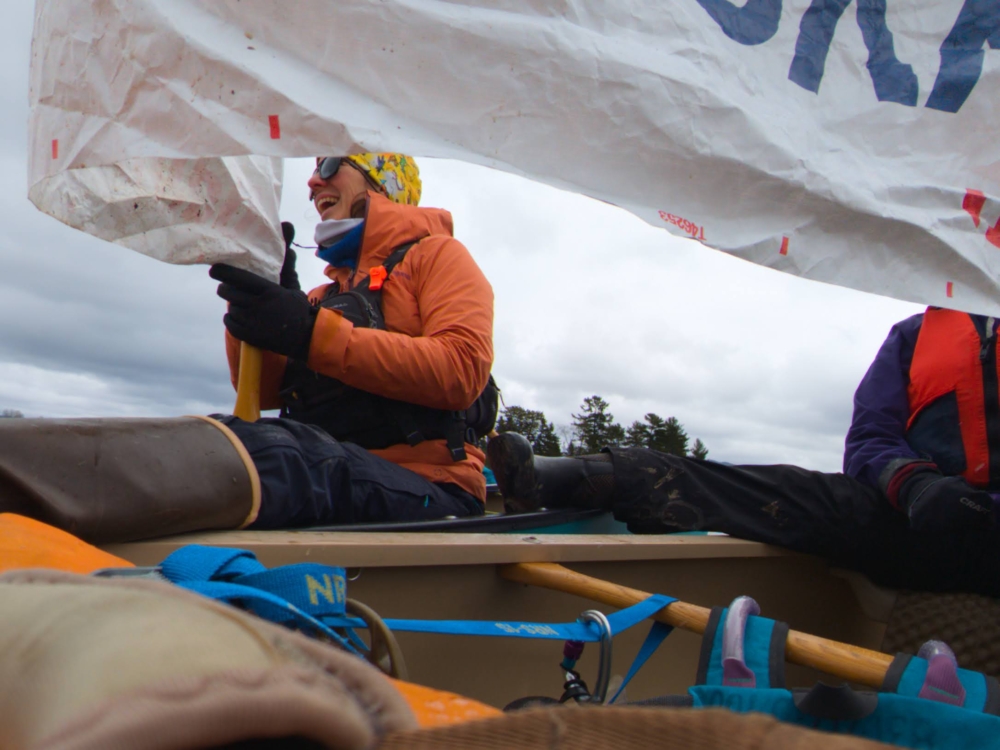
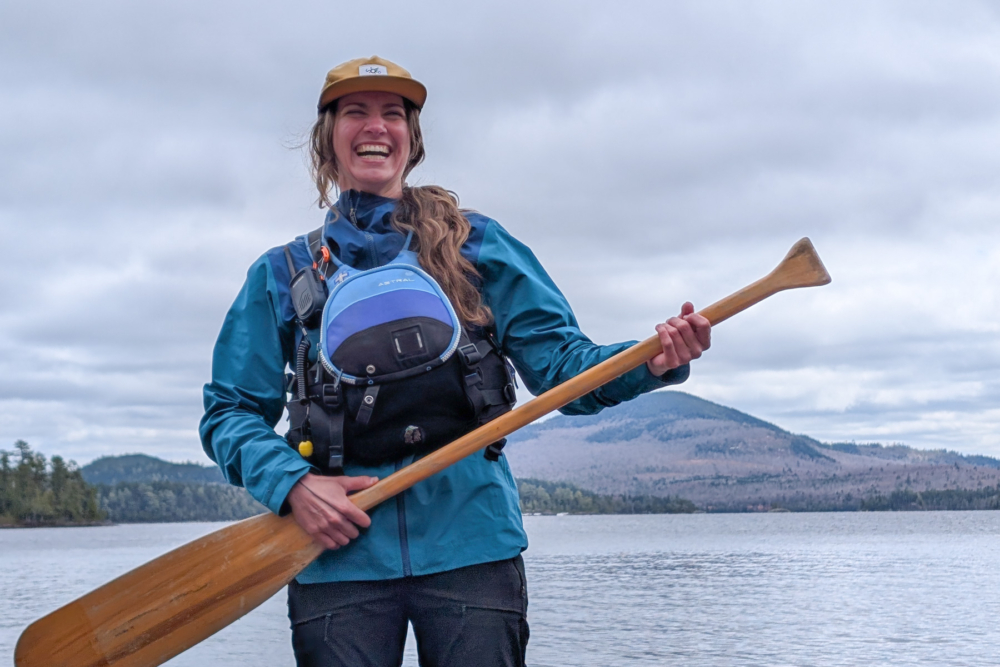
Within minutes, we harness the weather. Geometric NRS-strap patterns bind our bows, and we throw legs and arms over gunwales to steady the flotilla as it glides downwind beneath a seven-foot Tyvek sail. It’s beautiful. The sprawling gray of a Maine lake under stormy skies, a constellation of piney islands, rocky outcrops on forested mountain faces, and eight women laughing while illustrating the power of languid repose.
This is Guide Camp, and it’s reiterating a lesson I’ve been learning lately. Maybe don’t spend so much time fighting the wind, maybe use it to get where you want to go.
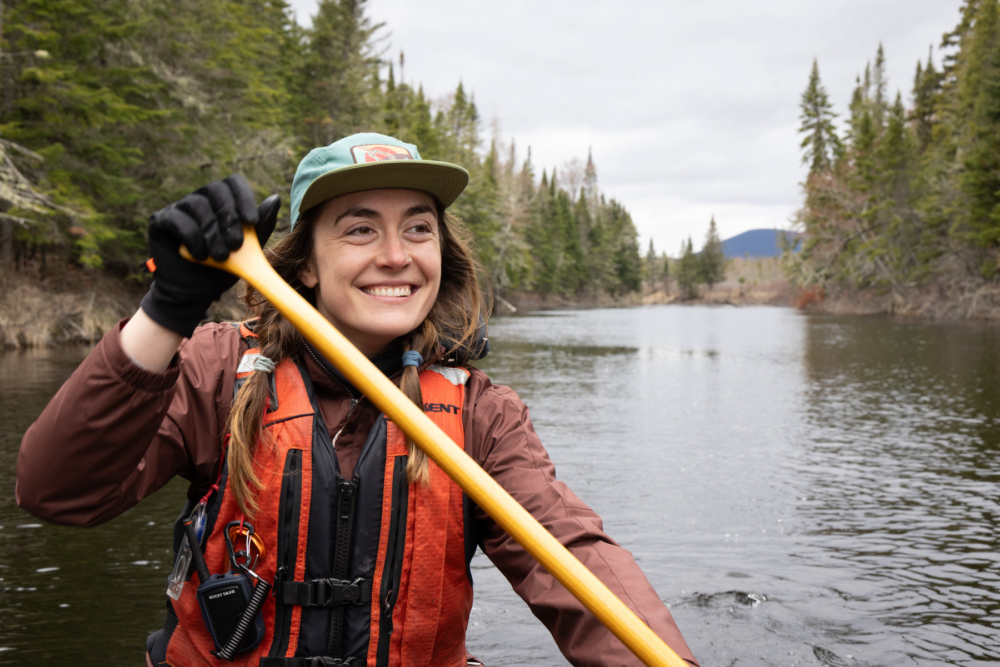
“It’s just so simple. All you need to do is find people you trust and put a date on a calendar,” says Amy Borch, a tattoo artist and the architect of this particular mission. The wind, the mud, the near hypothermic conditions—let’s blame them on her. Because it all started at her kitchen table in January, over a tumult of loose-leaf tea.
That night, I was staying with Amy while attending the Maine Outdoor Economy Summit, which happened to coincide with a much-publicized ICE surge in the city. We tried to get dinner at her favorite Mexican restaurant. It was closed. At the conference, a member of the Kindling Collective told guides that they should think about how to keep their clients safe both in the wilderness and in the towns where federal agents might be patrolling.
I’ve trained on rivers, oceans, snow-covered mountain slopes, and in classrooms to do all I can to keep my companions safe in wild places. I have no idea how to train for this. It’s a hollow, distant feeling.
After talking it over for hours, we sat silent at the table. We needed guidance. We needed other guides. We needed Guide Camp, even if we didn’t yet understand exactly what it would turn out to be.
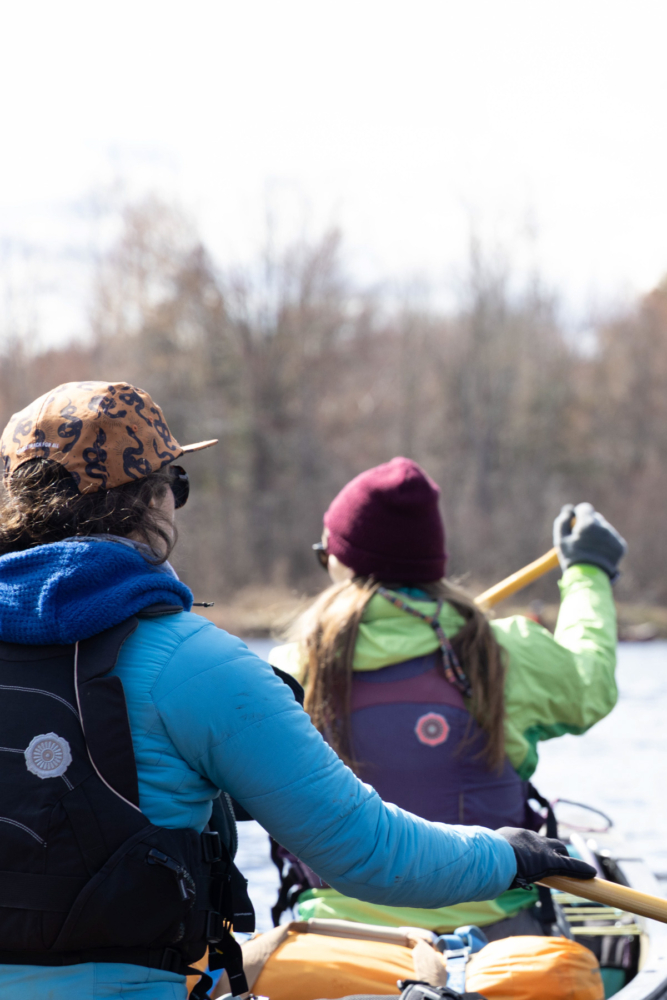
We started with what we know: mud season and river trips. Late May made sense, before the tourists arrived and bugs descended. With the timing settled, we began assembling a team. Defining “guides” broadly, we reached out to kind, openhearted friends that led nature-based educational or therapy trips. We limited the invitations to women, because we didn’t want to have to explain ourselves much. We wanted to find the people we could reach out to for support throughout the season ahead who would just get it, all of it.
The second step was to choose a mission; Amy came back with the Moose Bow Loop, a miraculous little adventure offering a 34-mile loop around Attean Lake, Holeb Pond, and a stretch of the Moose River that linked the two. As “loop” implies, you can do it all without a shuttle, just a heartbreaking portage or two.
The biggest trick was watching the weather. By the day before the trip, we had a prognosis: there would be wind from a direction, perhaps many. We did know that the wind would be ripping out of the west when we launched. So we started at the leeward side of Holeb Pond, where we could hug the shore for shelter.
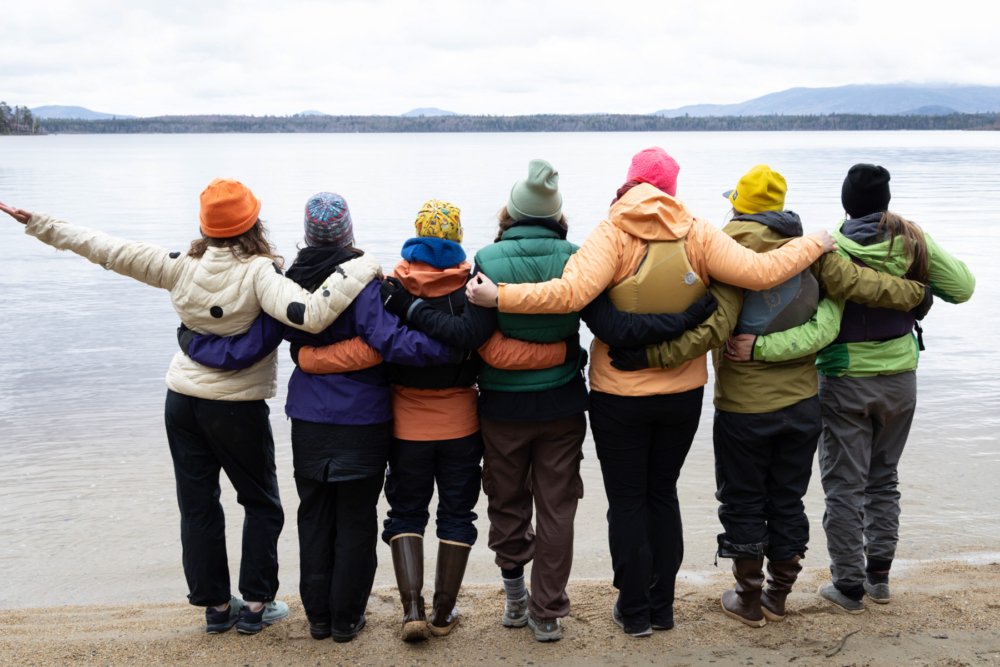
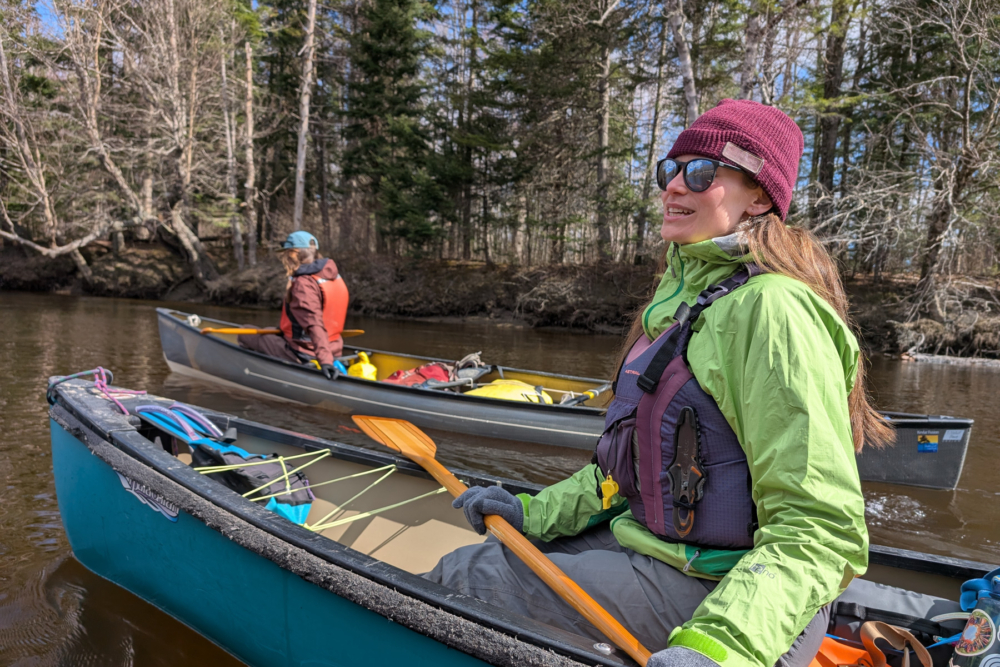
Plan A was to complete the loop and paddle back to our cars. We dropped a car in Jackman for Plan B, where a Sunday morning paddle along the eastern shores of Attean Lake and Wood Pond would have us off the water before potential 30 mph gusts in the afternoon.
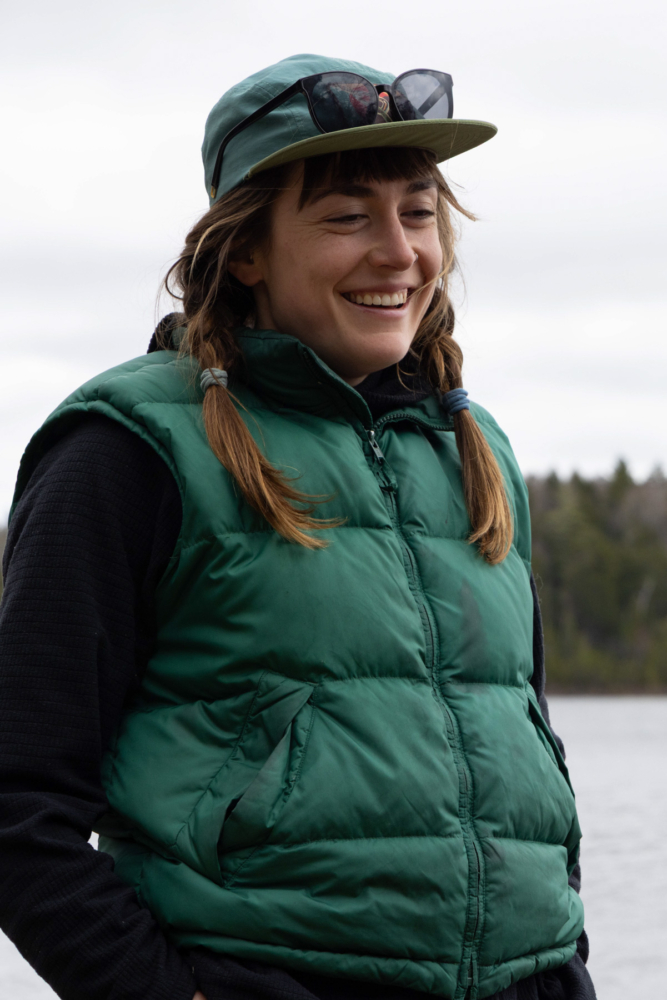
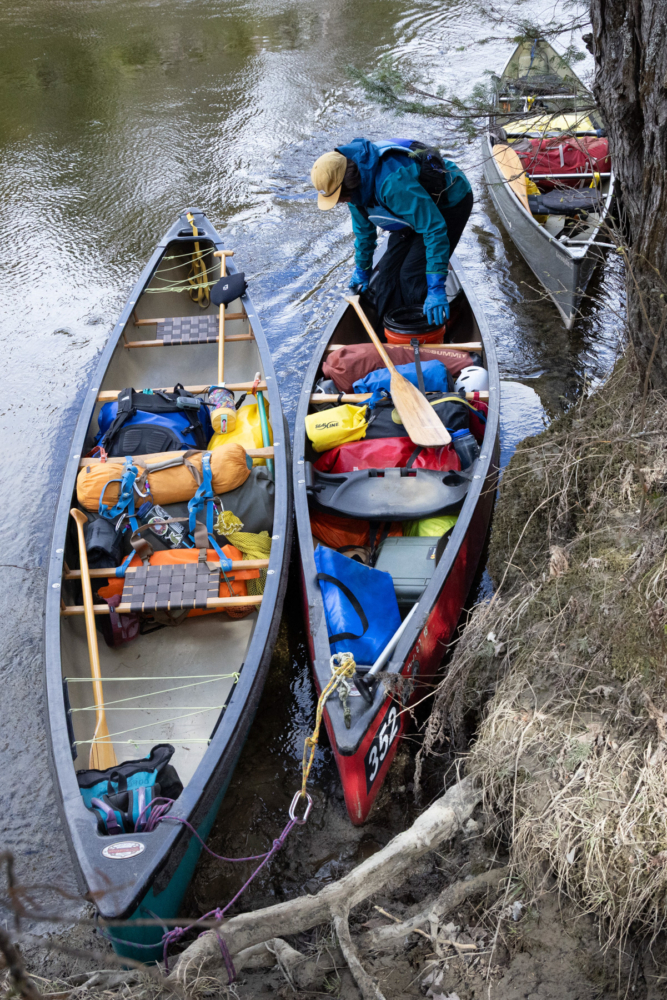
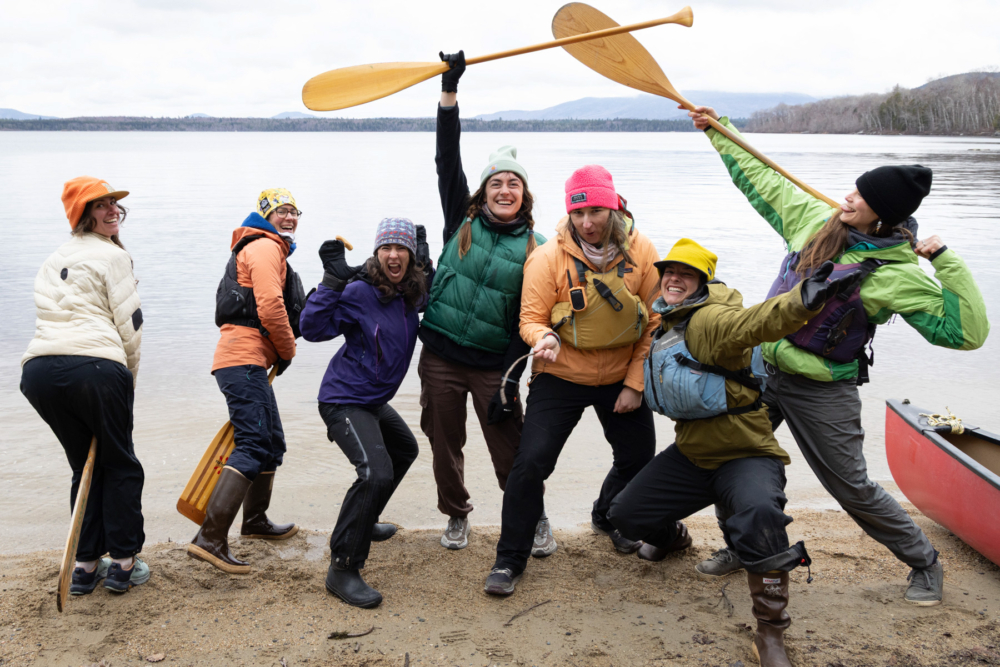
Launch day was a thing of beauty. Five cars, four canoes, and eight women. We hugged, chatted, and played a name game, (Cosmic Clark, Ready Rachel, Overly-Ambitious Amy, Laughing Llama Leah, Elephant Erin, Explorative Emma, Curious Chelsea, and let’s just say Headlamp Halley). Two geese paddled by, honking loudly in the middle of my probably-too-serious safety brief. “You’re here,” they said, “to go with the flow. Loosen up.”
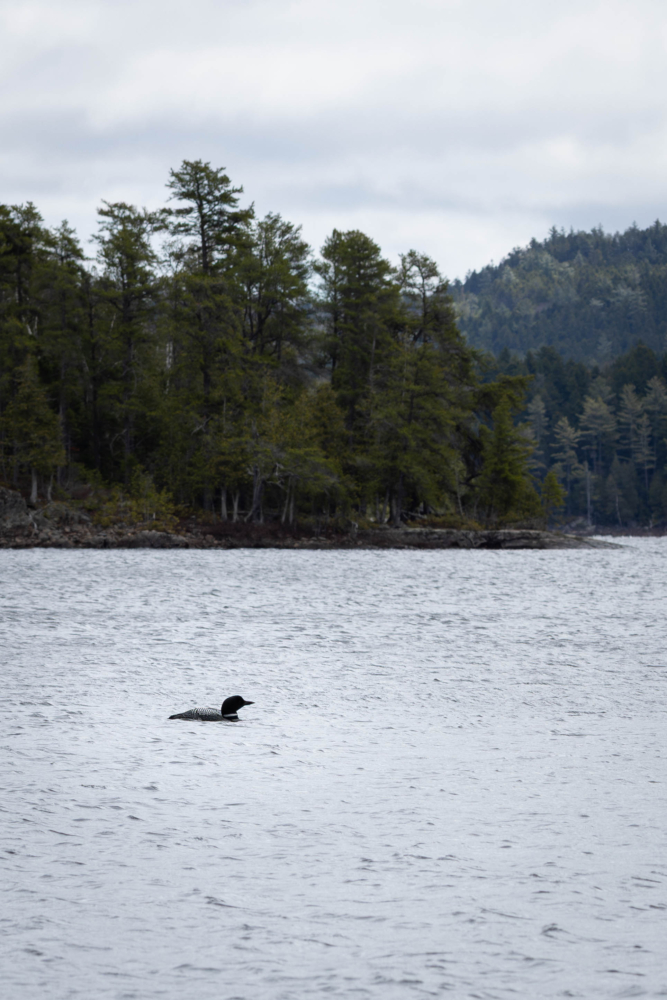
Loons hunted in the distance as we walked canoes to the shore, surfacing closer and closer as we strapped down our gear. That’s the first time I’ve ever seen them move in, instead of away.
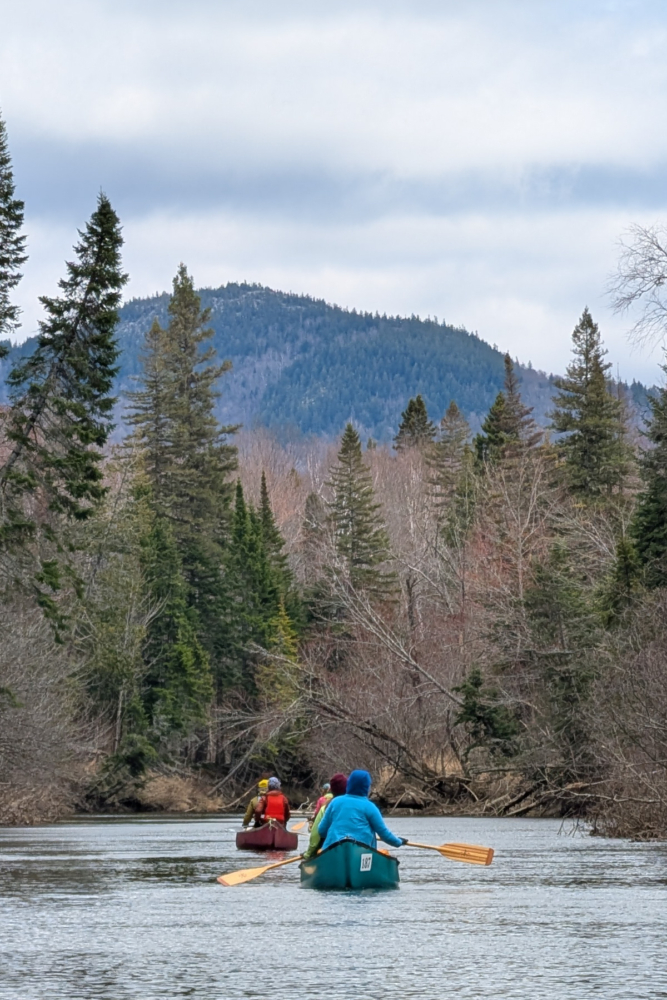
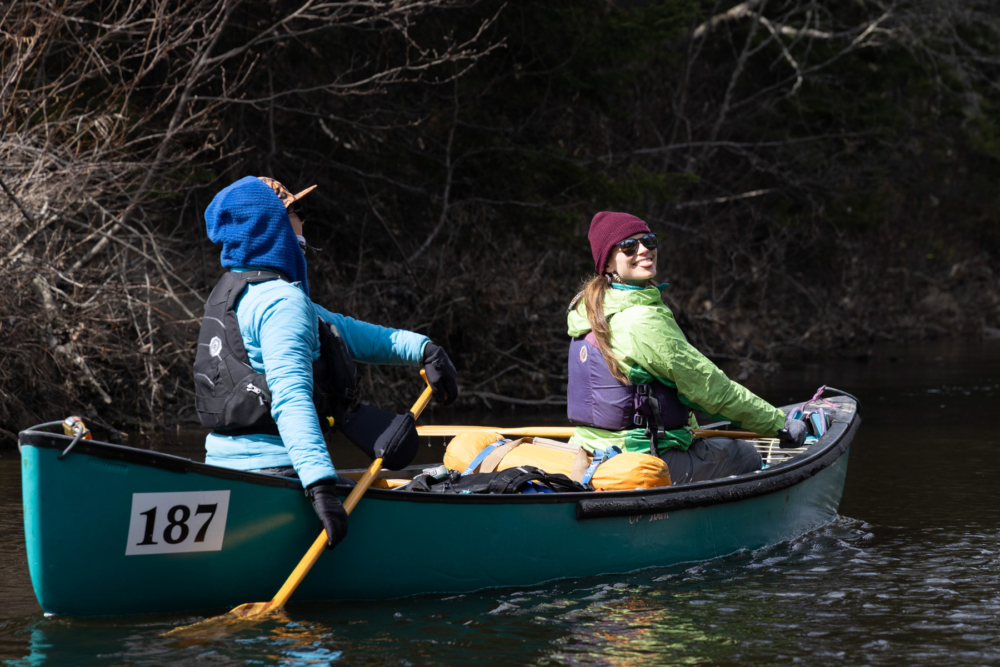
We launched in the lee of tall pines, but when they fell away to wetland meadows, the wind roared. Laughing, we tucked in for whatever cover we could, pulling hard for purchase. Each boat was an island at first, isolated by water and rushing air. When we made it to Moose River proper, we found the current. Hills and trees quieted the sky. The clouds began to break and whiten, ripping by in a mesmerizing play of shadow and dandelion light.
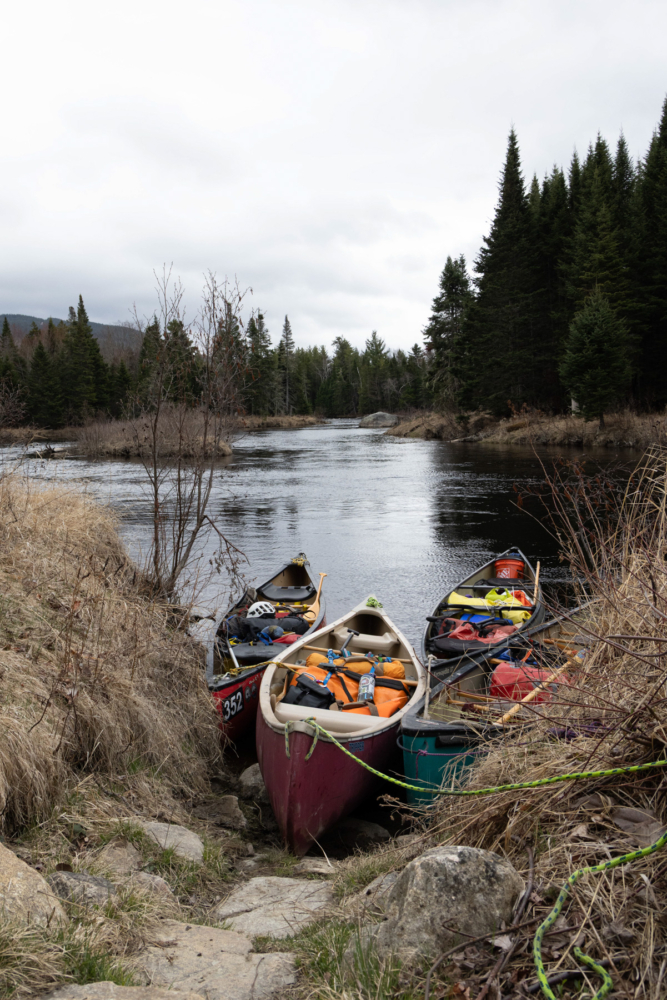
Evidence of high flows lined the bank: sloughed soil, debris among the trees. The beta says that this stretch is best at high flows, but I’m happy to have missed the flood.
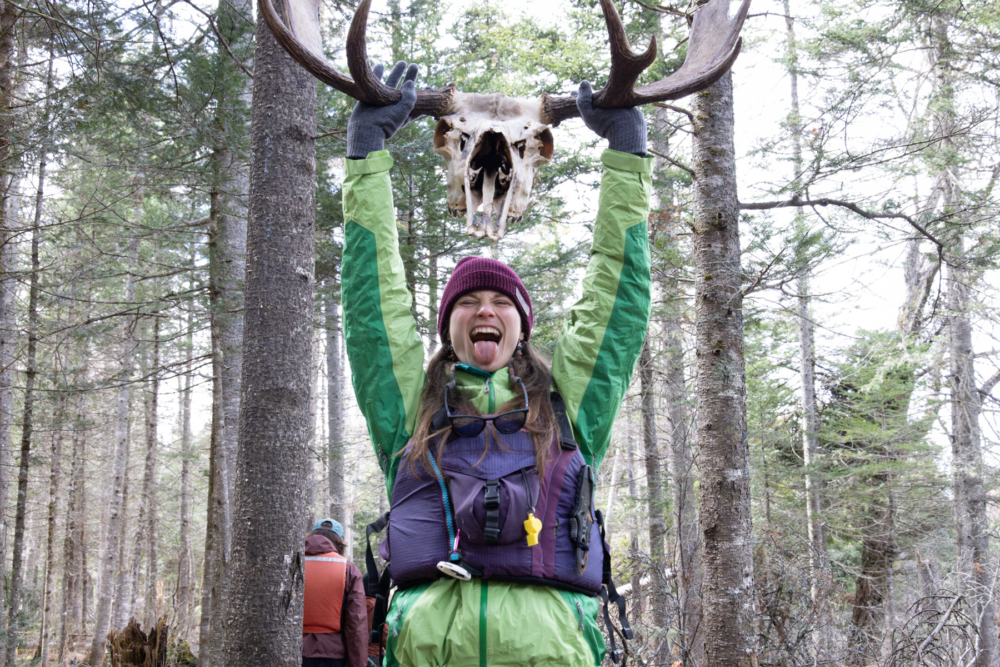
We pulled into the first campsite to stretch our legs, snack, and make a game plan. As I fumbled with the painter that spent all winter rotting on my boat, I heard Amy call, “Clark, bring your camera.”
It was a moose skeleton: fully intact vertebrae, pelvis, antlers, skull and detached lower jaw. Fur everywhere. We marveled at the geode teeth and puzzle pieces of spine, awed, silly, reverent. The trip felt like more than enough already. Settled now, we let our boats drift a bit more, a bit closer. We chatted, mostly about frogs.
In Maine, when spring nights reach 40 degrees and it rains, frogs and salamanders migrate en masse between breeding grounds. They’re all over the road. An organization called the Maine Big Night Project works to raise awareness and keep people from driving when conditions are right. They do a good job; we were buzzing about the frogs we’d seen and bemoaning the lack of salamander sightings.
Meanwhile, I was checking our progress on a downloaded Avenza Map. There was a turn coming up that I really didn’t want to miss. It’s not a common thing, needing to take a hard left on a river trip. In this case, missing it would mean finding ourselves above a miles-long logjam. Right on queue, a narrow channel appeared, marked by a little brown sign with a white canoe. We turned, and so did the mood.
The day had been a busy one, driving north, dropping cars, talking safety, loading boats, and battling wind. The moose skeleton had startled us awake, but it wasn’t until the turn that the river announced itself.
The light dimmed, warm from fighting through dense limbs, and the channel deepened. A massive shoulder of stone shrugged out of the Earth to our right, so striking we gasped. That’s the thing about Maine, all trees and dirt and swamp, then—rock. Sudden ice-scraped faces or oddly out of place boulders (known as erratics) are monuments to our recently glaciated past.
Two beauties formed a gate on the narrowed river. We pointed our bows through the portal in hushed delight, our canoes clustered like children in a cathedral. Massive boulders would rise out of the otherwise smooth, sandy riverbed for the rest of the trip.
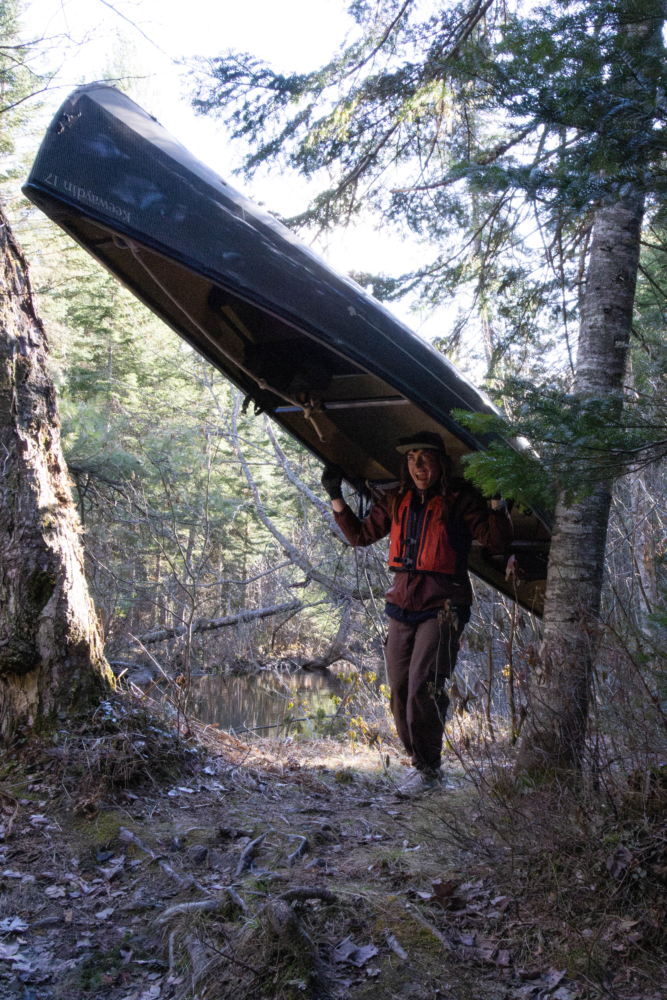
Then, a (small) logjam. Just above it, a sign pointed out the quarter-mile portage around Holeb Falls. Rachel carried her canoe on her head. So did Emma. It took four of us to haul my burly Old Town Disco, then five, six, seven. Eventually, all of us were carrying my canoe.
We’re told that we’re weaker, because we’re women. Sometimes the words creep in, and I slacken, begin giving up so much that I love. But every time I go outside, I see how silly it all is. We’re strong enough for this world by definition—we survive it every day. When we’re together, that strength compounds.
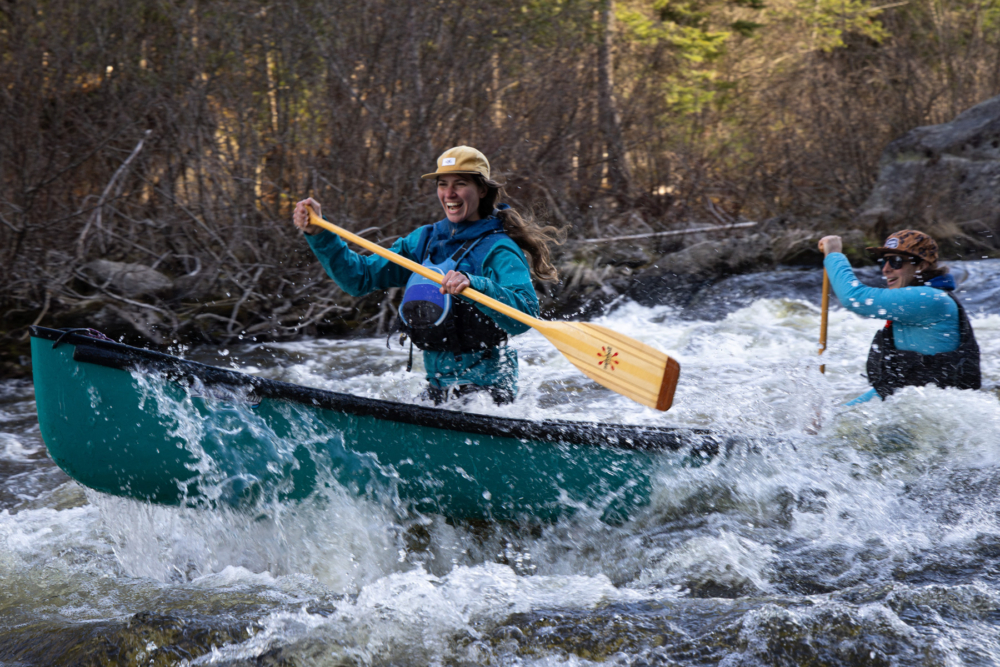
The portage ended in a campsite by an unnamed rapid, the splashiest of the trip. While most of us set up tents, Amy and Rachel scouted the rapid and ran it, their smiles electric. We hung clothes to dry, then drifted toward the dinner table for a potluck, girl dinner x8. We were coalescing.
In the months between the thought and the thing, the initial urgency had (temporarily) faded along with the news cycles featuring masked men patrolling our streets. I don’t remember anyone talking about politics, or the rising violence that had partially inspired the trip. We were just getting to know one another, as though the world were a stable, normal place. We laughed and danced and felt seen, reveling in the company of other nerds who could lose themselves in the complex form of a budding leaf.
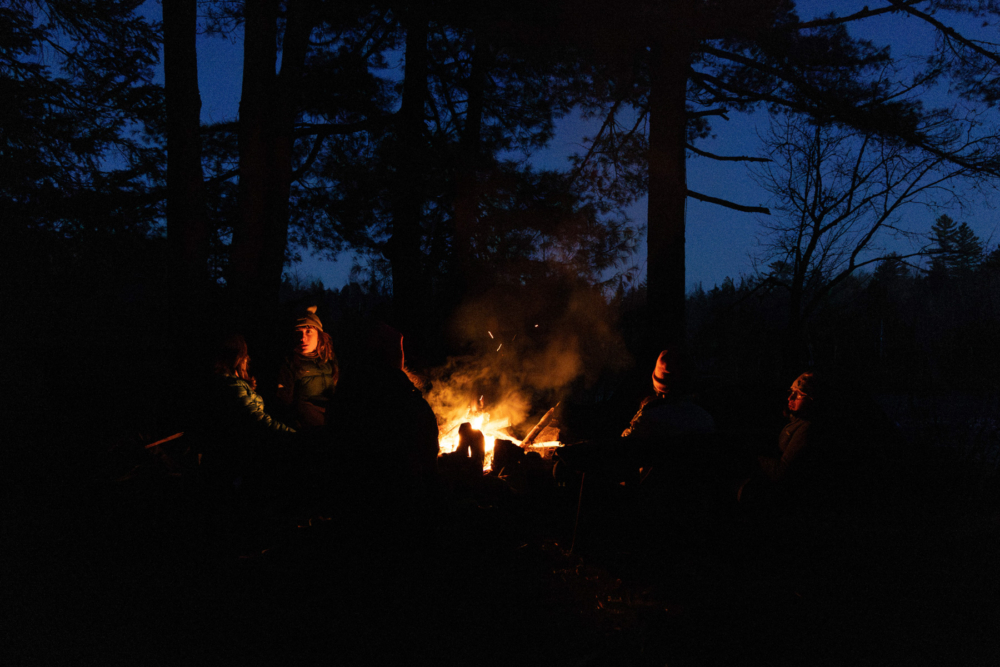
It’s a special treat for guides, and maybe even more so for women, to be in a group that dialed in. Very little in the way of traditional caretaking, easing the practicalities of life for others, was required. It freed up space for us to caretake one another in deeper ways, dropping into bigger conversations about challenges we felt at the base of ourselves. Later, gathered around the fire with dancing flames and shadows, we looked like a coven.
It didn’t exactly ease the dread of that January table, but hearts that full have a hard time feeling hollow.
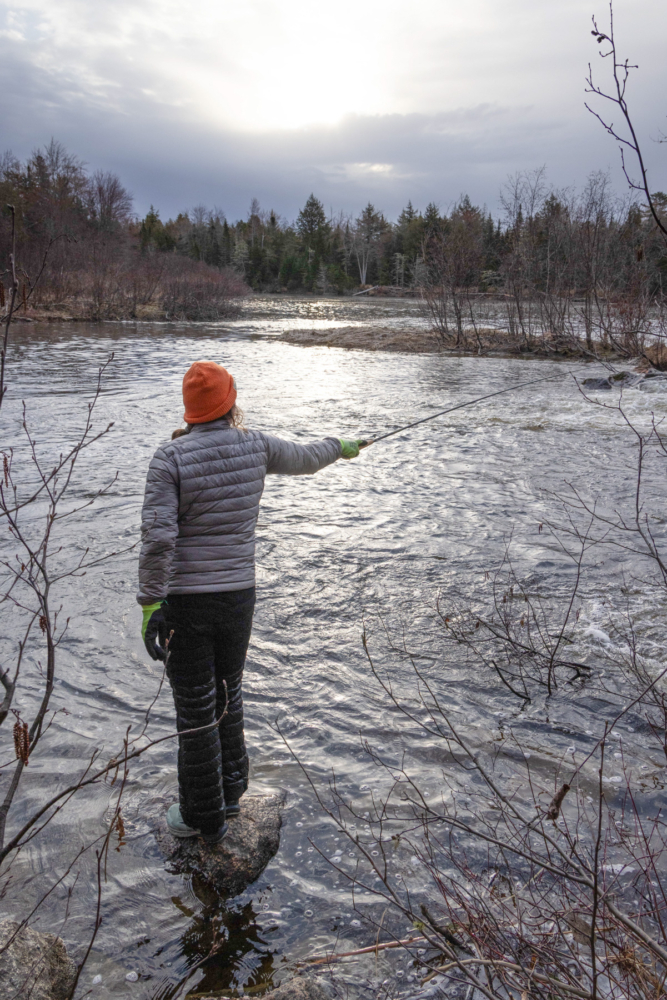
The next morning I got up early, hoping to catch a moose with my camera. I settled for the sunrise. We broke our fast, and camp, while Amy tossed a line in the river. No luck there, either. Just before launching the next day, we decided to switch up boat partners, lining up in order of our birthdays and folding the line in half. Onward.
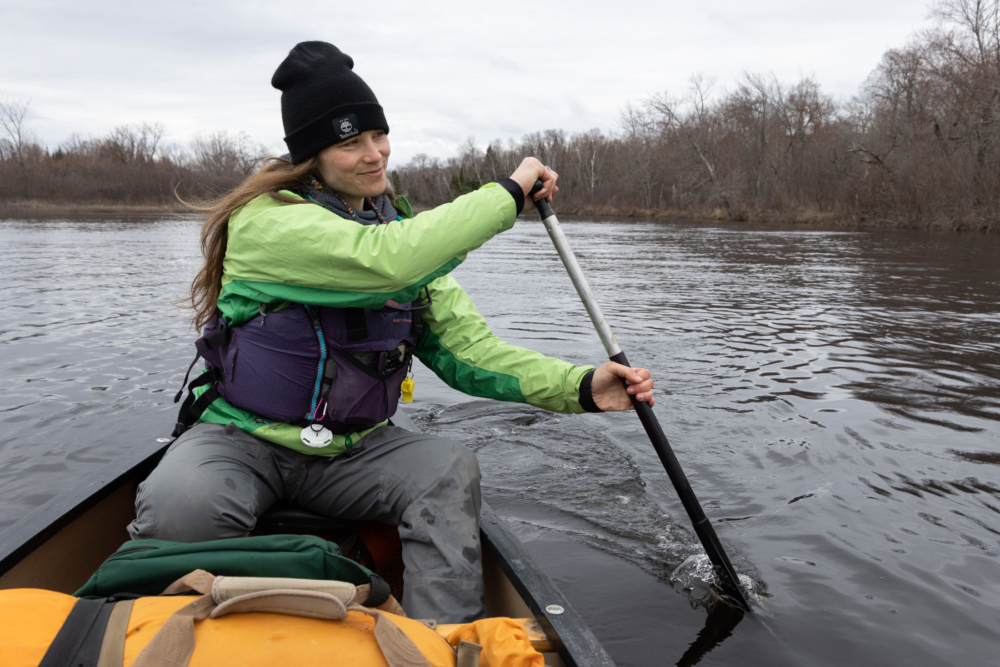
It was cloudy, and the forest was winding back down to wetlands, thinning enough for the wind to fight through. Between that and a few short rapids, we were cold. The boats broke apart as we kept moving to generate heat, retreating to our islands, bonding with the one other paddler in the boat. Now and then, like ducklings, the boats would huddle together to rest, reset, and giggle.
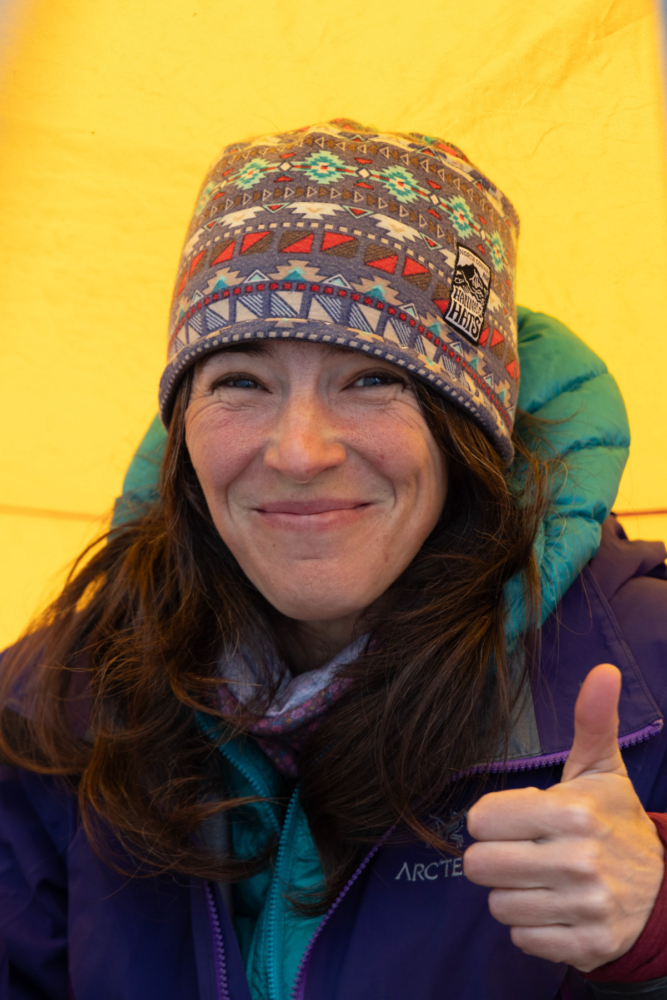
Amy’s gluten-free almond cake had been neglected at dinner and breakfast. Now she doled it out, her fingers dropping pieces into our open mouths. Maybe you had to be there, but I think you can imagine the belly laughs, the goofiness, the joy. Amy baby-birding her flock.
When we pulled over for a pee break, I was well and blue, the curse of thin skin. We shared our favorite anti-hypothermia dances, something most Mainers have in their back pockets. I like the “bananas” dance. It took two rounds for us to shake the chill.
It wasn’t long after that we hit the lake and built our sailboat, deciding to take it downwind to a camp near the bail car rather than risk even stronger gusts the following afternoon. I learned to sail years ago, but had forgotten how the nature of a day changes when you move with the wind. It’s the opposite of riding in a car with the windows down. Instead of creating your own chaos, you create your own calm. We rode that calm all the way to camp.
In the end, this trip didn’t train us to approach our rapidly changing world with grace. We looked into the abyss, reached for each other, and floated to the surface. So far, we’ve only helped one another, but that’s a place to start. The world feels windy right now. And the lake below seems frigid and unforgiving. Guide Camp reminded us of our collective strength and ingenuity—a reminder that eight paddles, four canoes, five NRS straps, a 7×5 strip of Tyvek, and a bit of teamwork can take you across troubled waters to a moonlit beach and a warm fire.
***