In the northern regions of Canada’s Northwest Territories, where the Roscoe, Brock, and Hornaday Rivers carve ancient paths through tundra, lies Tuktut Nogait National Park. Established in 1998 to protect the calving grounds of the Bluenose-West caribou herd, this remote wilderness sees fewer than 20 visitors annually. This July, Evan Lefebvre and his expedition-mate Steve embarked on a two-person packraft expedition that traversed the park from east to west, documenting the park’s timeless beauty and the troubling signs of a rapidly changing North.
***
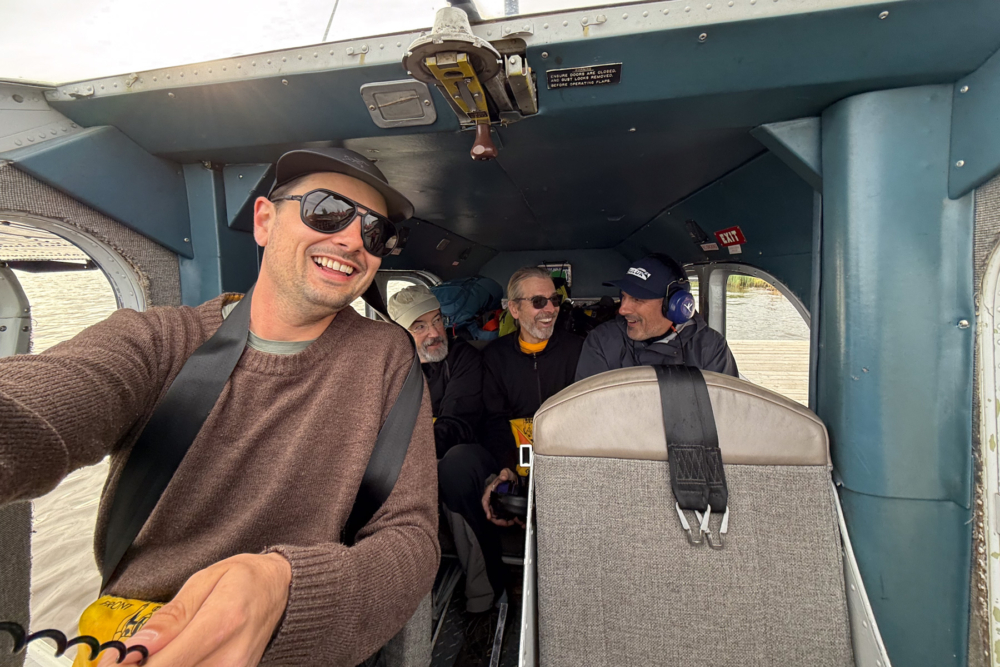
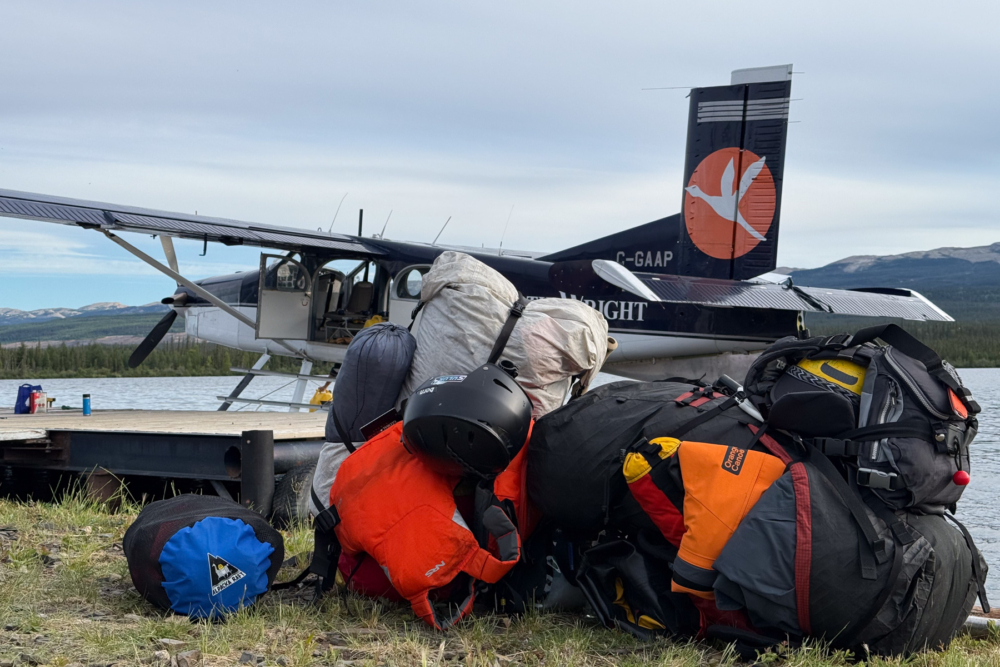
The float plane touches down on crystal-clear water 300 kilometers north of the Arctic Circle. Our pilot, Simon, from North-Wright Air, taxis to shore on Nunavut Lake, uncharted territory for both the charter company and for me. I’ve never ventured this far north before. We’re in Inuvialuit territory, approaching Tuktut Nogait National Park where the Inuvialuit and Sahtú Dene have hunted and traveled for millennia. In Inuinnaqtun, the park’s name means “young caribou,” a fitting description for a place where these magnificent animals still roam in abundance across the tundra.
As Simon refuels, a chunk of ice drifts toward our makeshift landing. It’s the middle of summer here, a brief period when the ice retreats and reveals what’s hidden underneath. The shoreline is a mosaic of rocks in every color imaginable, many encrusted with crystals that catch the never-setting sun. We make an offering to the land after pushing the aircraft away, watching it disappear over the horizon, and with it, our last connection to the outside world.
The four of us—Jim and Brian in a PakCanoe, Steve and I in packrafts—have shared the substantial charter cost from Norman Wells, though Jim and Brian plan to take a longer 28 days for a similar route that we’ve compressed into just 14 due to our lighter packs and watercrafts.
I fill my bottle from the cyan-blue lake. Looking around, there is an overwhelming feeling of gratitude for the fresh water, good people, and beautiful scenery. The landscape reminds me of my home in the Ottawa Valley, but stripped of trees.
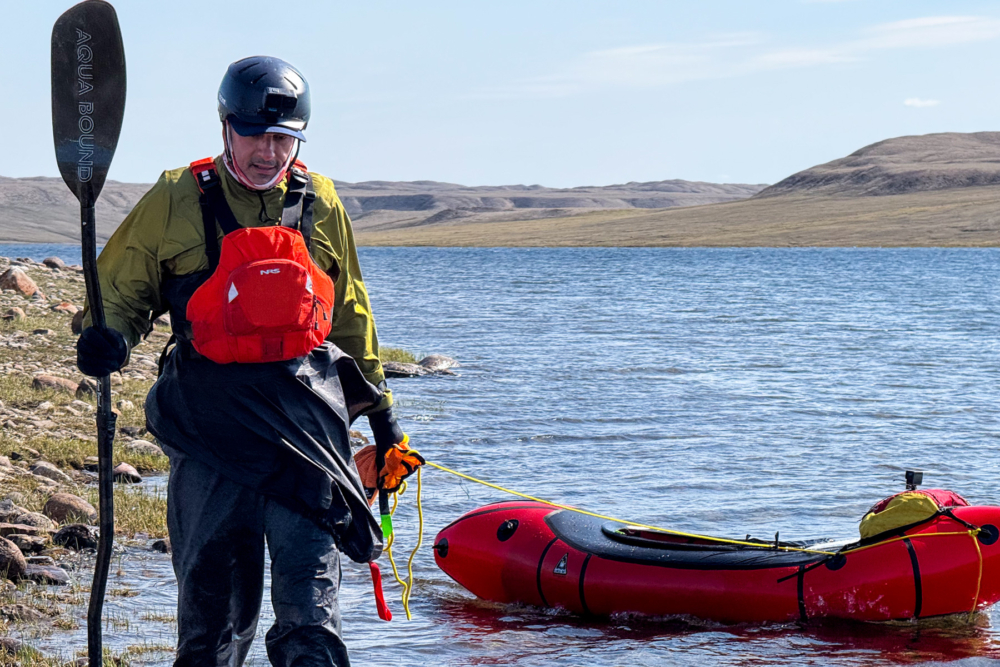
We inflate our packrafts, zip into dry suits, and push off. Almost immediately, we discover the Roscoe River’s true character. What should be 90 kilometers of paddling becomes an endless series of shallow dragging sessions over rounded rocks. Our packrafts grind against the riverbed as we hop in and out, scrambling over stones with lines in hand. The four of us stop for lunch, then part ways until later on as it’s hard to keep up on the flatwater with Jim and Brian in their much faster, and more elegant, PakCanoe.
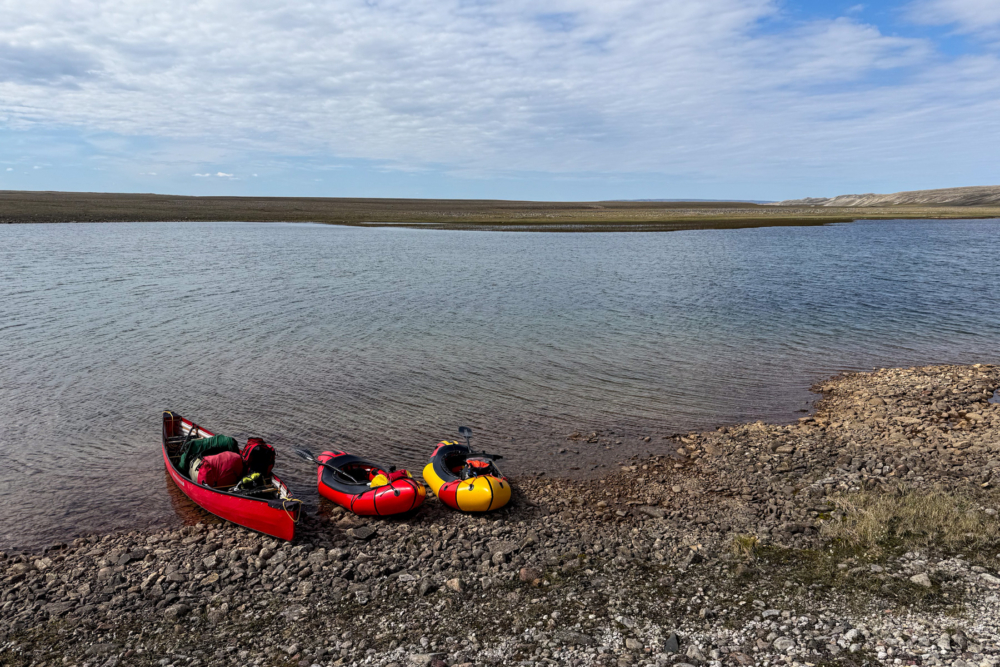
Steve and I develop what we dub the “Roscoe Style” of travel: lying flat on our rafts to distribute weight over shallow sections or sitting cross-legged, positioning a foot farther back than normal—anything to help float over the impossibly shallow sections. Arctic swans with their striking white plumage glide past as we struggle, marking each milestone we desperately hope to reach.
We’re relieved to see one decent rapid about half a kilometer long leading into Kettle Lake. Before running it, we wave a final farewell to our canoeist friends who have set up camp nearby. I make sure to get their satellite contact information for later, just in case. The day is hot with little wind; bugs are plentiful. We push roughly 25 kilometers and collapse at a buggy, marshy campsite among gravel hills. It’s around 10 p.m., though time feels meaningless under the midnight sun. Sleep comes in waves that never feel truly restorative. My first night experiencing perpetual daylight makes me wonder how anyone could tell time without a watch.
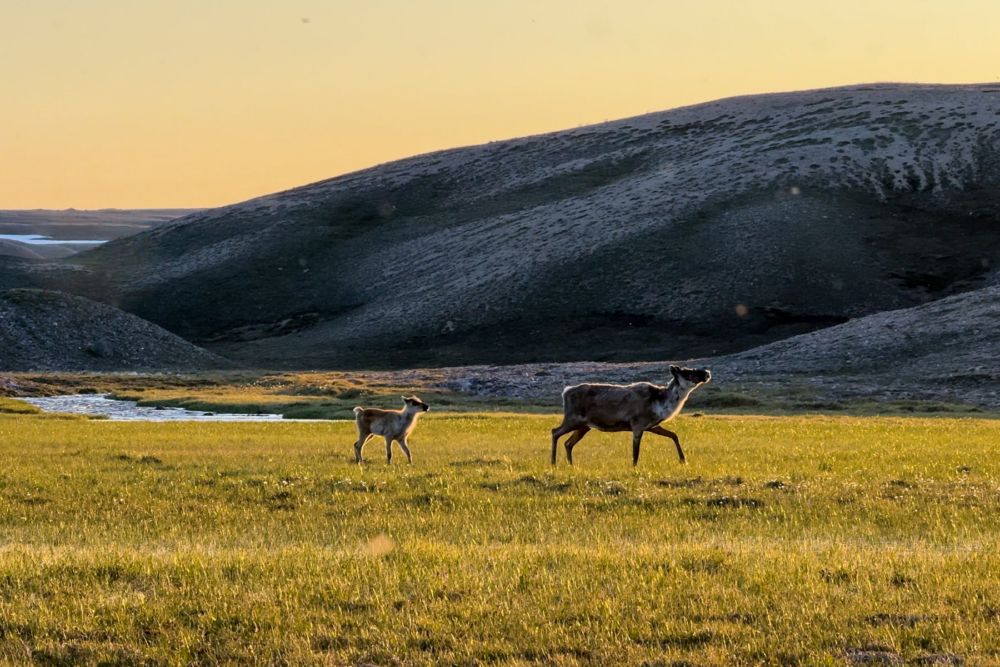
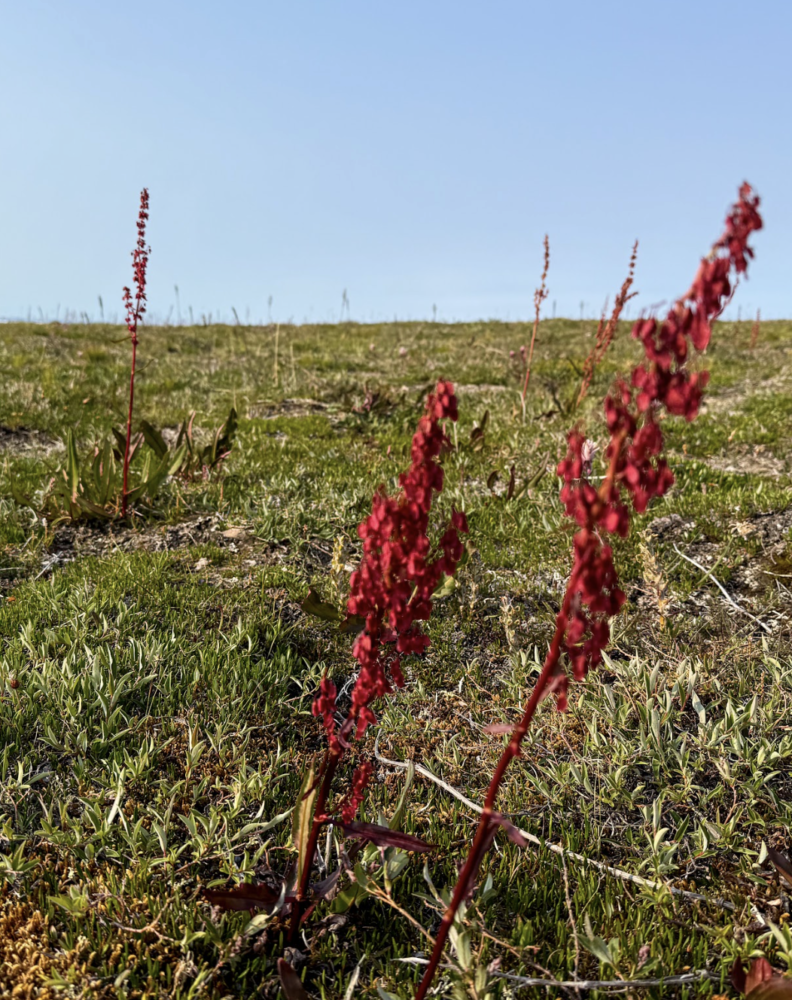
At camp the next morning, we encounter our first caribou: a male with impressive antlers, trotting carefree across the river from our tents. Flowers of all sorts and colours fill the landscape, with the occasional patch that smells as sweet as a flower shop. Around us, the hills begin to reveal pillars and veins of contrasting rock, hints of canyon country ahead. The whole area seems to sparkle from the glacial till and morainal deposits.
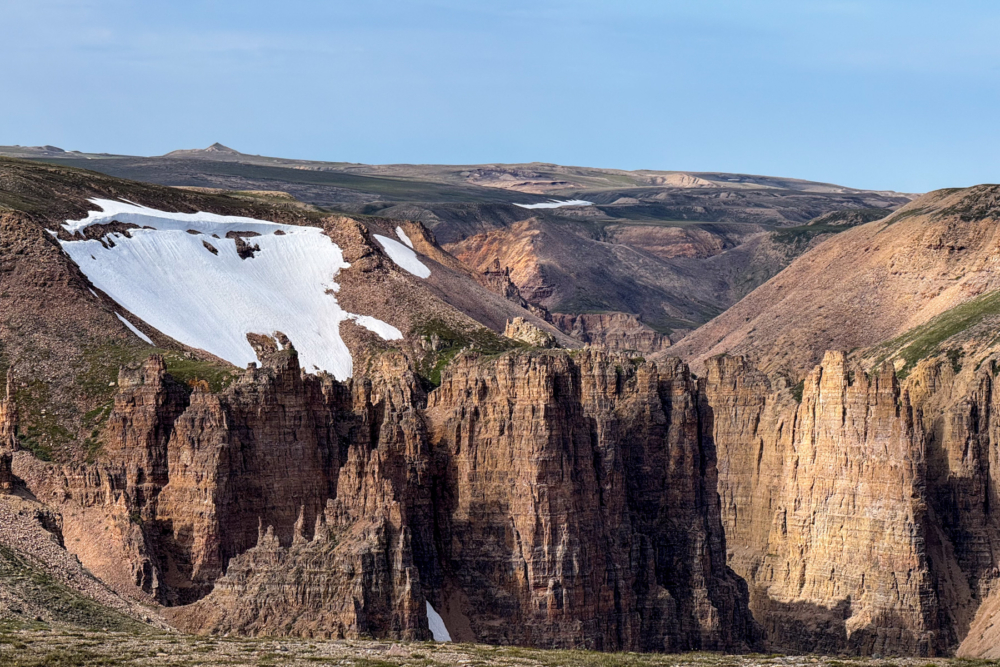
Day two brings more of the same. It’s a hard push against the wind on flatwater, with little current to help and even less time to stop and drink or eat. “Get it while the gettin’s good,” Jim had reminded me before we left, the phrase fueling our relentless traverse across the Arctic landscape. I notice large patches of ice on certain hillsides pouring into the river, a good sign that water levels will, hopefully, start to rise.
Between heavy breaths, I pause and listen. When the wind dies completely, the silence feels like a physical presence: no distant highway hum, no airplanes overhead, no human sounds whatsoever, aside from Steve’s occasional joke or the splashing of our paddles. That night, at our second camp, I take a moment to feel grateful for my tripping companion—his knowledge, optimism, and willingness to help in any way needed.
Collapsing our nylon homes each morning becomes routine, fueled by energy bars and quick snacks to keep moving. On day three, we cover another challenging 35 kilometers to finish the Roscoe. In some sort of trance, the same three lines from Stan Rogers’ “Northwest Passage” that I listened to before leaving loop in my head as we line boats along muddy grass and find our footing in caribou tracks.
We reach “Roscoe Lake” where the rapids finally become runnable, which we welcome with hoots and hollers of joy. Caribou appear everywhere now—lone bulls, small groups—and eventually stop and stare at our gray tents, mistaking us for boulders. We camp by flooded grasslands where cotton grass surrounds the football-field looking area. The glacial divide where the Roscoe and Brock once connected is just a kilometer from our tents. I take a shallow “swim” as a farewell to the Roscoe. Moments later, a caribou comes to the exact spot where I dried off, inspects us from a distance, and moves on.
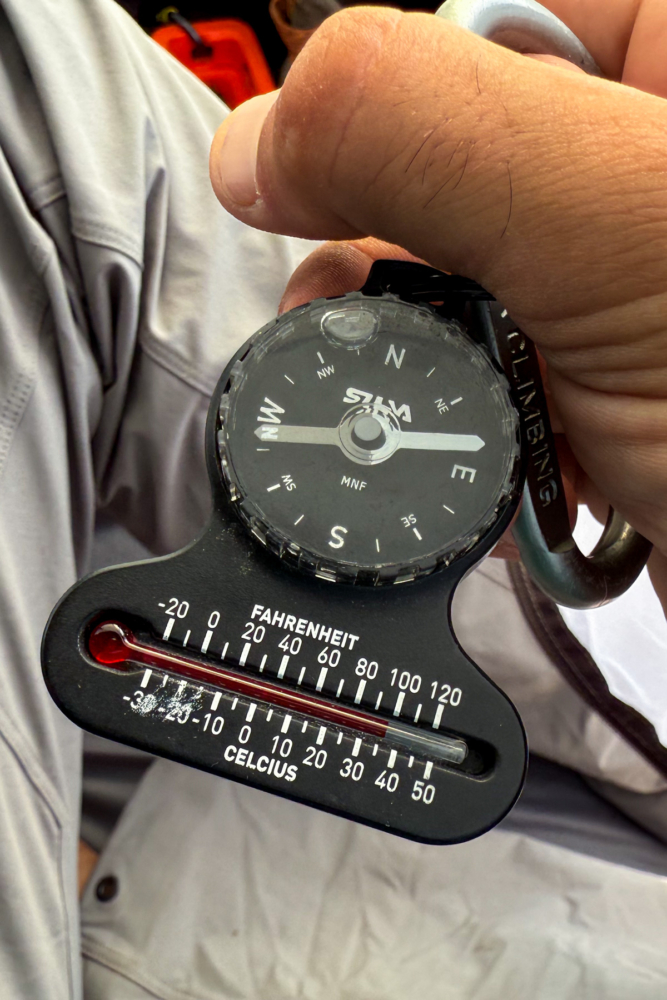
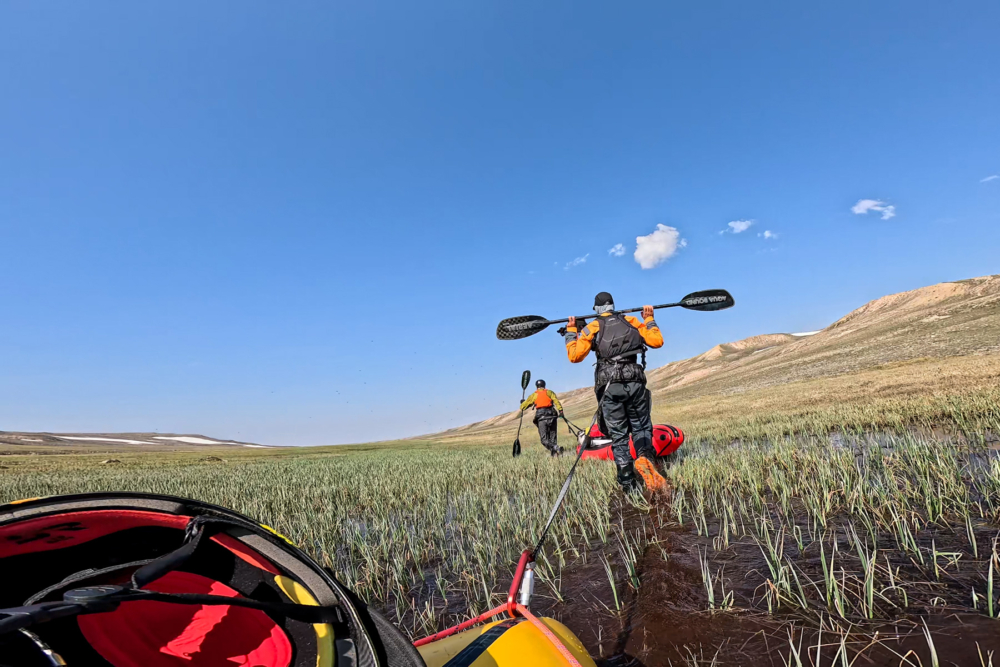
The temperature reaches a roaring 35° C inside the tent at 9 a.m. on day four as we convert to hiking mode for the portage between the Roscoe and Brock Rivers. My 95-liter pack feels ready to burst, loaded with 14 days of food.
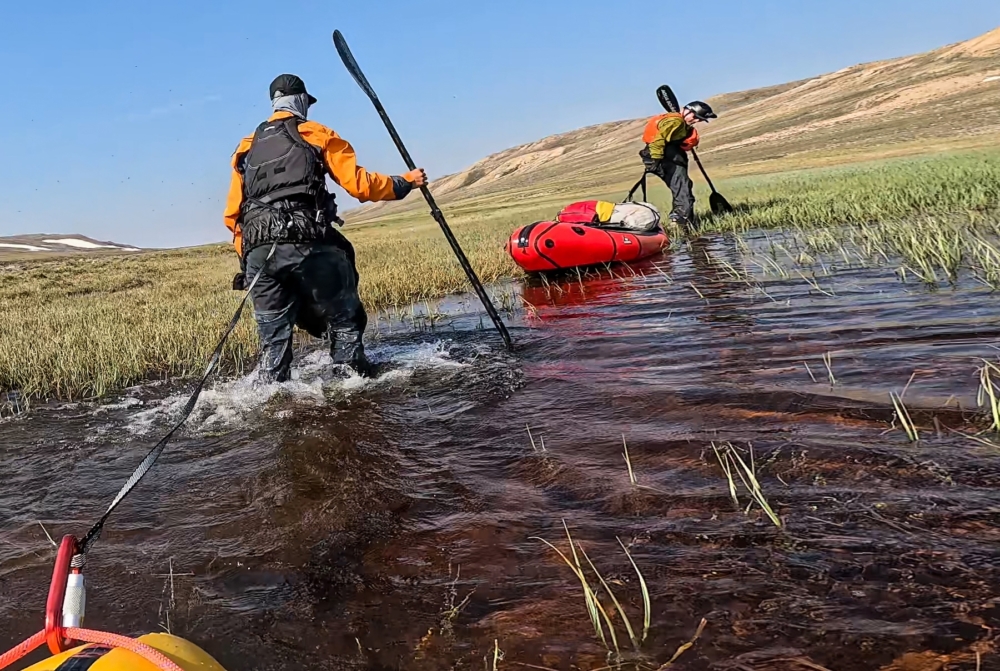
What we optimistically estimated as a three-kilometer crossing becomes a 10-kilometer slog through marshland, tussocks, and occasional waist-deep ponds. We keep the rafts inflated and pull them like sleds through water and grass, dry suits on, swarmed by bugs. The pattern becomes hypnotic: march head-down, take breaks sitting in our packrafts like sofas, hydrate, fuel up, and push again. If I avoid looking directly at where I have to walk, I tell myself, it won’t take as long to get there.
By evening, a storm rolls in. We find shelter on a rocky site at the first large lake between the Roscoe River and what we call “Third” or “Brock Lake.” The midnight sun dries our swamp-scented kit as the winds rise and doubts about making our extraction date grow stronger.
Day five is a harsh introduction to the reality of volatile Arctic weather. We wake to freezing conditions and thick fog until the wind rises at around 11 a.m. Strong headwinds, snow, and an upcoming lake crossing make getting on the water a challenge after the recent heat. I push onward, and into my packraft.
We fight across wind-swept lakes with two- to three-foot waves. My fingers go from pins and needles to numb—the start of frostnip, I later realize. We improvise with rain mitts as “pogies” and pour hot water on gear in hopes of regaining dexterity.
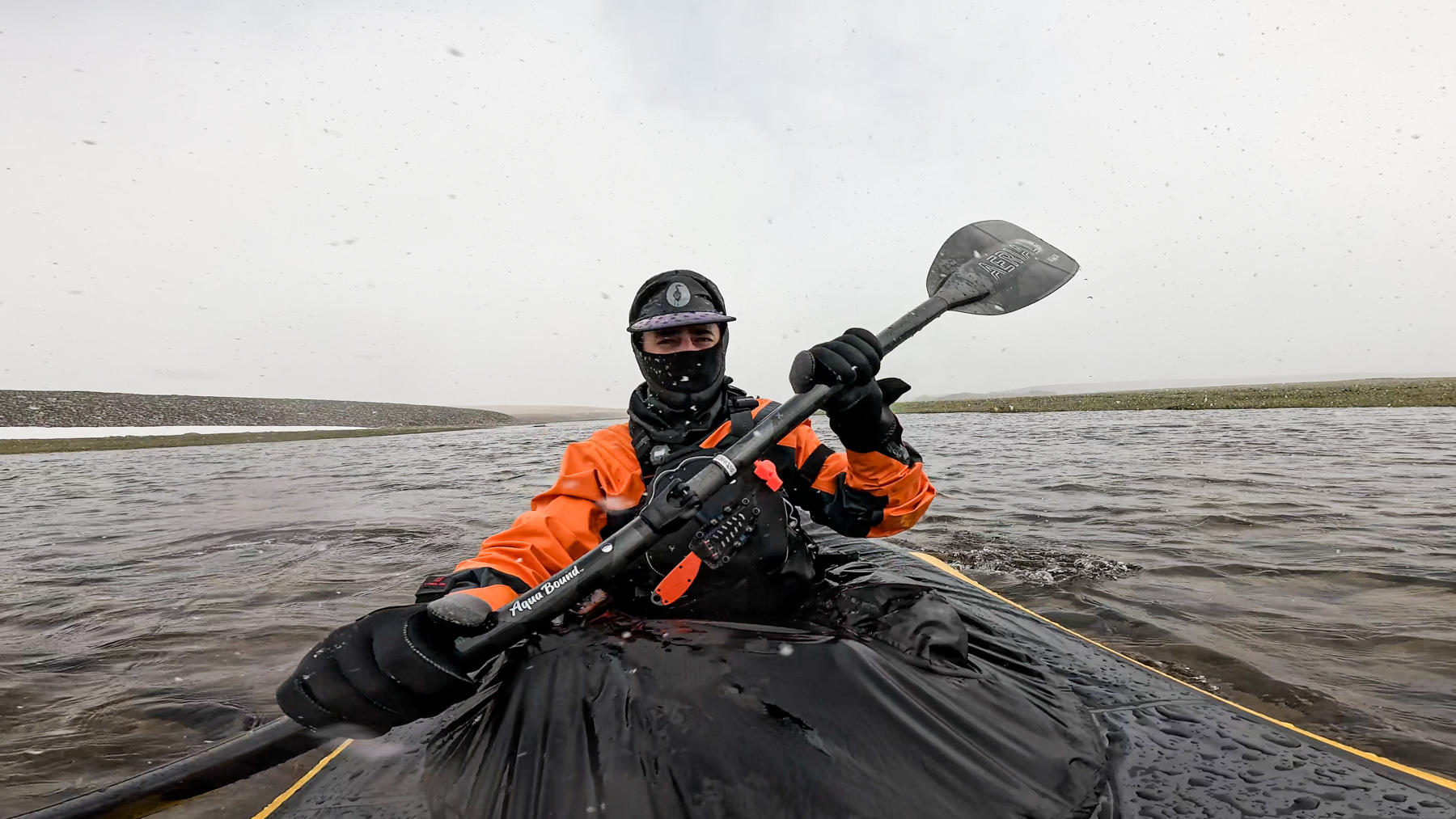
Partially frozen and finally ready to set up camp at Brock Lake, we discover a historical tent ring. It feels remarkable to find the ring after choosing the spot purely on sight from afar. Settling into my tent, I notice my Zoleo reads an incoming 10 cm of snow in the forecast, which is a real wake-up call for the coming days. I contact home to let them know of the weather, and an alternate pick-up plan.
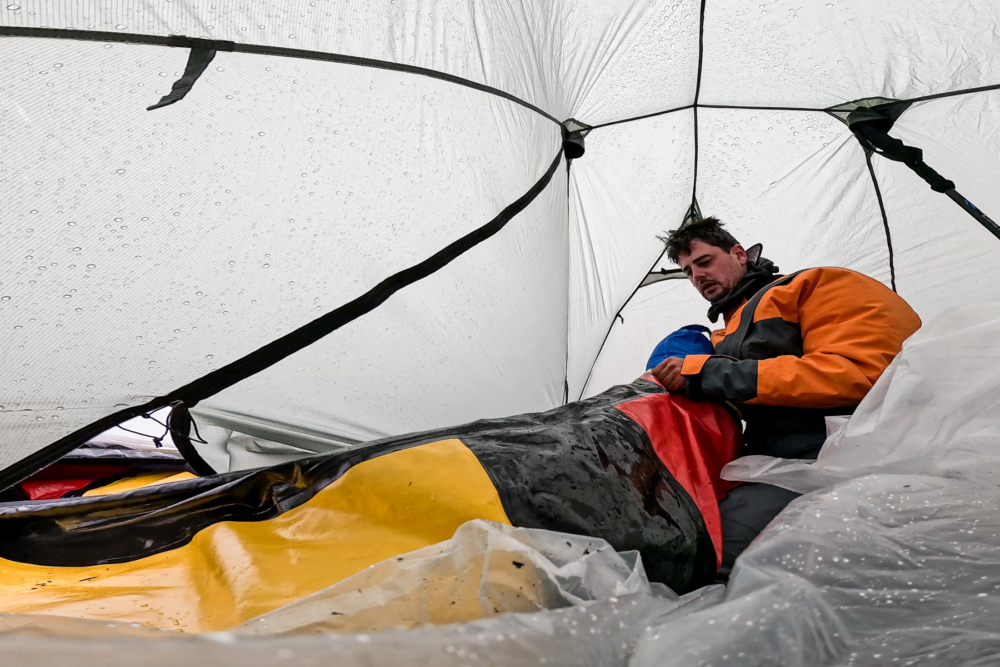
Starting day seven, we remain tent-bound for the next 46 hours as winds we estimate at 70+ km/h rock our shelters. Rain drives horizontally across the lake, and snow begins to accumulate. During the storm’s peak, I venture outside barefoot (a practice from my winter paddling back home) to gather more anchor rocks and experience the intensity of the oncoming rain, wind, and snow. The dry Arctic air makes even subzero temperatures more bearable than Ottawa’s humid cold.
Once the worst seems through, comfort grows knowing better weather is coming. Although a forced rest day, my legs and body are thankful for the reprieve. The wind’s white noise finally gives me a few real hours of sleep.
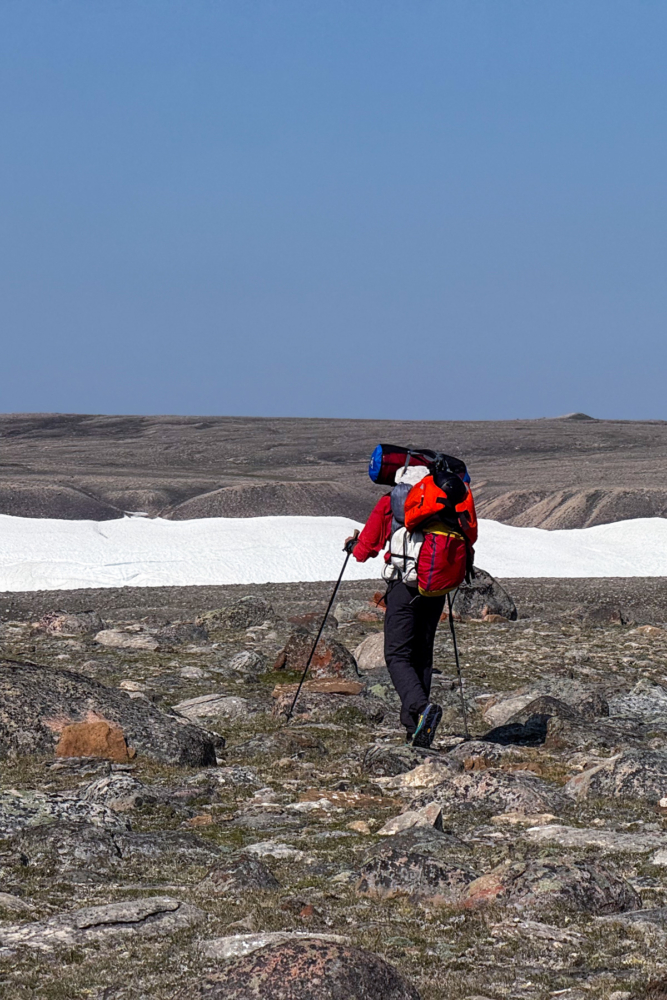
We wake to 2+ centimeters of snow. Cliffs are painted white, contrasting with the usual browns and grays. I notice my hands have begun to crack and scale from the constant exposure. I am slowly becoming the landscape that surrounds me. This is when my mindset shifts from optimistic to realistic: things feel serious and I am unsure that we will be able to complete the trip in time.
Evan’s story continues in An Amateur Meets the Arctic, Part 2.
***
Guest Contributor Evan Lefebvre is an Ottawa-based paddler who specializes in wilderness expeditions to remote locations. When not planning his next Arctic adventure, he can be found sliding canoes down snowy hills to reach open water in the Canadian winter. His observations from the Tuktut Nogait expedition have contributed to ongoing climate change research in Canada’s Arctic regions.