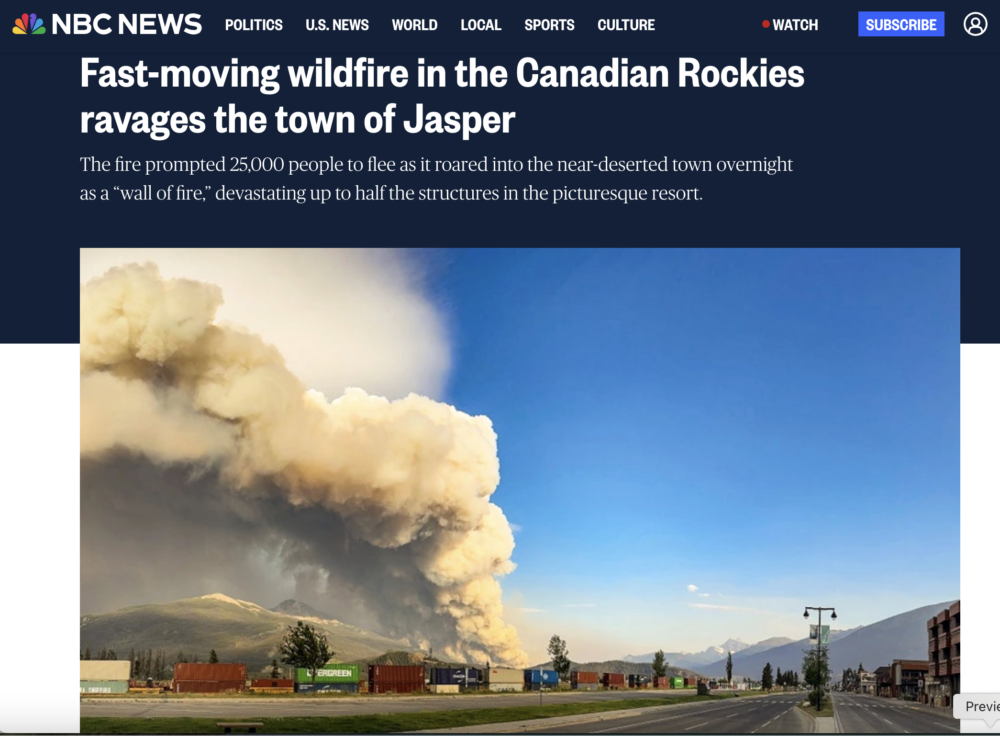
In July 2024, the mountains around Jasper, Alberta, lit up, igniting what would become the largest wildfire the region had seen in over a century. Over 32,000 hectares burned. Nearly 30% of the town was lost. Homes. Businesses. Landmarks that had stood for generations.
But if you’ve ever spent time in a mountain town, you know something about the people who choose to live there. They are kind. They are resilient. And they are committed to their beautiful mountain town.
A Mountain Town with Soul
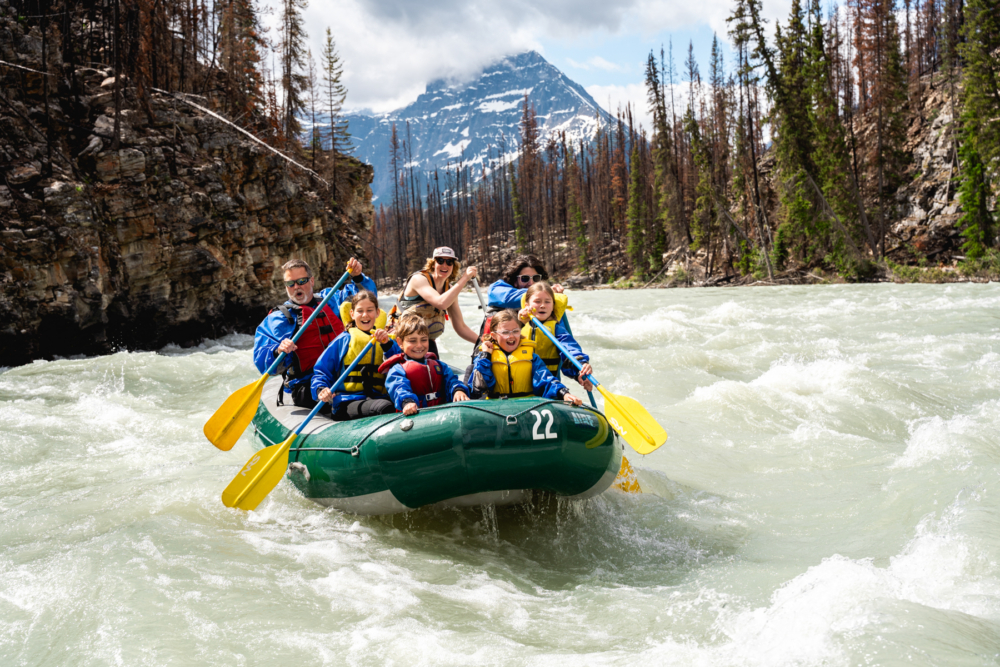
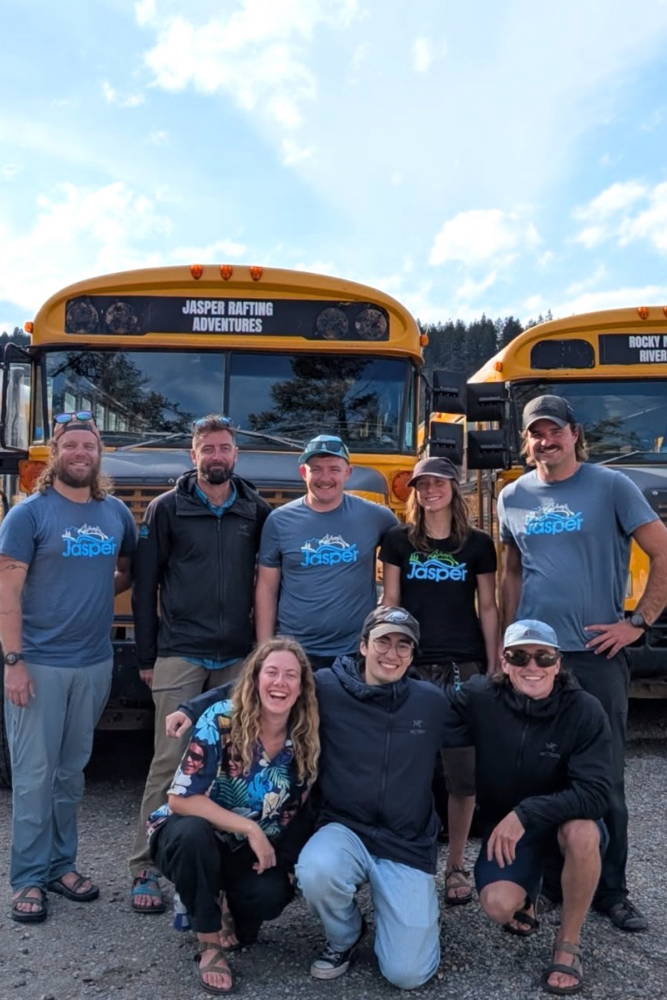
I was born and raised in Jasper. Grew up here, went to school here, fell in love with the mountains the way only a kid who grows up inside them can. In high school, I landed a position in the office at Jasper Rafting Adventures, one of the oldest rafting operations in Canada, guiding since 1971. The guides got under my skin pretty quickly. By the time I turned 18, I was one of them, running the glacial Athabasca and Sunwapta Rivers through the heart of the Canadian Rockies.
Years later, after building a business of my own in the neighbouring province of British Columbia, JRA brought me back on as their marketing manager. Different role, same rivers. Same town.
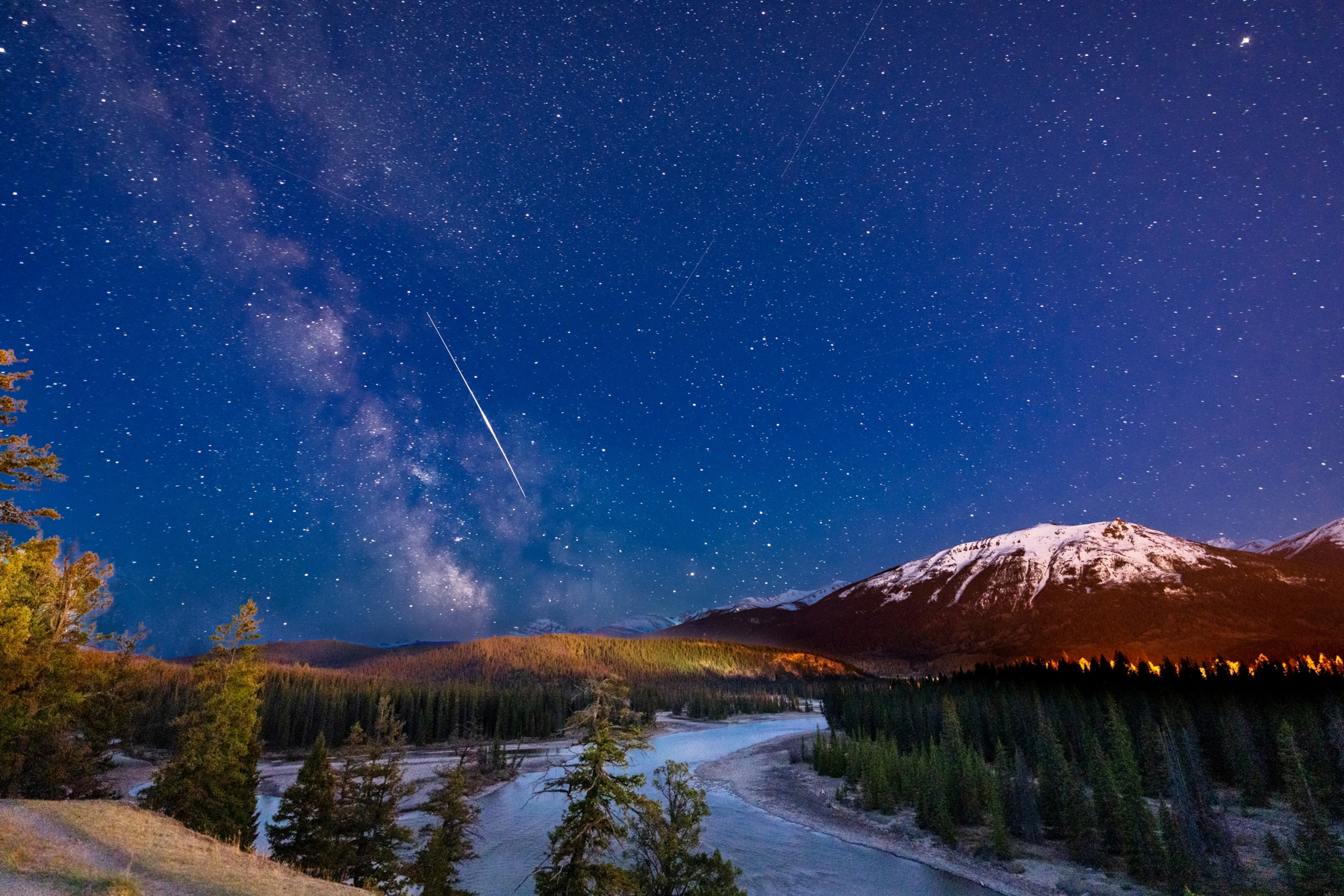
Jasper is the kind of place that’s hard to explain to someone who hasn’t been. Think Banff National Park: world-class scenery, towering mountain peaks, but quieter. Less crowded. No industry, no traffic, just the largest national park in Canada wrapped around you in every direction. Clear skies dominate most of the day, and at night, Jasper is a designated dark sky preserve, one of the largest in the world. On a clear evening, the stars fill the sky.
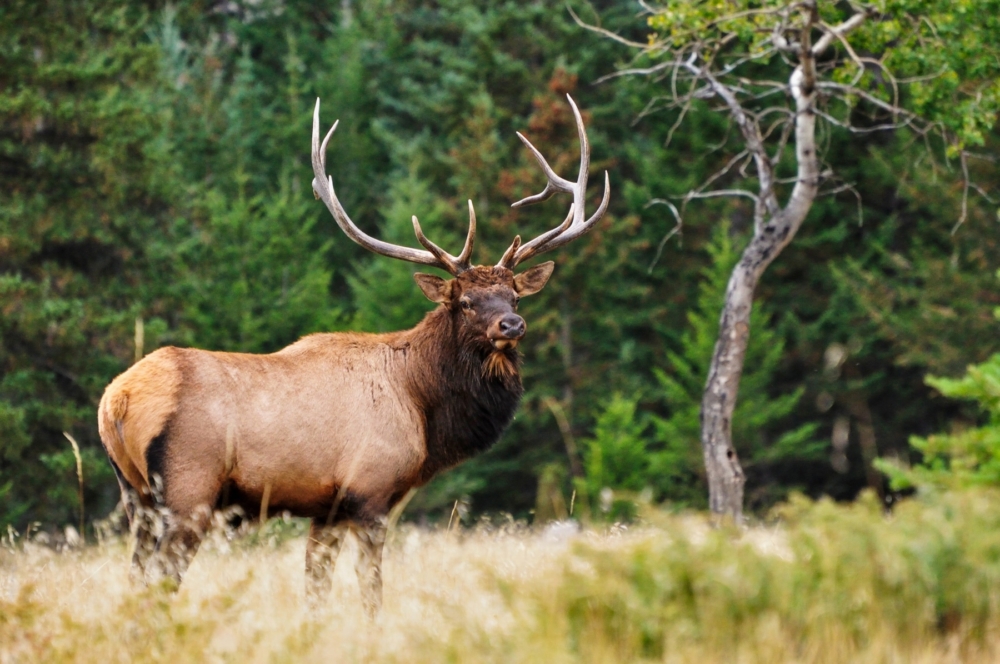
Elk wander through town like they own it, because, honestly, they do. After a day on the river, you end up somewhere like the Jasper Brew Pub, a local institution that took damage in the fire and has since been renovated and come back better than ever. You grab a pint, your arms are still a little tired from paddling, and you feel like you’ve earned your seat. People move here and don’t leave. Guides like Andy, Jordan, Andre, and Eddie have been running trips for years and still live here year-round, working at places like the local ski hill Marmot Basin in winter.
That’s the Jasper most visitors don’t expect to find. They come for the mountains and wildlife and leave having fallen for something harder to name.
The Night Everything Changed
The evacuation order came in the evening. The order came fast—there wasn’t panic, just urgency as families packed essentials and neighbours checked on neighbours. In just a few short hours, the highways filled with taillights streaming westbound through the Rockies.
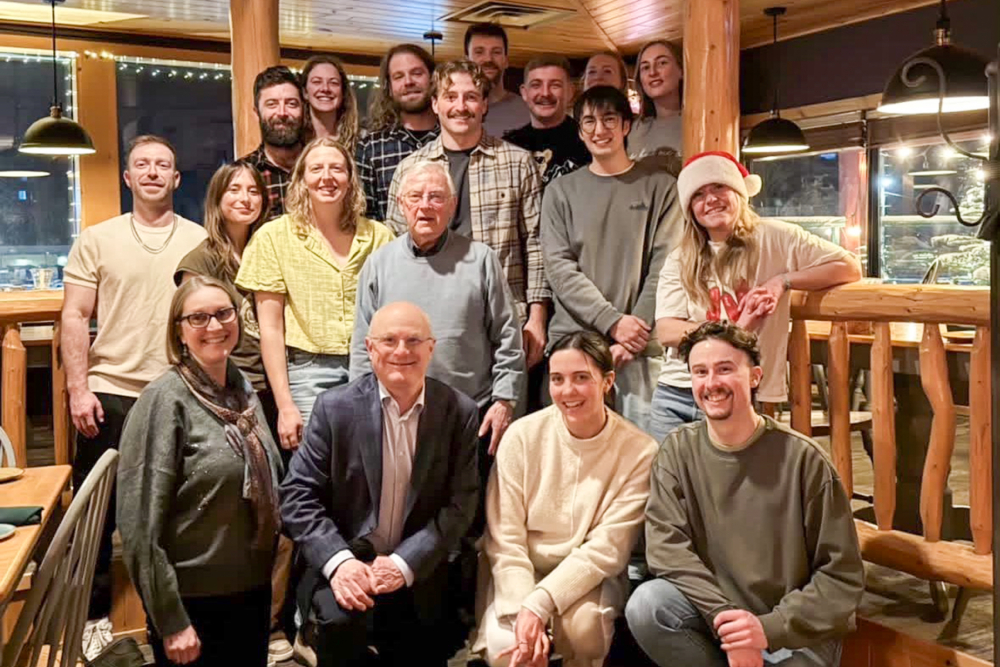
Like other businesses in and around town, we had to shut Jasper Rafting Adventures down immediately. The river schedule stopped. Guides loaded their trucks. The buses were parked, gear left drying. JRA owners Mark and Kathryn helped coordinate where everyone could go. Most headed to Valemount, the nearest neighbouring town, to regroup and make plans.
From there, some guides flew back home to the east coast to wait it out. Others turned it into an opportunity, exploring more of BC, checking out places like Tofino on the coast. Those with family or connections elsewhere opened their networks up, helping find couches, spare rooms, and places to land. A company, a family, separated but connected. Everyone just helped everyone, no questions asked.
We didn’t know what we would come back to.
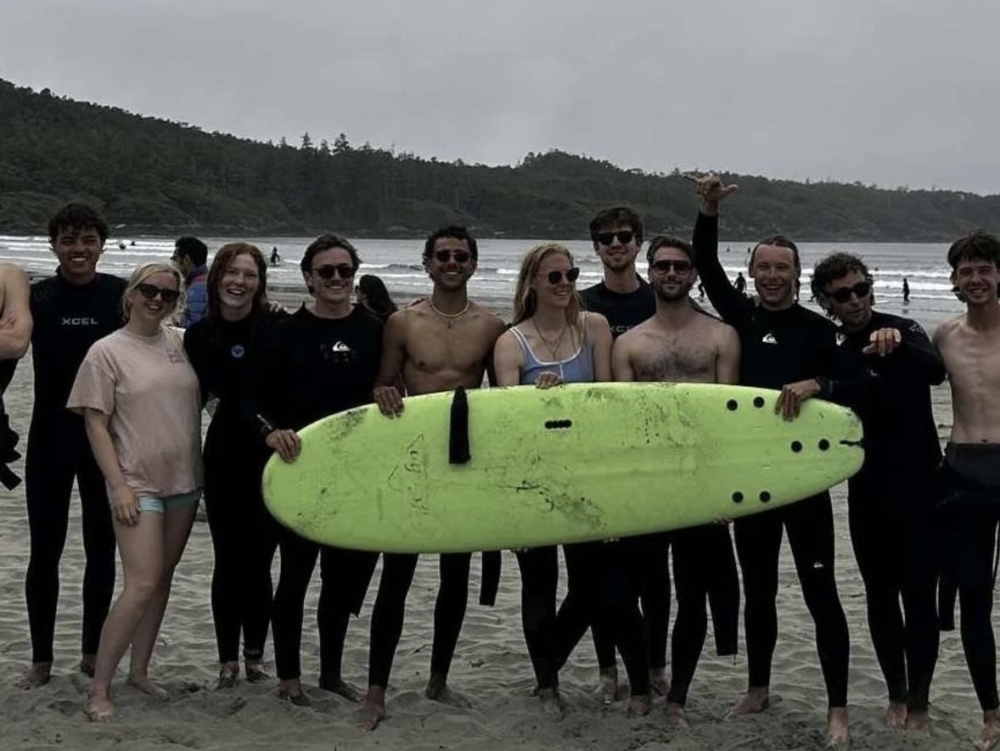
In the moment, it felt surreal, like an experience happening to someone else, or a scene in a movie. Then, someone shared photographs of downtown’s Maligne Lodge burning. Watching it on my phone, that image hit differently. Everyone knew the fire was coming to town. But it didn’t feel real until you saw the photo.
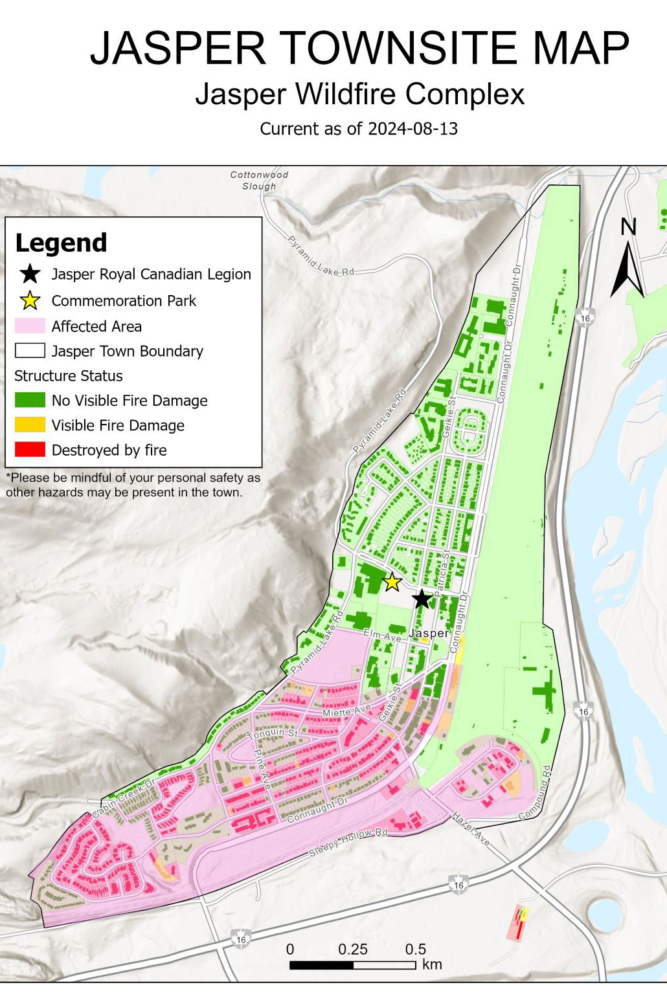
Then came the waiting. The official fire map wasn’t released for a few days, so nobody had confirmation of what had burned and what hadn’t. We were constantly on social media, watching every video firefighters posted, scanning the footage frame by frame trying to spot a familiar street, a recognizable building, trying to figure out if your block was still standing. It was one of the more stressful weeks I can remember.
My family’s house survived. The JRA office survived. The owners’ homes survived. But some of the staff accommodation buildings burned, and a few guides lost belongings they’d left behind.
You Can’t Burn a River
The strange thing about wildfires is that they consume the landscape but leave certain lines untouched.
You can’t burn a river.
When we eventually returned, the mountains were still there: sharp, immense, indifferent to what had happened below them. The Athabasca kept flowing. Meltwater still poured from the Columbia Icefields, as cold and turquoise as ever.
The valleys, though, were different. Sections of forest along the Athabasca River valley were blackened. Soil turned charcoal. Hillsides that had been deep green were suddenly raw and exposed.
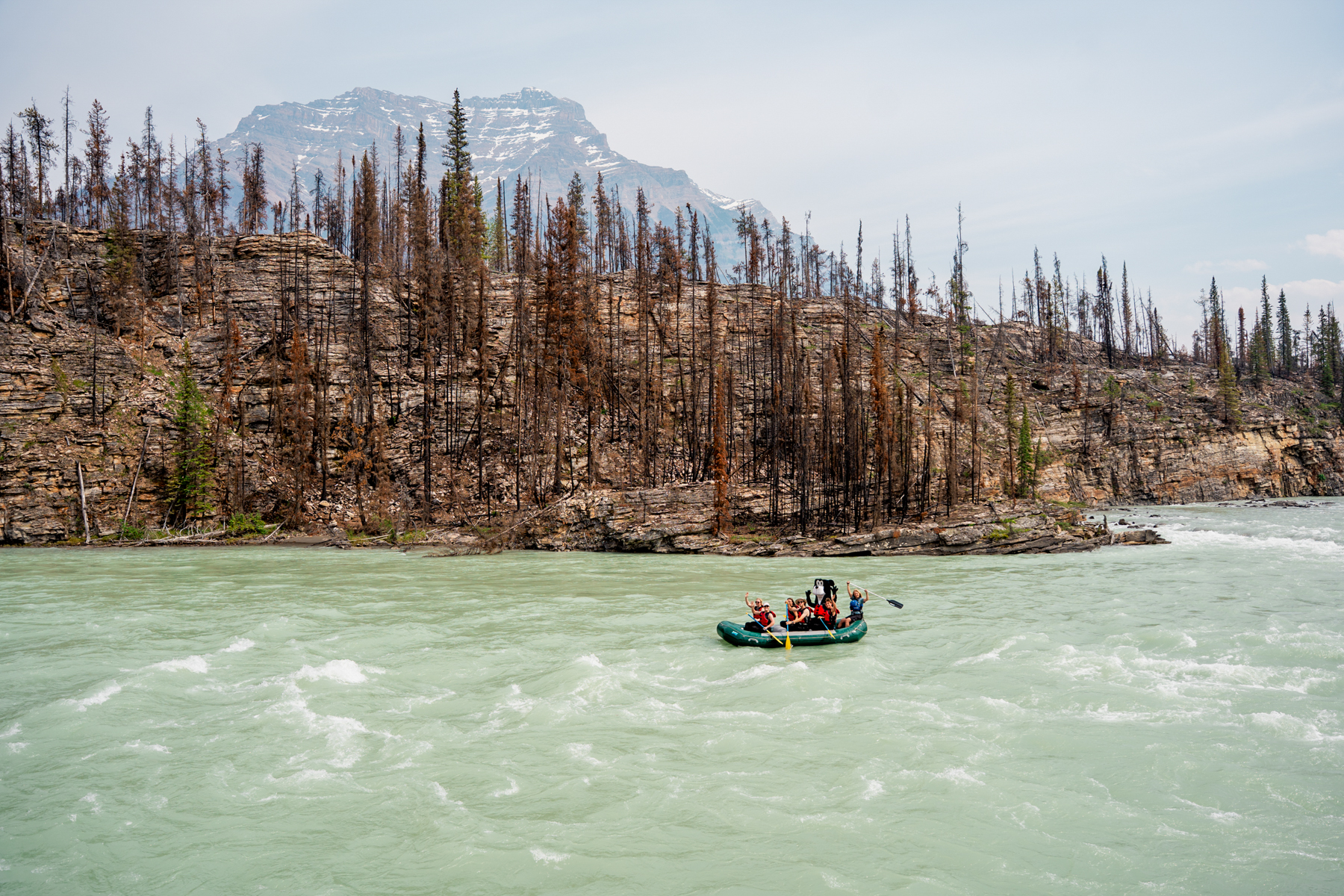
Pulling back into Jasper felt strange. It was dark and grim in a way that’s hard to describe unless you’ve seen a burned landscape up close. The town you grew up in, the one you know by feel, suddenly looked foreign.
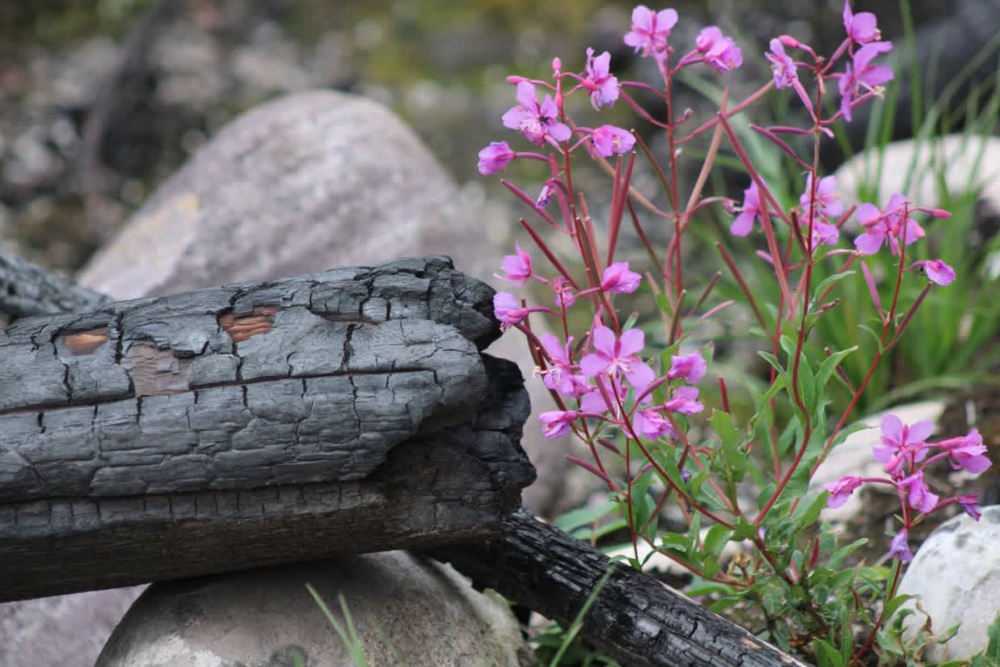
But fire is not just destruction in the Rockies, it’s part of the ecology. Fire resets and paves the way for new growth. By the following summer, the blackened slopes had begun transforming. Fireweed bloomed in thick swaths of purple. Fresh grass pushed through ash. The mountains filled with color again. What had looked like ruin slowly started to look like renewal.
Community Burns Brighter
When the fires had cleared, nearly 30% of Jasper had burned. In a small town, it wasn’t strangers who lost homes. It was friends, guides, teachers, our healthcare workers and volunteer firefighters. While devastating, the response was exactly what you’d expect from a strong mountain community used to taking care of one another.
There wasn’t much talk about “resilience.” As life returned to Jasper, people just did what needed to be done. Guides opened spare rooms. People crashed on couches. Gear was stored wherever there was space. Businesses shared resources. No one waited to be asked to lend a helping hand as we slowly crept back towards “normal” together. And yet, an under current of tension remained as spring and summer drew closer.
Jasper’s economy runs on tourism. Rafting, guided tours, restaurants, gift shops, hiking trails, the ski hill: visitors keep the lights on. So in the spring of 2025, we waited to see who would come.
Tourism numbers that year were lower than usual, mostly because campgrounds remained closed and capacity was reduced. Though we were forced to adapt, morale never wavered. Even those who lost homes showed up with steady attitudes and a kind of quiet defiance. This is Jasper. You rebuild.
Now, nearly two years later, most campgrounds have reopened. Businesses are operating, trails are mostly restored or are actively being restored. Regrowth is undeniable. The blackened soil that once felt jarring now bursts with wildflowers in summer. The mountains never stopped being dramatic, and the rivers never stopped running.
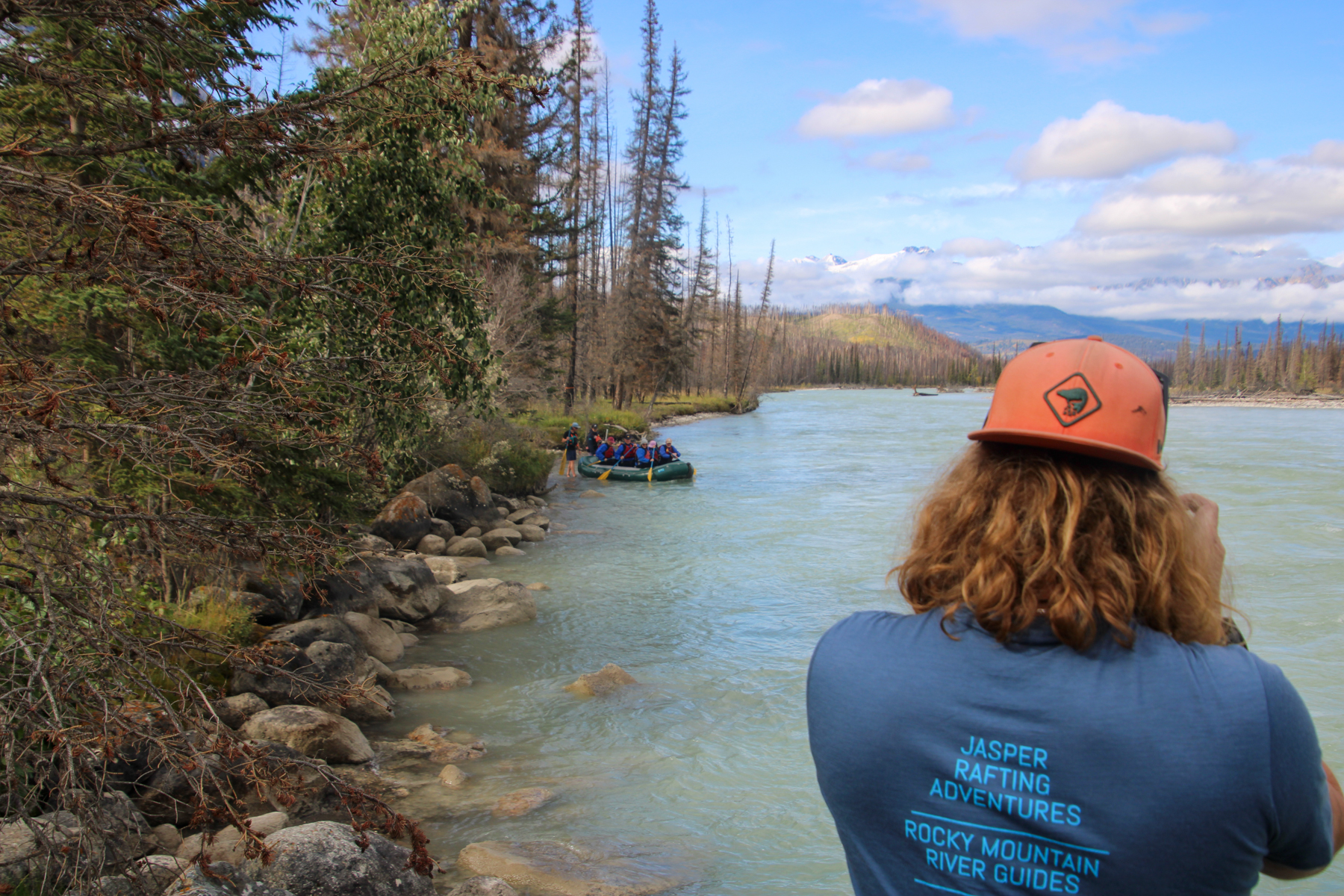
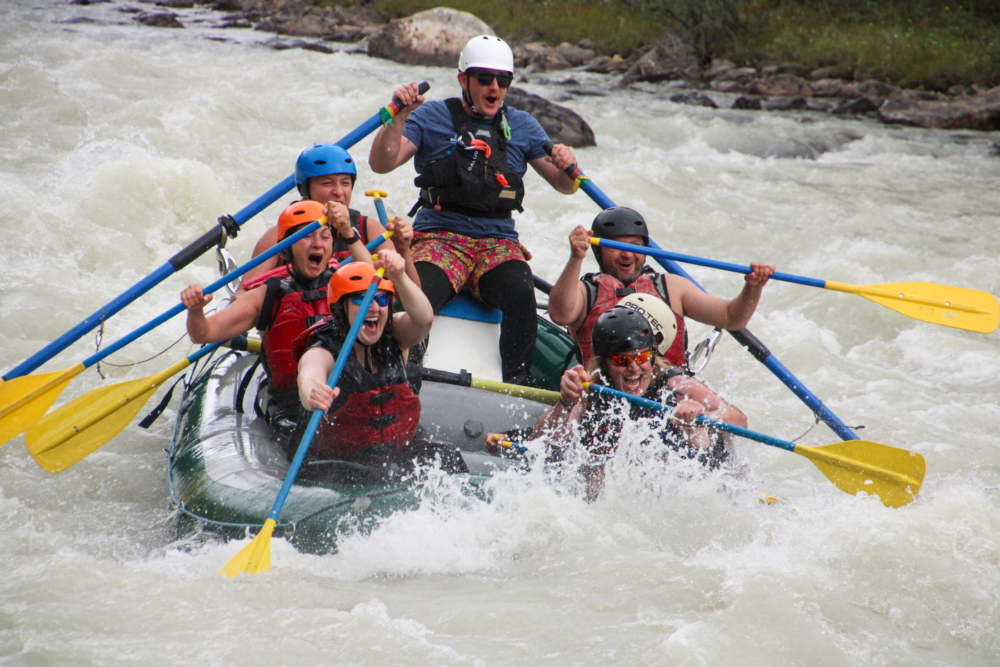
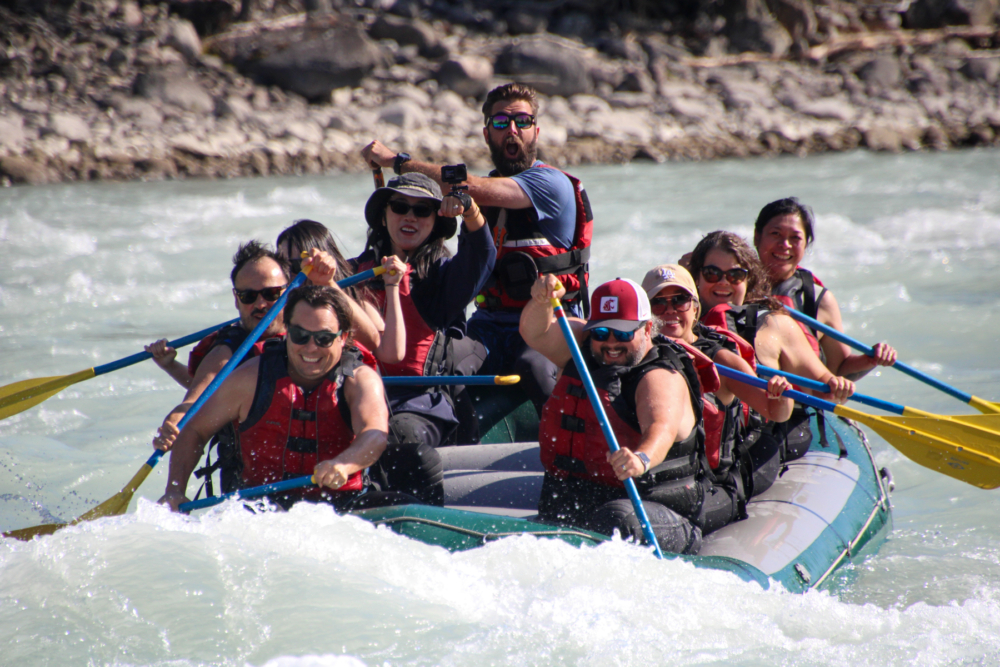
On the Sunwapta, you still punch through standing waves that hit harder than expected. On the Athabasca, you still hear that collective scream-laugh when the first wall of glacial water soaks the front of the raft. And when you pull into town after a trip, you still feel that mountain town buzz: the sense that you’re somewhere incredible.
Is Jasper Worth Visiting?
The season following the fire, the questions came constantly.
“Is Jasper open?”
“Is it worth visiting after the fire?”
Yes.
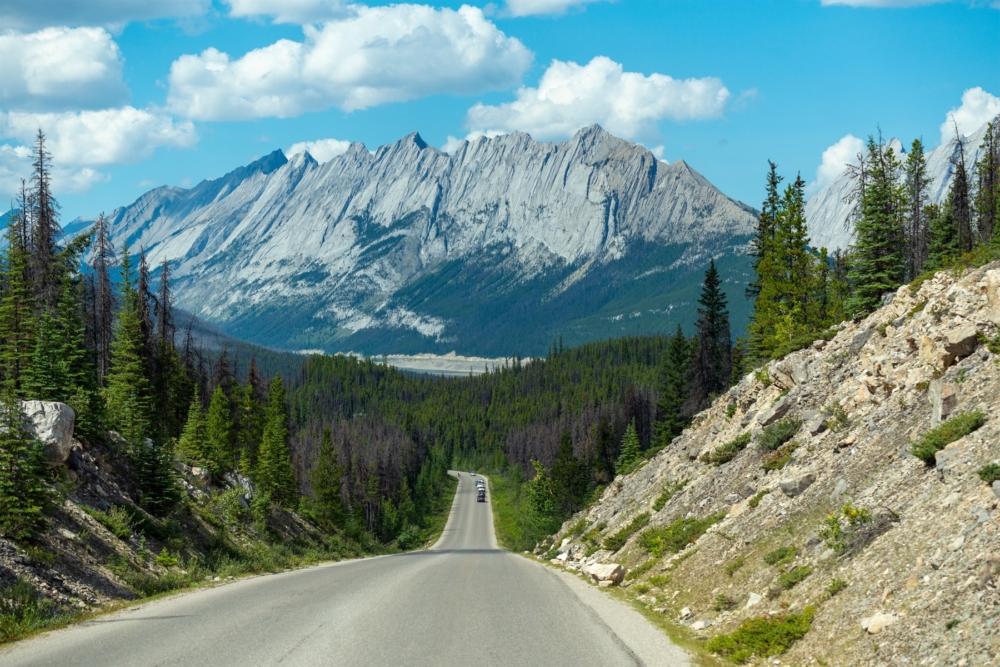
Jasper reopened to visitors in September 2024. And while a handful of areas remain under restoration, the majority of Jasper National Park, Canada’s largest Rocky Mountain national park, was untouched. Drive the Icefields Parkway and you’ll still pull over every ten minutes because it feels illegal not to not stop and take in their splendor properly. The Columbia Icefield still feeds the headwaters. Wildlife still moves through the valleys.
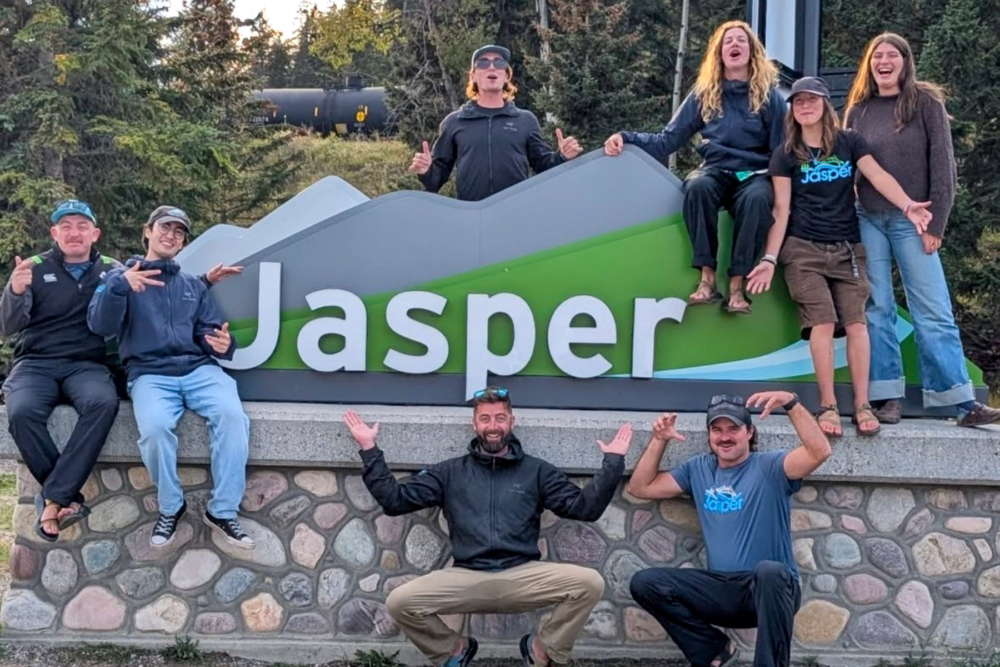
Downtown Jasper, also largely unaffected, still carries a distinct small-town mountain energy. Independent cafés. Local gear shops. Restaurants packed on summer evenings. There is pride in living here, working here, guiding here. It looks different in places, sure, but different isn’t bad.
There’s something uniquely powerful about rafting through a landscape that has survived. It offers perspective. Some visitors now come specifically to witness the regeneration, curious to see what wildfire does to an ecosystem and to better understand how destruction and renewal exist side by side.
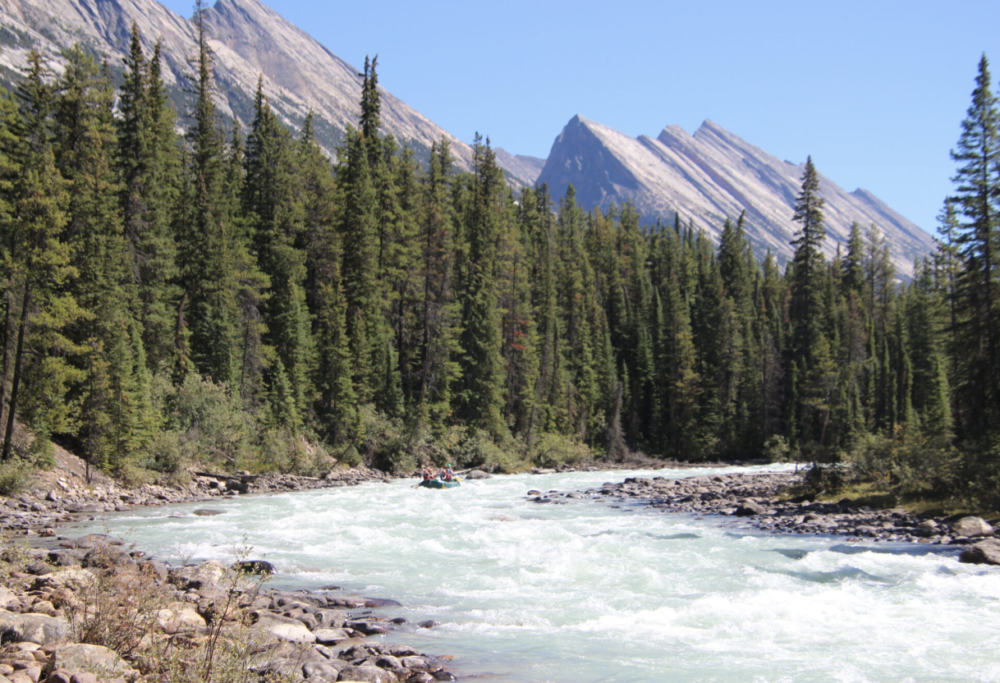
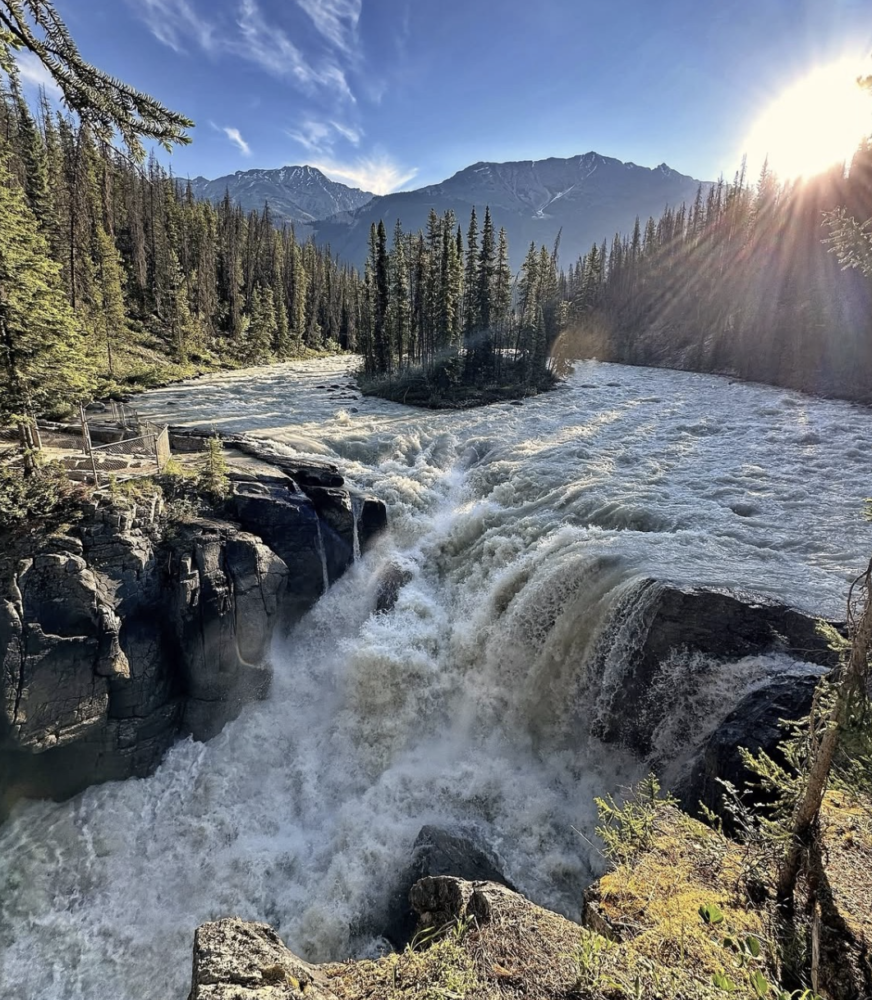
The Sunwapta, which offers the best Class III whitewater in Jasper National Park, was untouched by the wildfire. Fed directly by the Sunwapta Glacier, it’s powerful, technical, and absolutely electric at peak flows.
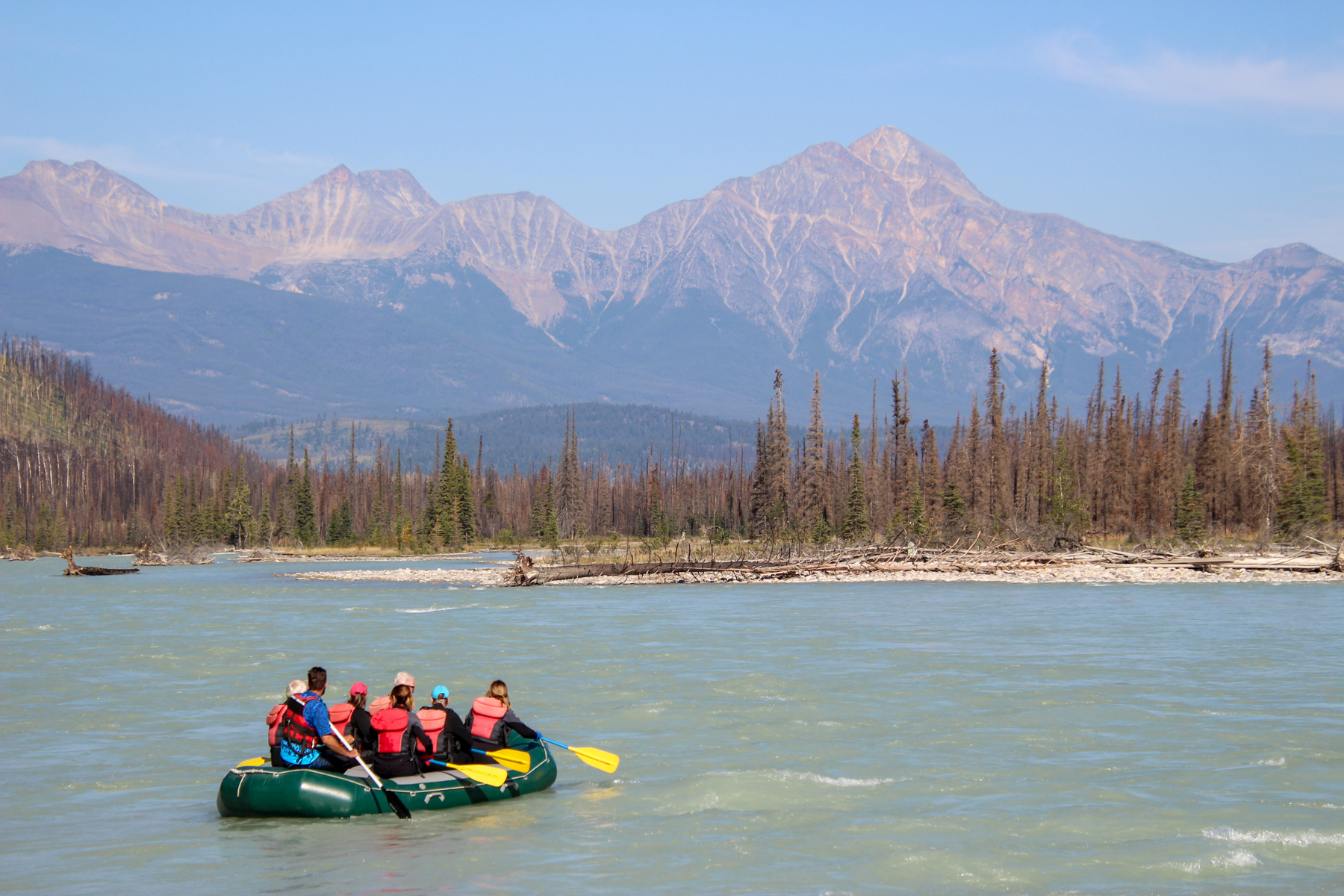
The Athabasca changed visually, but not functionally. Rapids still stack up against the canyon walls, fast and splashy, accessible but thrilling. Glacial silt still gives the water that unreal blue-grey tone. The mountains still dominate every horizon and, in many places, are now easier to see.
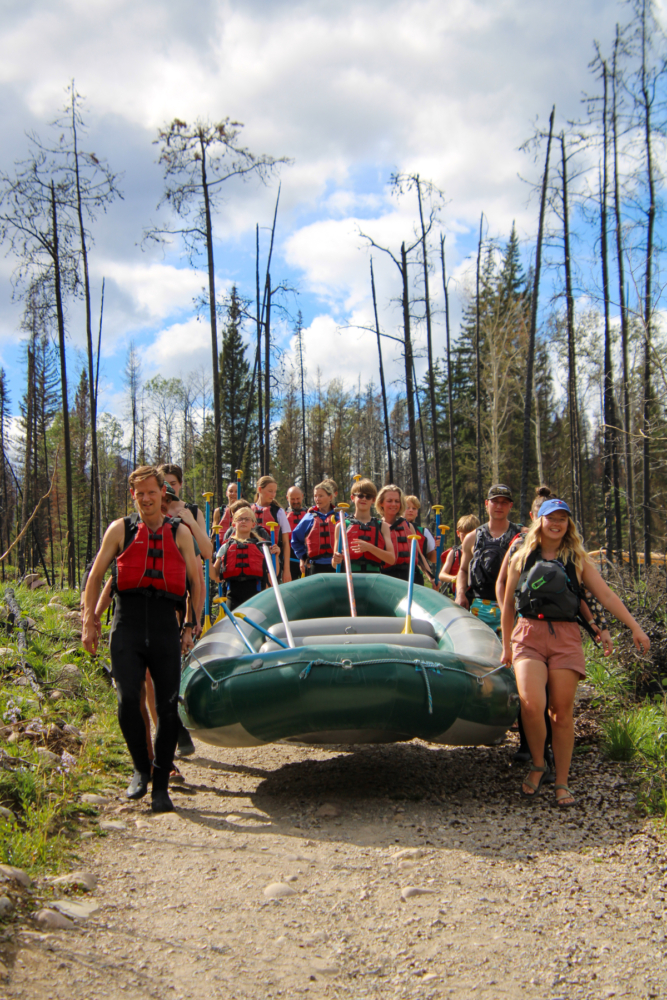
Some infrastructure was damaged. Outhouses had to be rebuilt. Access points were cleared and restored. But the core experience, that moment when a raft drops into its first wave and everyone forgets about emails, deadlines, and phone service, remains as strong as ever.
In 2026, there’s even more reason to visit. More campgrounds are open than last season. And with the Canada Strong Pass offering free entry into the national park, there’s never been a better time to come and experience Jasper for yourself.
If you’ve never rafted glacial water straight from the Columbia Icefield, driven the Icefields Parkway, or walked into a mountain pub after a day on the river and felt like you somehow belong there, there’s a good chance you’ve never been to Jasper.
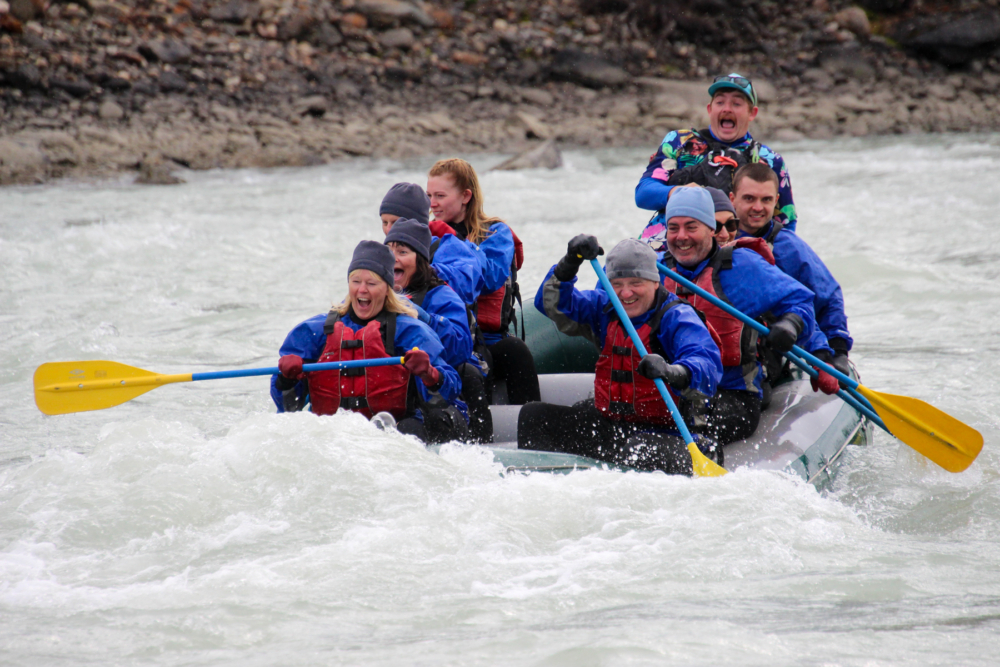
Now is a good time. Not because Jasper needs saving, but because Jasper is still Jasper. A tight-knit yet welcoming mountain community, as dynamic as the environment that surrounds us.
***
Guest Contributor Thomas McKenney grew up in Jasper and got his start with Jasper Rafting Adventures working in the office, then spent several seasons guiding on the river. After earning his engineering degree at the University of British Columbia he launched Okanagan Marine Guys, a boat care business that took off quickly and built his marketing chops along the way. When the 2024 Jasper wildfire left JRA facing one of its hardest seasons, it was a natural fit to come back to the company and this time focused on marketing as JRA gears up for a big 2026 bounce back season.
–
Editor’s note: JRA, like other local businesses affected by the 2024 Jasper Wildfire Complex, remain open for business and are accepting reservations for the 2026 season and beyond. The primary rafting season on the Athabasca and Sunwapta Rivers typically runs from May to September. To learn more, visit jasperraftingadventures.com or rmriverguides.com
Photography courtesy of Jasper Rafting Adventures, Thomas McKenney, Shutterstock | https://shawnccf.myportfolio.com/; https://www.deviantart.com/slecocqphotography; https://www.robertharding.com/ ;