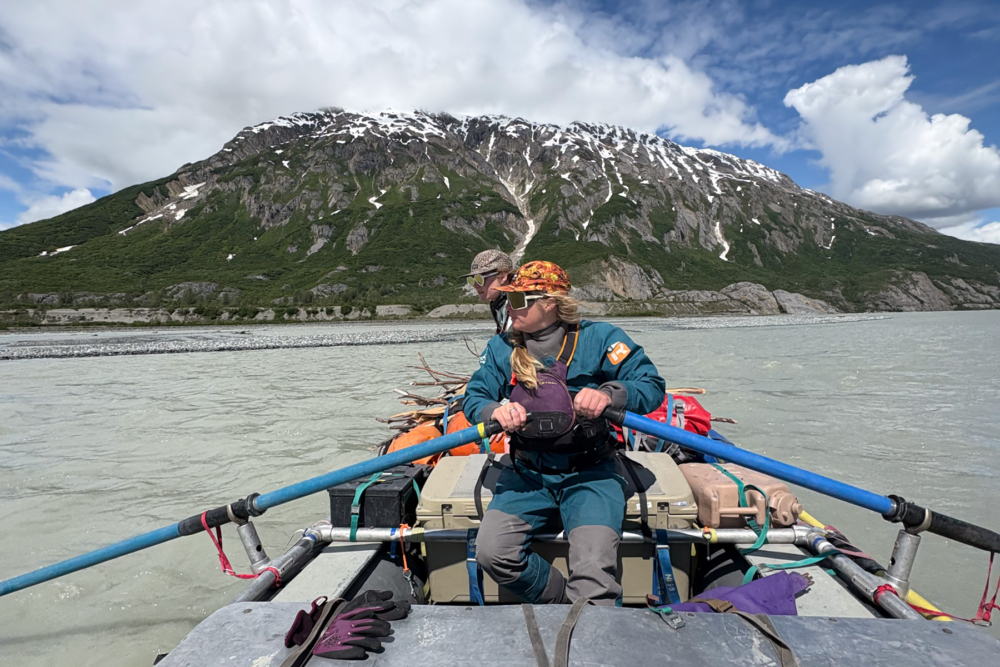
I’m rowing someone else’s boat on Lava Day. Although I’m technically the trip leader, I decided this was the “people’s trip,” and didn’t give myself a boat. I hug the left shore for a full a mile above the scout. It’s one of the only places we have GPS coordinates for, and I keep my phone handy, addicted to the siren song of my topo map. Because we’re not about to run the Lava I know. This isn’t the Grand Canyon. This is Lava North.
Like anything associated with Alaska, the whispers I’d heard of the Upper Alsek and its tributary, the Tatshenshini, sounded slick and sexy. A place far away where the mountains are bigger and the wilderness is, well, wilder. I’d heard enough rumors that I finally threw my name on the 10+ year long waitlist. I was completely unprepared when I pulled the permit just two years later.
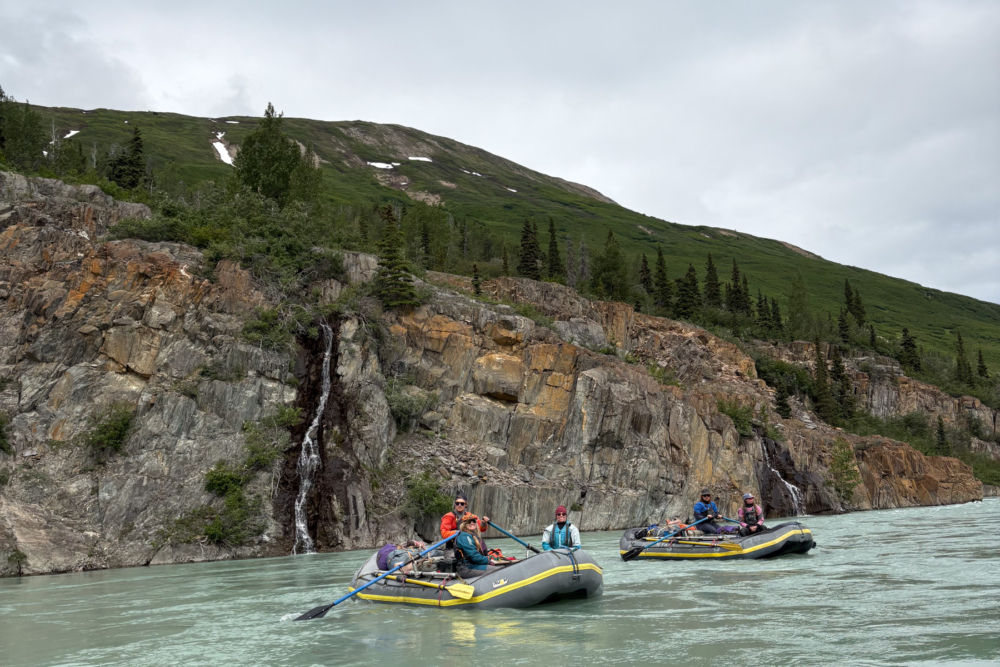
The permit is for a takeout date, allowing you to run either river, and I decided on the Upper Alsek–the beefier, logistically nightmarish older brother to the Tat. I used a few one-liners to convince some friends to come along, “It’s the trip of a lifetime,” and “We’ll never pull this permit again.” Then I rented boats and arranged a shuttle to the Dezadesh River in Yukon Territory. From there we’d float into British Columbia, take a helicopter portage over Turnback Canyon, then continue past the confluence with the Tat to Dry Bay, Southeast Alaska, where our rented boats would fly back to Juneau and we’d fly to Yakutat.
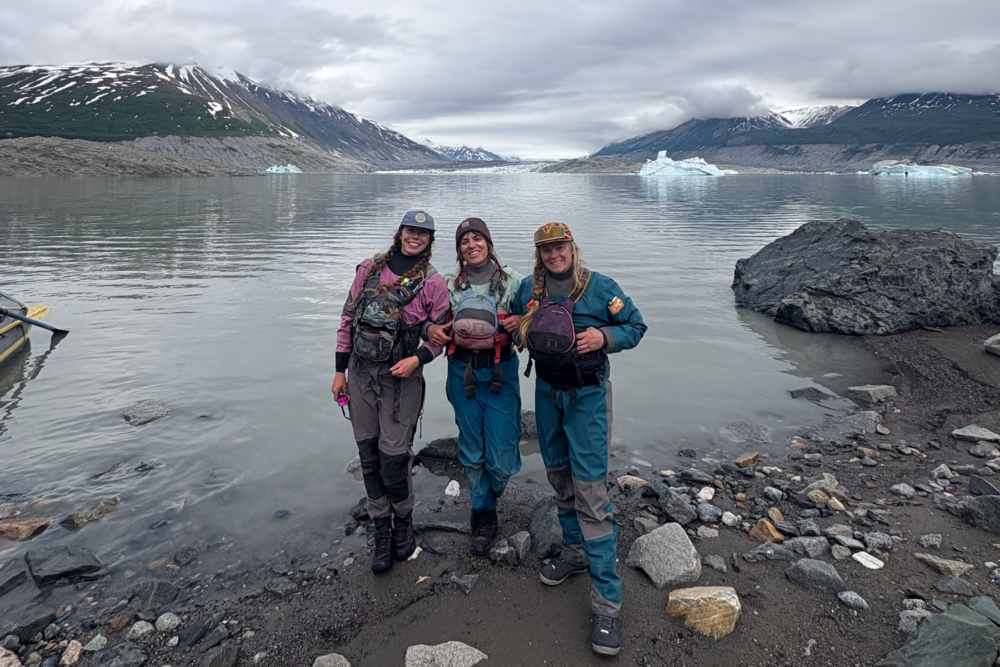
Our crew was mostly guides or former guides, some of whom I’ve worked with for years on the Salmon. It seems improbable, like it crept up on us, but we’ve known each other for so long we’re old friends. We’ve worked together, sure, but we’ve also built up the days of mountain biking, private boating, and traveling in foreign countries. We’ve seen each other fall in and out of love, change jobs, make a mess of life, and clean it up again. We’re all in or approaching our thirties, and those of us that still guide are eyeing the other side of the fence.
Our first night on the river, we can’t find a camp. Or rather, we can’t find the kind of camps we’re used to. There’s no trace of human impact, no worn ground or footpaths. We pull over on a sandy spit above the confluence with the Kaskawulsh, the official start of the Upper Alsek. It’s Hannah’s birthday, and she picks the beach, a mile of cracked sand littered with twisted old trees. In my head, I call it the Burning Man Camp, the Playa, though we’re settled in a river valley haloed by green and gray mountains.
Hunter and I study the topo on our phones. “I think there’s clear water on river left above that slough,” I say. He looks at his own phone.
“You mean down here?” He asks, pointing to a different spot on the GPS. We argue for a bit, until Zoe walks by.
“Do either of you even know what a slough is?” she asks.
“It’s like a big crevasse-y thing,.” I say. Hunter stares at me.
“No, I think it’s a debris fan,” he responds. Zoe snorts with laughter.
“You guys!! A slough is a back-eddy behind a peninsula.” Hunter and I stare at each other for a minute then burst into laughter.
“I totally thought I knew what a slough was!” I gasp out between the belly laughs. “A slough,” I chuckle, wiping tears from my eyes.
“Bless you,” Zoe says, like I’ve sneezed. “Now, what did you say?”
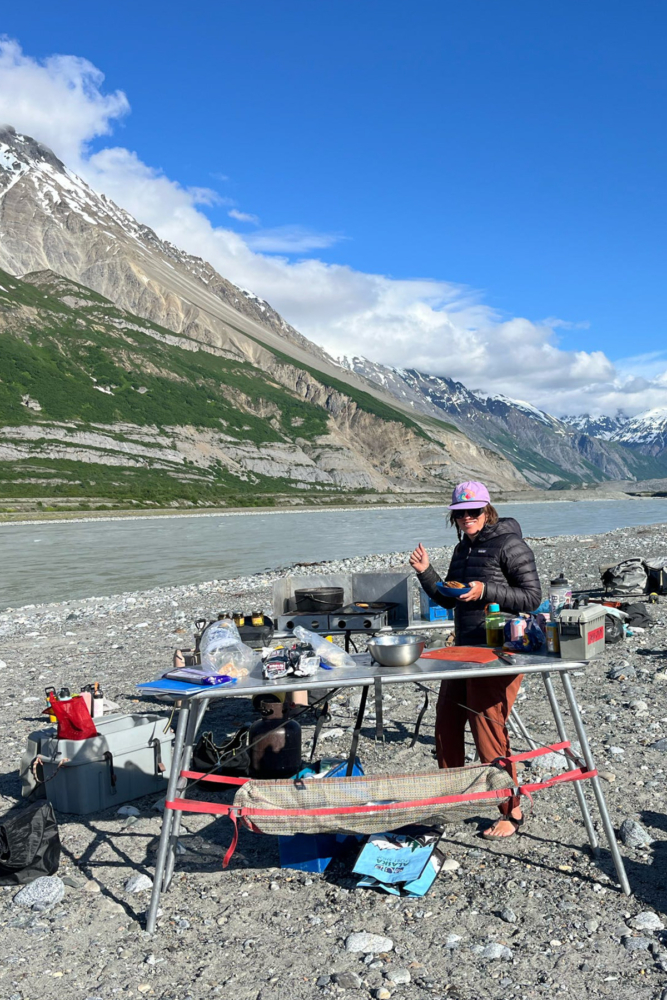
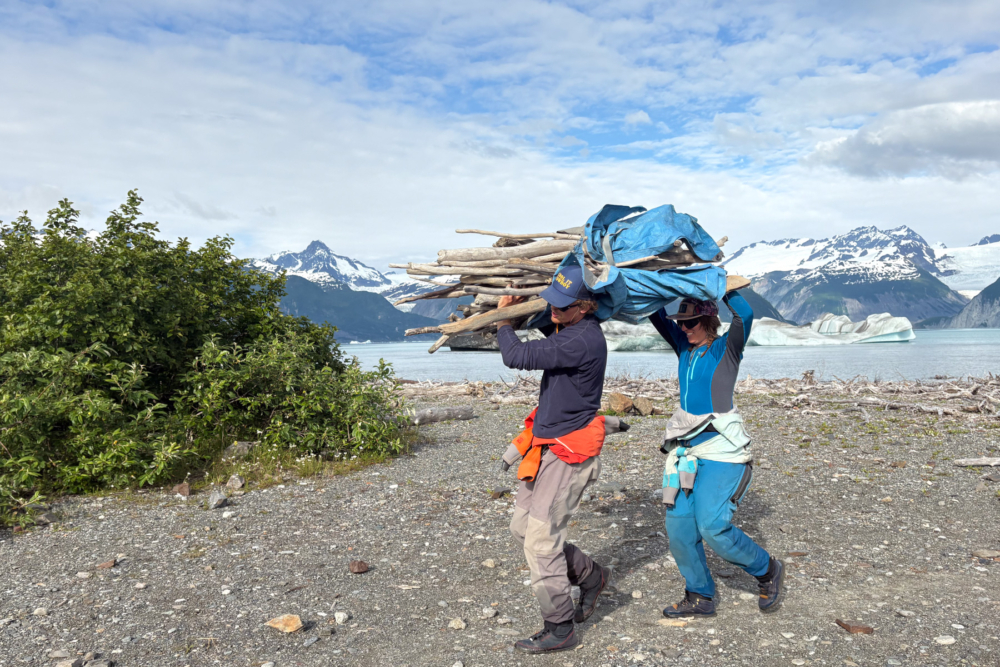
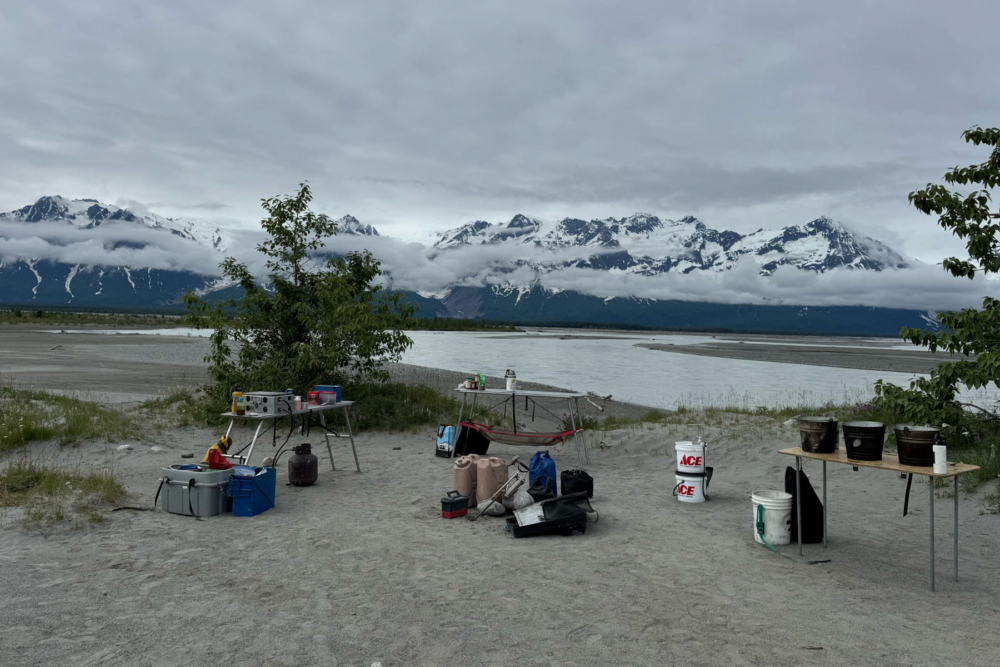
By day three, we’ve given up on finding any established camps, hikes, or stops. It wakes up a part of me that had grown stagnant in the predictability of the rivers I’ve worked on for years, of knowing the pace of the miles, of what interp I’ll ramble about at every turn. This river feels like ours alone, like we’re explorers on a first descent. Every bend brings a new unknown. We make up names for things, cavorting about how “Alexander Dezedeash” and “Katie Kaskawulsh” once wandered these mountains.
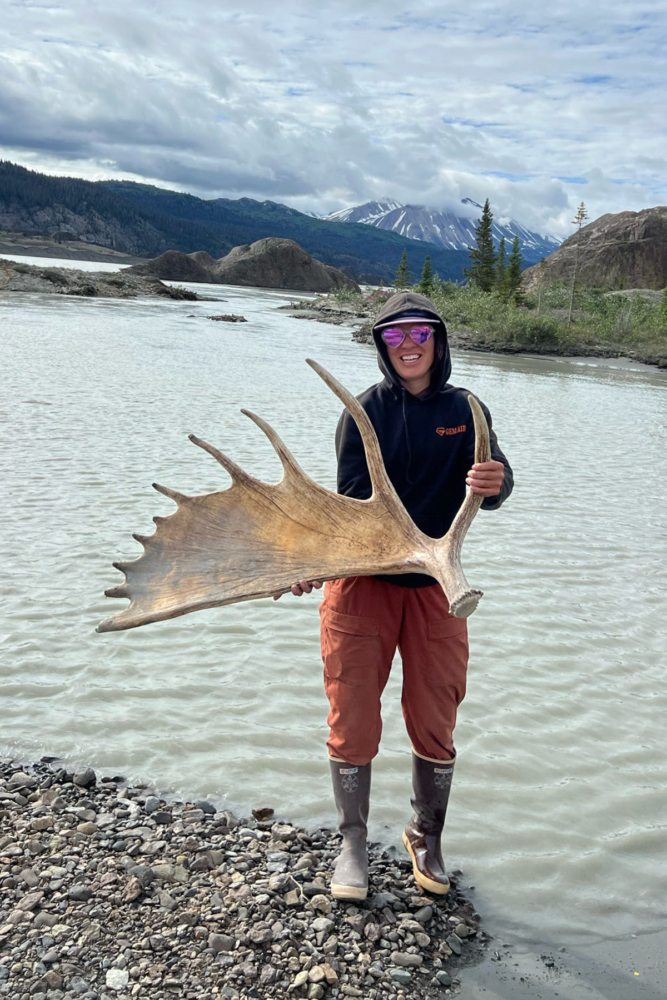
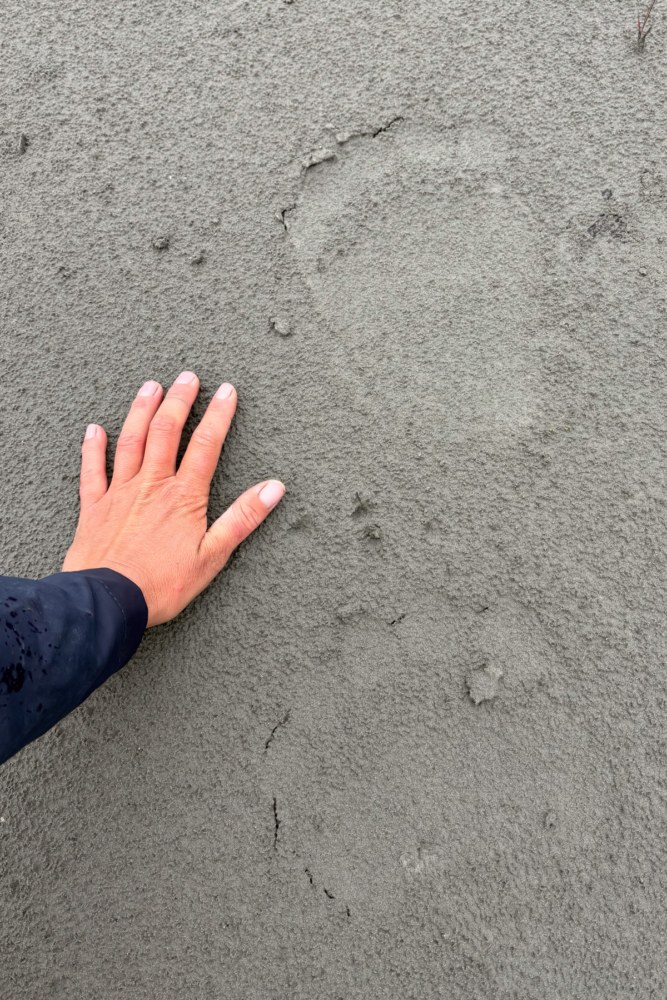
We pull over above Lowell Lake, under the looming base of Goatherd Mountain. The mountain is a balustrade, sheltering us from some unknown, its flat top leaking waterfalls at regular intervals. I grab a few water jugs and walk towards the base of the mountain, heading for the catchment of a waterfall. I wander down a fence line of shrubs until I find a gap, a recently used passage. Other river runners must stop here, I think. As I step through the shrubs and onto the sandy wash below the waterfall, I look down. There is a set of grizzly tracks wandering away from the passage—not river runners, after all.
I look around, suddenly on edge, and see the girls coming up behind me with more water jugs and bear spray. Safety in numbers established, we sashay up and down the wash, gasping with each new set of tracks. “Woof!” shouts Hannah when she sees a wolf track. Then, wistfully, “I wanna see a woof.” While Caroline and I fill jugs, Zoe and Hannah find lynx tracks, which we all gather around, eyes wide.
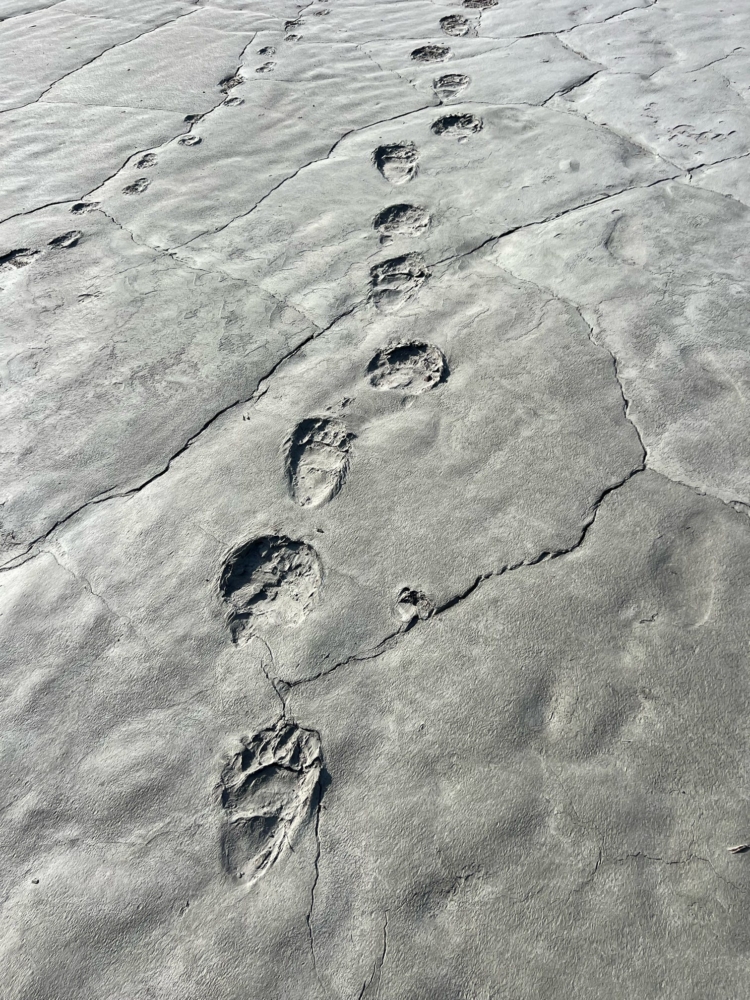
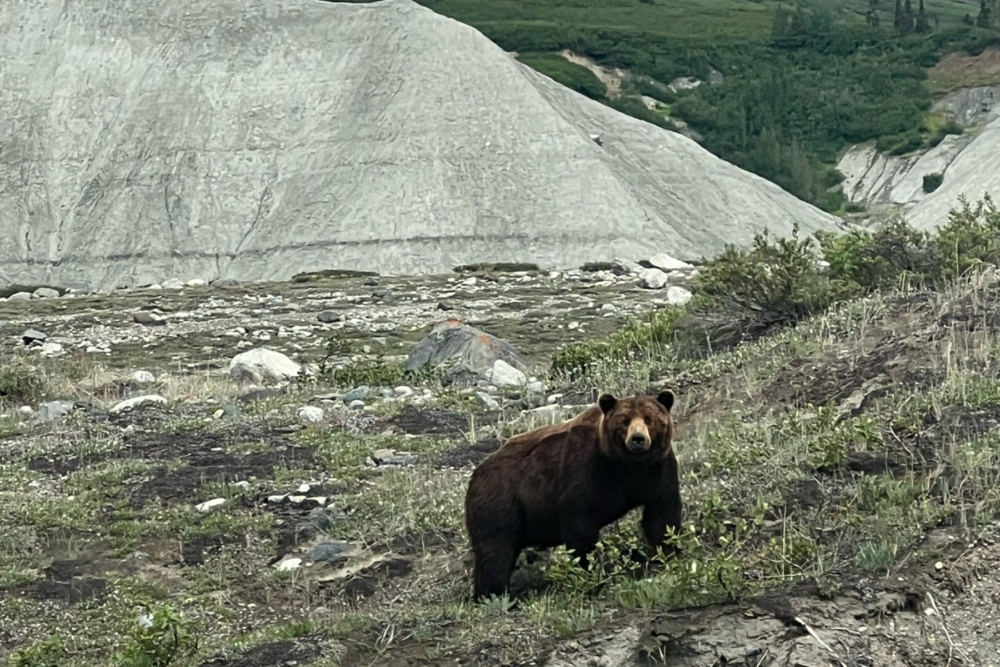
I feel spun up in the place, utterly captured by the stories whispered through the prints. I want to spend the day grasping for an understanding of the animals that have passed through here, chasing the wonder of a new set. But the structure of a commercial trip is burned so deeply into all of us that next thing I know we’re heading back to the boats, bound for camp.
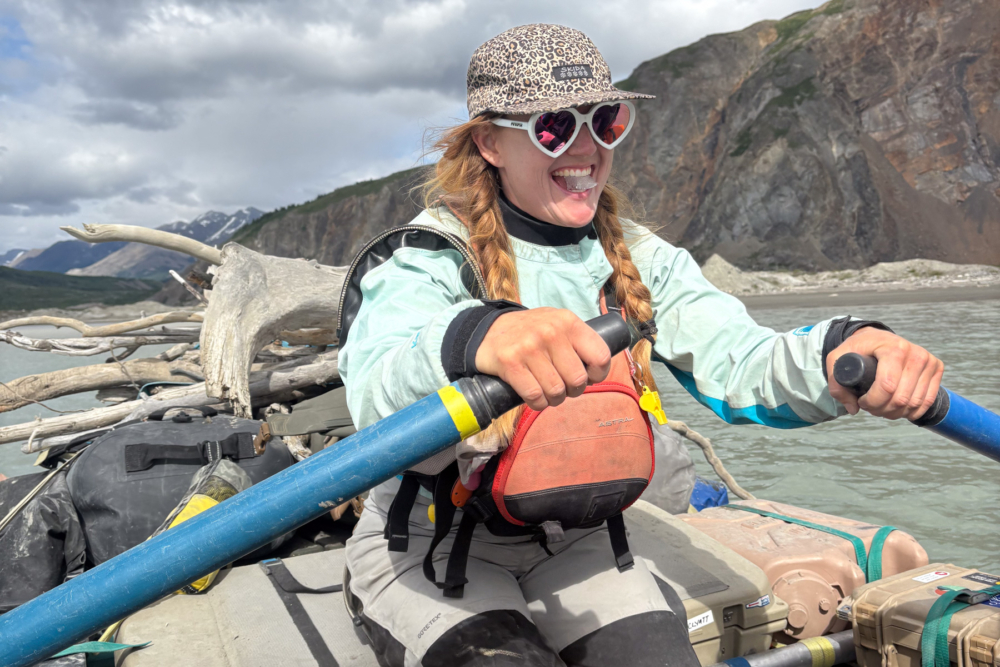
The day we run Lava North is my first day rowing whitewater on the Upper Alsek. I begin the day cautiously, hugging inside corners hard. After a few miles, I realize that it’s just another river, albeit a massive one, and begin to relax.
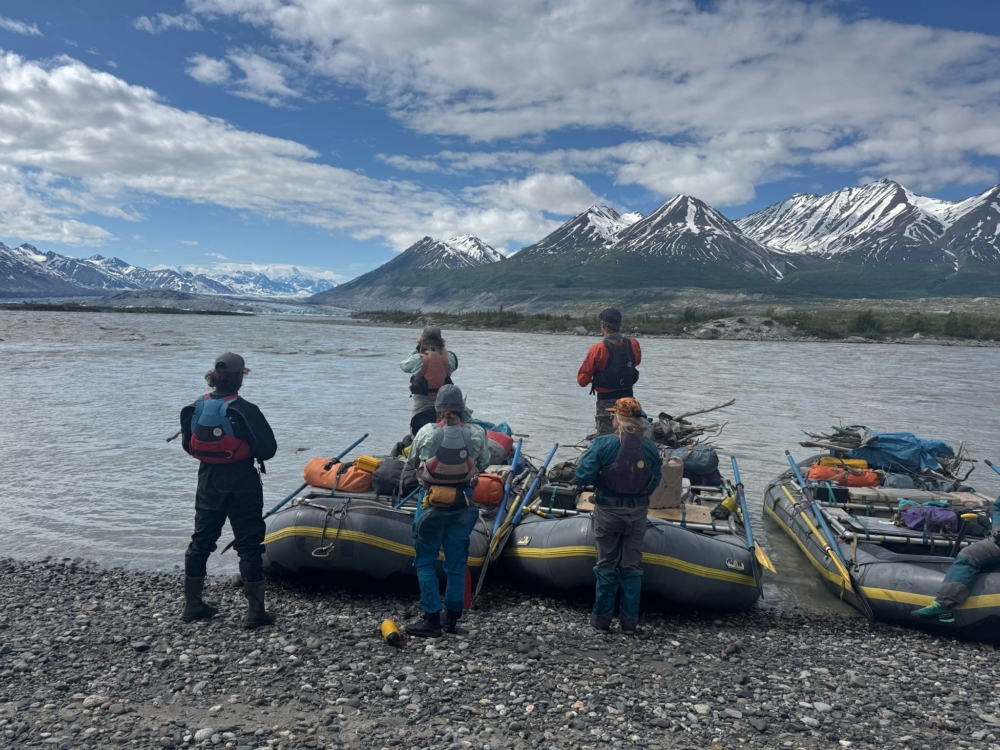
As we hike down to the scout for Lava North, I study the entrance. The beta we’d been given was the left sneak was likely in. The river is cold and massive, and sneakalicious sounds pretty good to me. As we approach the rapid, a series of rocks on the left shore close out an easy entrance. The right side of the river is gated by a hole the size of a whale. I’ve never seen anything like it. It’s so big it doesn’t bother to surge fast, instead slowly coiling in on itself, leisurely spitting droplets of water out as it eats its own head. More center, there’s a rooster tail wave, about 14’ tall.
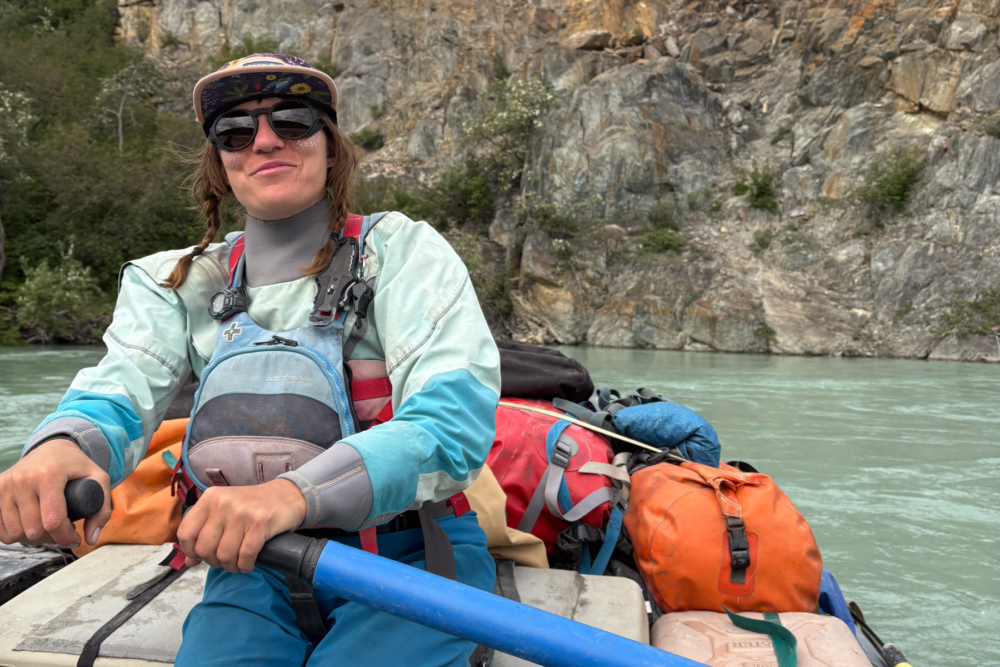
On the left, the alleged sneak, there’s a medium but runnable hole leading into a series of smaller ledge holes. Most of the water is shooting straight into the rooster tail. Further left, where the entrance is friendlier, all the water leads into a fence of nasty pin rocks. It is much, much less sneaky than I would prefer.
We pace up and down the rapid, alternately discussing, whooping, and staring, tight-lipped. We consider the center line, a highway between the rooster tail and whale hole, but there’s no markers, just a swath of open river and the hope that you line it up right. I wonder if this is what Grand Canyon rapids would’ve looked like on big water years, before the dam. Finally Hannah says, “Ok, that’s enough. We gotta run it.” We’ve been at the scout for over an hour.
I go first, setting up to move left above the medium hole. “You got this Mia,” Caroline says, posture straight, eyes downstream. The water grabs us, shooting the boat forward, the course set, no fighting against this kind of volume. I’m slightly more left than intended, fear having got the better of me. We run over the top of some rocks I’d meant to be to the right of, but the current has us in its throes, and I can barely tell before we’re hitting the ledge hole with left momentum. I eye the rooster tail, spittle flying up as it froths angrily at us, but we’re through, safe. Exhilaration begins in my belly and works its way to my mouth, and I’m screaming and cheering as we turn around to watch the next two boats. I pump my fist, laughing, as my friends style their lines.
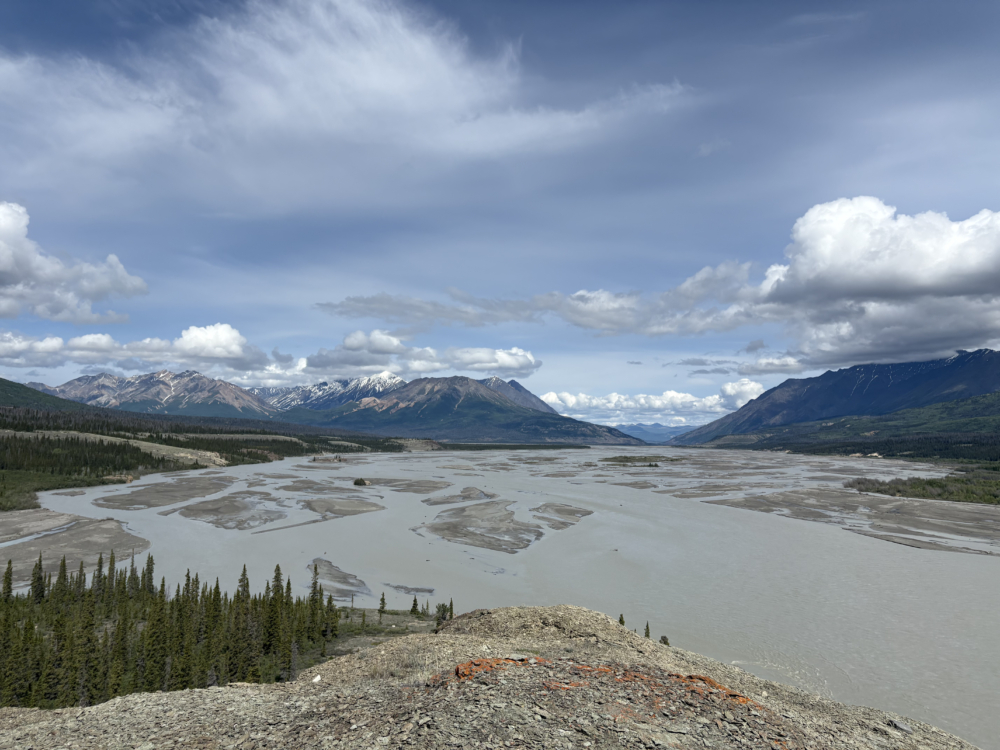
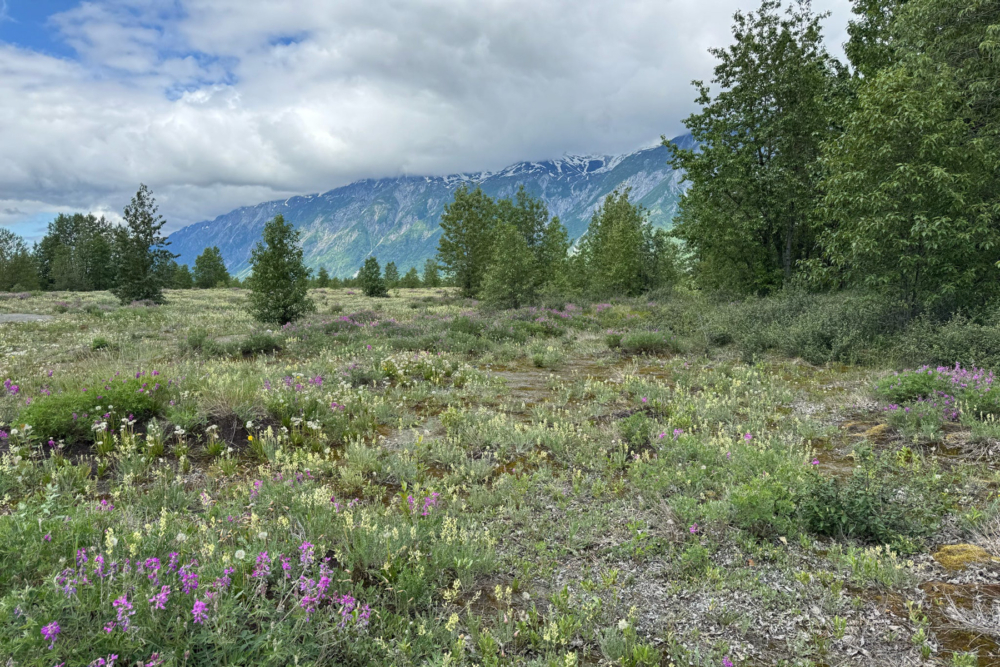
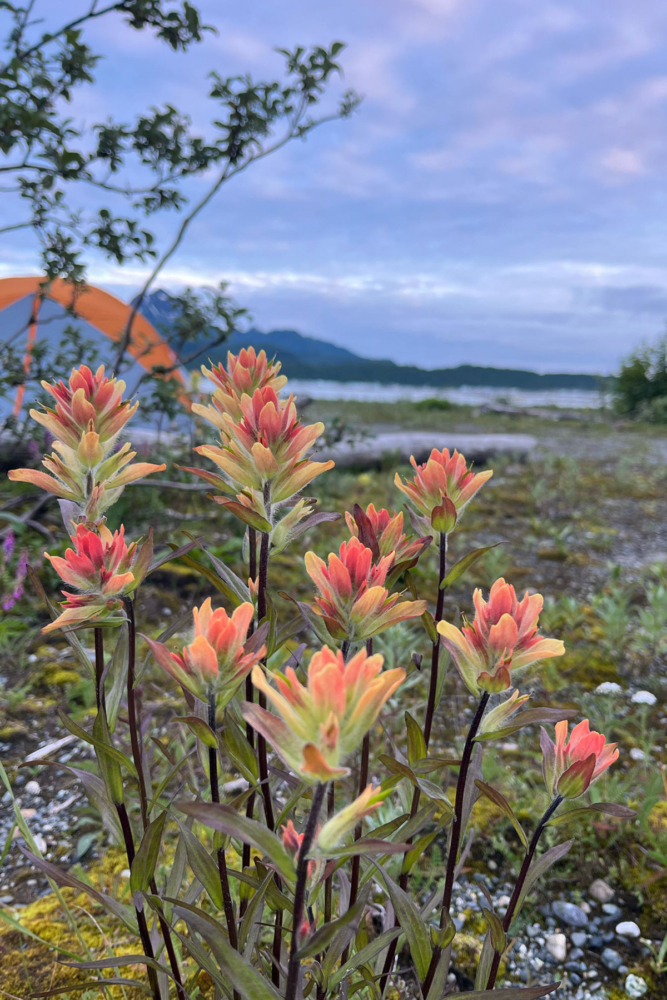
Several days later, we camp just above the confluence with the Tat, and meander downstream to see it. We’re a loud circus as we traipse along, looking at wildflowers and blubbering over grizzly tracks bigger than a dinner plate. The confluence is a mile wide, braided, a wending merging of rivers. We linger for a while then continue our trek up the Tat, laughing and telling stories. Suddenly Jack stops, binos raised. “I think there’s people over there.” The mood changes instantly, a tribalistic challenge springing up. “What!” I gasp. “Where?”
We huddle, peering at what seems to be two groups camped on the Tat. We haven’t seen other river runners in a week, hardly even traces of humanity, and I’d forgotten that the river doesn’t belong to us. Eventually they notice us, but the distance is such that we discover this when we see one of them peering at us through their own set of binos. I feel edgy, protective. We head back to our camp.
We party at the confluence, the sun lingering as we dance with shadows, cut mullets and play games. I have no idea what time it is when I stumble back to my tent. I’m too wired to sleep, but I settle into my bed and let my mind wander. When I hear the roar, I understand, suddenly and primally, what it is. In the silence that follows, laying preternaturally still inside my tent, my mind tries to talk my body out of what it knows. That was not a grizzly bear. It could’ve been anything.
The second roar freezes the thoughts for a few seconds, but they pick back up. That could’ve been a moose. It’s Hunter snoring. Maybe Jack farted, maybe…the third roar sounds the same distance away. I start counting in my head, ticking away the seconds until the next roar comes. Eventually, they fade, and I roll onto my stomach and fall asleep. We end up camping next to the group from the Tat later in the trip. They went for a hike that morning and watched as three grizzlies circled our camp.
When we arrive at the scout for entering Alsek Lake, the final camp before takeout, we’re hungry and grumpy. We’ve let go of structured days, perhaps a little too much. We make lunch and discussions about the “gates” begin. We’ve been told the entrance to Alsek Lake has three pathways through, which should be scouted for icebergs. Following the scout is a somewhat heated discussion, but finally we decide to go through Gate 1, to the left of a large peninsula, through a gap in the ‘bergs, and out into the lake. The risk feels acceptable given what we can see.
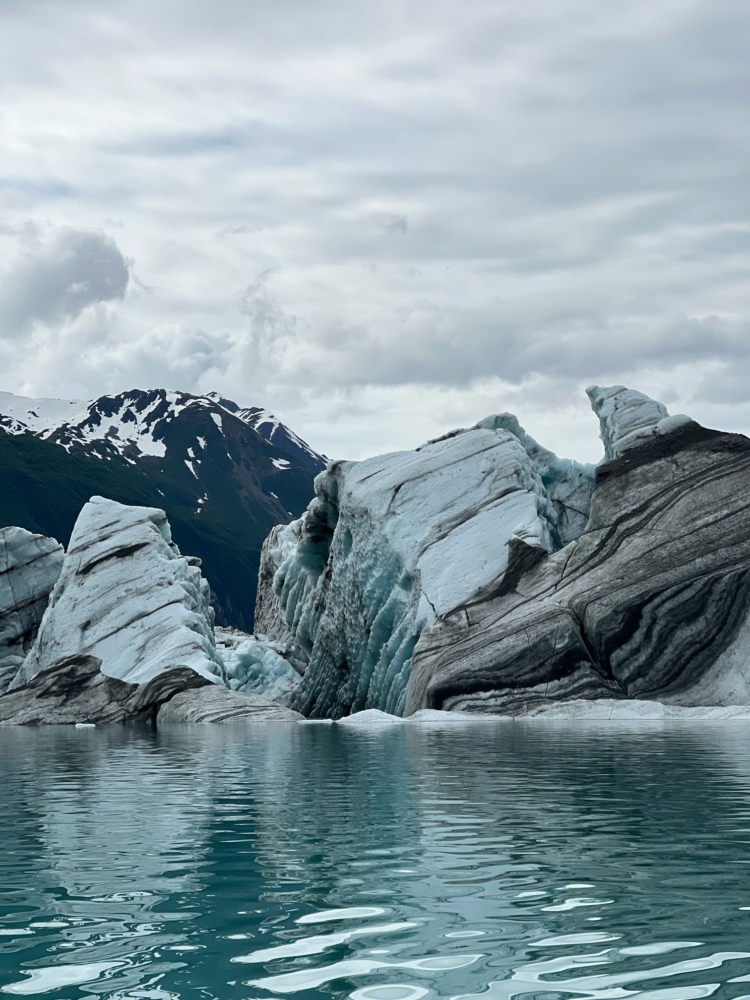
I push across the slowing water, the brown river silt gradually giving way to the cloudy turquoise of the lake. I’m rowing towards two battleship-sized icebergs split by a field of open water. Though the way between the bergs is clear now, only hope can stop them from rolling, and I fear that unknown monster crawling up from below the lake into the light of day. And so, I am quiet, the omnipotent ice gluing my tongue to the roof of my mouth.
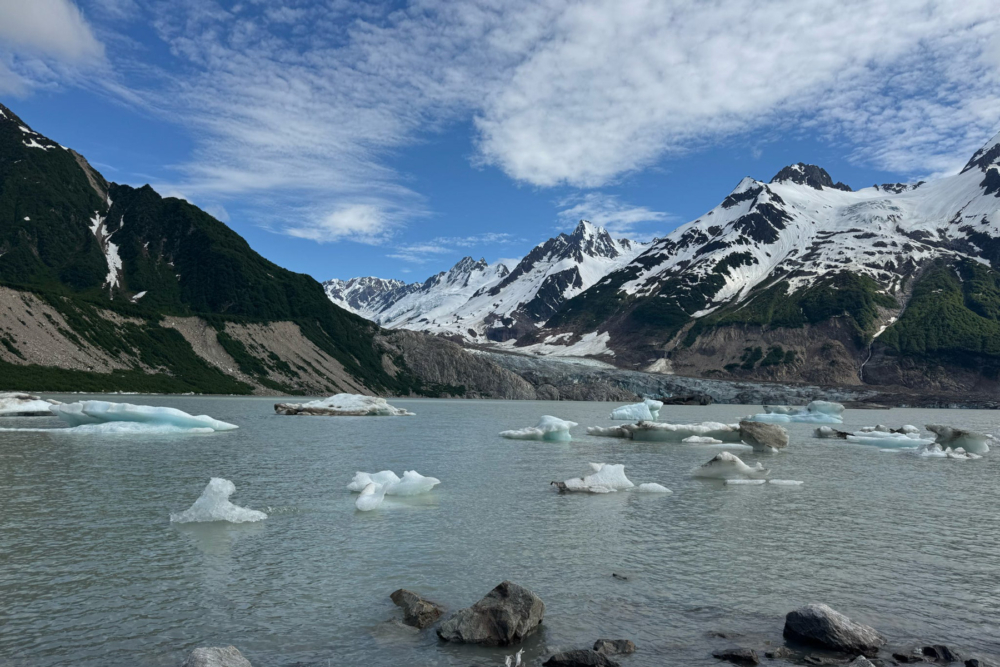
My sensory world is overwhelmed by a bazaar, offering shades of blue previously unknown to my imagination. Beginning with the transparents, here we have deep indigo, and stacked on top of it, ice kissed cobalt. Over there is a selection of opaques, snowy with cerulean highlights, complimented by crystalline azure. And throughout, the cobalt accents of gravel clawing through the bergs, twisting and flowing. The texture is as variable as the color, and it’s all I can do to row, and to keep checking the water lapping at the edges of the bergs, looking for signs of motions. I push out into the lake, then turn and watch my friends row through, caught and held, as I was, in the present moment.
That night, we bask in the aftereffects of our heightened state of awareness. The feeling of marvel lingers, a bone-deep awe. This river has fascinated me, threading a joy and appreciation into my heart that had gone stale in my guiding career. Anticipation had quickened my pulse before every corner, every natural feature tangling my brain, each turn more beautiful, more enticing, than the last. I’d been drunk on wonder, the novelty making me remember what it is like to be new to rivers.
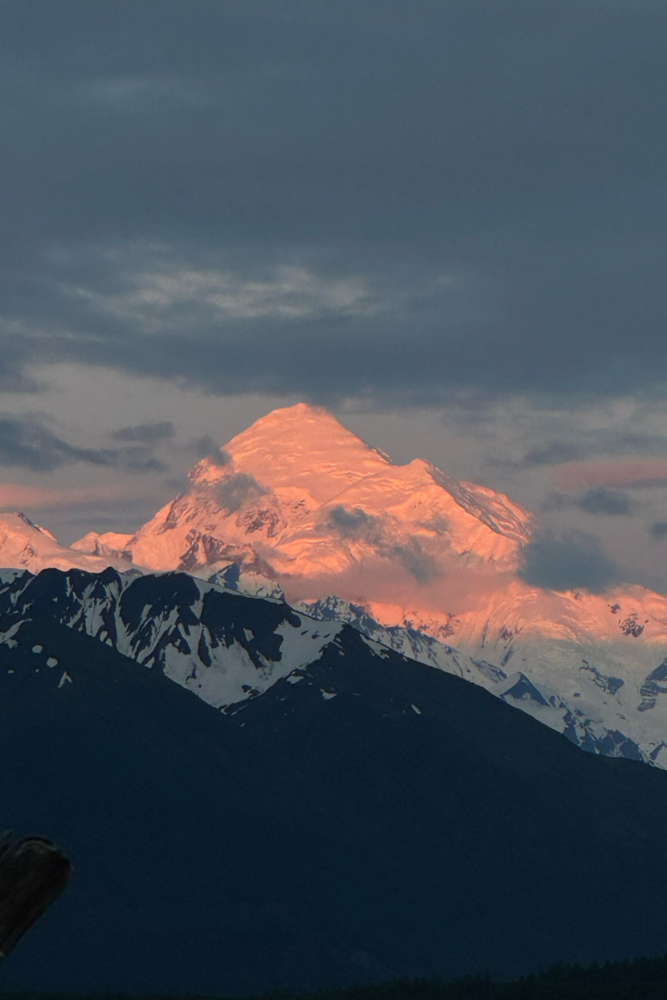
As my era of full-time guiding reaches its frayed end, as I try to untangle myself from the identity of a guide, this trip has made me realize that a love of rivers still saturates my blood. Woven in with it is a love for these people, this community that rivers have gifted me. Regardless of whether we’re guiding or not, we’ll still have adventure, have each other, have rivers new and known to travel down. As we walk to our tents for bed, the clouds part for just a few minutes. Mt. Fairweather cuts into the skyline, reflecting pink, the river giving us one last gift before we part.
***
Guest Contributor Mia Clyatt is a professional river guide, biologist, and freelance writer. Her writing centers around the outdoors, adventure travel, and sustainability. She is an advocate for wilderness and loves to play in the high country, be it skiing, hunting, mountain biking, or dirtbiking. She is the co-founder of Big Water Babes, an organization dedicated to educating and empowering women in whitewater. Learn more at miaclyatt.com or @montanatinyhouse.