We come through another canyon, and the dark grey volcanic rock walls begin to open up. The landscape becomes a vast grey/black gravel desert, with craters, lava boulders, mountains in the distance and almost no vegetation. The rumble and mist ahead are sure signs that it is time to find an eddy so we can get out and scout. We wander across an open expanse in the direction of the thundering sound; the river has broken into many channels, each dropping through jagged and narrow slots of rock.
Anxious laughter spreads through the group, and we describe the view as we have so many times already: ‘this could be the moon’. But it’s not just a metaphor. When Ragga, our wonderful shuttle driver, dropped us off at the river’s source earlier this week, she told us astronauts have trained for moon landings in the area.
Apollo astronauts once trained in the Askja caldera, just south of where we are, and more than 50 years later, the Artemis II crew returned to the volcanic deserts of Vatnajökull National Park to do the same. It was as much a fun fact from Ragga as it was a warning: her attempt to describe a place so stark and stripped of life warranted comparison to another world.
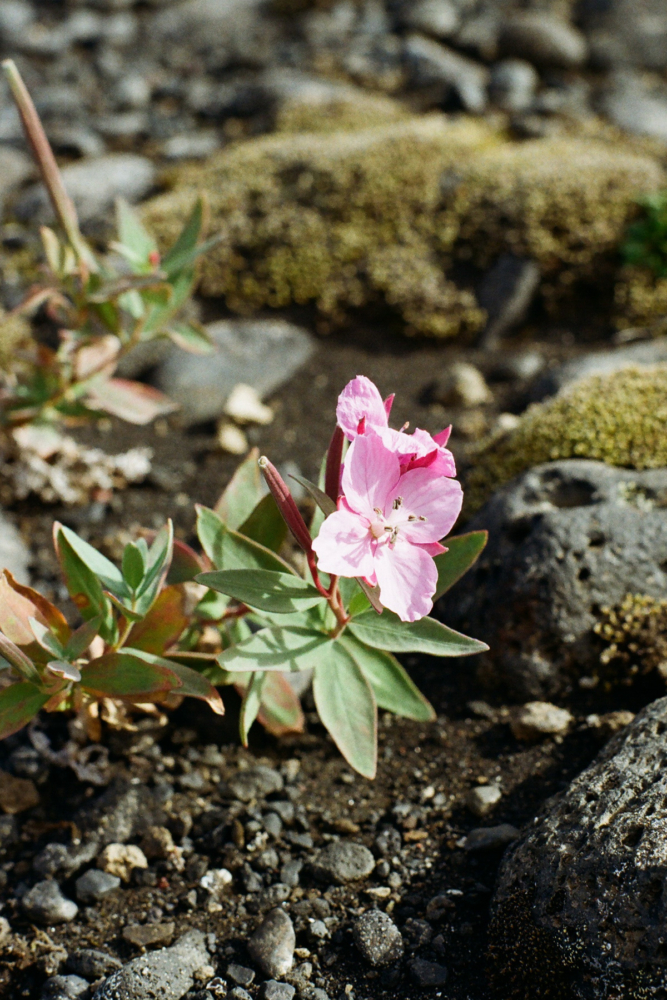
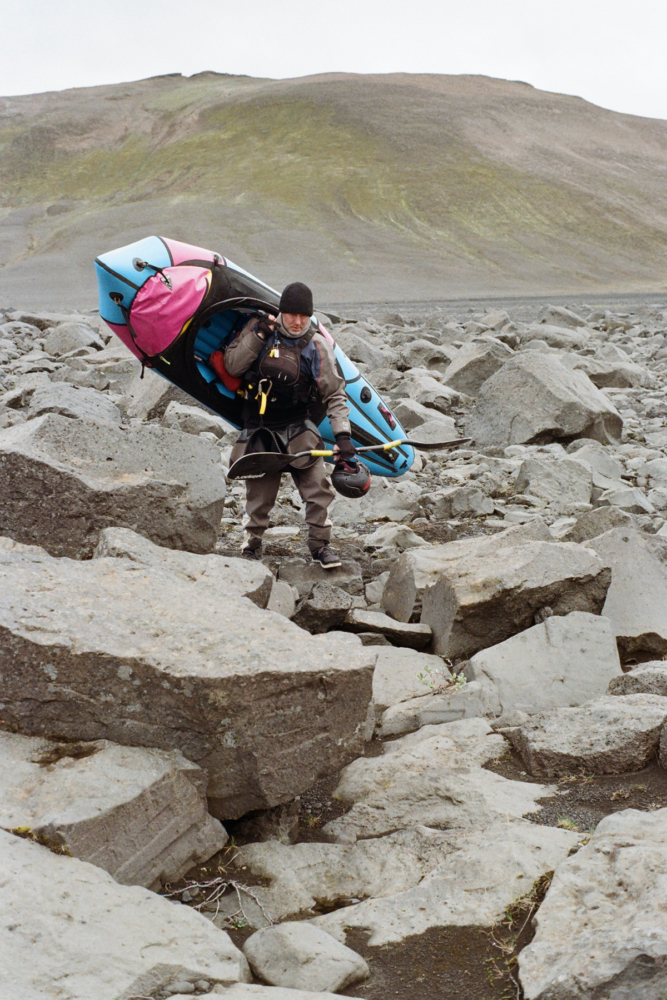
It is mid-portage that I catch the guys putting their boats down to crouch low over a tiny spec of colour forcing its way through the black sand. The small flower they’ve gathered around is the eyrarrós—the ‘Arctic River Beauty’, a willowherb with thin stems and soft pink petals that blooms in summer months before the winds and weather tear them away. The eyrarrós was a strong candidate for Iceland’s national flower.
Here, on the banks of the Jökulsá á Fjöllum, the existence of something so delicate feels almost impossible. It grows only where glacial rivers deposit thin fans of silt, on the fragile and dynamic edge between water and desert. And on this river, that edge is almost always changing. As it gets blown around in the wind, it is holding on in a place never meant to support such a soft form of life, or, heck, any form of life for that matter.
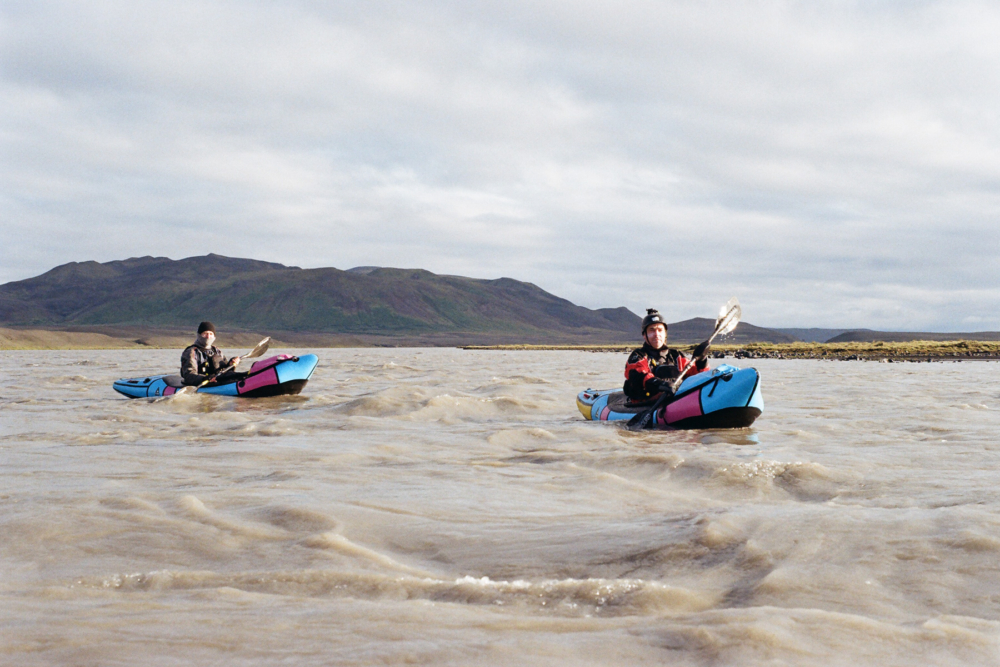
We stand up and dust the black sand from our knees, suddenly aware of how strange we must look out here. Three paddlers in brightly coloured GORE-TEX suits, contrasting against the washed-out greys of ash, rock and sand. We are just as jarringly out of place as the eyrarrós. And as the eyrarrós holds strong to its sliver of sand/silt, fragile but stubborn, it’s clear we are trying our very best to do the same.
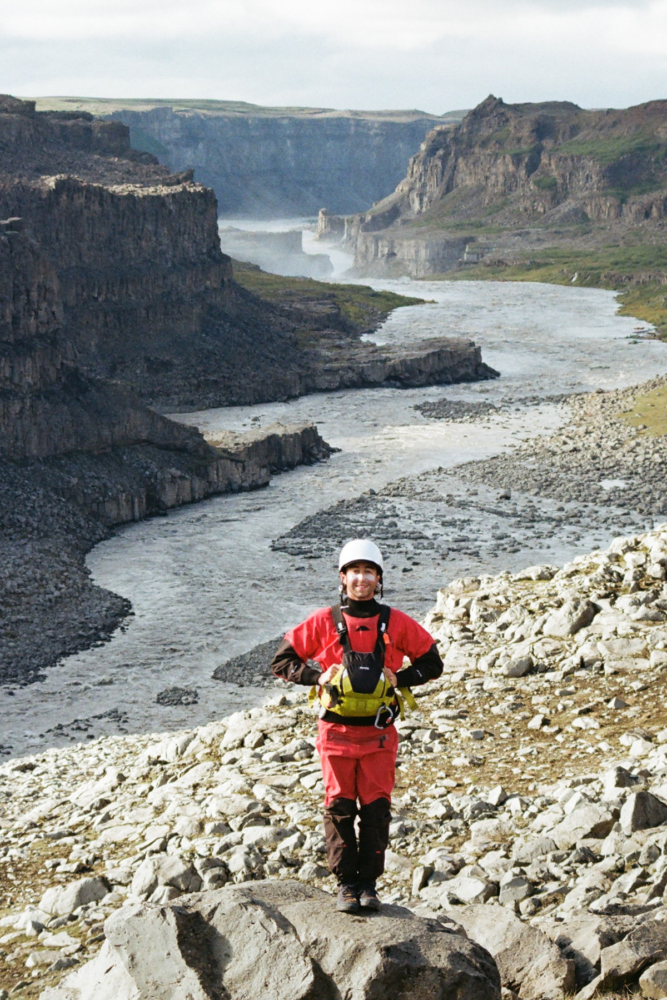
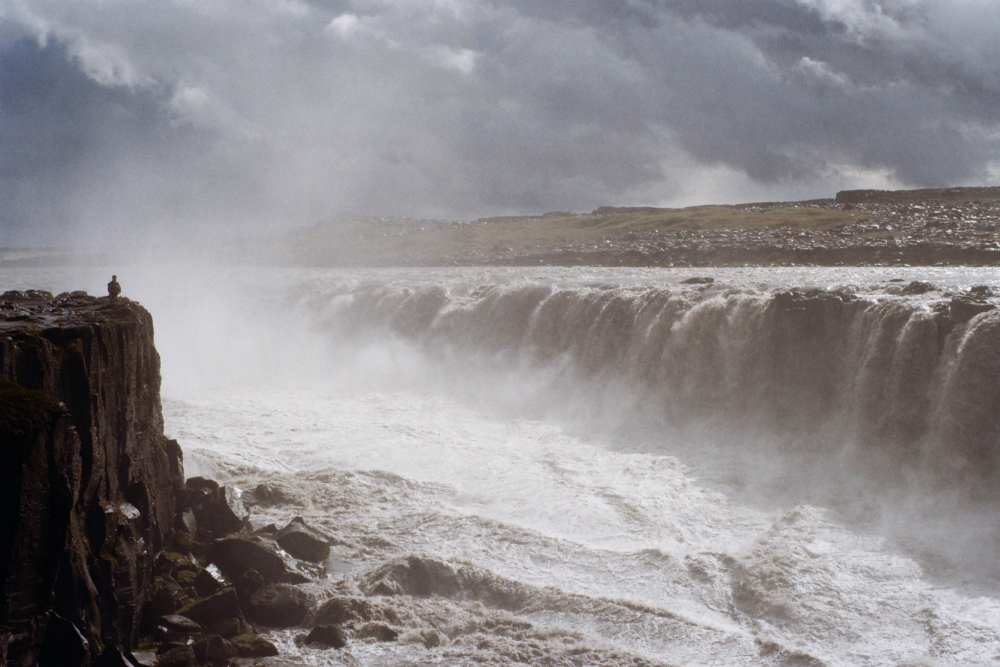
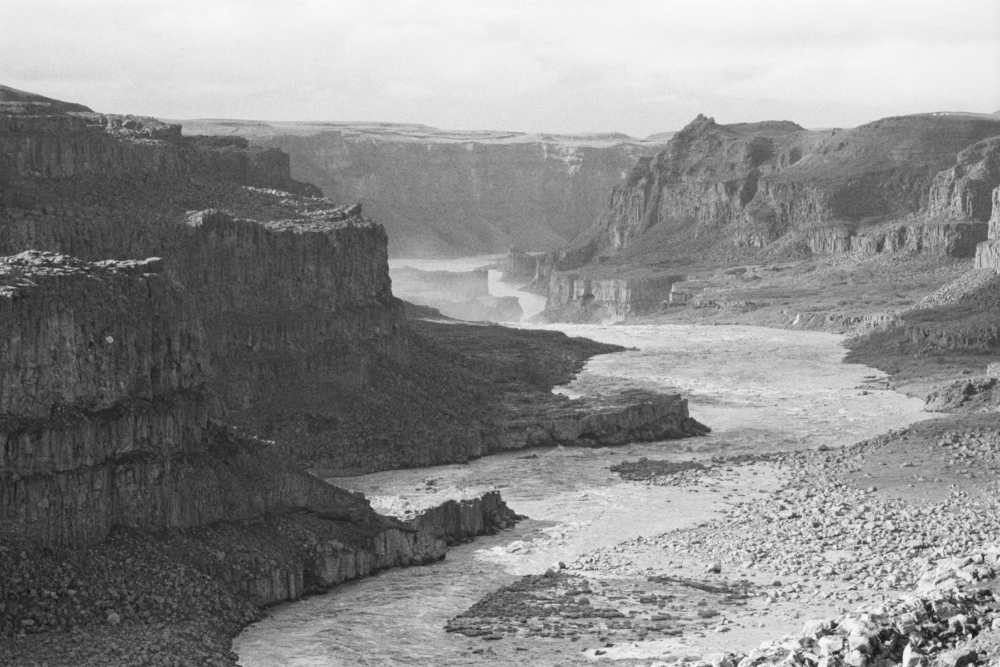
After a slow and cautious few days in the upper reaches of the river, today we paddled 60 kilometres, setting ourselves up to arrive at the crux of our entire trip tomorrow. The Jökulsá á Fjöllum culminates in the Jökulsárgljúfur canyon, one of the most epic waterfall sequences, and canyons, in the whitewater game.
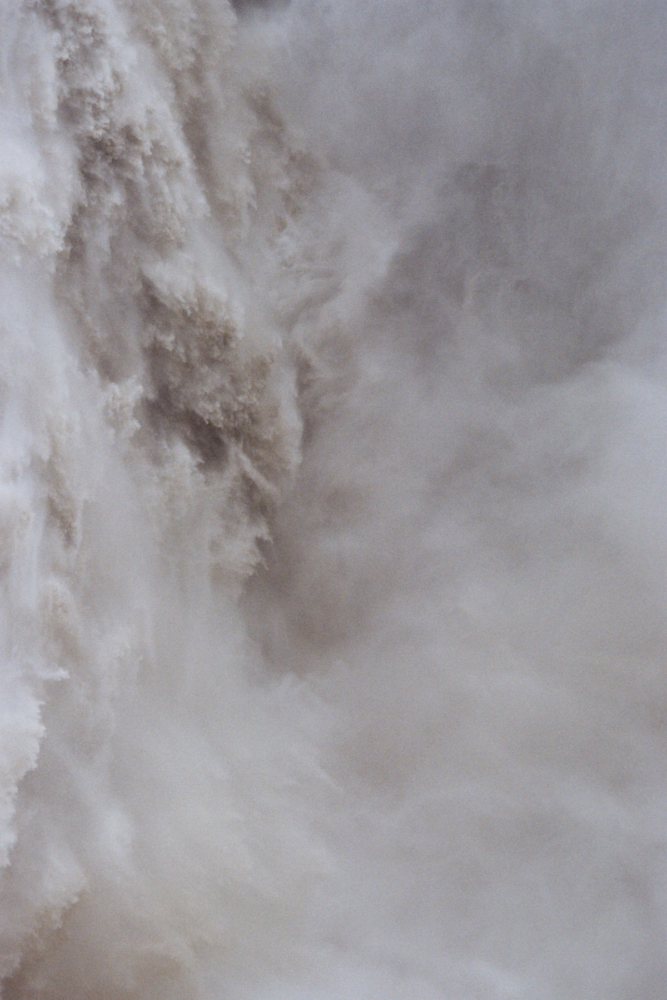
Here, the Jökulsá á Fjöllum plunges over four thundering drops: Selfoss first, a wide horseshoe of basalt roughly 30 ft. tall; then Dettifoss, 145 ft. tall, 330 ft. wide, and believed to be one of Europe’s most powerful waterfalls; then Hafragilsfoss, another thundering 90 ft. drop framed by sheer basalt walls; and lastly, Réttarfoss, a gnarly 30 ft. drop into a tight gorge. Between the waterfalls, the canyon walls rise roughly 400 ft. above the river.
In a testament to the power of Iceland, it was a violent jökulhlaups (glacial burst) that tore through this area at the end of the last ice age and formed this jaw-dropping, mind-blowing section of river.
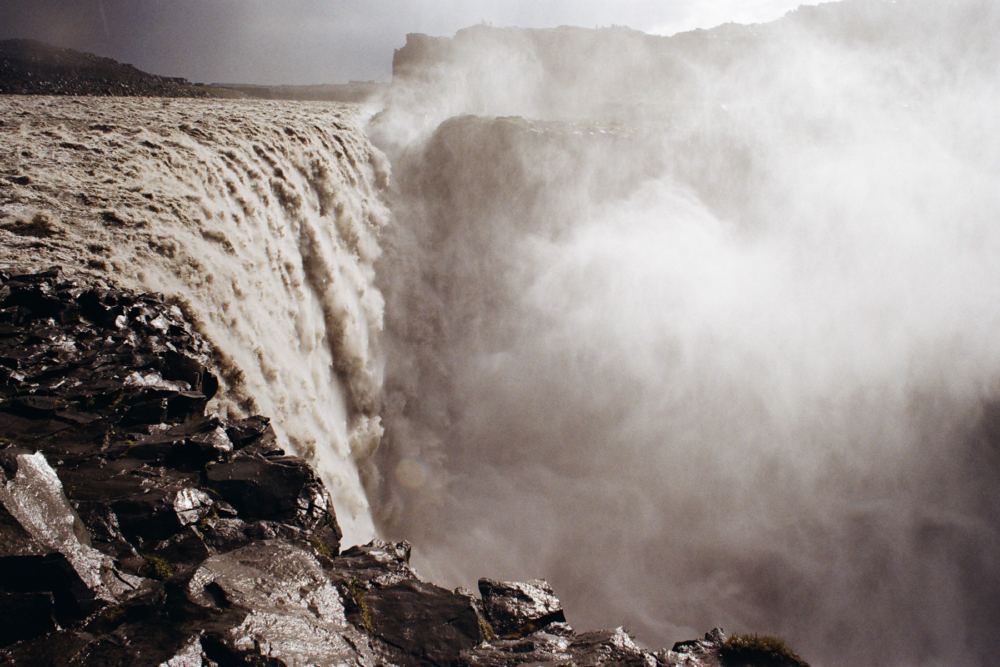
From the outset, we planned to portage the four waterfalls—roughly 10 kilometers on foot along the canyon rim—then return to the river and paddle another 20 kilometers of canyon to a highway bridge downstream, where Ragga would pick us up.
Only a handful of expeditioners have paddled the Jökulsá á Fjöllum from its source. According to the park office, we are the fourth group to do so.
The 20 kilometres of river below the waterfall canyon is a classic big-water run for local whitewater kayakers in Iceland, and one of the few places on the river where we were able to get detailed beta. A local contact warned us that paddling this section of river is best at or below 200 cumecs, and advised us to seriously reconsider dropping in above 300 cumecs.
Through our satellite communicator, every evening we have been getting a water-level update from our contacts back home. With an online government water-level gauge, they have been tracking the daily rise and fall of the river, and its general trend as we approach this crux.
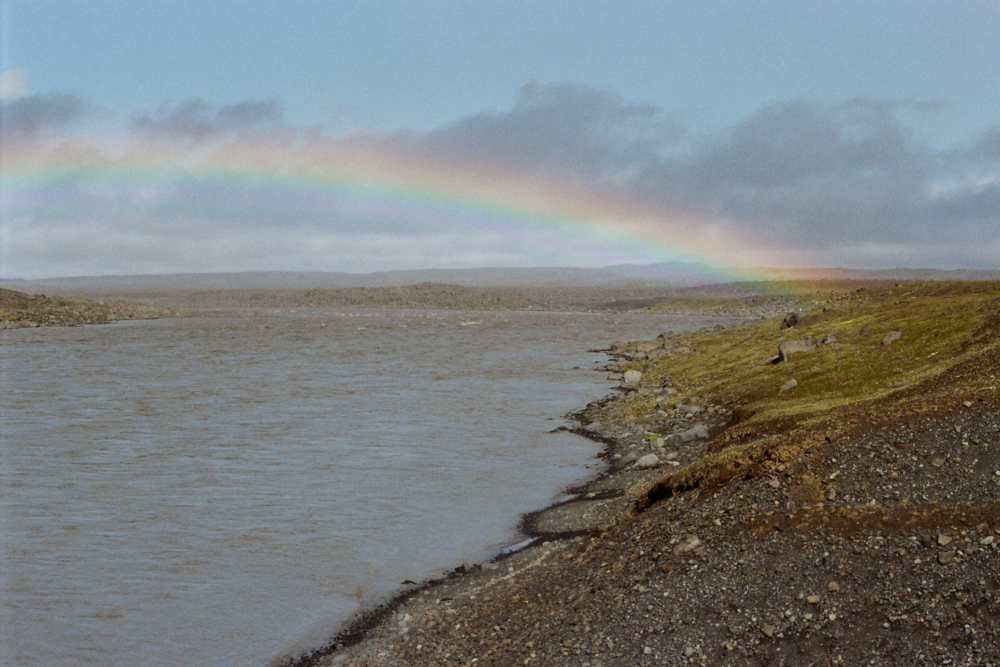
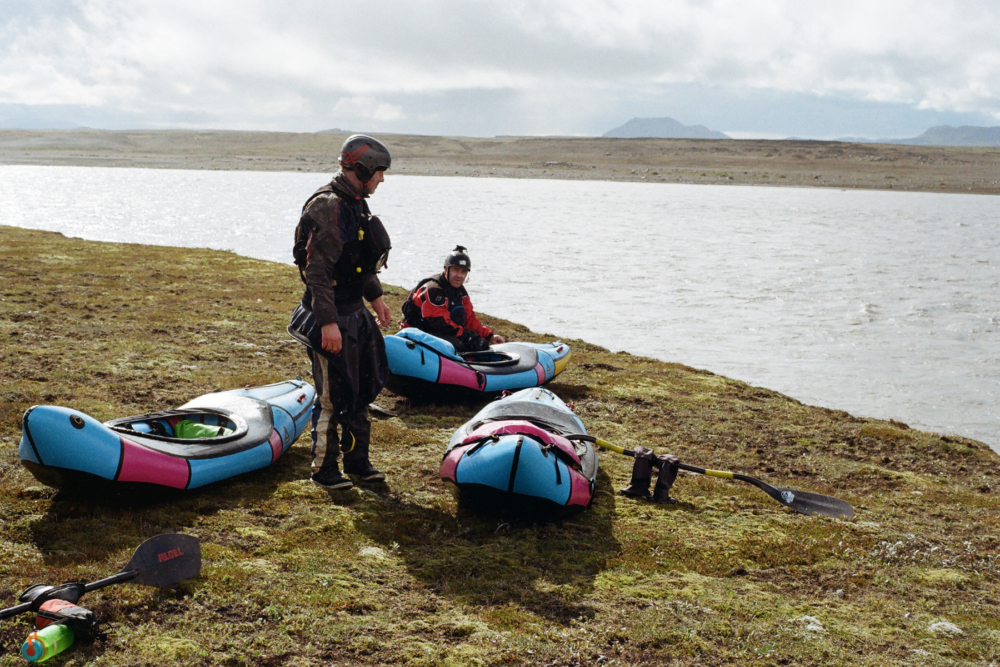
The news on the InReach this evening isn’t good, but it is what we expected. After five days of sun and unseasonably warm weather in the highlands of Iceland, the river peaked at 475 cumecs, and based on the weather forecast, is likely to continue rising into tomorrow.
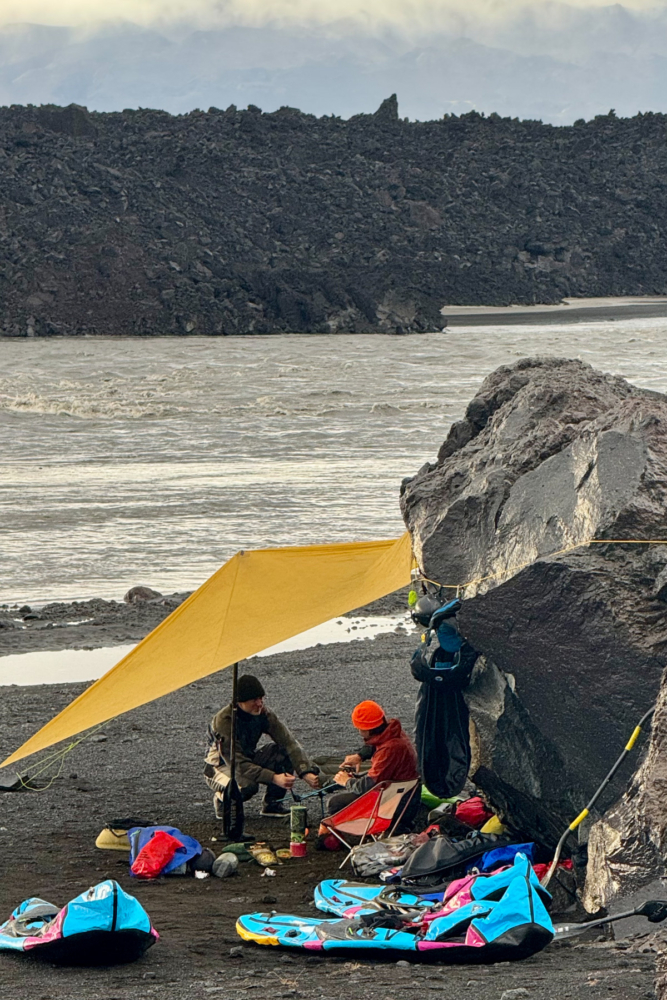
We each go about our nightly routine, which starts with a river bath. Absolutely freezing cold, the silty water surges up and down unpredictably in a way that is indicative of a river with too much water between its banks. We camp along another particularly barren stretch of river and huddle behind a boulder smaller than we are, chasing a false sense of shelter from the relentless wind and blowing sand as we try to eat dinner.
The national park prohibits fires, and with no trees around, starting one is basically impossible. Instead, we place a flashlight in the middle of our circle in hopes of finding a false sense of warmth through ambiance. We wear every piece of clothing we packed, and pass around moisturizer to nurse our dry, cracked hands.
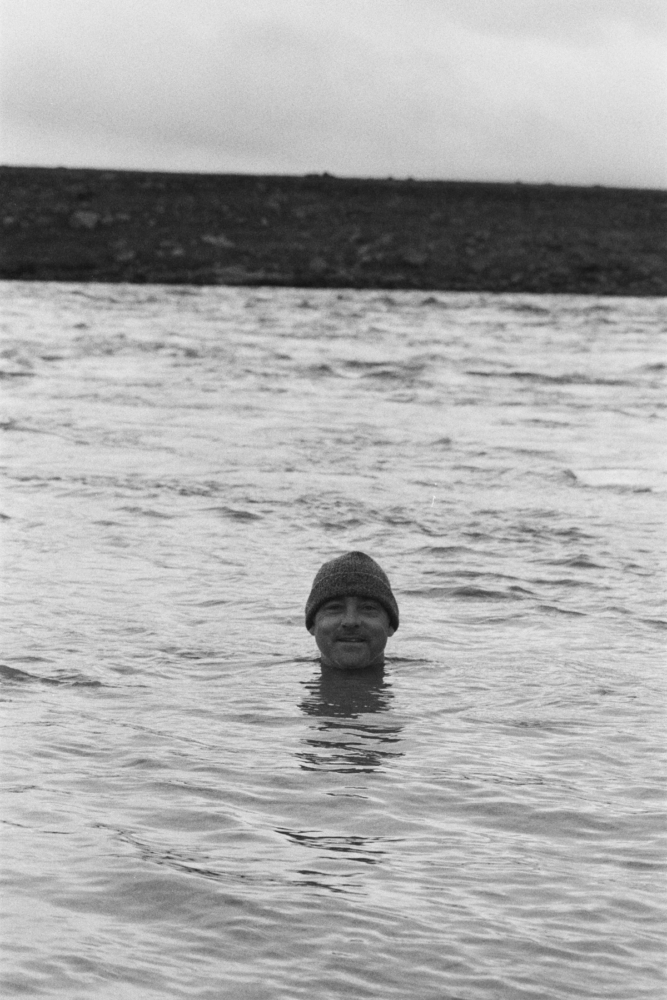
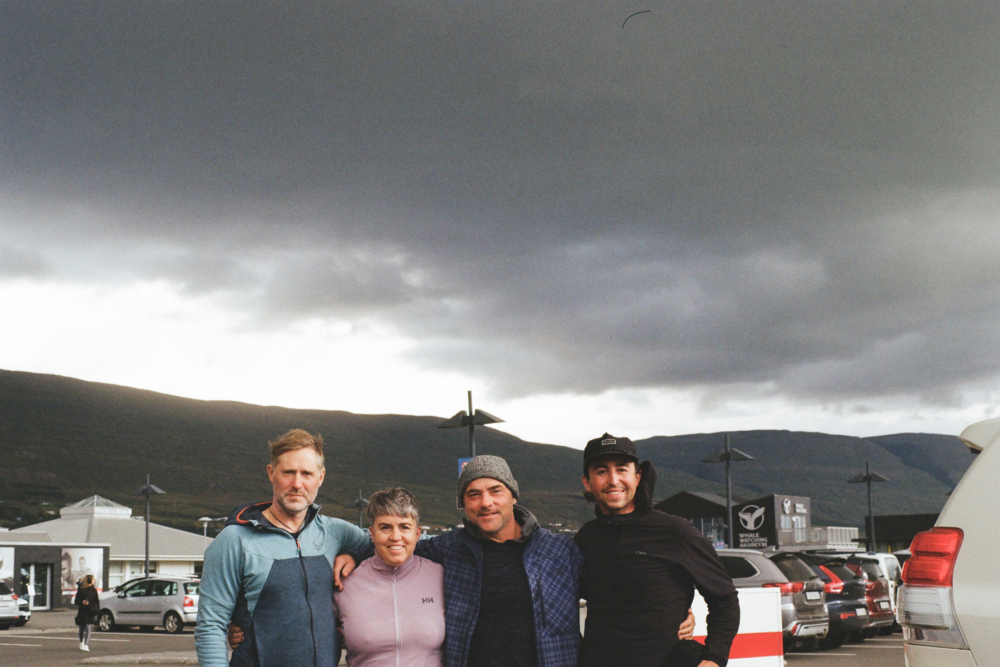
The decision now is easy. With the local beta we have and the latest water level update, this will be the end of the line for us. We get in touch with Ragga to adjust our pick-up location to the parking lot/tourist centre near Dettifoss, and will hike out from here tomorrow. She is relieved to hear this and admits her worry for our wellbeing over all these days without cloud cover.
Spirits around the dim glow of the flashlight are high, and we double down on the food we have left, trading chocolate bars and cured meats while laughing and reminiscing about the highlights of the trip.
Through years of expeditions, it is from people like Kyle and Mick that I have learned that the goal of all this is not simply to reach a river mile or claim a ‘first descent’, but to embrace the process itself. The solitude in the pitch of night; the trip-planning Zoom calls; the kind park ranger, and our new friend Ragga; the problem-solving together; the river baths and shared laughter; the pure joy of dreaming something up with good friends and committing to it, even when it is hard. And, crucially, always coming home in one piece.
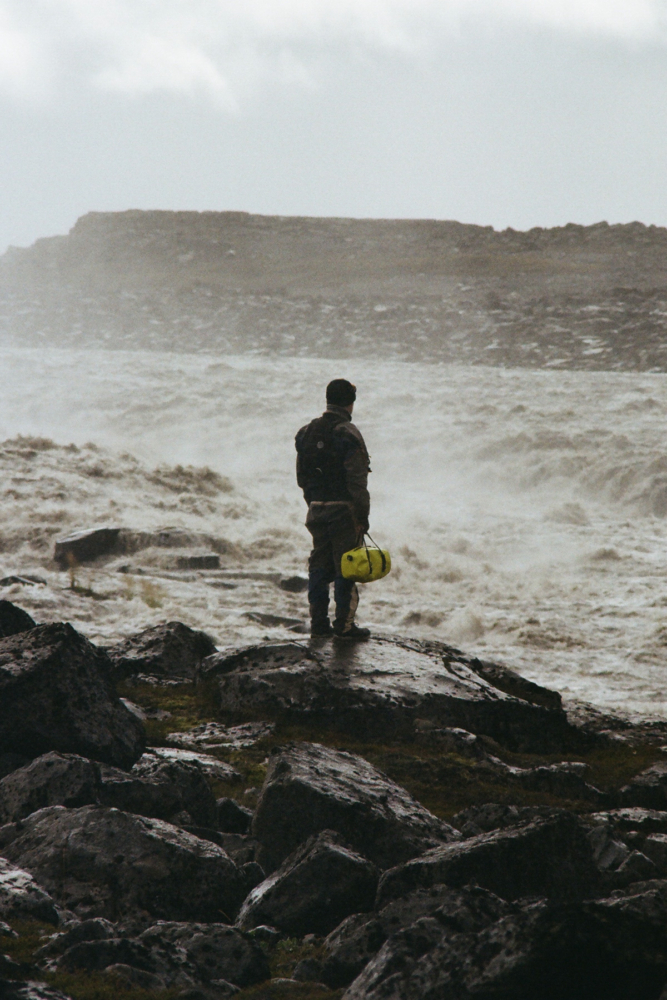
The last night of an expedition is always bittersweet: you are excited for warmth, food, and a hot shower, to see loved ones, to return to your life. Yet you hesitate to leave a place, a state of mind, or a feeling that, in these places, we are at our best—fully present in being alive, and fully present as friends.
Much like the eyrarrós, our small orange tent looks both incredibly insignificant and strikingly out of place amidst the endless expanse of rock and sand. Expedition paddling has a way of reminding us that we are temporary, fragile, but capable of holding on in wild and improbable places.
In Part 1, I wrote about the spark and the uncertainty that sets an expedition in motion; here, at the end, what remains is gratitude. To paddle the Jökulsá á Fjöllum is to witness power, reshaping a landscape in real time. This place never welcomed us, yet it gifted us the chance to be a very small, stubborn, and fleeting part of a story that is still being written.
***
Photography courtesy of Steven Walker, Mick Lautt and Kyle Chernetz.