We both shot up out of a fitful sleep. It was 3 AM. Rain was still tapping incessantly on the tent cocooning us from the barrage that had been happening on and off for the past three days. My adventure and life partner, Diana, switched her headlamp on and looked at me, searching for some explanation of our sudden stirring. The low rumble of the water flashing in the wash was growing.
Thunk. Thunk. The force of water flowing through the canyon was now moving rocks and boulders. Having witnessed multiple powerful, land-gouging flash floods the day before, we were nervous and on high alert. Had we camped out of the torrent’s range? Or were we about to be violently washed into the reservoir we had been paddling for the past 18 days?
A Dam of Controversy
The reservoir known as Lake Powell is an oddity in a landscape that is not conducive to producing or sustaining vast amounts of water. On September 13, 1963, water that once flowed freely to the Gulf of Mexico flooded the natural wonders of Glen Canyon, completing what has become perhaps the most infamous sacrifice of the U.S.’s dam-building era. The Glen Canyon Dam would stop the flow of one of the West’s greatest rivers for 186 miles, drowning countless cultural resources and affecting the ecosystems of 96 tributary canyons.
Controversial from the outset, the dam came about in a compromise to save Dinosaur National Monument from the same fate. Upon visiting what was to be lost, David Brower, then executive director of the Sierra Club, lamented his decision to withdraw his opposition to the building of the dam, stating that flooding Glen Canyon would become “America’s most regretted environmental mistake.”
Being born after the dam was completed and the reservoir was given its name (after Major John Wesley Powell, the leader of the first government-sponsored exploratory trip of the Colorado River), I grew up knowing little of its history. When I moved to the desert southwest in 2008, I became more aware of the issues and politics surrounding its existence.
Most of the people in my community are outdoor enthusiasts who fall on the environmental and conservation side of the spectrum and mourn the reservoir’s existence and dream of it’s demise. Few friends want to be on Lake “Foul,” other than to pull off a Monkey Wrench-type scheme.
My relationship with the lake and its history has been one of impartiality. In my nearly 18 years of living near the lake, I have adventured many times into the stunning landscape in which it lies – descending narrow slot canyons, biking down four-wheel drive roads and along sandy washes, even paddling across its cool, blue-green waters to get from one canyon to another. The lake was just something that was there to stop and look at when driving from one nearby adventure to another. I gave its existence little thought.
Receding Waters
Pulse quickening, I unzipped myself from my sleeping bag, grabbed my rain jacket, and emerged from our tent into the darkness. The sandy ledge we were camped on was waterlogged, but the trenches we had scraped out to keep the rainwater from pooling beneath the tent were doing their jobs. Turning my headlamp towards the roaring water, my attention focused on the 100 feet of land between our tent and the stream. The banks were still holding and not eroding towards us. Whew!
In 1999 the lake was at “full pool,” creating nearly 1,700 miles of shoreline. Since then, due to the climate crisis and a mega drought throughout the Southwest, water in the reservoir has receded by 75%. Politicians, water managers, and the states that depend upon its waters to sustain life in the desert (Arizona, California, Colorado, Nevada, New Mexico, Utah, and Wyoming) are scrambling to figure out how to deal with the looming water crisis.
Millions of Americans rely on the Colorado river and the water stored in its reservoirs to exist in an arid landscape that cannot support the region’s current (and still growing) population. A reckoning with Mother Nature is taking place despite humanity’s will to have it otherwise.
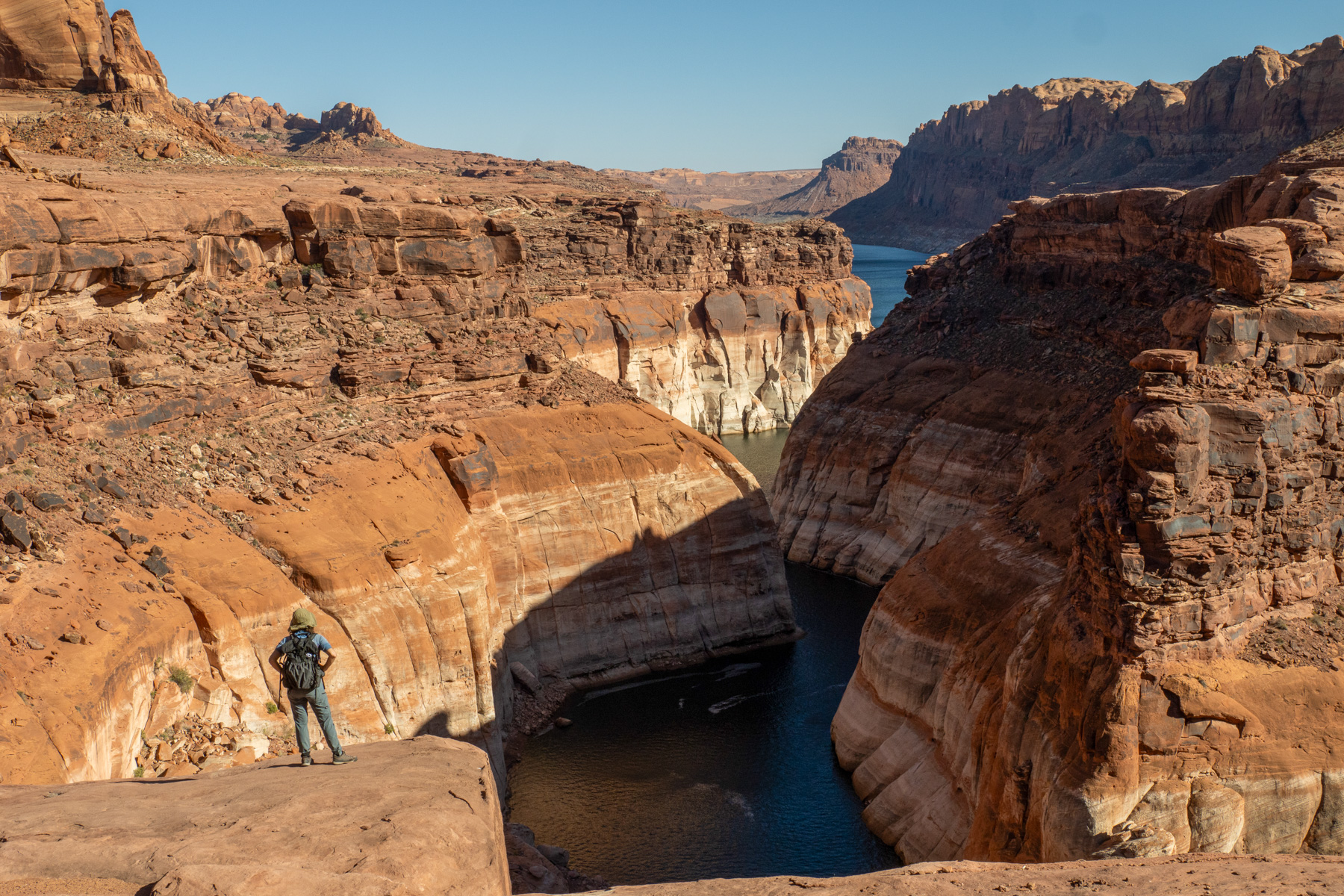
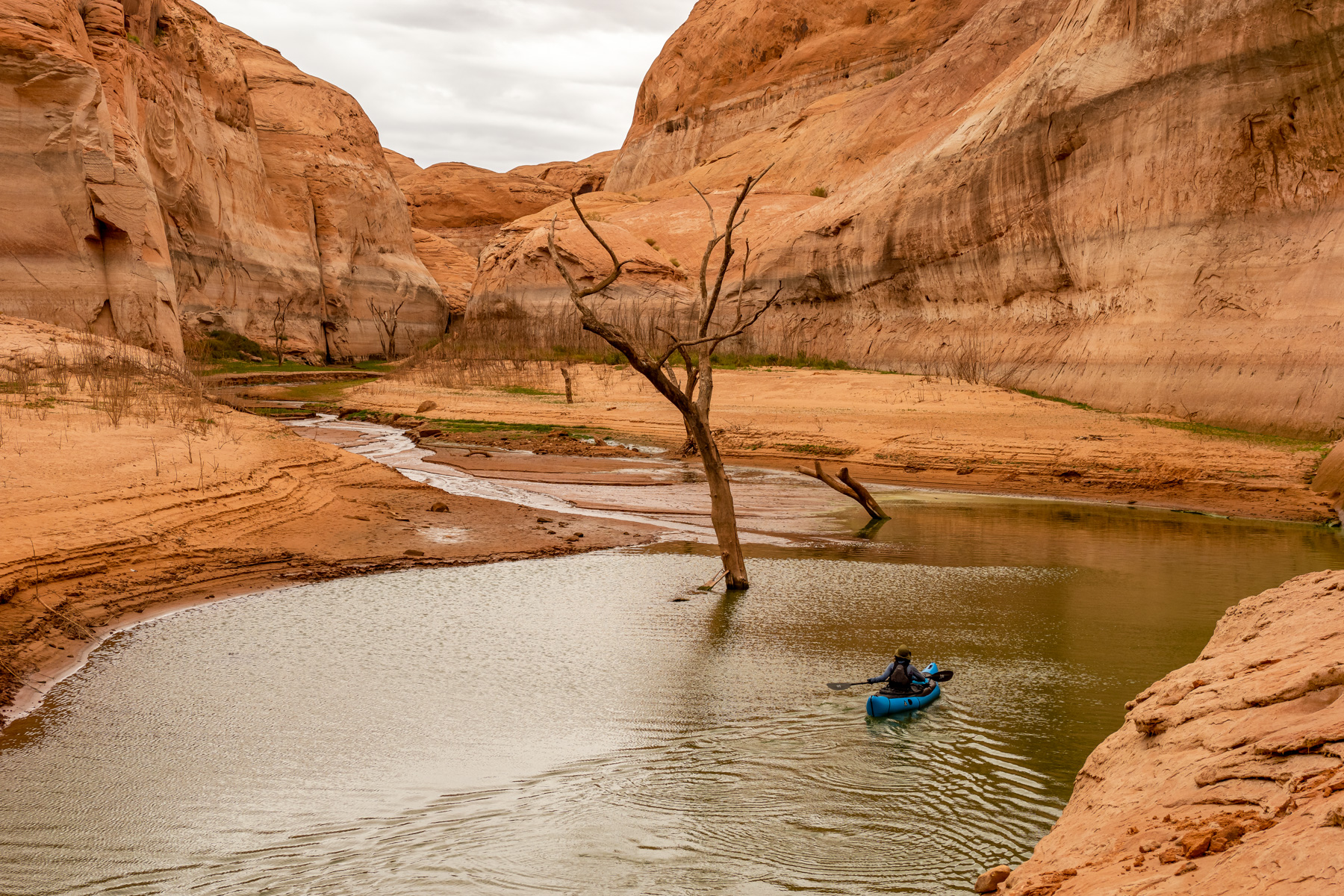 As Lake Powell recedes, the reservoir edging ever closer to “dead pool,” where water levels are so diminished that there is no ability to generate hydropower or release it downstream due to the dam’s elevated release outlets, we are seeing positive ecological change. Tributary canyons are reemerging with native plants finding root as they did before the dam’s existence. Natural wonders and cultural sites from the original inhabitants of the region are beginning to reappear as Mother Nature reclaims what once was.
With stories of Glen Canyon reemerging, my indifference towards the lake turned to curiosity. With the help of past Glen Canyon explorers and photographers such as folksinger and environmental activist, Katie Lee; famed boat builder and river guide, Norm Nevills; and photographer, Tad Nichols, among many others, I began diving deep into the past of the canyon – seeking out its drowned wonders.
What natural and cultural treasures could I found and experience with the lake going dry? Would an extended visit to the lake change my indifference to its existence?
A Launch into Mud
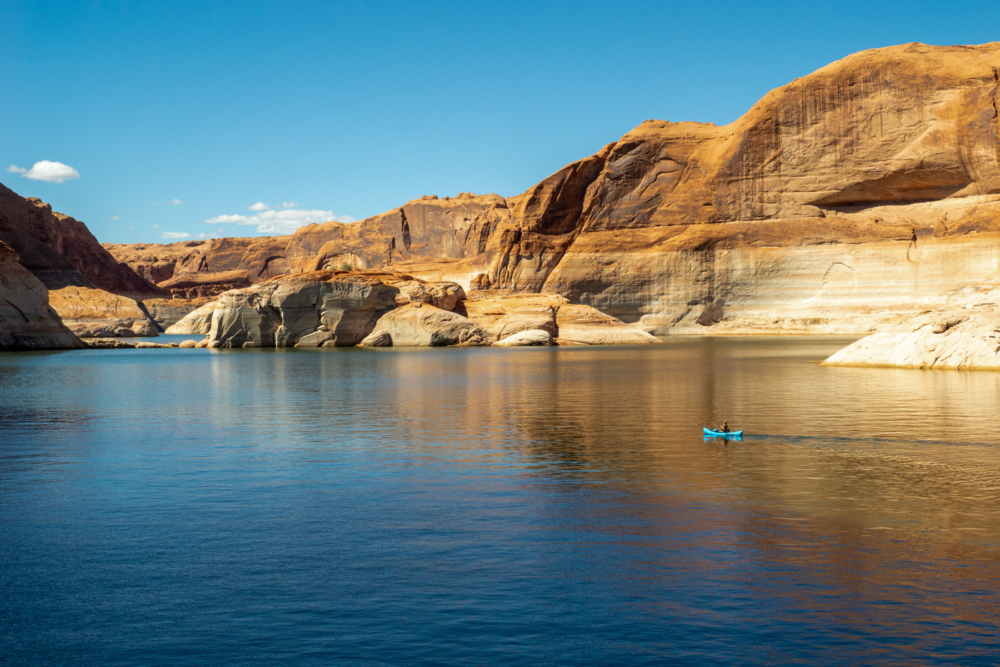
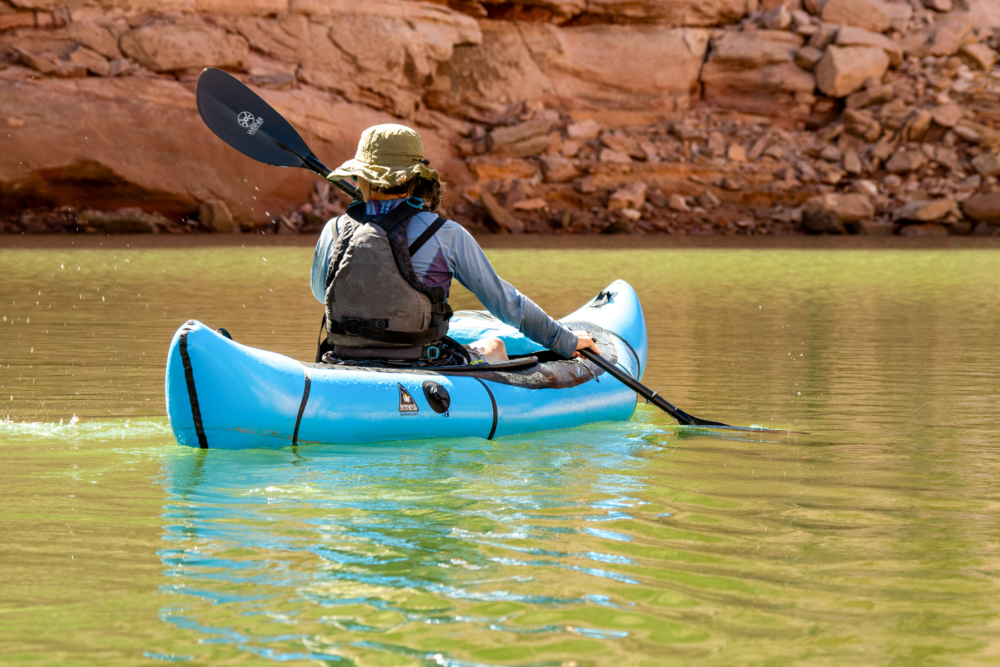
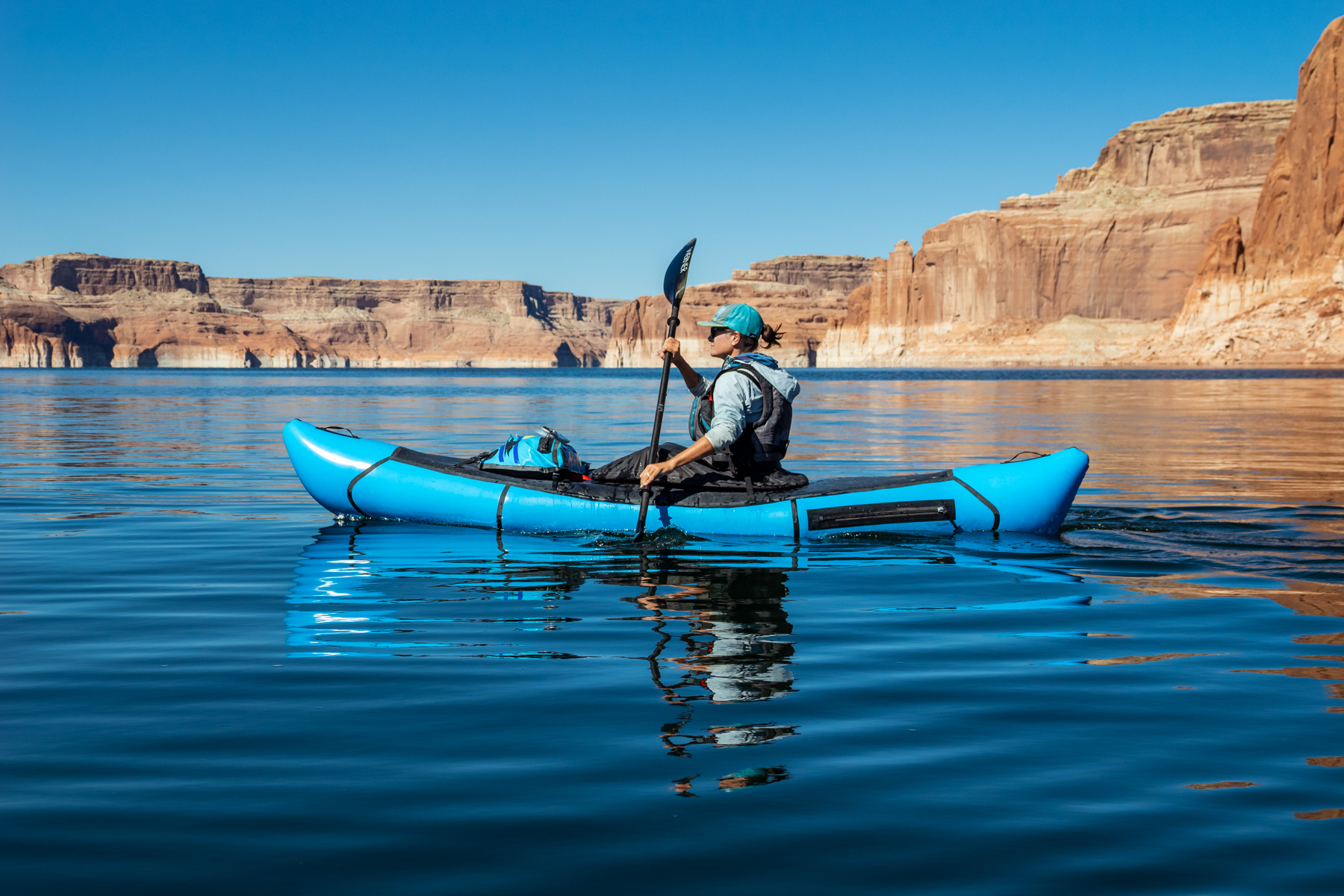
On a warm, late September morning, Diana and I took our first paddle strokes away from the ever-steepening embankment of the North Wash boat ramp. We had thirty days of food, camping and backpacking equipment, along with canyoneering harnesses and ropes stored in our pack rafts. Our plan was to spend a month paddling the length of Lake Powell, exploring its many canyons along the way.
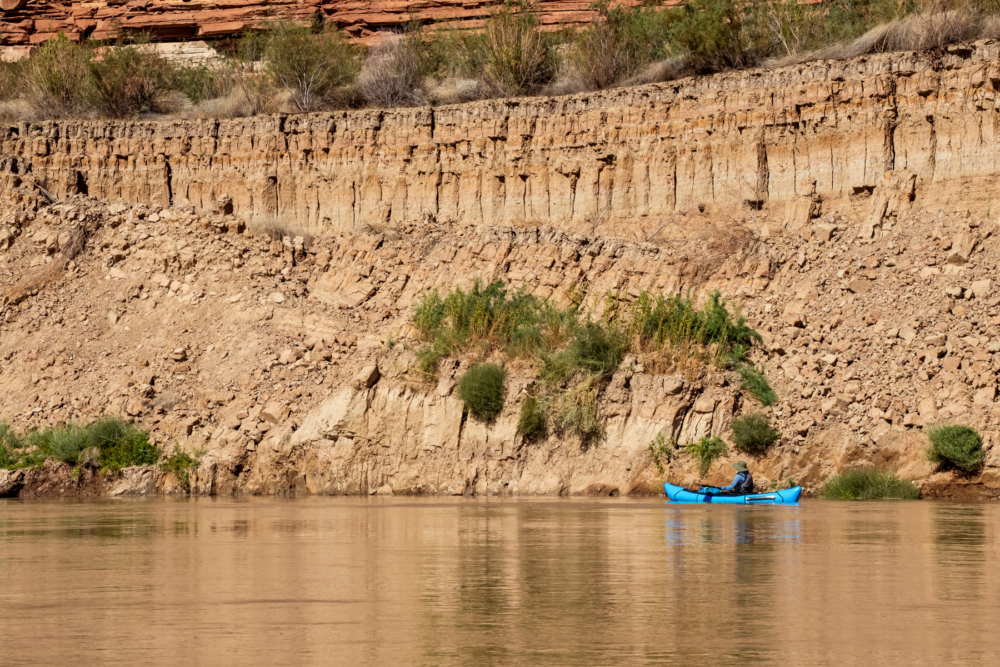
The lake had now receded to under 150 miles in length. The Colorado River was once again flowing, carving a channel through the sediment and silt deposited by the lake’s creation 62 years ago.
This ”Dominy Formation” of mud and sediment, as it is now called (after Floyd Dominy, the head of the Bureau of Reclamation when the Glen Canyon Dam was being built), is an ignored consequence of building a dam in a place fed by some of the most sediment-rich rivers in the west – the Colorado, San Juan and Dirty Devil rivers.
It is estimated that seven percent of Lake Powell’s total storage capacity has been lost to sediment accumulation. As the lake has shrunk, the sediment is a prominent character in the upper regions of Glen Canyon’s emergence, towering over the river for 30 feet or more.
Diana and I let the current of the Colorado River carry us toward the still lake waters, silt walls sluffing into the river only to be carried further downstream. As the lake dries up, scientists predict that the Dominy Formation will slowly make its way towards the dam, the reservoir eventually becoming one of mud rather than water.
Upon arriving at our planned camp site for our first night, we quickly realized that we would be continuing further downstream because it was impossible to exit our pack rafts without wallowing hip deep in mud. Escaping the river to the top of the Dominy mudscape would only lead to a desolate camp on the former lakebed. Additionally, hiking to a nearby canyon would be an impossible endeavor requiring us to negotiate a vast, two-mile plain of clay and water seeps. We would be marooned in muck.
With plenty of daylight left, we stayed in the brown, swirly current and drifted towards the reservoir delta, where the river current and reservoir waters meet. At this transition zone, the river sediment begins to settle towards the bottom of the reservoir, the brown silty water turning to the clear blue-green that recreationalists have come to associate with Lake Powell. After nearly 14 miles of muddy river, we were paddling on glass across waters that looked like those found in the tropics.
Nature’s Reclamation
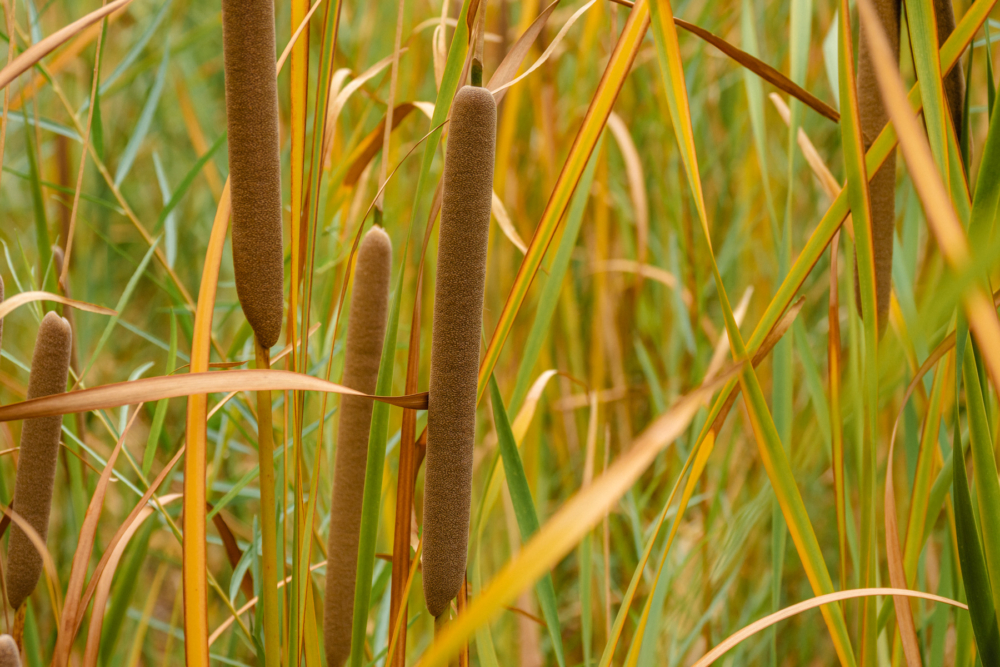
The wall of green comprised of willows, cattails, young cottonwood trees and other native vegetation looked impassable. The steep, unclimbable walls on either side of the sandstone canyon were not helpful. This was crazy! I had been in this canyon just five years ago and there wasn’t this much life. Things had radically changed in a relatively short amount of time. Amazing!
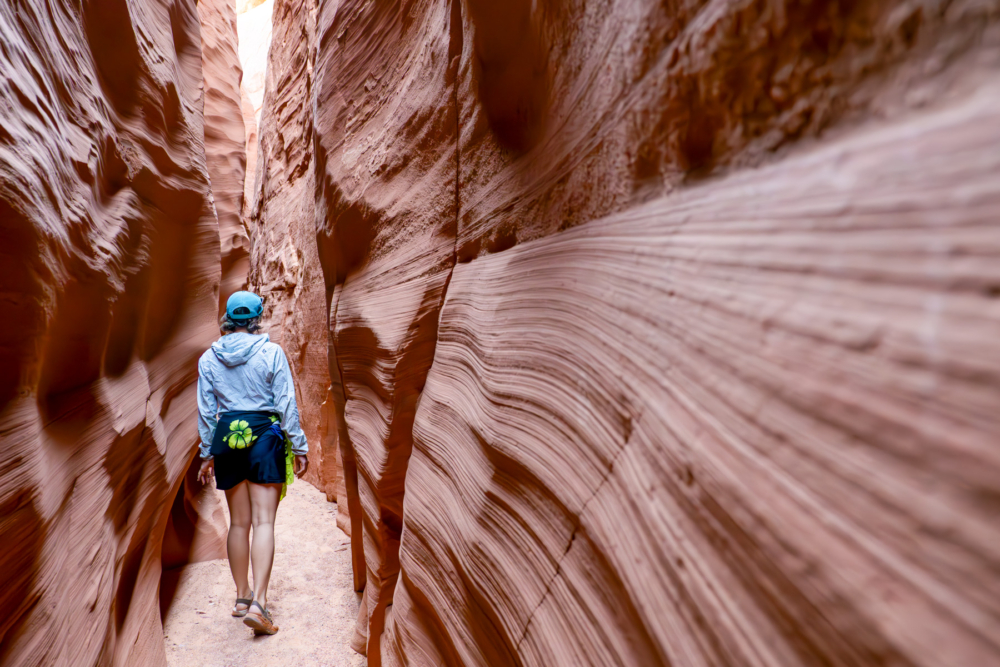
While planning the trip, I had identified canyons that I wanted to explore – whether for their past natural beauty, being known as once having cultural sites, or rumored to contain narrow and deep sections. The plan was to visit a canyon or two each day as we paddled down lake. For a few canyons, we would leave our boats, taking backpacking and canyoneering equipment to truly immerse ourselves in them. Through these explorations I hoped to find the magic of the reemergence of Glen Canyon.
Little did we know the challenges we would experience on these forays.
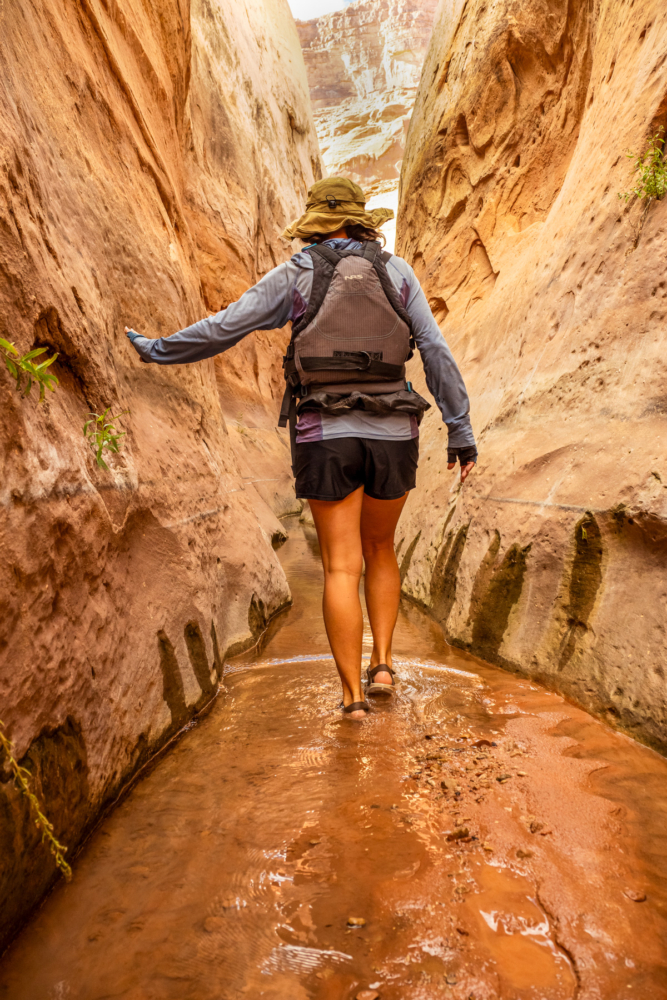
After a lengthy paddle from the main channel of the lake, which added significant mileage to our days, we would come to the end of the lake water, usually a muddy and sandy canyon outlet with cottonwood trees still standing tall despite decades spent underwater. After finding a suitable place to exit the boats that wasn’t quicksand, mud, or a loose, precarious and collapsing sediment layer, we would begin hiking up a canyon that was often flowing with spring-fed water.
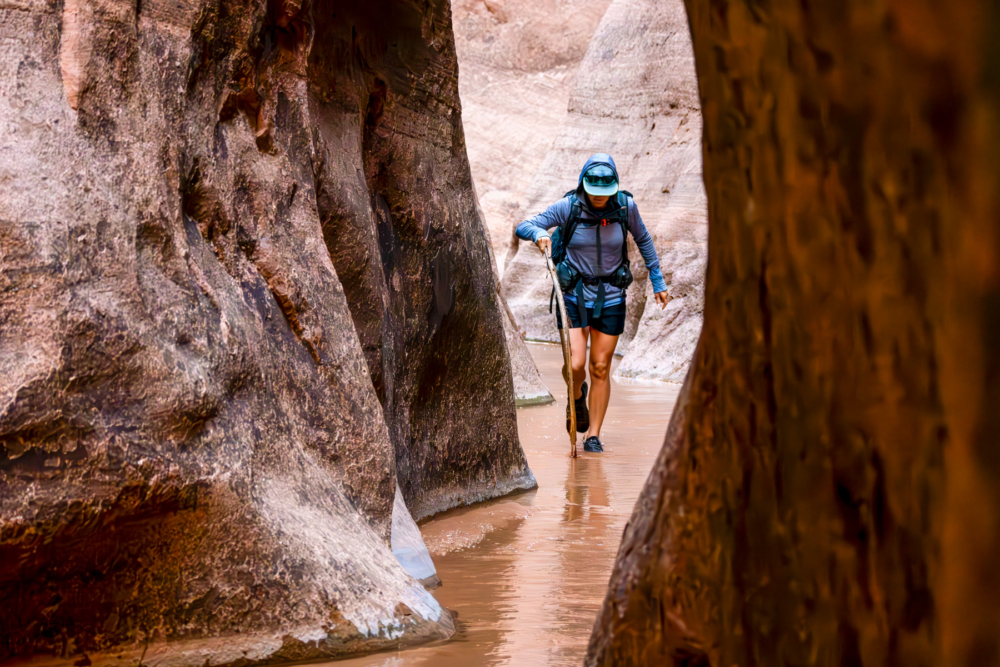
Our pace was slow as we had to negotiate steep cutbanks, dead tamarisk and Russian olive trees, and long stretches of quicksand. Using trekking poles as probes to find solid footing or push back vegetation, we slowly made our way towards the high-water mark from when the lake was last full 26 years ago.
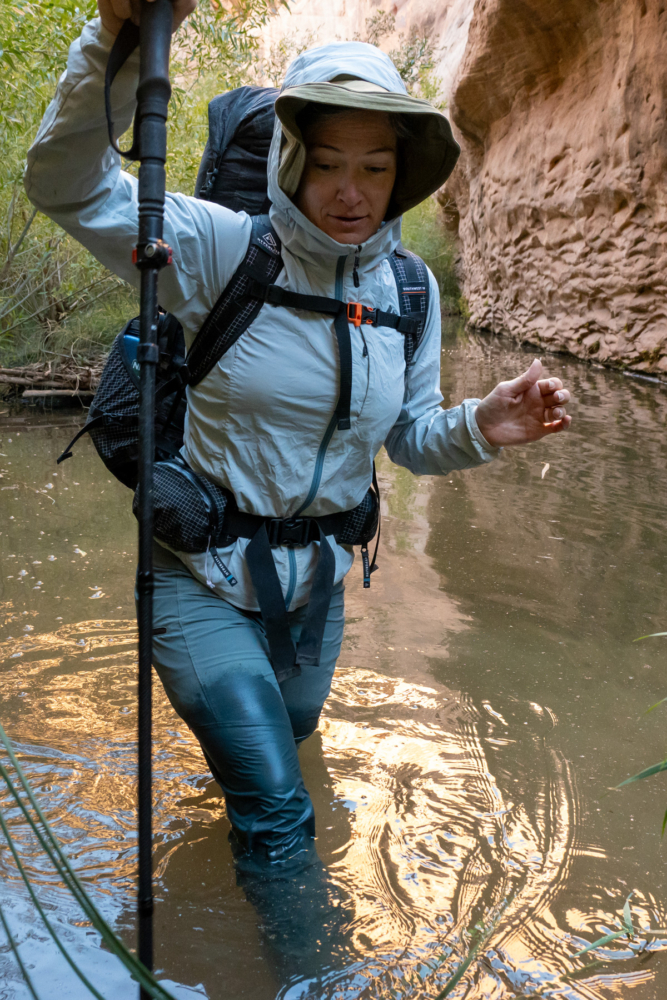
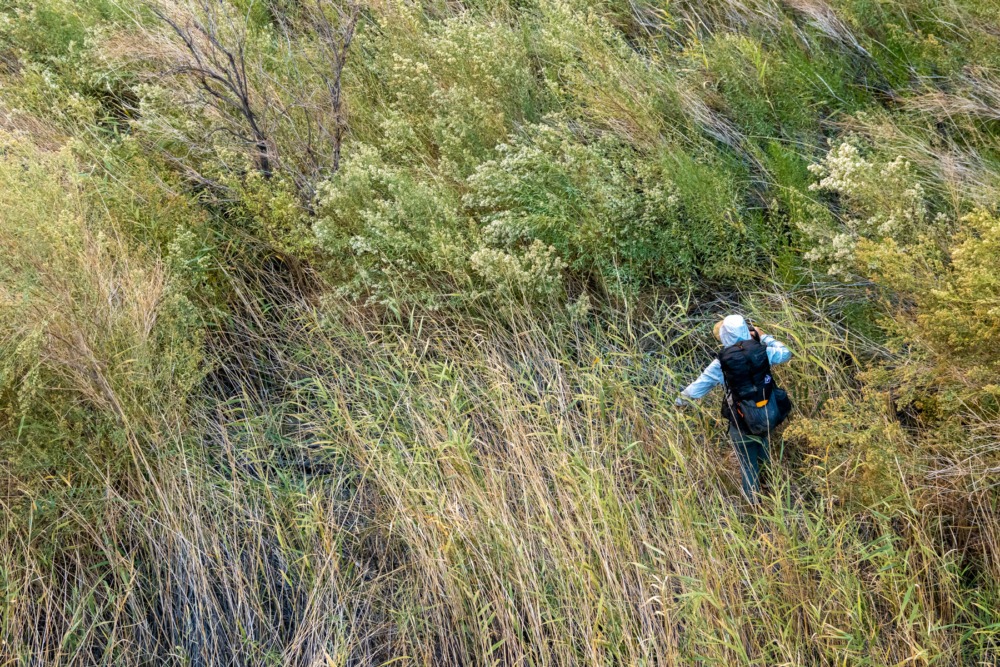
To get there was typically a two-mile hike at minimum. Sometimes it was much longer, as when we hiked and bushwacked six miles across a dry Halls Bay in our attempt to reach the Halls narrows in the rugged Water Pocket Fold of Capital Reef National Park.
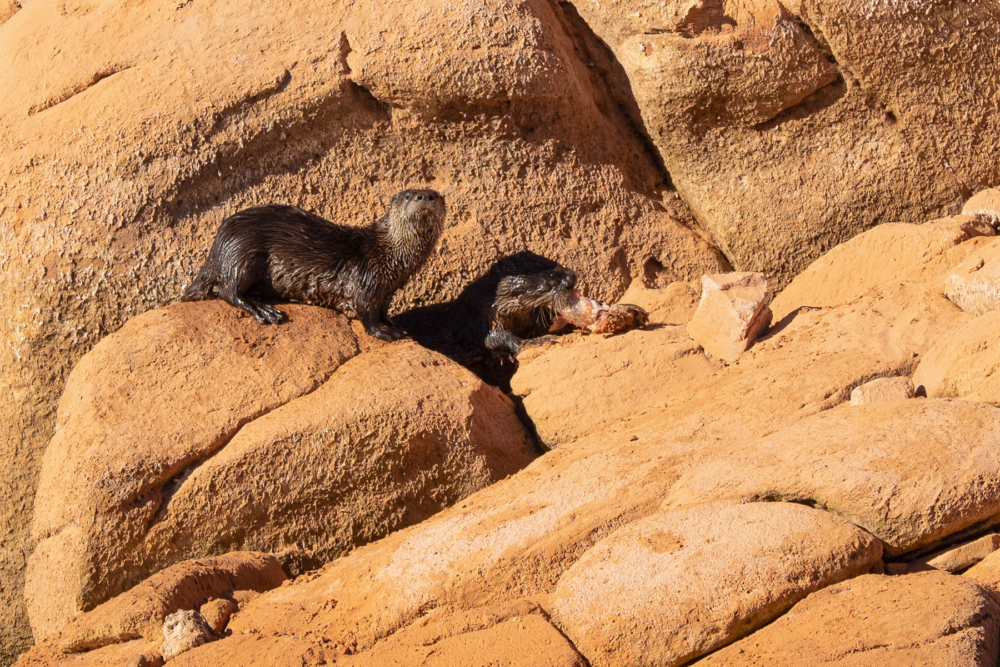
As we got further from the lake, Mother Nature’s revival was on full display. Native plants took root in the nutrient rich sediment of the lake. Beaver ponds became prevalent as nature’s persistent workers invited life back to the canyons – their dam sites becoming fertile grounds for the return of bird and aquatic life along with other creatures. Glen Canyon was truly emerging once again.
A Lake of Contrasts
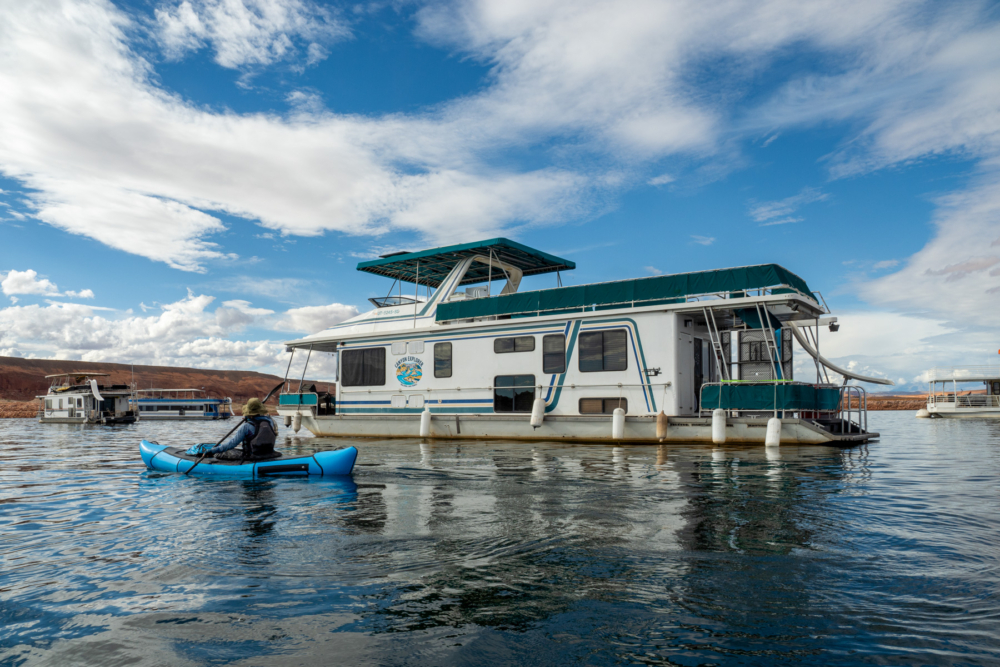
“Are you finding the fish?” I asked as I paddled past the shirtless man staring towards the sandy shore from the bow of his fishing boat. Shifting his gaze my way, he smiled and shouted, “Dude, screw the fish, I can find them anywhere. I’m looking for a place to park my houseboat.”
Though built for water storage and hydropower generation, Lake Powell has become a recreationalist playground. Over four million people visit Glen Canyon National Recreation Area each year. This equates to over $400 million in economic activity from boat rentals, restaurants, hotels, commercial tours, fuel sales, and many other services.
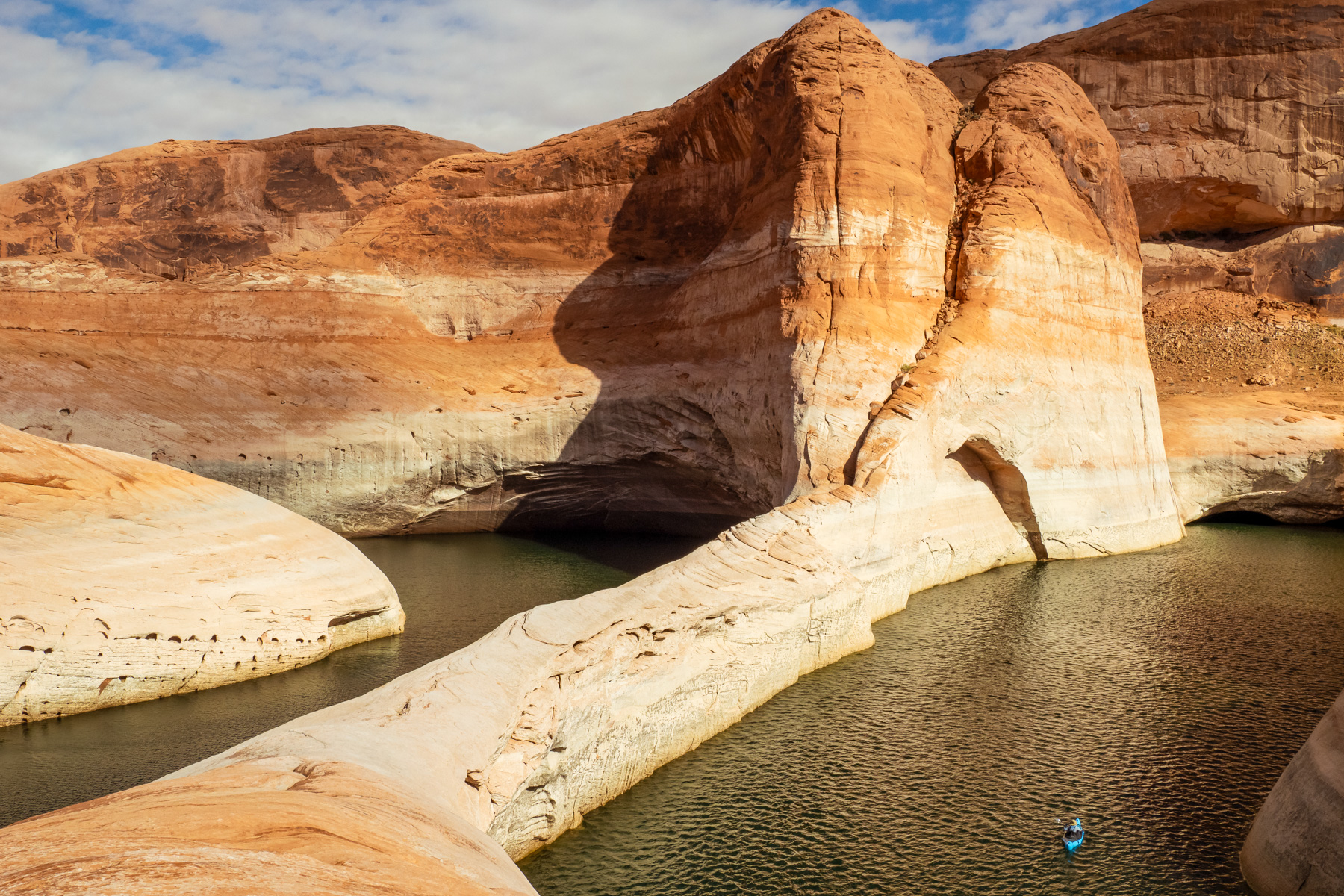
During our first two days of paddling, we didn’t encounter a single person. But as we got ever closer to Bull Frog Marina (the only viable mid-lake access ramp given the current water level), located 50 miles south of our launch point, we encountered lots of humans: fisherman, water and jet skiers, speed boaters, and party-goers on houseboats. Gone were the feelings of remoteness from when we first launched.
When off the main channel and away from its hum of motors, solitude and wildness returns. The difficulties of getting into Glen Canyon’s tributary canyons prevents the masses from visiting them, leaving Mother Nature to do her work.
In contrast, the natural beauty combined with the clear waters of the main channel are a magnet for people looking to enjoy the resource that is this man-made lake—and where there are humans, there are impacts. Old beer cans, faded red solo cups, busted camp chairs and pop-up tents, lost beach towels and swimsuits, golf balls, bent fishing poles, remnants of crashed boats, broken Styrofoam coolers, torn boat awnings, tires, corroding batteries, campfire rings and so much more, litter the shores of Lake Powell.
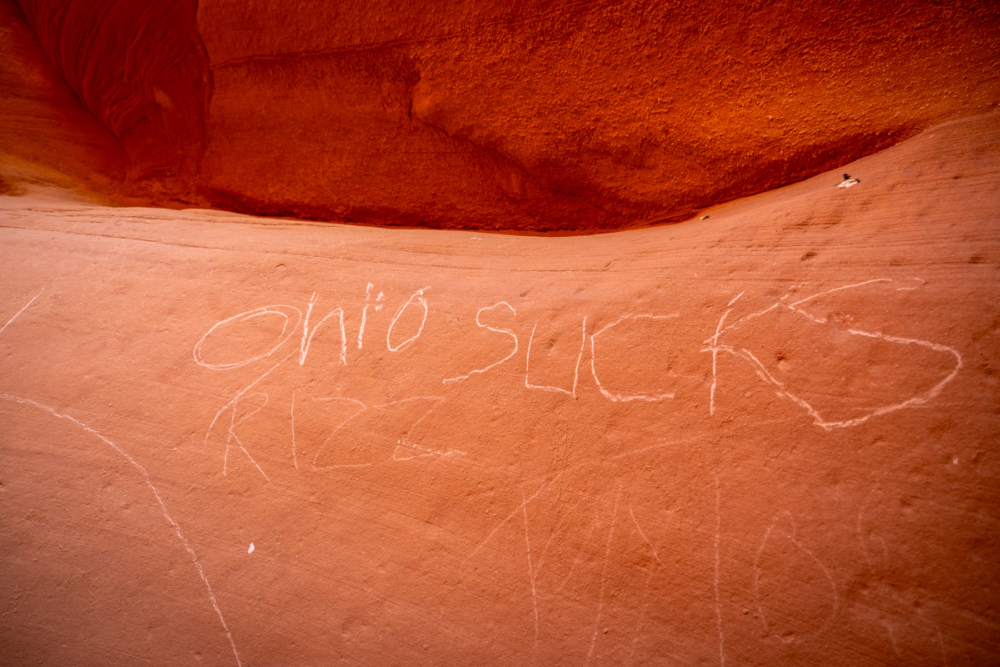
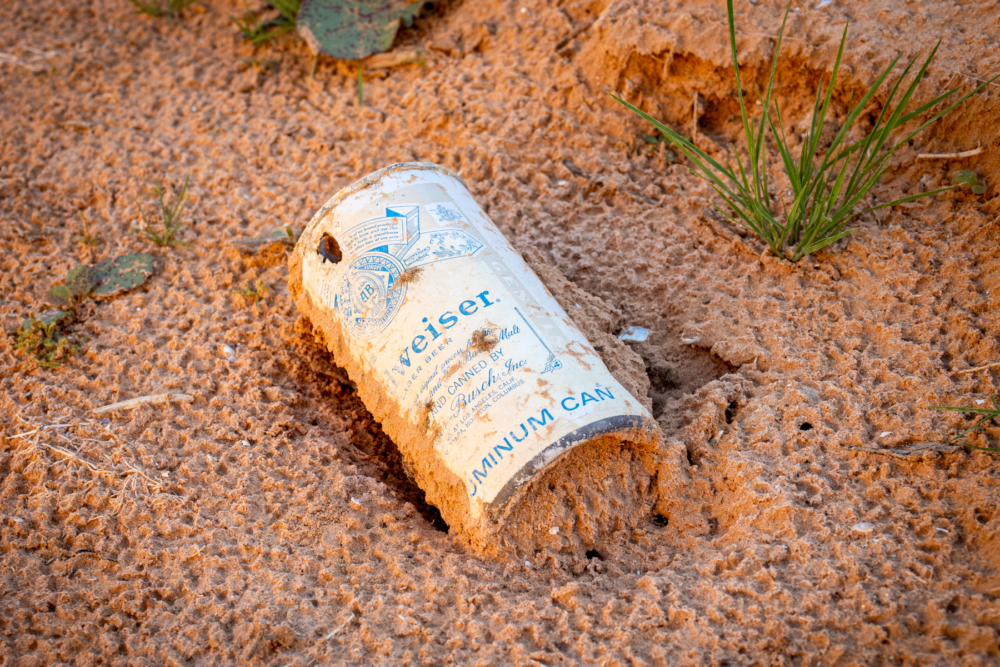
More disturbing is the charcoal, mud, and scratched graffiti. We strolled into the recently emerged Cathedral in the Desert, a natural amphitheater of breathtaking beauty, only to have our awe turn to sadness when we discovered the “We were here” scars of the Jensen family and many others carved into its walls.
The Final Decision Maker
Though I reminded myself to loosen my clinched grip on the paddle, I couldn’t bring myself to do it. Four-foot chop richocheted off the vertical lake walls, tossed us like corks. The wind and rain were in our faces with little to deter the elements as the long straightaway funneled nature’s fury towards us. So this is how the trip will end, I thought to myself.
The 30th and final day wouldn’t be easy. It shouldn’t have been a surprise: In the past month we had faced our fair share of challenges, from incessant bugs to shoe-sucking quicksand and mud, sand blasting wind, historic rains and flash floods, relentless bushwacking, not to mention a close-call or two with a speed boat.
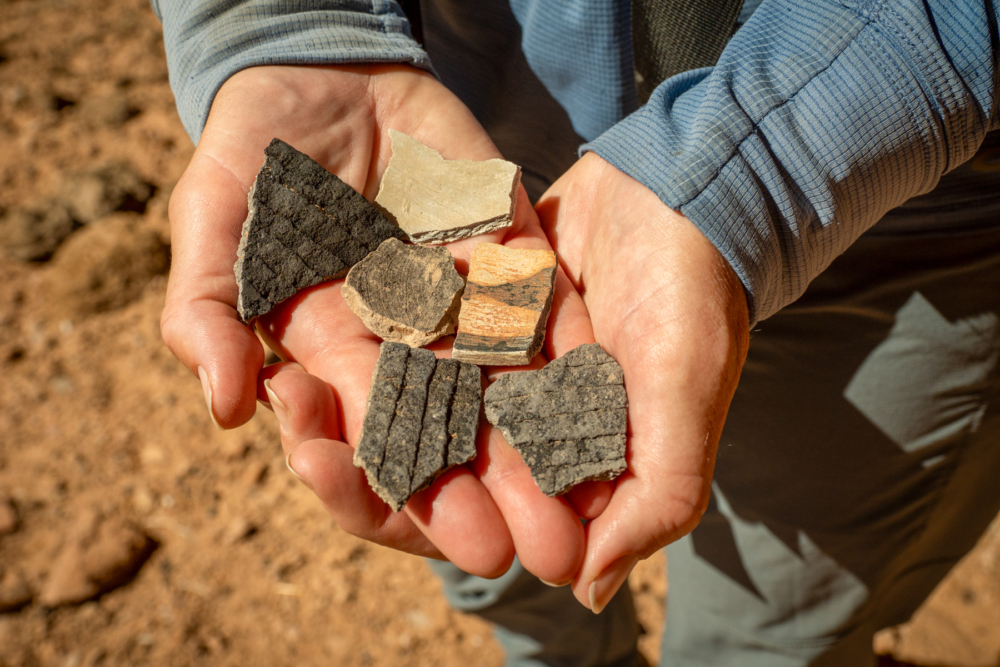
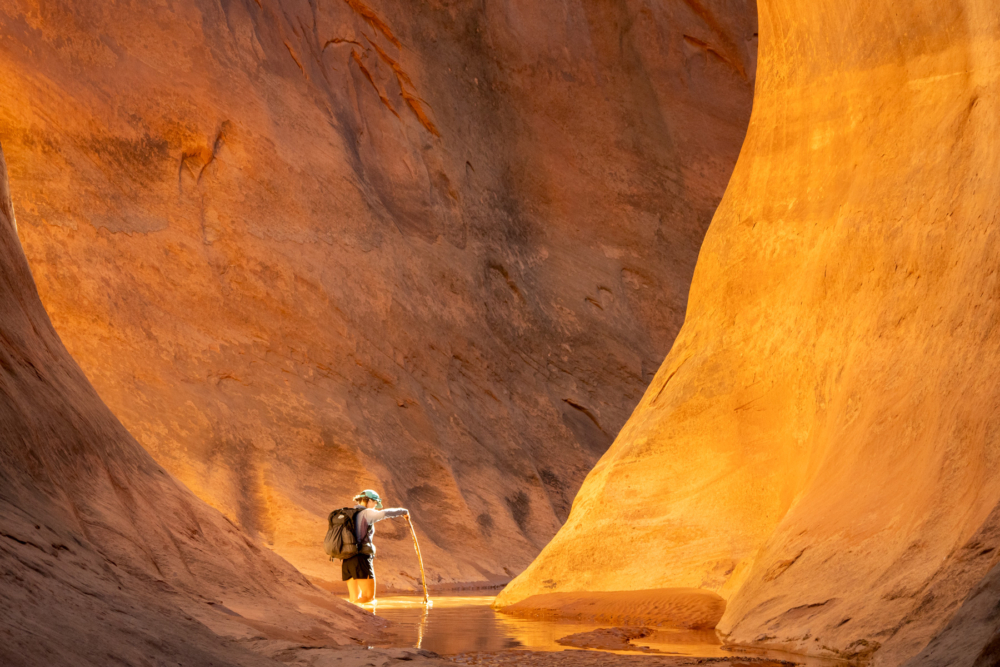
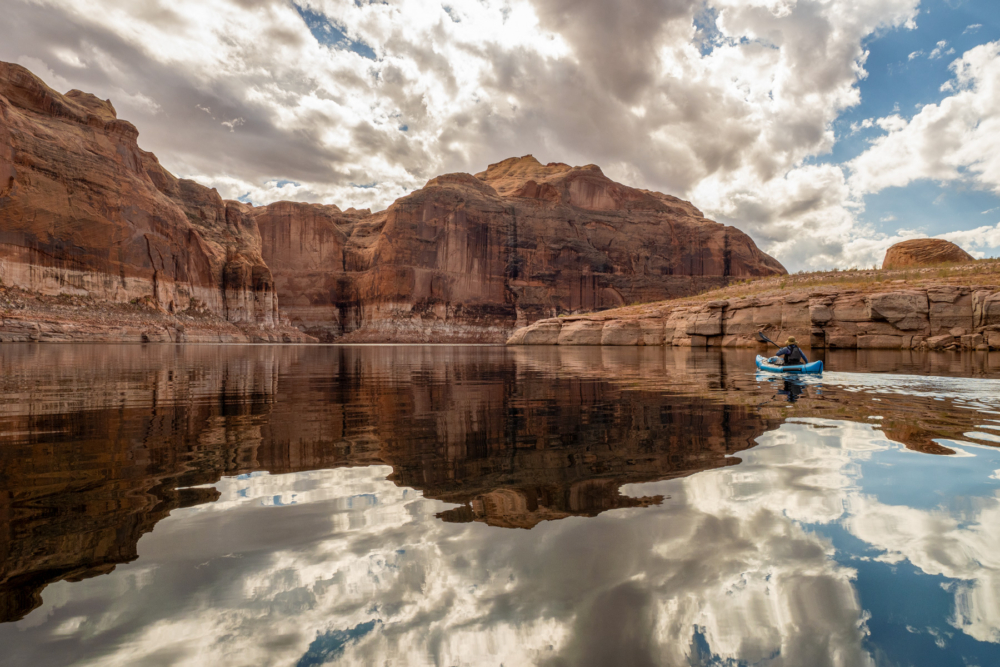
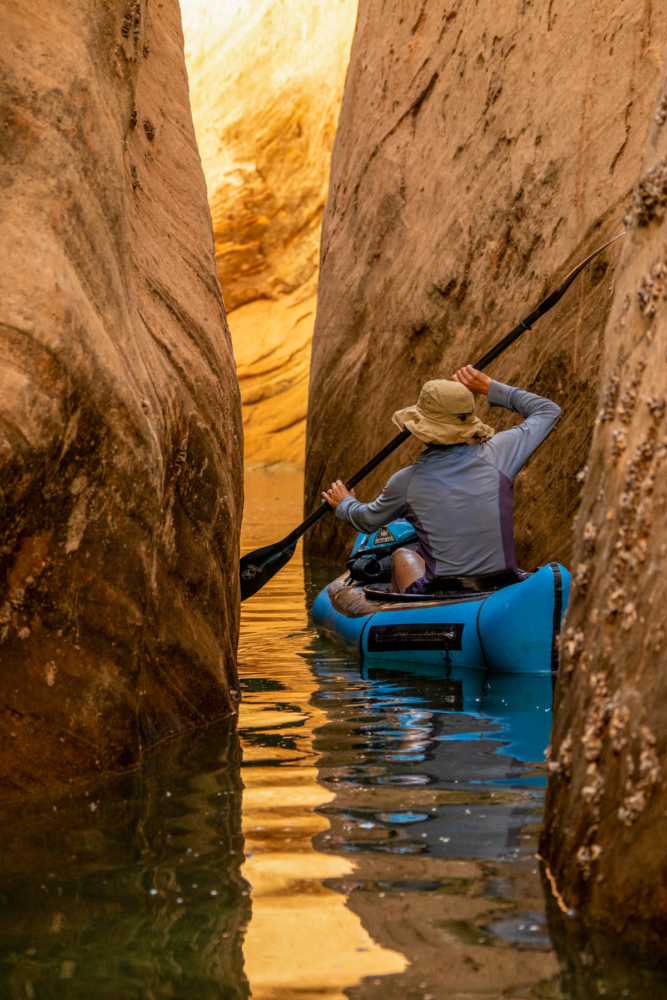
And yet, we also experienced many moments of wonder – a vibrant double rainbow after an evening thunderstorm, ancient pottery shards long buried under water, the howl of coyotes welcoming the rising full moon, golden light filtering through constricted canyon walls, paddling on a pane of glass with both us and the surrounding red rock landscape reflected upon its surface.
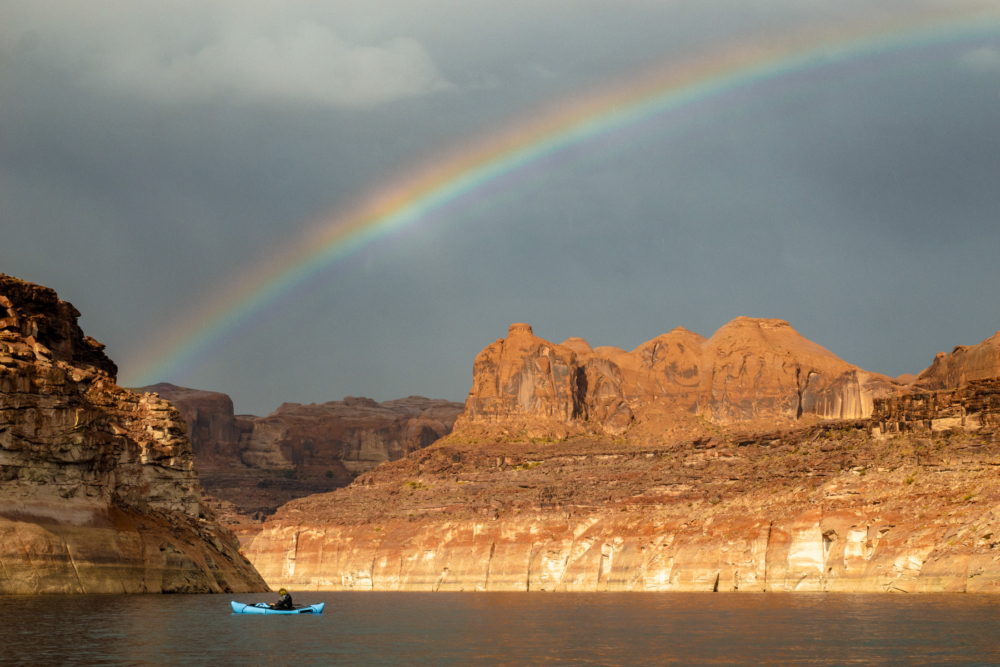
I had embarked on this journey to learn about a manmade oddity in the desert—a dam and consequent reservoir clouded in controversary that effects all those who call the southwestern U.S. home. I’m still not sure of my opinion on the merit of drowning Glen Canyon. That happened before my time, and it is what it is. The act of damming the river is now past, and cannot be changed.
I did learn, however, that regardless of Lake Powell’s future, the land, waters, flora, and fauna that comprise it deserve our care and respect. Motorized or not, recreate and visit the lake with an obligation to care for it. Clean up and carry out trash. Remove fire rings. Be respectful of other users and the creatures that make the lake home. Leave no trace. These are all easy things to do.
Given the river community ethos of leaving a place better than you found it, I like to believe that without the Dam, the Glen Canyon of today would be a pristine canyon showing little signs of human impact. Why not care for the parts of it we can still access in the same way?
Mother Nature will ultimately determine the fate of Glen Canyon and the 710-foot concrete wall that drowns its splendor. From appearances, it seems she wants the canyon to emerge from its watery slumber…and given what I experienced over the past month, I don’t think that would be a bad idea.
 ***
***
Guest Contributor Brett Davis is a prominent outdoor educator and adventurer. After a recent retirement from serving as the director of the Outdoor Pursuits program at Fort Lewis College, he has been utilizing his extensive outdoor skillset to pursue personal adventures. You can find more of Brett’s writing and adventures on Instagram — @brettrdavis— or through his website, thelessoncollective.com.