In July 2025, Heather Smallpage, Kelly Fields, Shira Biner, and Natalie Afonina traveled to Baffin Island in the Canadian Arctic for a five-week, human-powered exploration of the island.
In part 2, Heather looks inward for a light to guide their through the trials and tribulations of their five-week-long expedition. This is part 3 of their journey.
***
There I was, singing to the current, feeling the soft rain on my face, and feeling light, alive: in body and mind. I owe my state to the river; its flow and gentleness, its constant state of movement, how it does not confirm but flows–as a reminder that I am able to live in such a way too.
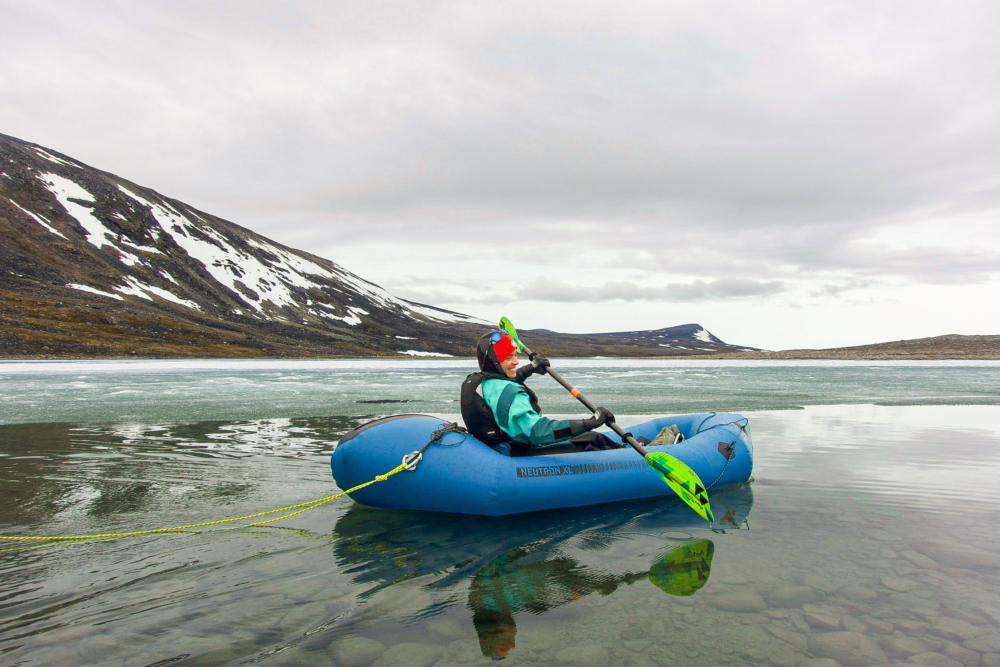
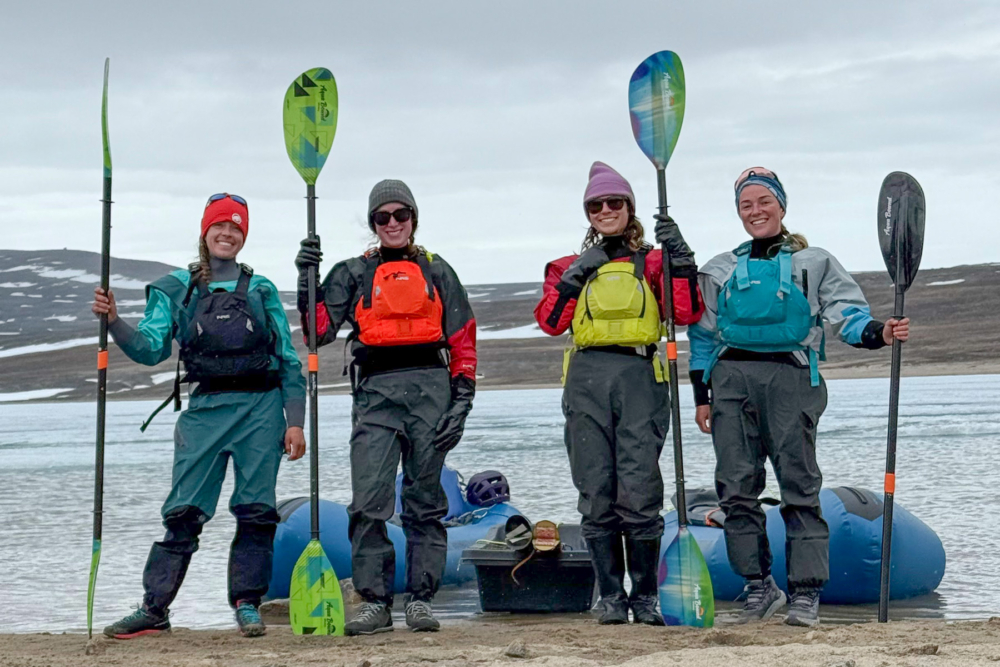
We were constantly moving in Baffin Island, yet still had time to be within the landscape. After 27 days of skiing, climbing, and walking over dozens of miles and all kinds of terrain, we finally inflated our packrafts and set off on the Kuugaaluk River.
As we paddled closer to the end of our journey, I found myself in a state of emotional exhaustion I had never experienced before from being consistently disrespected. And yet just a few days on the river hit a reset button for me. Fun fact about me: I hate getting in water, especially when it’s cold. But while we were paddling, I couldn’t shake the feeling that I needed to get my head under water and splash around.
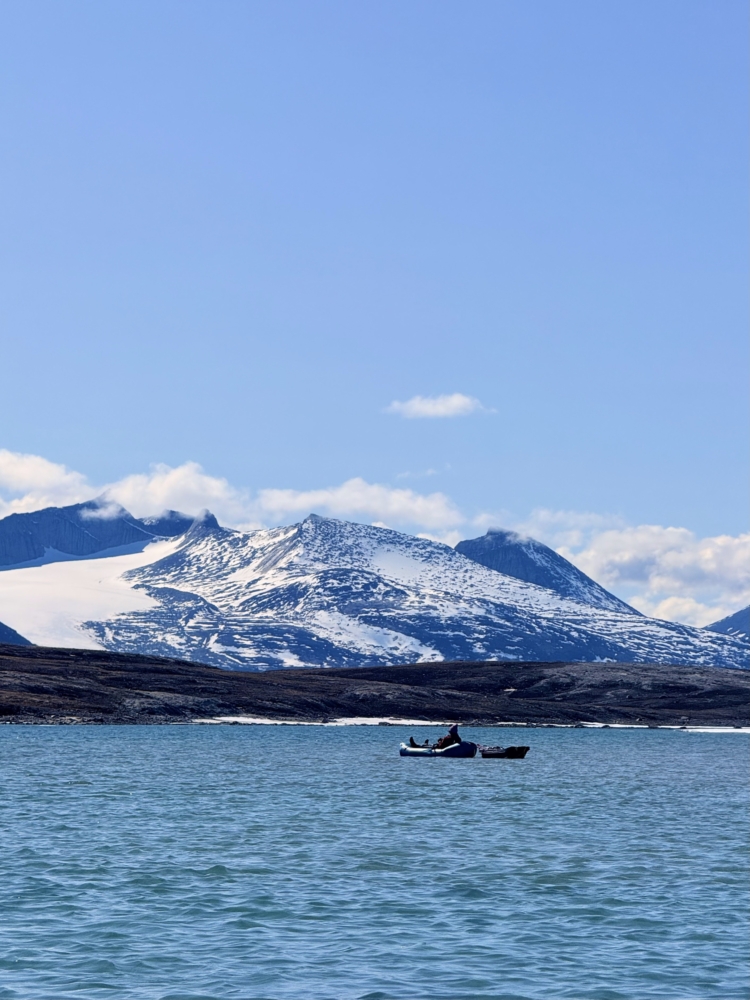
Those few days paddling on the Kuugaaluk River were refreshing in many ways. It offered space, peace, and, as down as I was feeling, I couldn’t escape the childlike need to play. The day was beautiful, the sun was glittering on the sparkling water, the current gentle. Every time I stopped paddling, my boat would get flipped around and I would see the glaciers and mountains drifting further away. Looking back at them, knowing our journey was closer than ever to being complete, I found moments to process everything as the current carried me along.
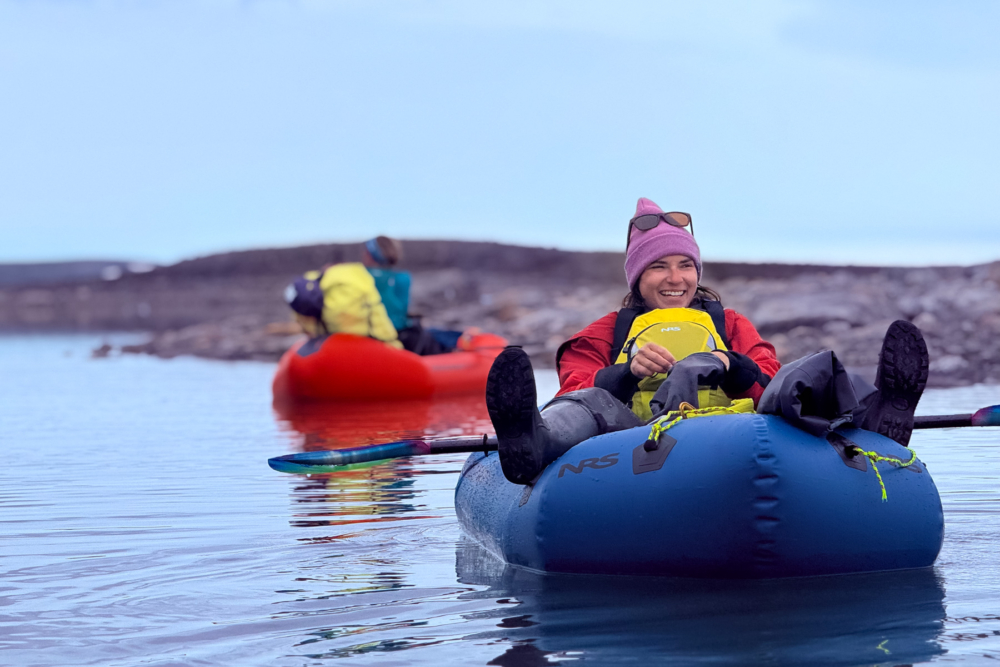
Perhaps I loved the river so much because it was the first time I wasn’t pulling 100+ pounds behind me, or my body weight, and some, on my back. However, I think it had more to do with the flow of the river and its commitment to change and fluidity, being and moving in the only form it knows.
“This palace speaks in ancient tongues. It speaks through the ground, wind, water, time—that is the language it knows. It is one I am learning to listen to. These mountains shed, moan, shake, and let go. They let the unstable, loose parts fall away when the ice melts off. What’s under feels the sunshine.”
– Excerpt, Heather’s journal.
In the Arctic, there was no escaping the endless amount of space or being anything less than present with my surroundings. For that, I was grateful. Not only was the landscape the largest and most expansive I’d ever moved through, but it was also far enough away to let go of all the noise that accompanies “normal” life. The land, ice, water, and wind offered me a chance to tune into another kind of frequency that I can only feel in faraway places. In some ways, that’s the strongest pull for me to go on big adventures—to connect with parts of the world that humans haven’t created. To get back in touch with the land, and through that, with myself.
A question that stuck in my mind throughout, was: what could we learn from the land if we really listened?
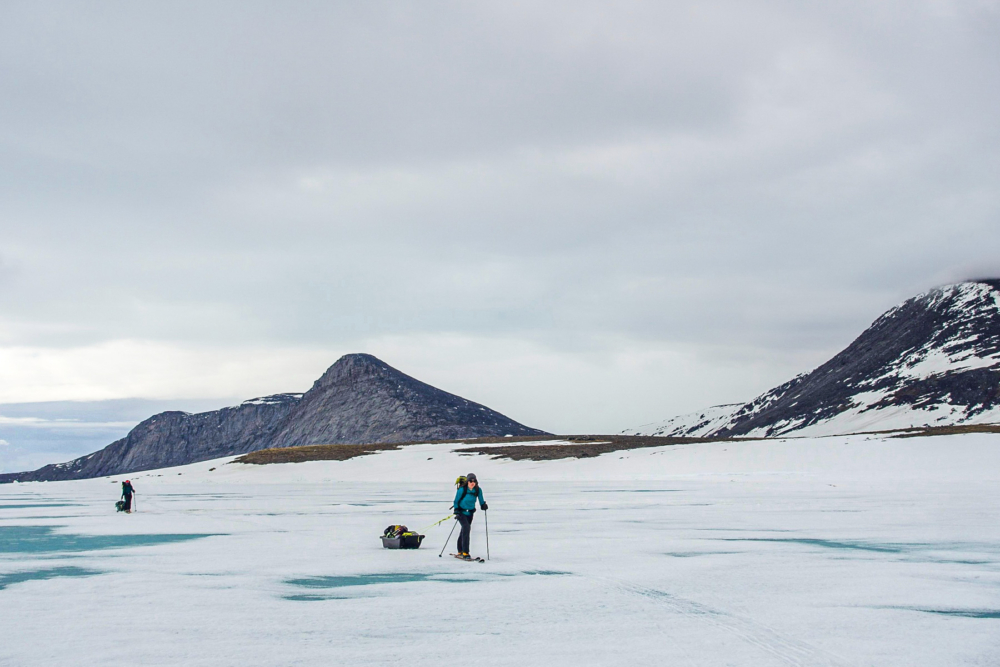
Have we, as humans, not forgotten that the earth breathes as we do? That the movement of the river reflects the movement in our own veins? That the soil and wind are alive in the same ways we are? We forgot when we put ourselves above it so many centuries ago, made the earth something to conquer, and reduced the magic of the world to something we walk upon.
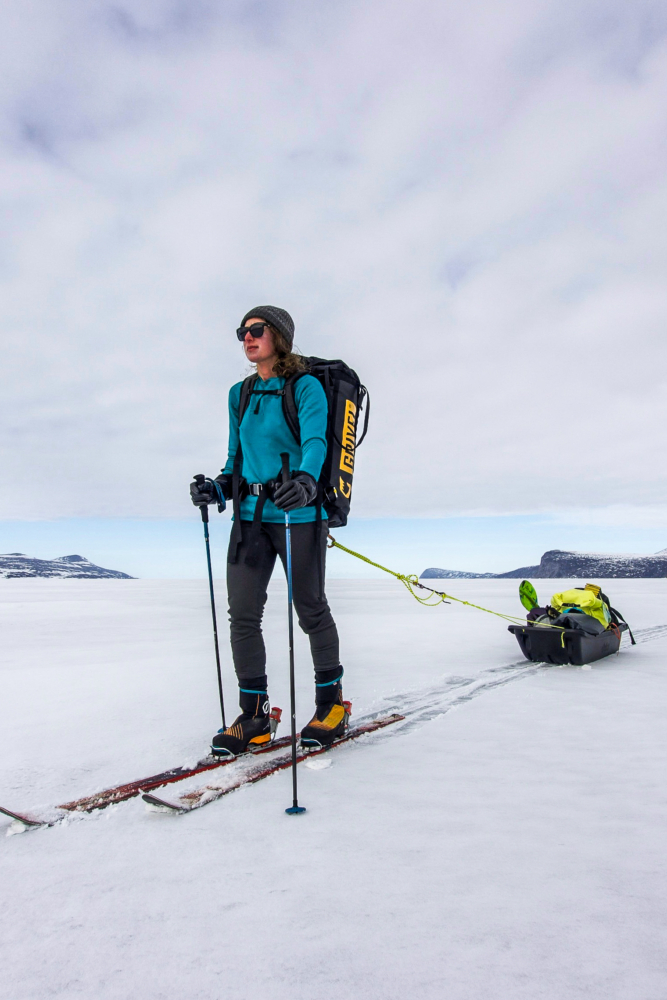
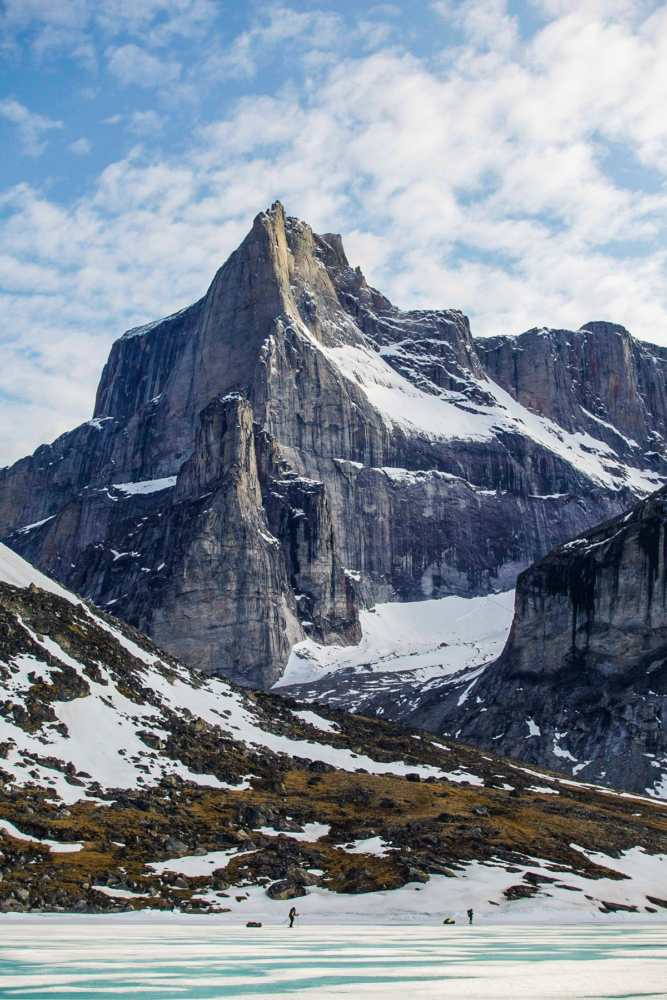
I did my best to listen to the land and be open to the experience of such immersion. I moved through it with respect, and listened. On days like the one where we skied into the fjord and saw the mountains up close for the first time, I felt welcomed. The day was blue and beautiful, sunshine on my skin. I was giddy and couldn’t contain my joy. Other times, like when we got to our high point on Eglinton Tower and saw more rock looming above us, it felt like a warning.
“I thanked the day for being so beautiful, for welcoming us into its depths. I thanked Sedna, the Inuit goddess of the sea. And promised to respect this place, be a part of it and not above, to understand its power. Here, there is a force somewhere close to life and death, here and there. I’m not interested in going there yet, so I will pay close attention to here. Listen and feel how I can be here in a way that connects, appreciates, and survives.”
June 17, Day 9. Base camp, post-ski.
–
“My body has a knowledge of these environments, how to move in them and how to assess. How to listen and feel. Eglinton was welcoming but the summit proper was not as friendly. To listen. My body carries me through. Interacting with ancient landscapes that all voice a chorus. A changing one. My body has learned how to be that—within and a part—always respecting its magnitude of connection. Trusting and believing I am part of it. Becoming part of it at times. In respect, awe, open.”
June 23, Day 15. Base camp, post-climb.
–
Beyond Baffin Island, there are fewer opportunities for me to find this kind of connection with myself and the land. Yet it is possible, and always around me if I can tune in. It’s certainly more of a challenge to hear it amongst the waves of noise in my day-to-day life, or just existing in this current atmosphere. But it is there.
I realized that I am never alone despite how far I may be from my people—they are carried in my heart and the space I have for love in my body is as expansive as the Arctic landscapes.
The Arctic Heather showed me that I not only belong in extreme environments, but I can thrive in them with beauty and resilience.
The weather showed me I was safe. It informed me how the mountains felt and if they were willing to let a few wanderers into their home. I learned from the expansiveness not to assume, nor to rush. That time does not exist when we are in the moment.
The sea ice reflected change, its constant motion in a dance with the seasons. Breaking up, moving apart, opening, only to freeze again into a solid mass.
The bumble bees and the teeny Arctic willow trees taught me of abundance. Even though I thought the Arctic was a place of ice and rock, the wonders of plant, insect, and animal life were abundant and making the most of the sunshine while they had it.
The constant light, a reminder of my own. And when the light disappears, even for months at a time as it does so far north, it eventually comes back.
Or, perhaps we carry it in us until the time is right.
***
Editor’s note: In July 2025, Heather Smallpage, Kelly Fields, Shira Biner, and Natalie Afonina traveled to Baffin Island in the Canadian Arctic for a five-week, human-powered exploration of the island. In total, they traversed more than 300 km of ice, rock, and water by ski, foot, and boat, including a first ascent on the mountain Eglinton Tower. They named their ascent Lemnos in the Clouds (5.11 A0) and made history as the first team of female+ individuals to establish an alpine-style big wall in this area.
–
Guest contributor Heather Smallpage grew up in Wisconsin where they explored the many lakes and rivers, which instilled in them a deep appreciation for the natural world. They moved out west after graduating from the University of Minnesota, and have been pursuing adventures in the vertical world ever since. They are non-binary, a climber, a singer, writer, and lover of loons. You can follow along with their adventures and find more of their thoughts and writings on Instagram: @hsmallpage.
Photography courtesy of Heather Smallpage, Natalie Afonina and Kelly Fields.