Recently, on the way home from paddling the Alberton Gorge outside of Missoula, I mentioned to my friends that it was maybe time to start thinking about flatwater kayaking. One friend said he could probably tolerate getting out in his long boat sometime soon—but not too soon. Another friend (who’s also my husband) was flatly disinterested. A third friend, Charlie, asked, confused, “Why would you do that?”
Charlie was earnest; his situation is a common one. He’s been paddling for several years, considers himself “on the inside” of the whitewater community, and yet he’d never heard of anyone paddling upstream for fun—or for any other reason.
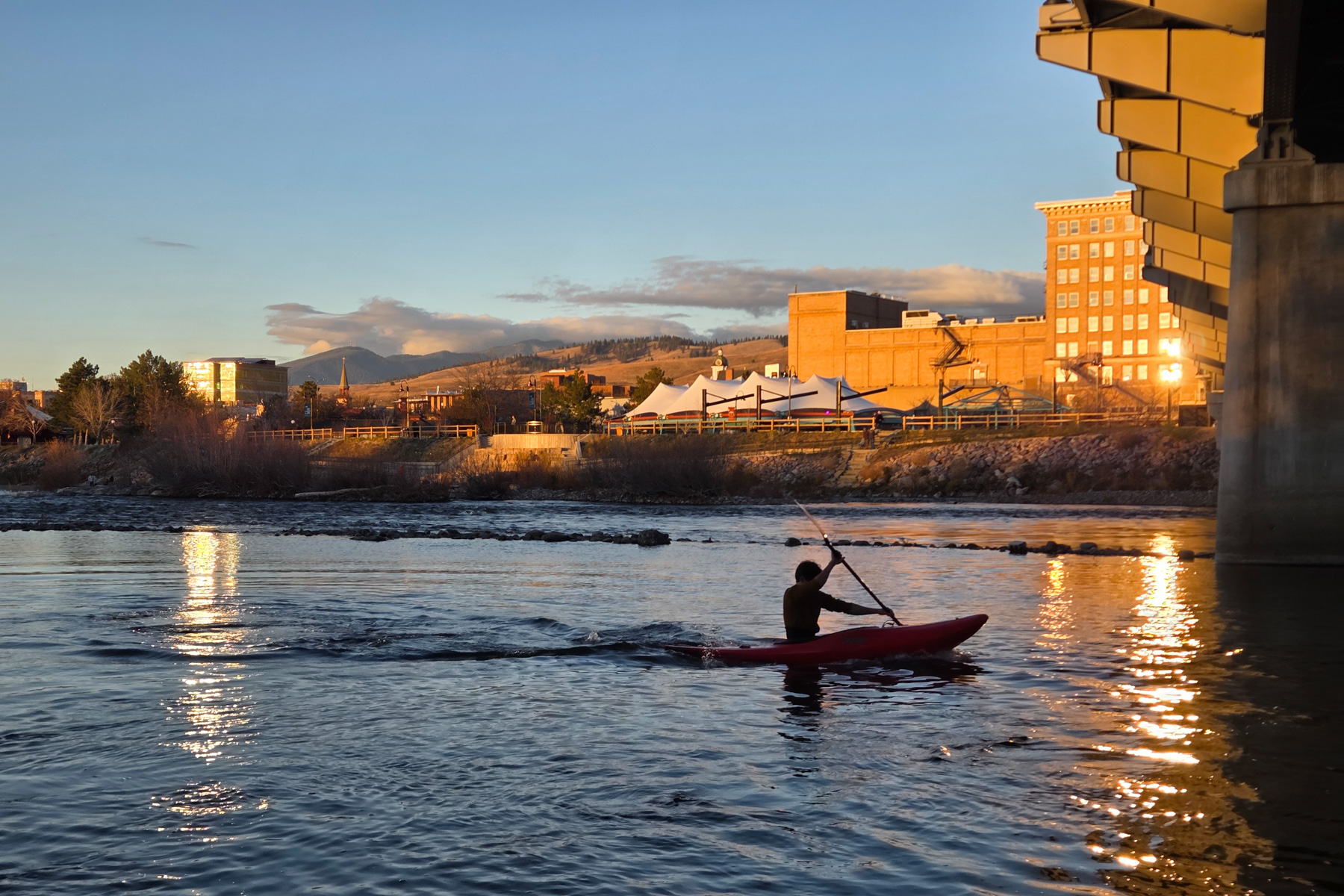
It’s easy to write off uphill kayaking—and its slightly sportier cousin, attaining—because it’s generally less enjoyable than running rapids or floating downstream with the current. Yet this type of training can prepare us for some of the harder parts of kayaking, like mental fortitude and early-season fitness. We can go upstream paddling with friends or (in many cases) alone. It gets us outside when we’d rather stay cozy on the couch. And it doesn’t necessarily have to be miserable.
On our drive, we mused over how upstream paddling might be nice at night, perhaps under a big moon. “It may be best to do our flatwater paddling under cover of darkness,” someone joked. But, actually: it’s best for your friends to know you’re doing it, and to invite them to do it, too. The more people that train over the winter, the more fun we’ll have when the rivers start to run in the spring. And the more connected that people feel to rivers, the more they’ll do to protect and advocate for them.
***
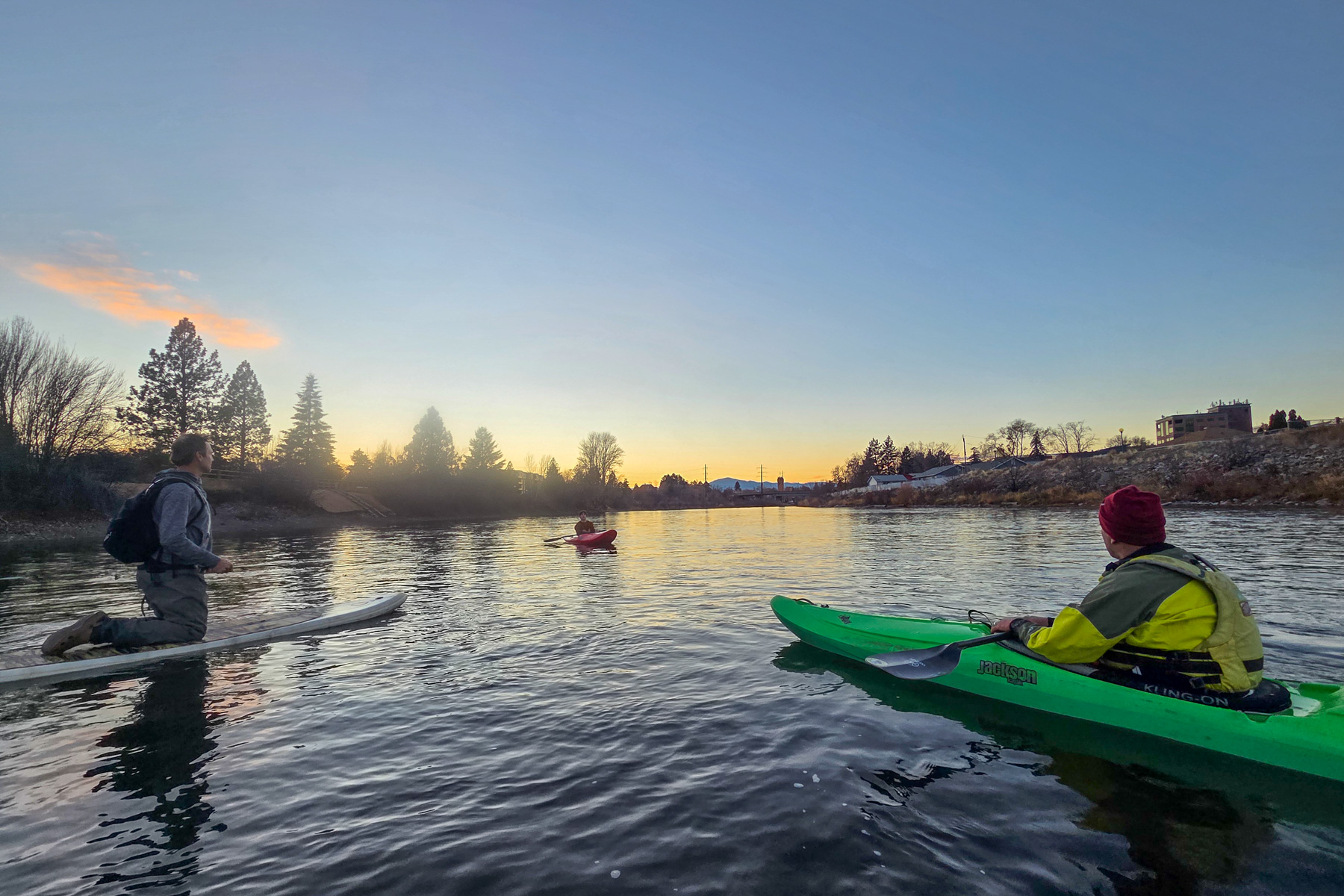
On a chilly November weeknight not long after that conversation, I happened to find three heavy-hitters of the Missoula uphill paddling community about to head out on the water: Jason Shreder (dad), Ben Stookesberry (cat dad), and Jude Franczek (not a dad). I asked them to share their thoughts about and tips for flatwater paddling.
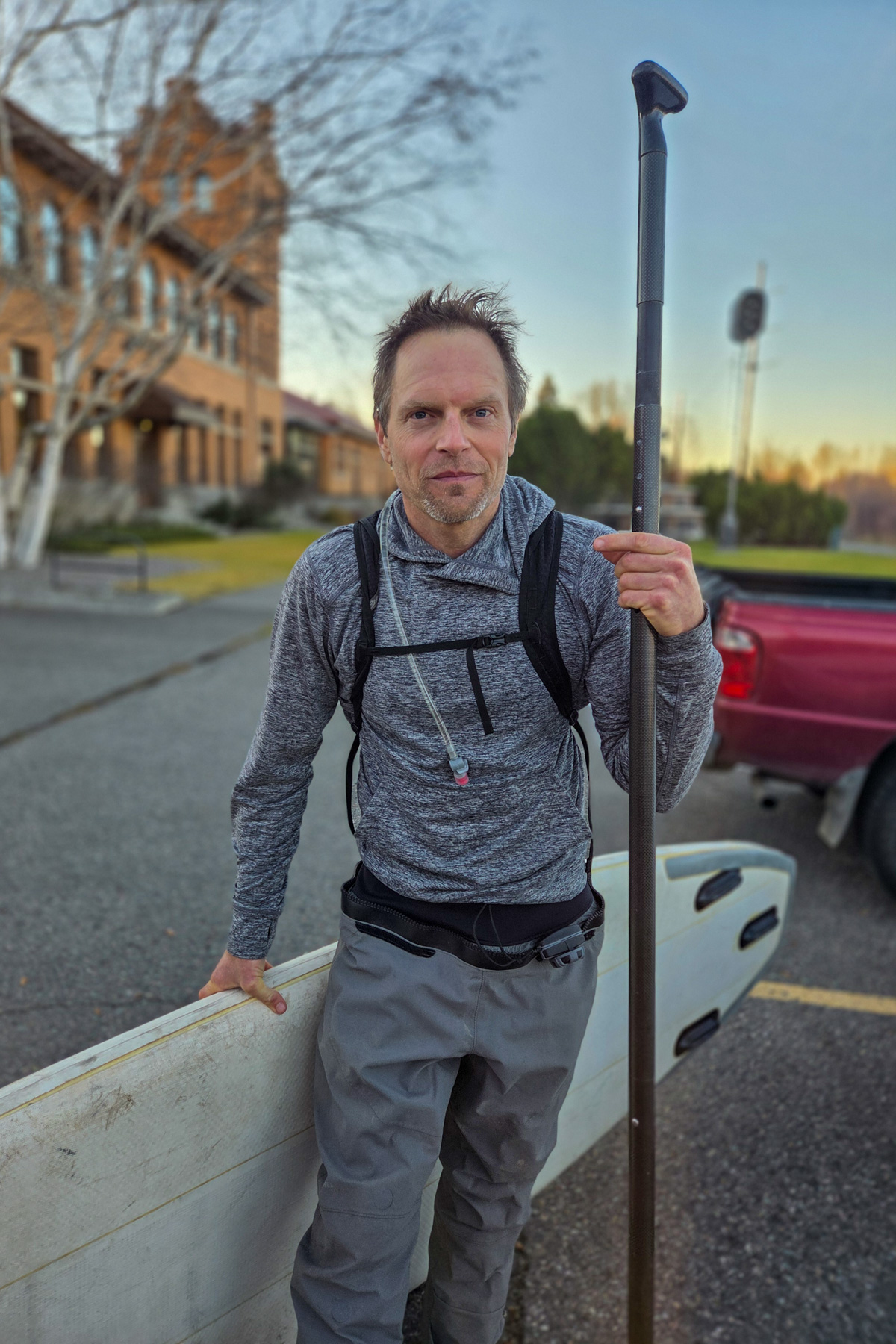
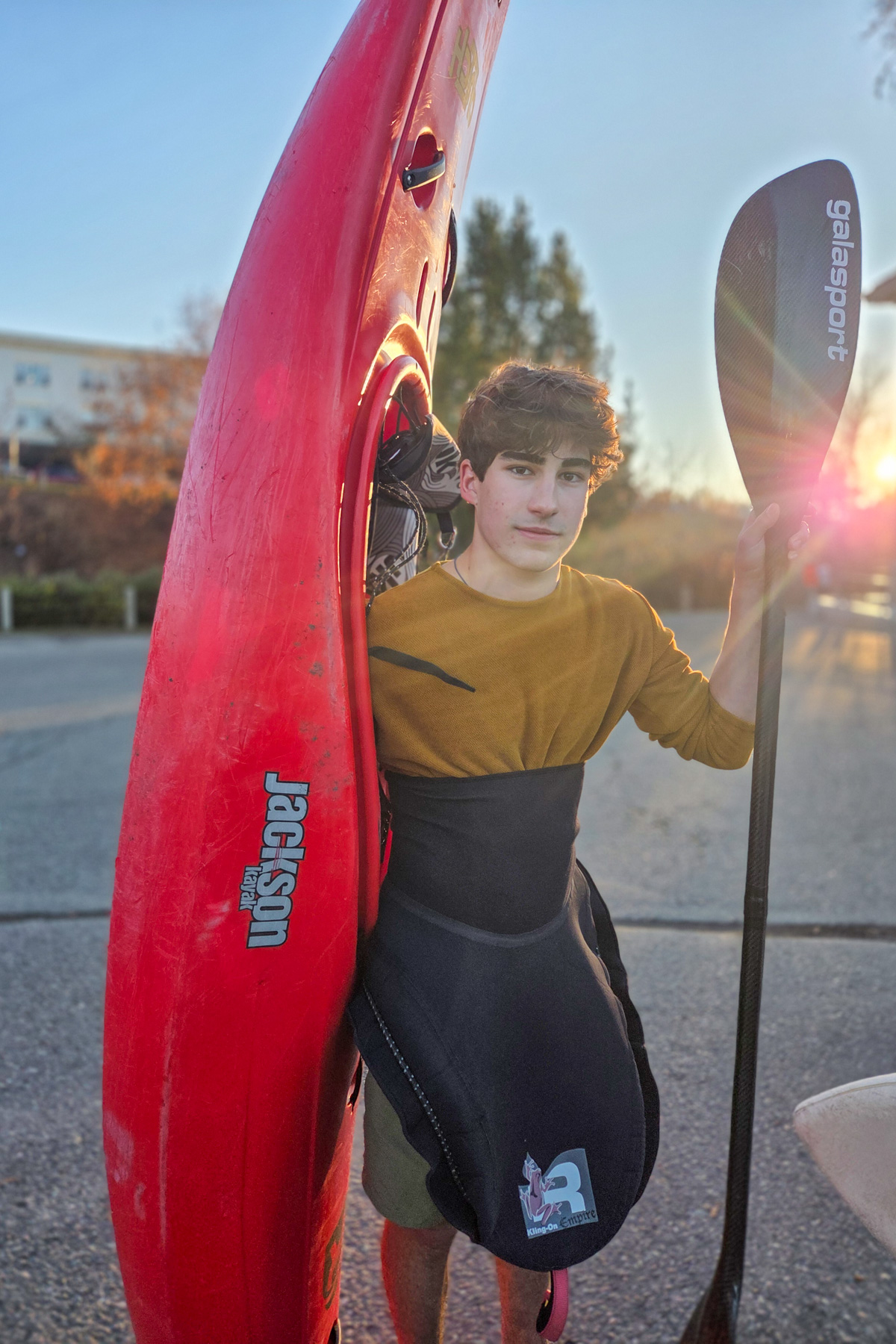
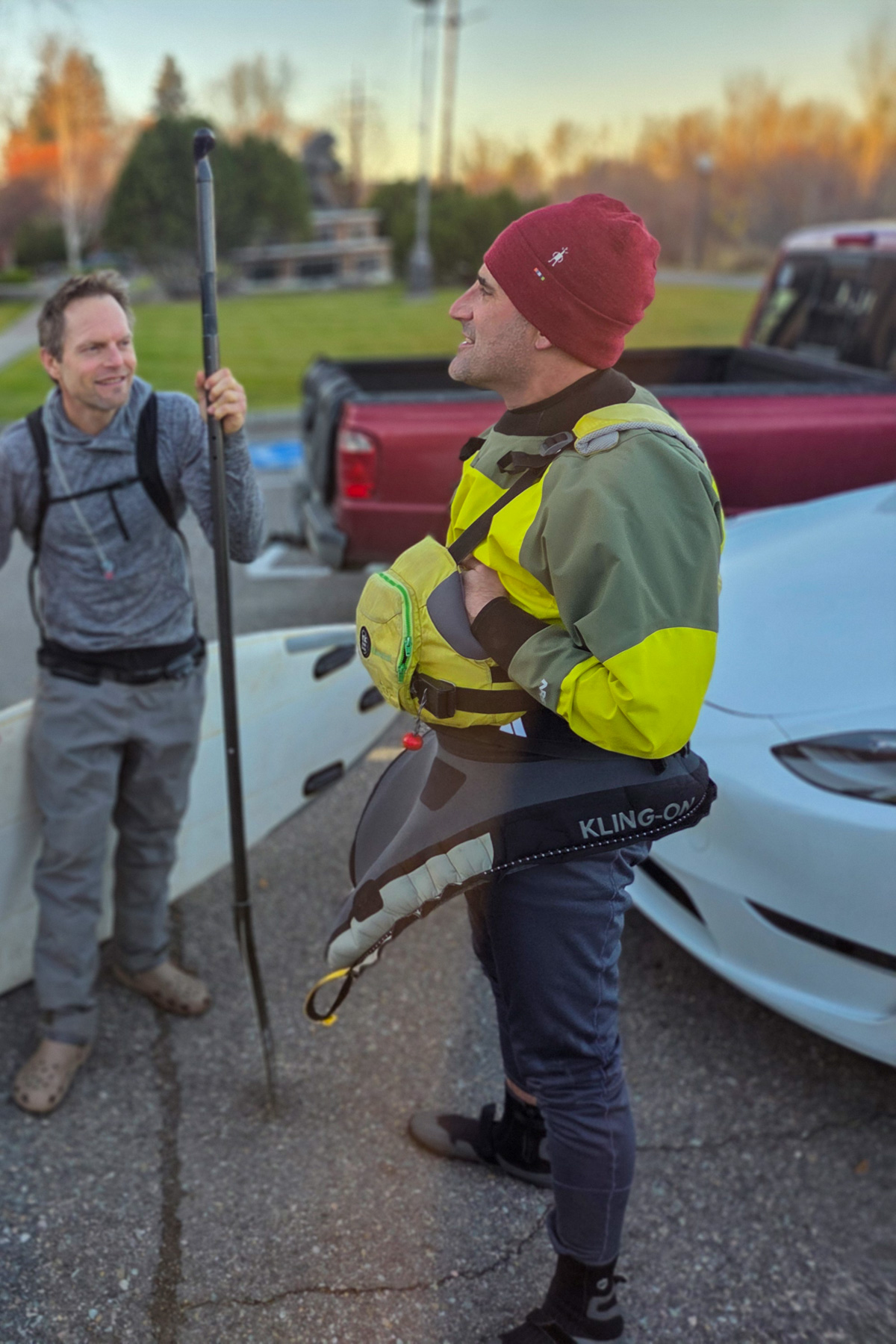
Why do you go flatwater paddling?
Franczek: “It’s not that fun, actually. But it keeps you in paddling shape, so you don’t get huge blisters when you get back in the boat. It keeps the muscles strong, the stabilizers, the tendons, so you don’t get tendonitis in the spring…I’d rather go to the gym. But there’s no better way to train for kayaking than going kayaking.”
Shreder: “I don’t paddle as much as Jude or Ben anymore, so for me it’s about staying in rhythm and still getting in my boat. When springtime comes around, I don’t feel rusty because I’ve been paddling. And like Jude said, it might not be exactly the kind of paddling that I really want to be doing, but I’m just more prepared and feel better in the spring…It helps me maintain a level where I can still kayak and have fun.”
Stookesberry: “Um, I’m not like Jude. I actually can’t stand being in the gym. So [the river] is one of the refuges that we have in this city: you can be right downtown, and once you take a few strokes out on the water, it’s pretty magical. It’s a really good workout, and in the wintertime, there’s nobody out there, so you can get that solitude in the middle of the city.”
Is there anything else you like about it?
Shreder: “For me, I’ve always been drawn to the river and I’m most happy when I’m in the seat of my kayak. While I might not be able to travel and go kayaking all the fun places I used to, the fact that I can go after work, even after dark, and like Ben said, enjoy the solitude. Just gliding across the water helps me center myself and forget about what’s stressing me out for a short period of time.”
Franczek: “I will say, I like flatwater freestyle kayaking a lot more, but it’s a little cold for that in the middle of the winter. I don’t have that much fun just, like, paddling in a straight line, to be completely honest. So, the best thing is when you get done…you’re tired and hot, and then it’s a great place for a cold dip. You just take off your gear—and then you hit a little cold plunge session and your dopamine and endorphins shoot up and you feel good.”
Stookesberry, who was not in a kayak but rather on a SUP: “I really like to stand up on the flatwater, just because it feels like it engages my lower body a little more, and a little bit of the balance aspect. I still get that really good core workout. I feel like it transfers, to some extent. When I take my kayak out I usually end up just doing eddy turns down in Brennan’s [Wave].”
What are some of the other reasons you do this?
Shreder: “When I was starting out in a kayak, I noticed that all my mentors did a lot of flatwater paddling. They practiced. And I personally don’t feel like a lot of kayakers practice. We just get in our boats and go, and I think that the flatwater also gives me the tools to, like, warm up properly. ”
Franczek: “Backstrokes. People don’t do enough backstrokes.”
Shreder: “It forces you to practice. I think what Jude is trying to say in some ways is that practicing isn’t always the most fun, but if you do practice, it makes kayaking more fun. And I’ve noticed that a lot of good kayakers do a lot of flatwater. Just an observation.”
Franczek: “I think the backstroke’s something everybody should do. When I come here I go from bridge to bridge and back up. I paddle downstream backward, then I charge back upstream to the bridge forward. And I do like 10 of those down and back.”
Stookesberry: “There’s something to be said for the wintertime and the conditions. Even paddling flatwater out here, inevitably you’re gonna get wet hands, and you just get prepared for early season paddling.”
You can prepare your tissues for the cold.
Stookesberry: “And your gear.”
Shreder: “Prepare to be uncomfortable.”
Stookesberry: “Or, if you are uncomfortable, maybe purchase another pair of gloves or hat or layer. Be more prepared.”
Franczek: “Cold plunge.”
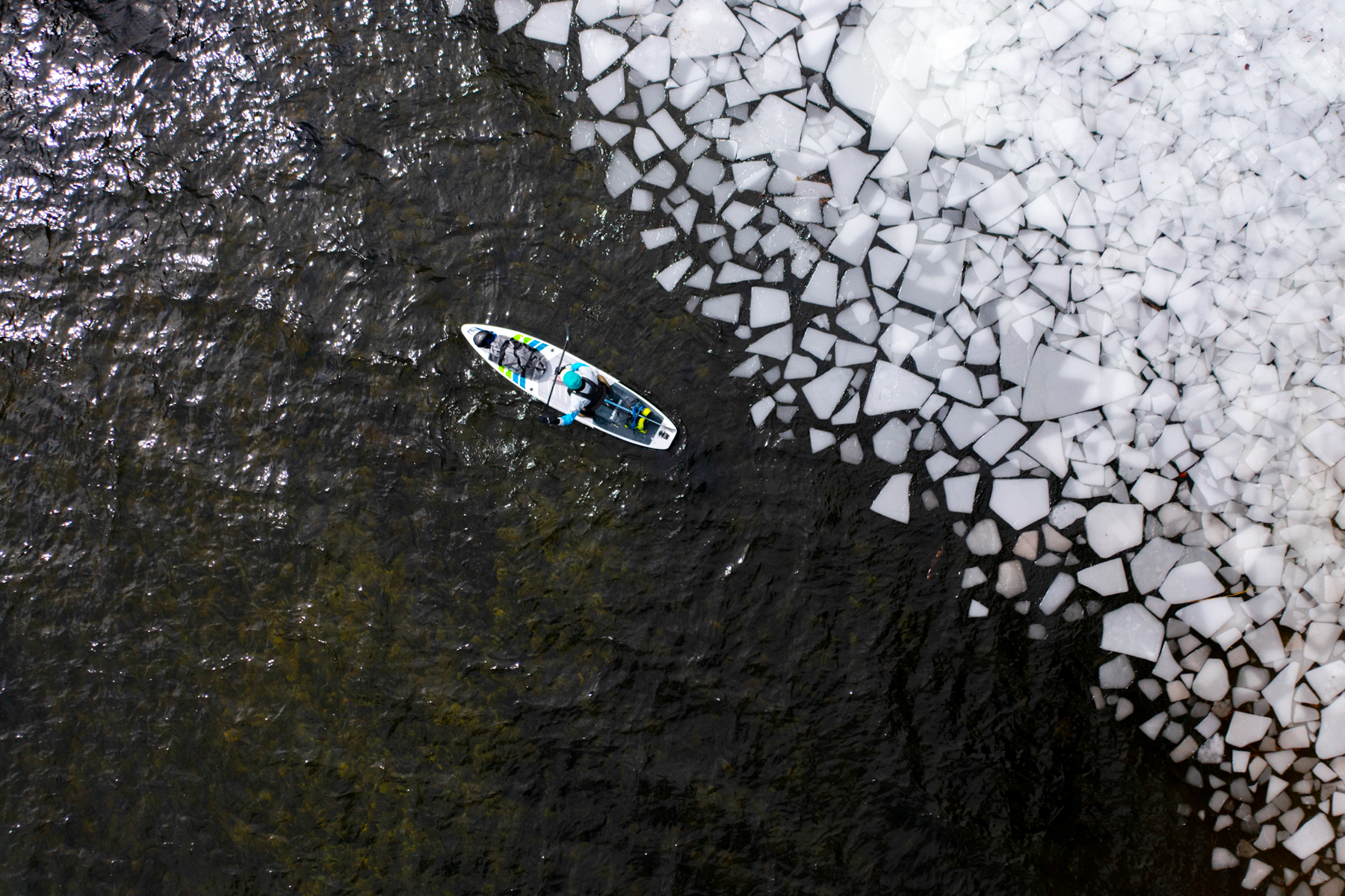
Stookesberry: “That’s the worst thing, showing up at the river for your first time and just suffering out there for a full day because you forgot your gloves, or you don’t have enough layers on. You’re not prepared. [Upstream paddling] certainly helps with that. And then when the ice grows on the river, that’s pretty amazing, pretty spectacular to see how the ice grows. You don’t want to go under the ice—that’s important.”
Franczek: “Here’s one thing that’s my favorite thing. The river between the two bridges is fully iced over at some point, and then it gets warmer and it breaks up, it melts, and then there’s, like, hundreds of icebergs coming down the river, and you can paddle up and use them as gates, and like carve through them, and splat them, and charge at them. It’s sick. It’s like gates that come toward you. And iceberg spins.”
***
So, as a distillation of why we love flatwater or upstream paddling in the “off-season” (if there is such a thing!), here are a few key benefits of the practice:
DISCIPLINE
It’s cold, potentially uncomfortable, and sometimes hard to find friends to go with you. It takes discipline and commitment to maintain your motivation for flatwater paddling. This type of mental training is invaluable, though, and not just for kayaking.
PREPARATION
If you put in your flatwater days, you’ll have more fun, be stronger, paddle safer, and feel more confident when springtime hits.
DIVERSIFICATION
Paddling upstream forces you to relate in new and different ways to your boat’s edges, your balance, and the current. This will pay dividends when it’s time to paddle whitewater again.
SPACIOUSNESS
When you remove the stress, adrenaline, and beloved distraction of whitewater, you’re left with space. Simply put, you’ll enjoy spaciousness for your thoughts, for birdsong, and for the river itself.
And, finally, here are some tips from me (a non-pro kayaker) on how normal (non-pro) kayakers can get out to enjoy flatwater or uphill paddling this winter.
GEAR
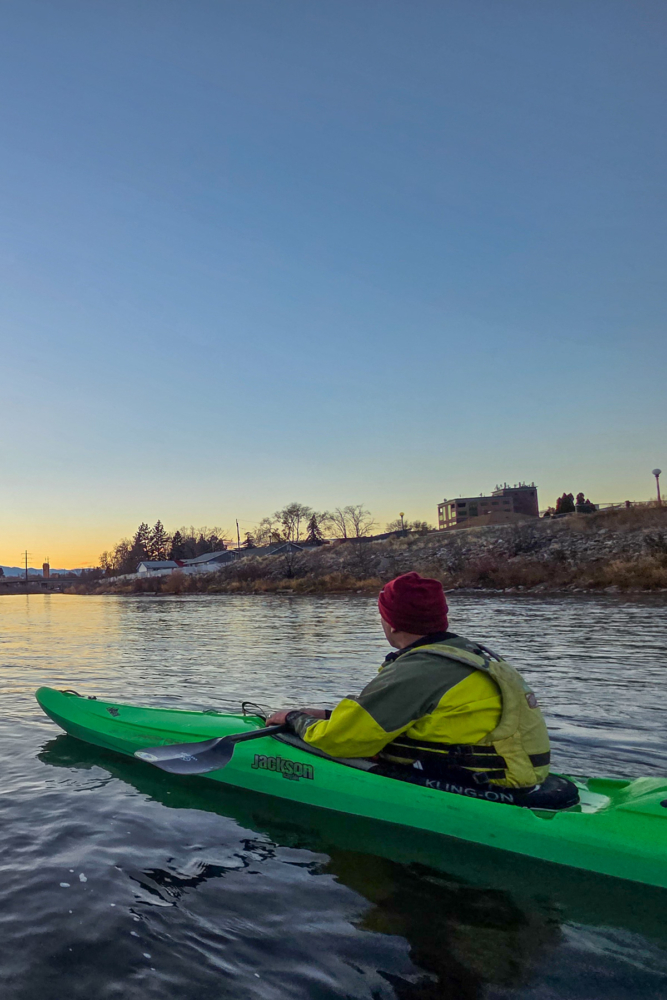
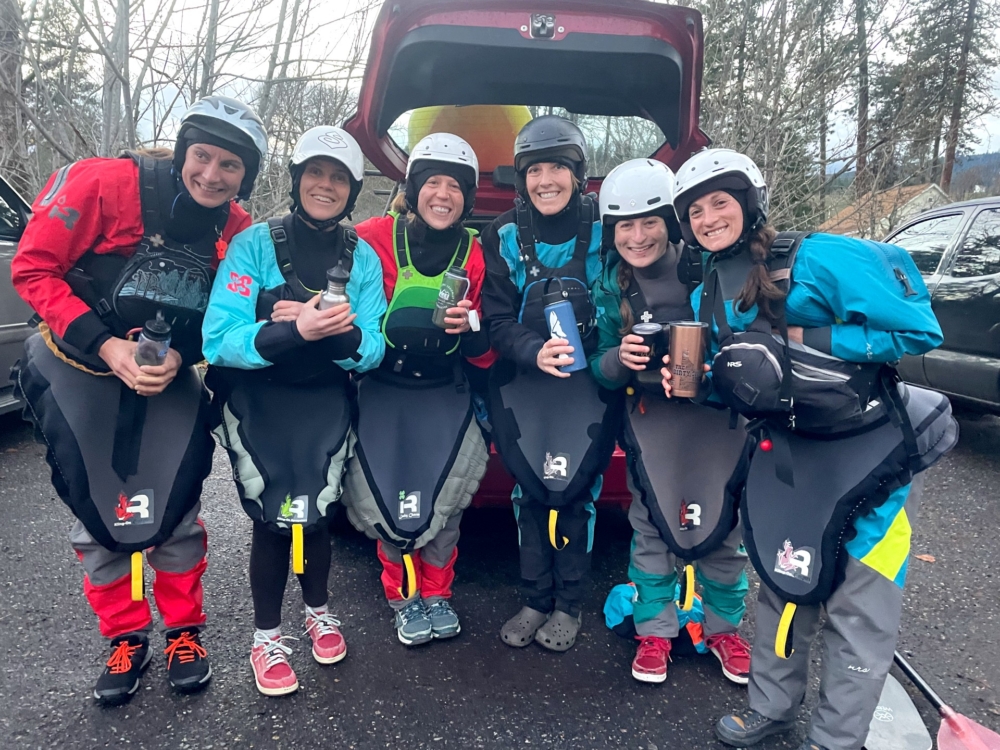
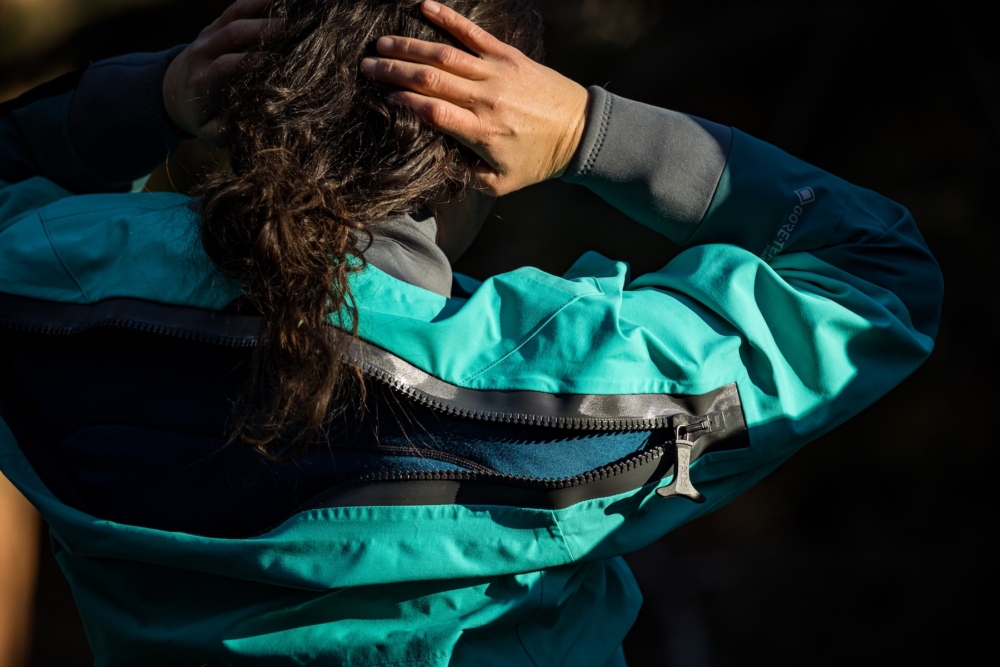
Depending on your geography, you probably want to wear a dry suit or (and assuming you have a solid roll), a dry top with neoprene bottoms. Even though you’ll warm up by paddling, you still need to dress for cold-water immersion: synthetic or wool base layers + insulating layers under your drysuit are essential. I also wear a down vest to keep my core cozy.
Check your gear: The off-season is a great time to make sure your zippers and gaskets are functioning at 100%.
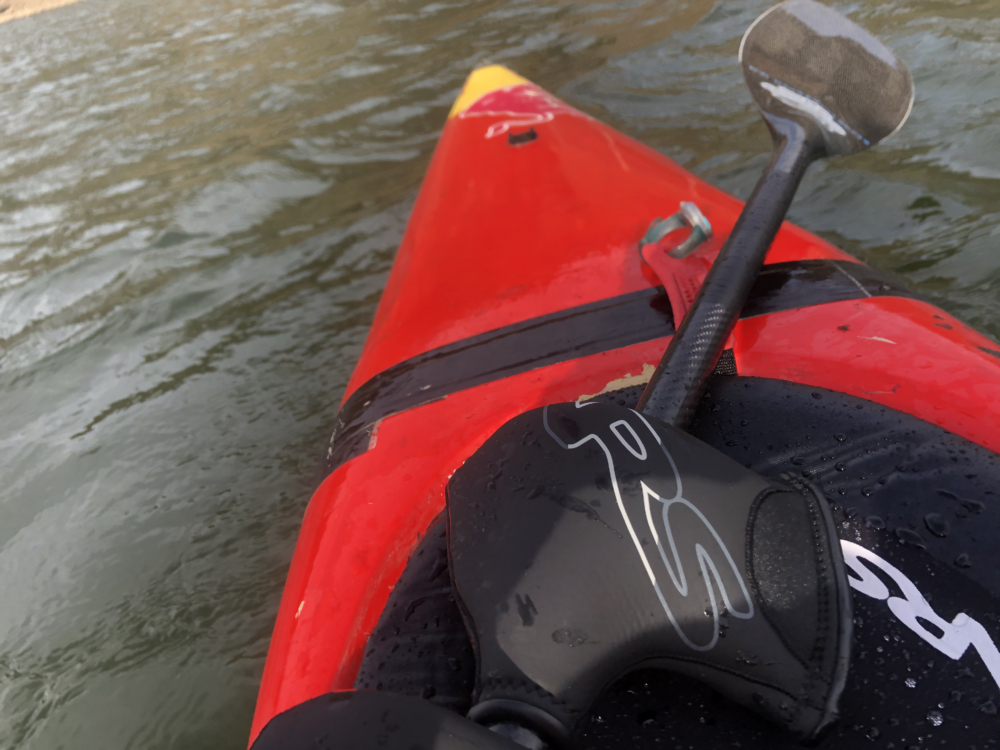
Protect your hands with neoprene mitts or pogies. In places where it’s warmer than Montana, you might get away with neoprene gloves. Personally, Raynaud’s phenomenon means my hands go numb almost instantly in the cold, and I’ve taken to wearing my mittens plus pogies on the coldest of days. (Layering for winter paddling is cumbersome at best, but wearing two layers of neoprene on your hands may not be tolerable. Experiment until you find the right solution for you.)
Wear a neoprene skull cap or surf hood under your helmet.
Don’t forget your feet: wear warm wool socks under and appropriate footwear over your drysuit.
Consider getting fully dressed at home or in your vehicle so that you trap all that good body heat inside your drysuit.
Tighten the screws on your kayak and fix any holes in your spray skirt to prevent a soggy cockpit.

SKILLS
Perfect your roll in warmer water, but be prepared to use it in cold water. When the river is cold, you really want to stay in your boat. If you capsize, you need to be able to trust that your roll will get you upright again.
Flatwater is the perfect venue for building muscle memory for perfect paddle strokes. With very few hard moves to make or waves to smash, you can focus on cultivating textbook form and mechanics.
SAFETY
If you’re headed away from town or into the wilderness, pack a dry bag with emergency provisions. Your checklist might include handwarmers, firestarter, extra layers, a headlamp, a space blanket, and first aid.
Eat more food! Drink more water! You burn more calories and it’s harder to stay hydrated when it’s cold out.
As a sobering counter to Jude’s enthusiasm for iceberg slalom: if the river is actually icy, you should take it very seriously. You’ll have a whole new set of safety concerns on your hands. Don’t go out on an icy river alone, and remind your crew to be extra vigilant. Ice dams, ice bergs, and undercut ice protruding from banks are hazards to be avoided.
Paddling flatwater in winter is different from running whitewater in winter. A lot of your training transfers (i.e. gear preparation, layering, ice awareness, etc.), but whitewater implies that you’ll be spending time upside down, exerting more energy, and engaging with hazards. Extra gear may limit your mobility, and your muscles will fatigue faster in the cold. For more on successful wintertime whitewater adventuring, see this excellent post by Anna Bruno.
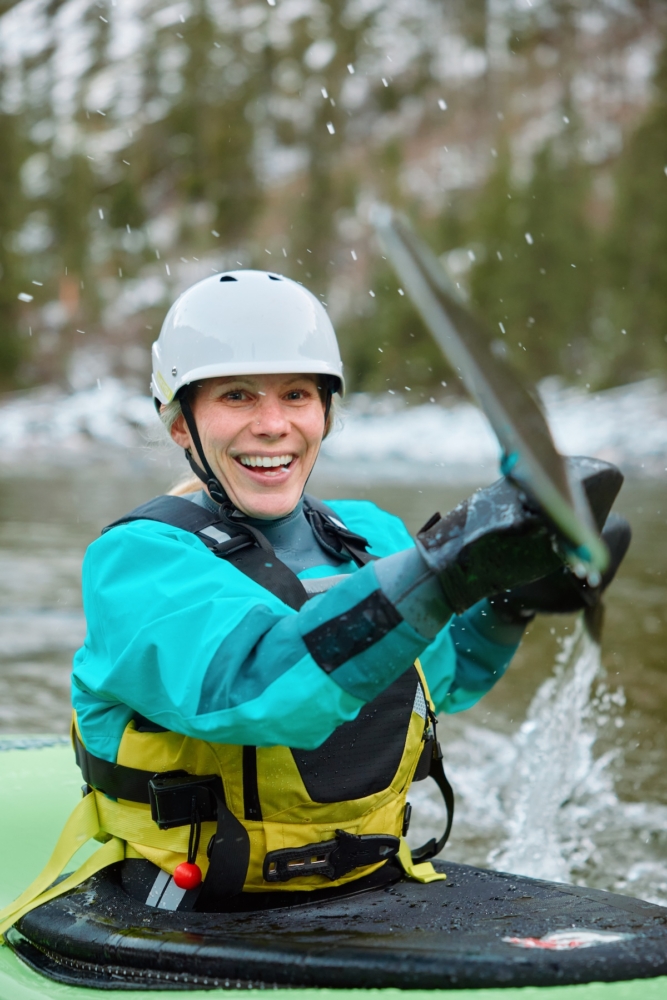
Now, with a thermos of tea, a snack, and maybe even a friend, go find a stretch of flatwater and enjoy the sparkly solace of wintertime rivers!
***
Photography courtesy of Chandra Brown, Anna Bruno, Jake Martinez and Ryan Salm.