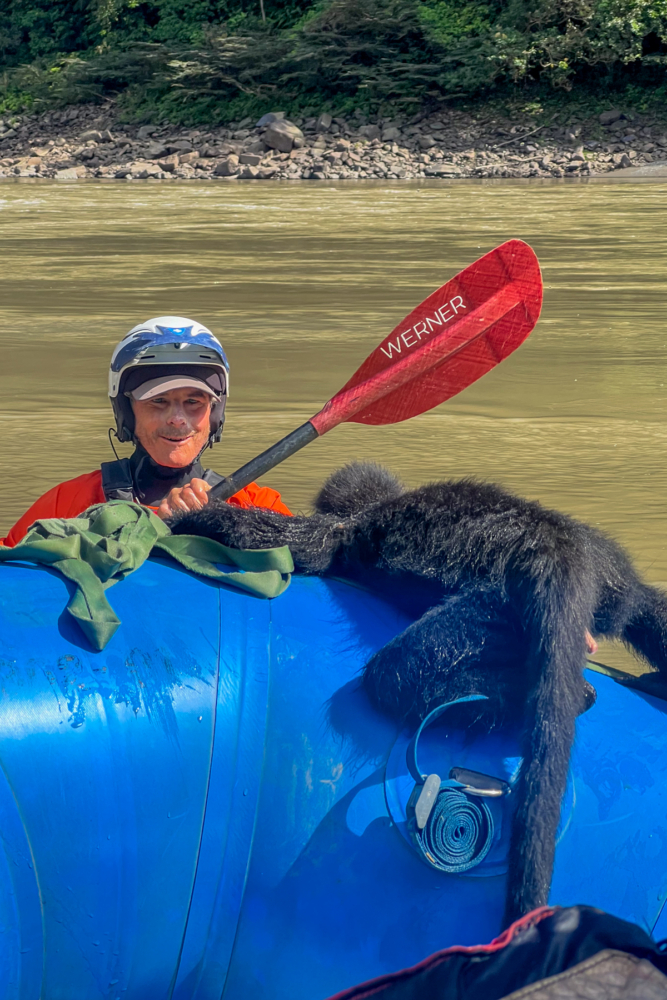
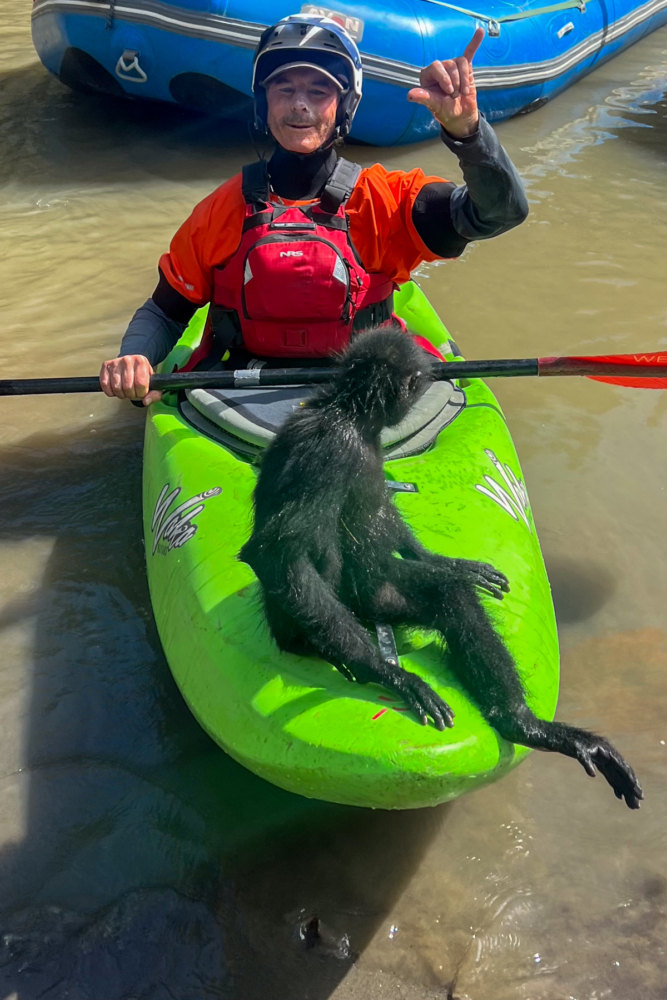
When Maku wraps his tail around my paddle shaft, I know having a monkey on your kayak probably isn’t a great idea. But at least we’re close to shore. We’ve been on the Rio Yavero, one of Peru’s best jungle whitewater runs, for six days now. “Shore” is Carlos’s jungle camp in the Amazon Basin’s heralded Megantoni National Sanctuary, where he motors passengers up and down the famous Pongo de Mainique gorge. Maku is his pet monkey.
We’ll camp here for two nights on a roofed platform. I’m already grateful for its shelter; the night before, a rainstorm forced us out of our camp at daybreak to escape the rising water. Though it may be the same story here: Longtime Peruvian kayaker Leo Gonzales says he’s never seen the Yoyato tributary this high. Flotsam seven feet above shows its crest from the night’s storm. I pulled in next to Carlos’s panga, which is where I made Maku’s acquaintance. Maybe my Waka kayak looked like a giant, green banana.
After Maku hops off, I clamber out to help unload the rafts while Carlos fires up his motor and peels his 32-foot-long panga out of the eddy to retrieve Pepe, the owner of Apumayo Expeditions, whose oar boat missed the eddy. Carlos is well-versed in such maneuvers. His dad bought this land when it was declared a UNESCO World Heritage Site in 1987, after Manu National Park, Peru’s oldest, was created in 1973. A panga captain as well, he drowned when Carlos was a teen, peeling out of the same eddy when the river was even higher. But he made a fatal mistake: he hadn’t started his motor yet. When he pulled the cord, only a sputter as the current swept his boat downstream, capsizing it in the maelstrom. Now Carlos is at the helm, having learned the lesson of Amazon: Always start your motor before you leave the eddy.
At our outdoor dining room, Maku shows us his swing before turning chairs, table, shelving, and even a large coffee grinder into a parkour playground. He’s as happy for the audience as we are for the beers Carlos grabs from his generator-powered refrigerator. Carlos got Maku two years ago from a friend, who found him injured by a native hunter’s arrow. Now, when he’s not hopping on kayaks or coffee grinders, Maku is by his side 24-7.
Carlos shuffles a dinner of chicken and rice onto a mahogany table, whose wood was harvested nearby. Maku scowls; he’s no longer the center of attention. In a nearby shack, a helper huddles beside a scratchy satellite TV, watching a World Cup soccer game. Peru’s not in it this year, so no one cares who wins. But they do about the country’s presidential election; it’s Keiko Fujimori, the niece of former Peruvian president Alberto Fujimori. “It’s who we want,” says Pepe. “But now they will say it’s fraud and will have to recount.”
We’re officially back in civilization.
Getting There
The Yavero, which drains the Andes’ Vilcanota mountain range, begins as the Paucartambo as it descends toward the Amazon. After careening through a maelstrom of tight, Class V-VI gorges it changes to the Yavero. Near Pongo de Mainique, it joins the Alto Urubamba, before flowing to the Atlantic thousands of miles away.
We’re here in June 2026, 40 years after seven American kayakers — including Beth Rypins, Bob McDougall, Nancy Wiley, Lars Holbek, Eric Magneson, Phil DeRiemer, and whitewater pioneer/filmmaker John Armstrong — claimed the upper section’s first descent in 1986. Their 17-day self-support took them 250 miles and 11,500 feet in elevation, resulting in the award-winning film, Paucartambo: The Rest of the River, which Armstrong recently digitized and toured with across the U.S. I’d wanted to see the river since I’d first heard about the film.
Admittedly, our trip on the lower section was nowhere near that epic. But it’s still remote; Leo estimates it’s only been run commercially about 10 times. And this is only the second time Apumayo has run it. The only other private paddlers to run it have been those with the cajones to tackle its upper section.
Pepe, 61, picked me up in Cusco. Together, we drove two hours to his home in the Sacred Valley, just above a Class V-VI gauntlet on the Urubamba that protects the Incan fortress of Machu Picchu. In the morning, we packed 13 people and all our gear into two minivans, more heavily loaded than any llama on the nearby Inca Trail. Then we headed northeast through Calca and over a 14,400-foot pass, our driver honking at every blind corner.
“This trip has all the components of a great expedition,” Pepe said, after we stopped for a quick hot spring soak. “It’s super remote, at the far edge of the Andes before the Amazon, and its rapids are perfect for commercial trips. And you get the spectacular waterfalls of the gorge at the end.”
While his bread-and-butter is Machu Picchu treks and day trips on the Urubamba, Pepe lives for this kind of exploration. Regaling us with tales of the lost Incan City of Gold, or “Patiti,” nearby, we descended umpteen more switchbacks before reaching Quebrada Honda, meaning “Big Canyon,” at about 3,300 feet, our quarters for the evening. In the town plaza, surrounded by coca bushes, a makeshift map showed a thread of the Paucartambo flowing northwest. We were now officially on a map.
Exhausted, we wolfed down heaping cuts of carne asada at our hostel before a 5 a.m. start began the remaining six-hour push to our put-in. Cresting the final cordillera, we finally saw it: an emerald thread far below. Our van picked up speed, seemingly anxious to reach our long-awaited goal. Or maybe it was just our lack of brakes.
At the River
“Don’t worry, this boat knows the lines.”
The encouragement came from Leo, who loaned me his Waka OG for the trip. He’s been down the upper Paucartambo six times, including leading the first Peruvian descent. “That one didn’t turn out so well,” he said later, recounting epic portages, running out of food, and a high water hike out.
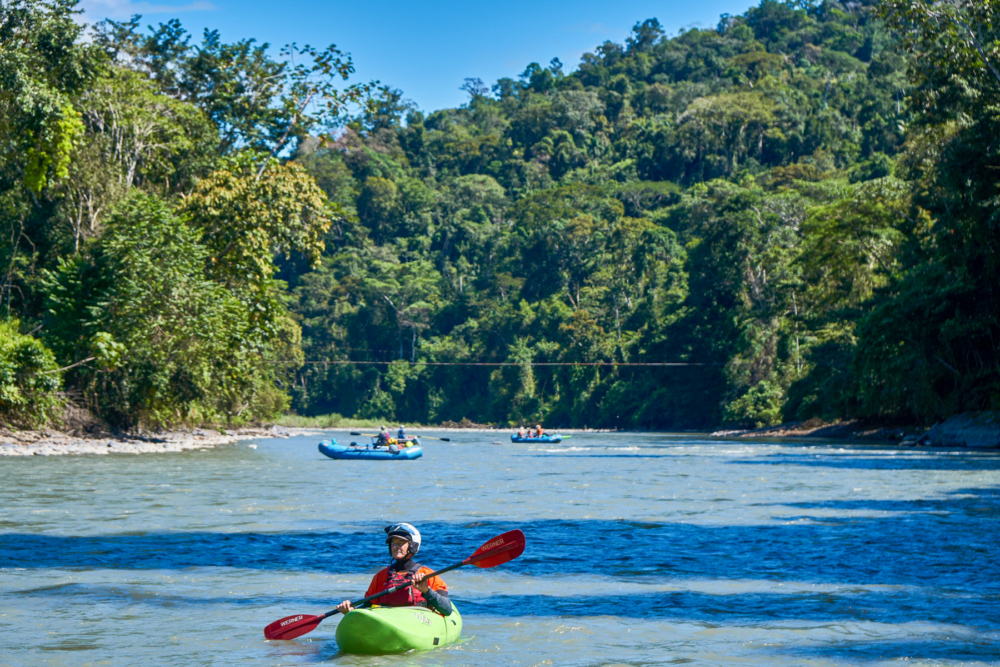
Joining me kayaking were Alan and local legend Chawa Siabanel, who lives on the Apurimac. The rest of our party — Peruvian clients Manuela and Rosario, and filmmakers Veronika and Hanna— piled into rafts with guides Luchin, Pepe, and Leo, while US clients Sheryl, Alan, and Mike rowed their own. Our start was just below the upper section’s last Class V. Earth River Expeditions, said Leo, ran about eight commercial trips putting in just above it, back when that was the only access to the lower river. But it meant a long, arduous portage right after you rigged. I eyed the new bridge in San Martin with renewed appreciation.
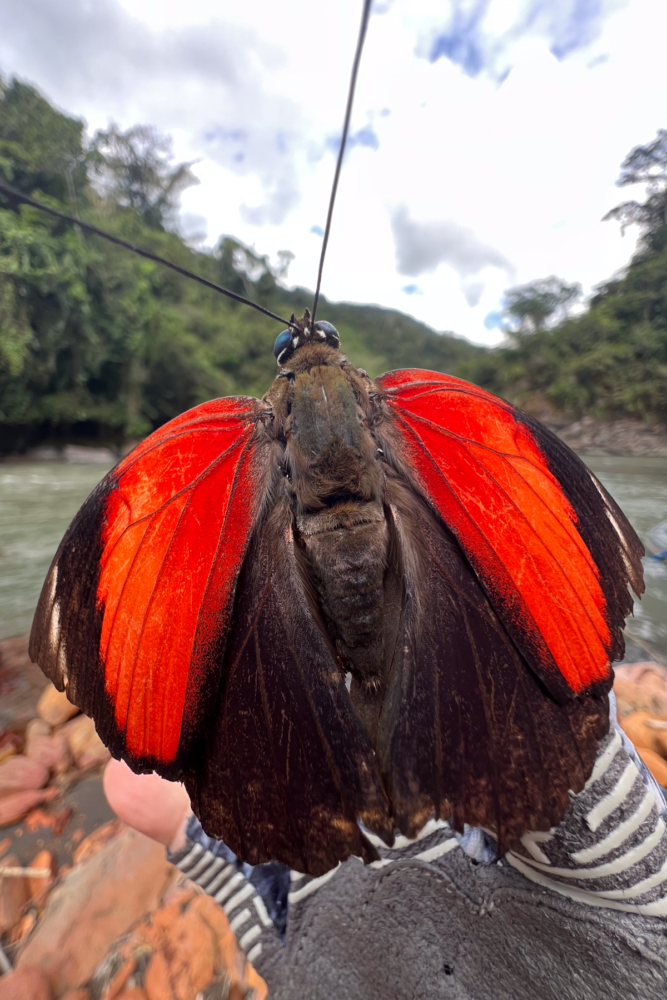
The river’s mystique — and might — surfaced quickly, with Pepe breaking a wooden oar in half in the first rapid. Everything is fragile here, but also alive, from the frog eggs wisping through the water in protective, spiraling, DNA-like ribbons to alienesque tree roots tentacled around the bedrock. A swarm of orange and yellow butterflies fluttered in a frenzy around my helmet. There are no invasive species here, it seems, besides humans. Everything would just get devoured by the jungle.
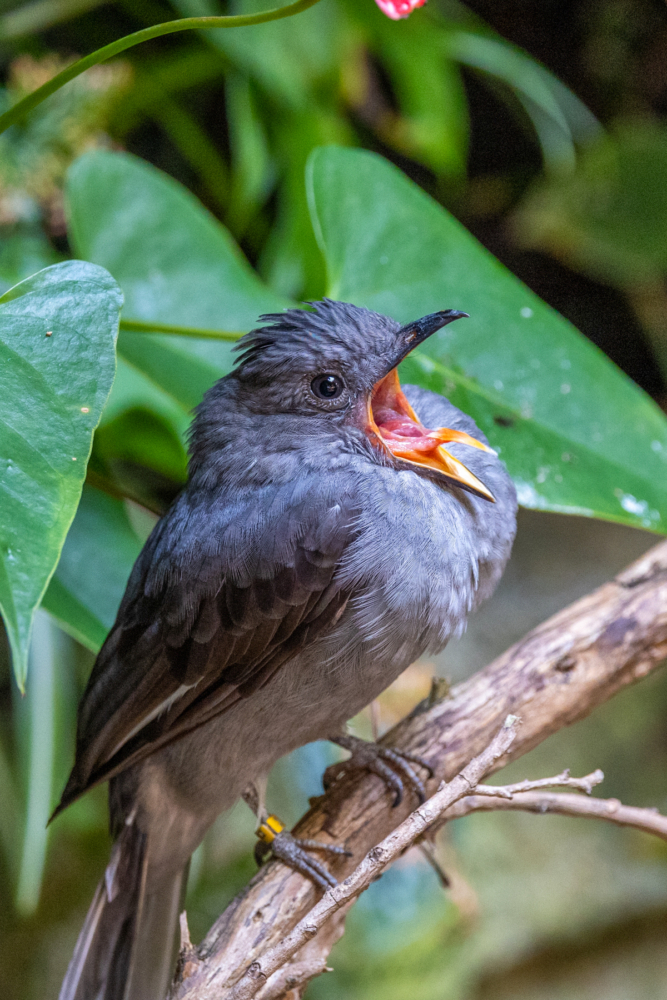
While Pepe grabbed his spare, we marveled at the “Huba, Huba!” whistle of the screaming Piha, a high rising pitch followed by a quick descending tone. Leo, who also works with Cornell University identifying birds here, imitated it perfectly. “I’ve seen some movies that take place in Africa, and you can hear them, but it’s fake,” he said. “They’re only found here in the Amazon.” Indeed, the Yavero harbors more than 400 bird species, many endemic to here alone.
Not all the sounds were as welcome. A large bee buzzed me through the next rapid, enamored by my orange NRS paddling jacket, red PFD, and white, stamin-like helmet. At camp, giant tapir tracks led to the water. Odd-toed ungulates more related to horses and rhinoceroses than pigs, they’re large, herbivorous mammals described as “good swimmers” and “living fossils,” dating back 20 million years and living up to 30 years. Though known to be shy, docile creatures, I decided not to jump in to cool off.
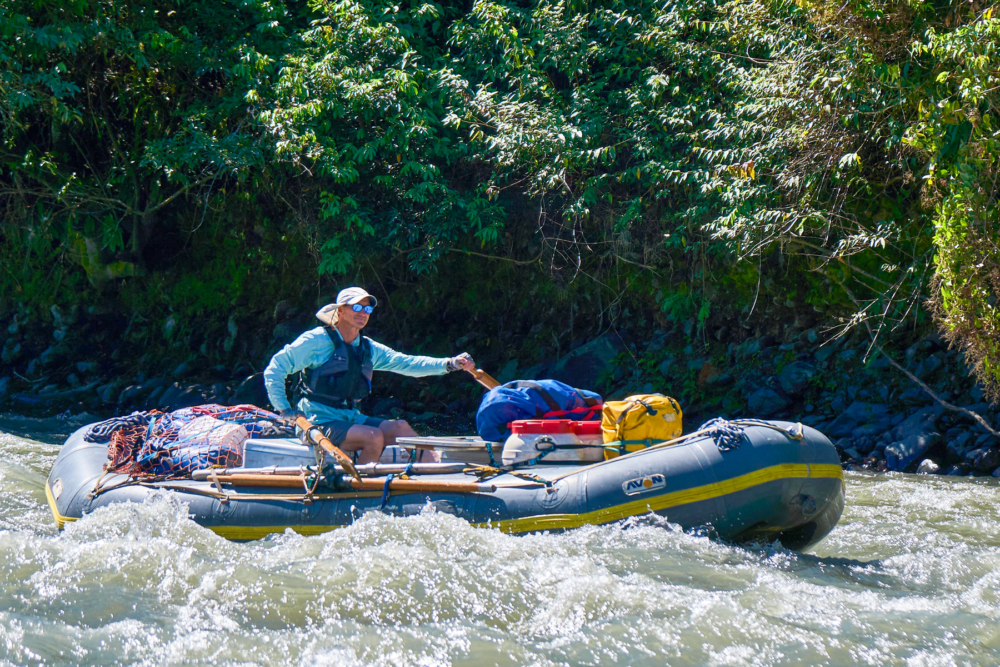
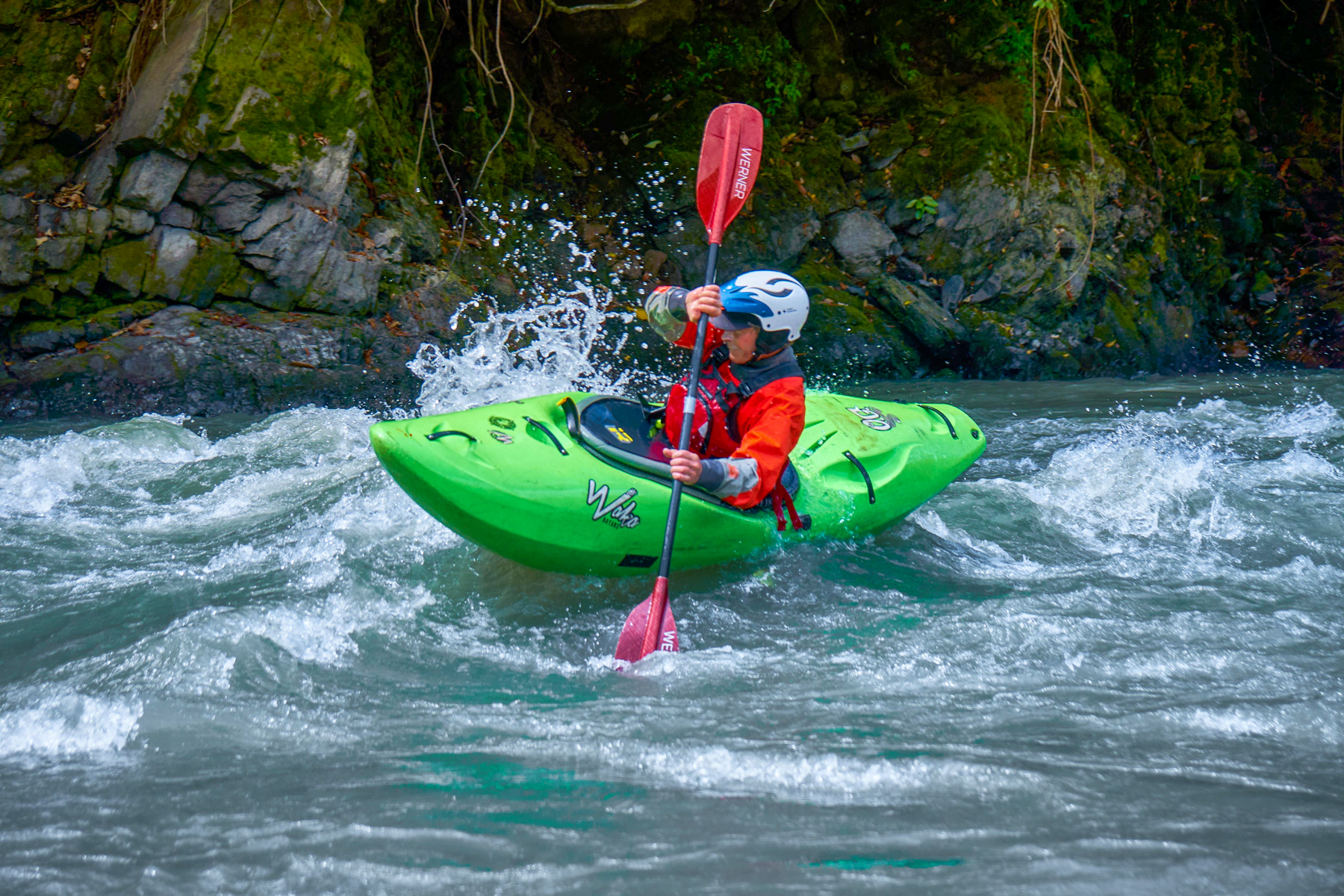
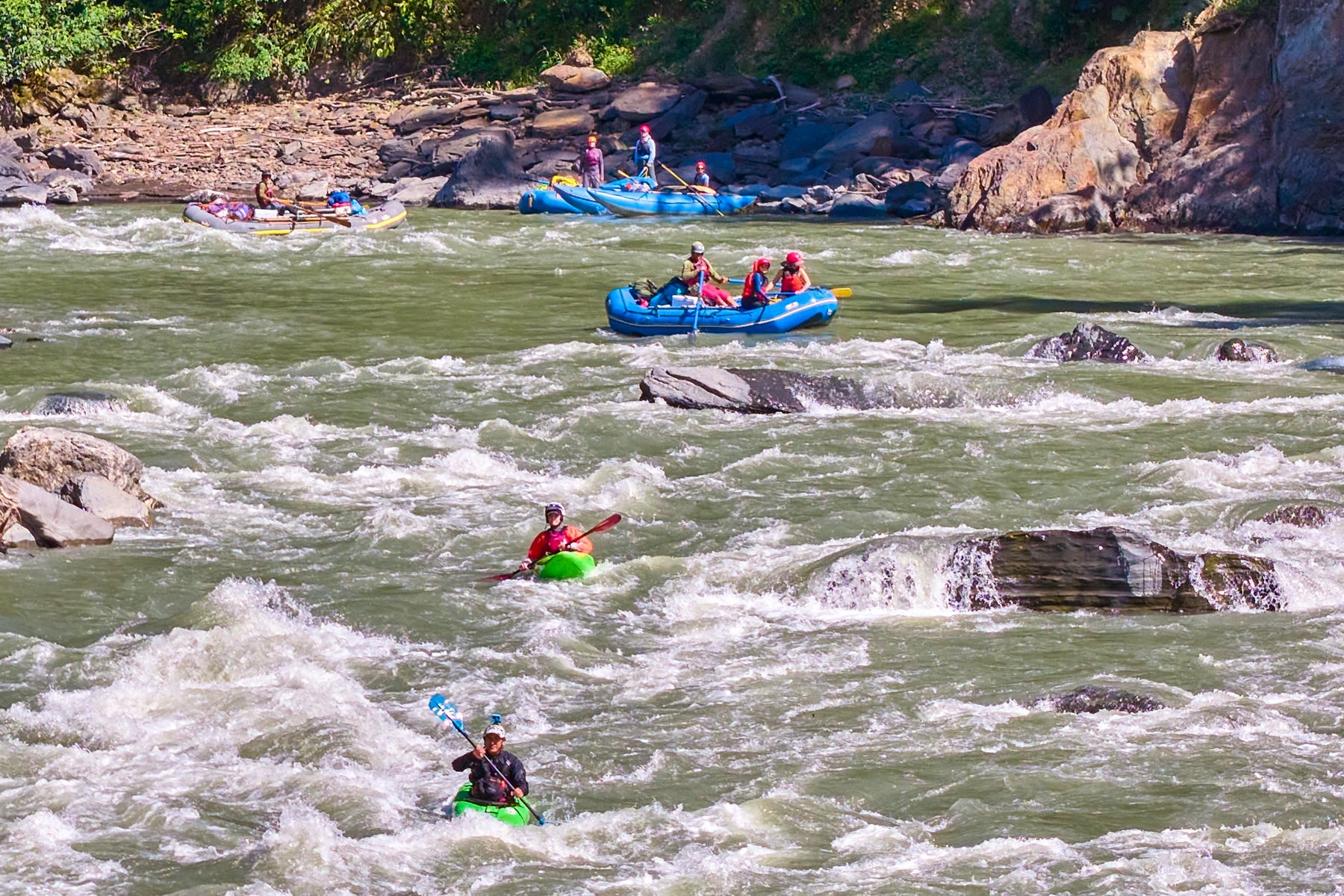
The section harbors as much whitewater as it does wildlife. My friend Kurt, who founded peruwhitewater.com, said it has the “longest Class III rapid in the world.” Indeed, we soon found ourselves on a seemingly endless 10-mile-long wave train, interspersed with a few Class IVs that kept the rowers on their toes. In one hole I took the longest creek boat ride I’ve had in a while.
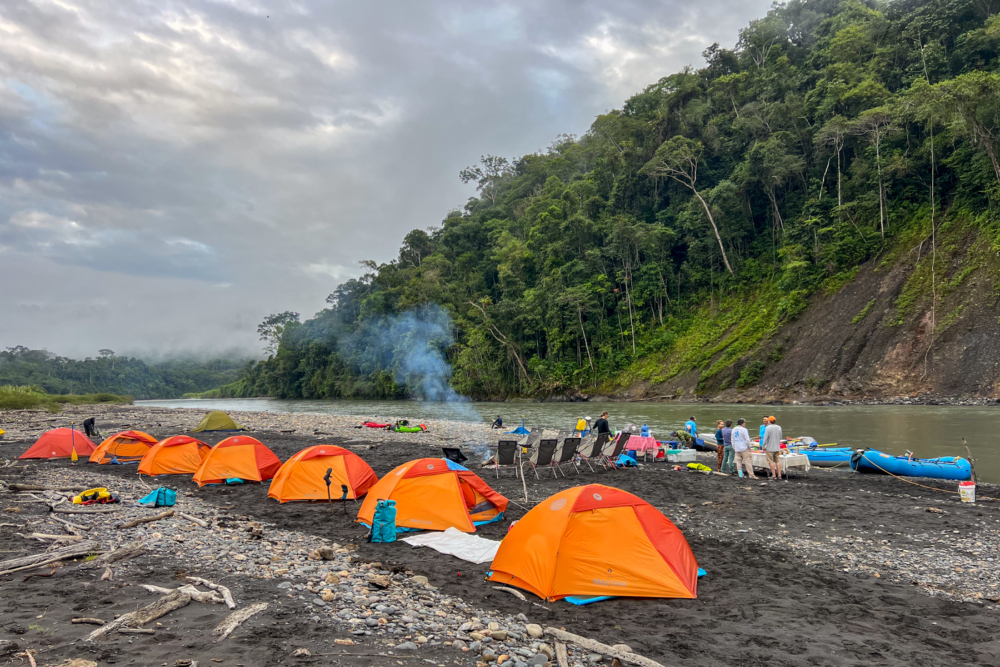
Giant igneous oozes pockmarked the river as we worked our way downstream. One, sticking six feet out, was big enough for us to swim to, complete with a sand-filled cul-de-sac in the middle serving as a happy hour beach. We used our lone paddleboard to ferry over guacamole, chips, and beer.
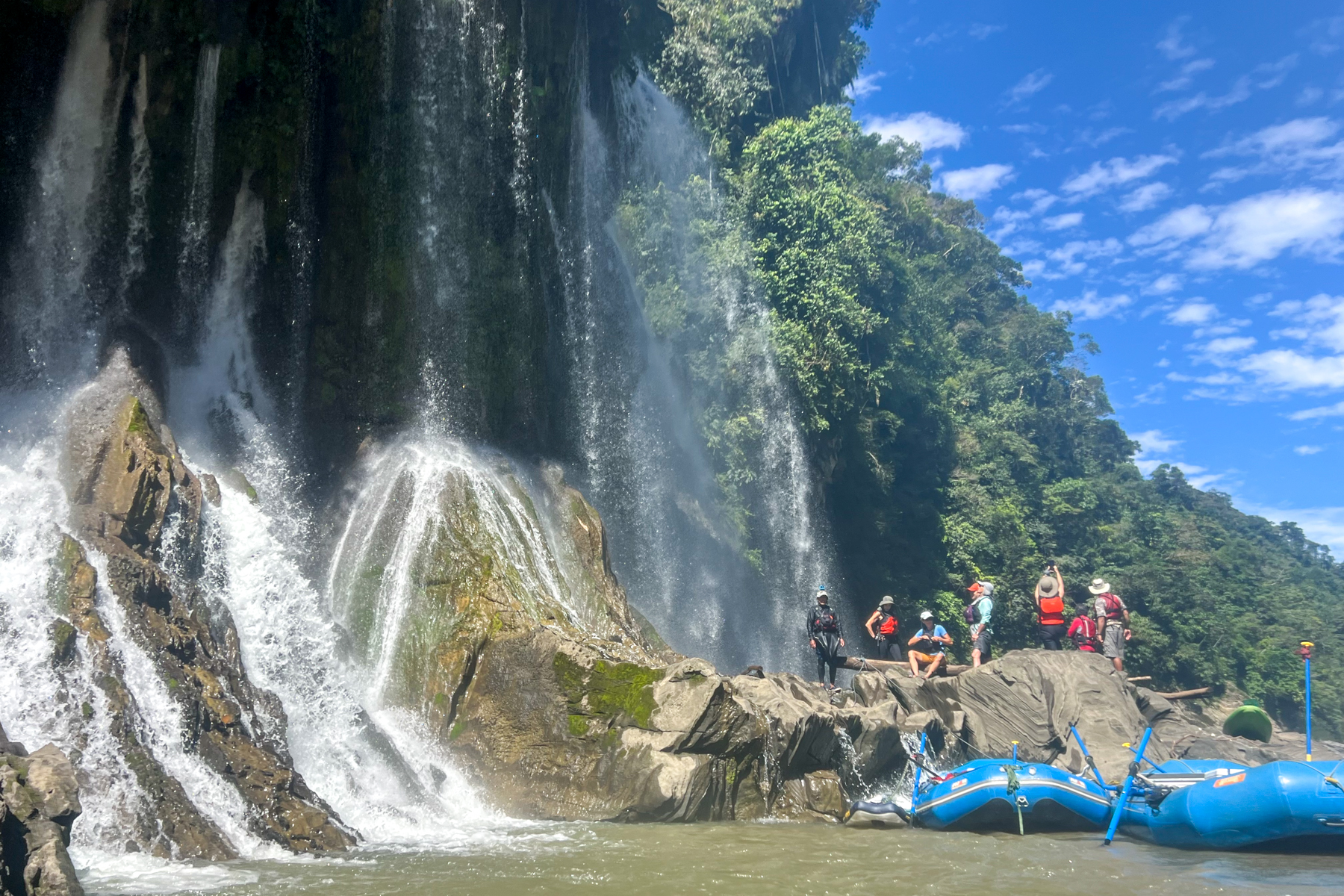
At a side creek, we hiked up a ravine to a towering, Tarzan-like waterfall. Leo discovered it during his first run down the upper. We took turns swimming behind its pounding veil. By day four, another veil had started to appear: that of civilization. Pangas rested on jungle-bordered beaches, outboards affixed to long shafts to navigate the shallows, as well as homemade SUPs, logs tied together with long canoe paddles lying about.
Have You Ever Seen the Rain?
The rain came on night four. And ants. Urubamba means “Ant Place,” as Olie experienced firsthand. Retiring to our tents, he had set his atop an errant anthill and didn’t zip it all the way. A battalion had found their way inside. Wilderness wingman that I am, I helped him shake it and move it, only to find they’d also eaten holes through his tent’s sidewall. Better him than me. The rain was a bigger worry.
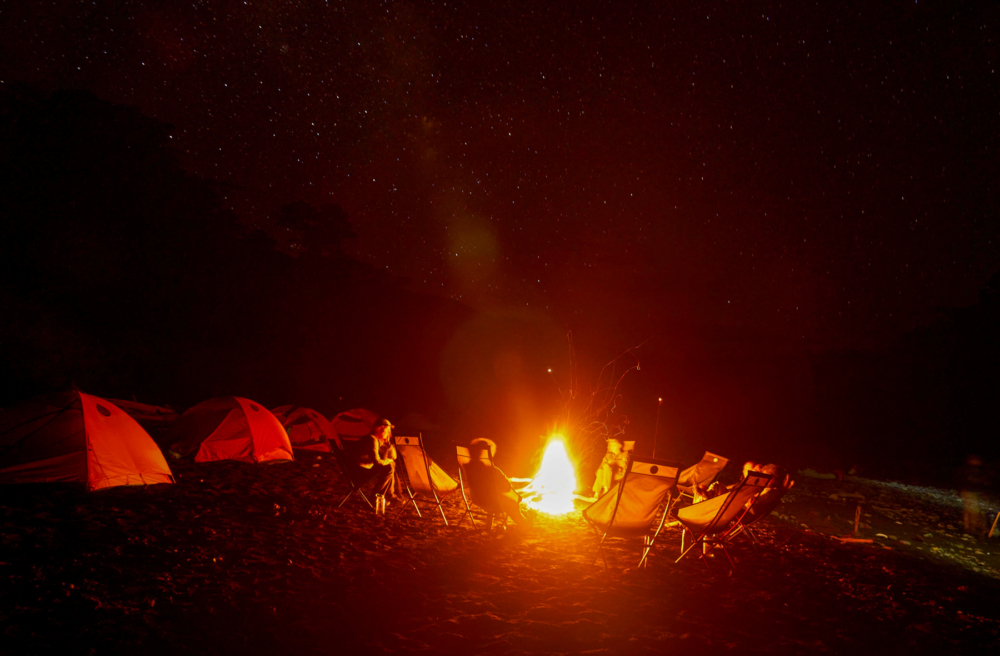
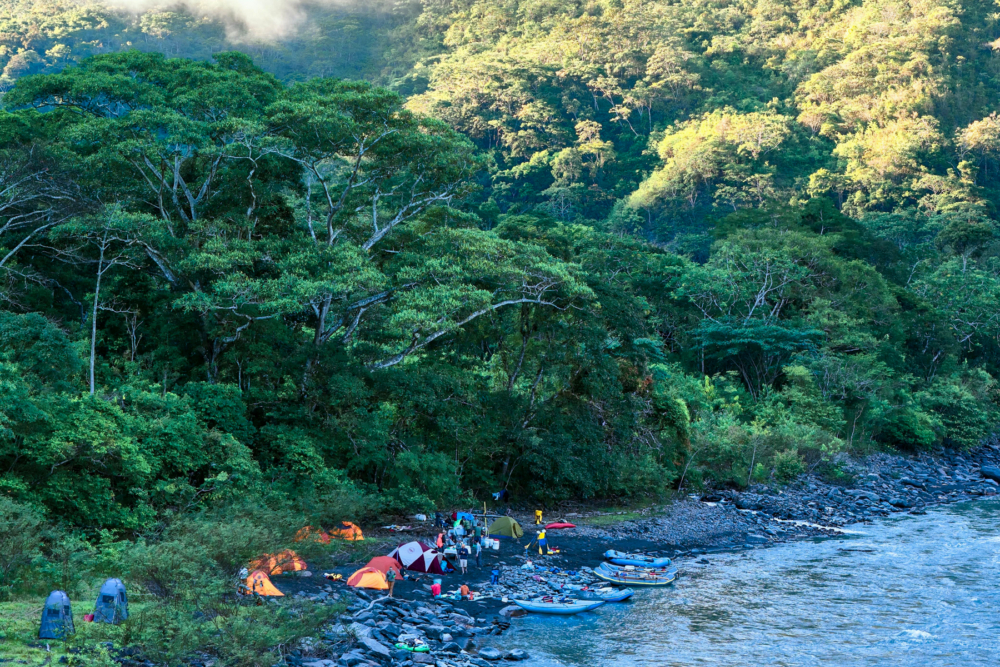
“Move the tents,” came the cry at 3 a.m. The river had risen nearly five feet overnight, completely covering our little happy hour rock and devouring our beach. We hurriedly crammed everything into drybags and shuffled farther up against the jungle wall.
“Probably not worth setting them back up,” said Leo. Instead, we loaded the boats and waited for daylight on a tiny sliver of cobble, making the best of the saturated situation. Soon, only a thin strand of beach remained. Behind us, an impenetrable jungle wall. Leo had ventured into it earlier and got bit by a bullet ant, swelling his foot to the size of a mango. It was only the third time he’d ever been bitten.
The rainstorm was likely due to the “Friaje” winds, which come north from Patagonia to the Peruvian Andes. “That, and the Super El Niño,” said Pepe. The first time I met Pepe was on Peru’s Tambopata River in 1989 when a similar deluge swelled the river 13 vertical feet, forcing us to bivy in the jungle an extra three days. Now we were hunkered down in the Peruvian rainforest yet again.
We put back on at about 6:30 a.m., everyone and everything drenched. By now, the river had nearly tripled in size to about 10,000 cfs. We were in the mellower section, but still facing roiling seams and whirlpools — especially when we joined the Urubamba, whose dark current doubled the river again. At one point, I found myself paddling uphill against a boil. Another time, a whirlpool opened that could have swallowed our swimming tapir. Soon, we saw Luchin with a rope on the right, marking our camp at the Rio Yoyato. With him was Carlos, along with pesky Maku.
Paddling the Pongo de Mainique and Megantoni National Sanctuary
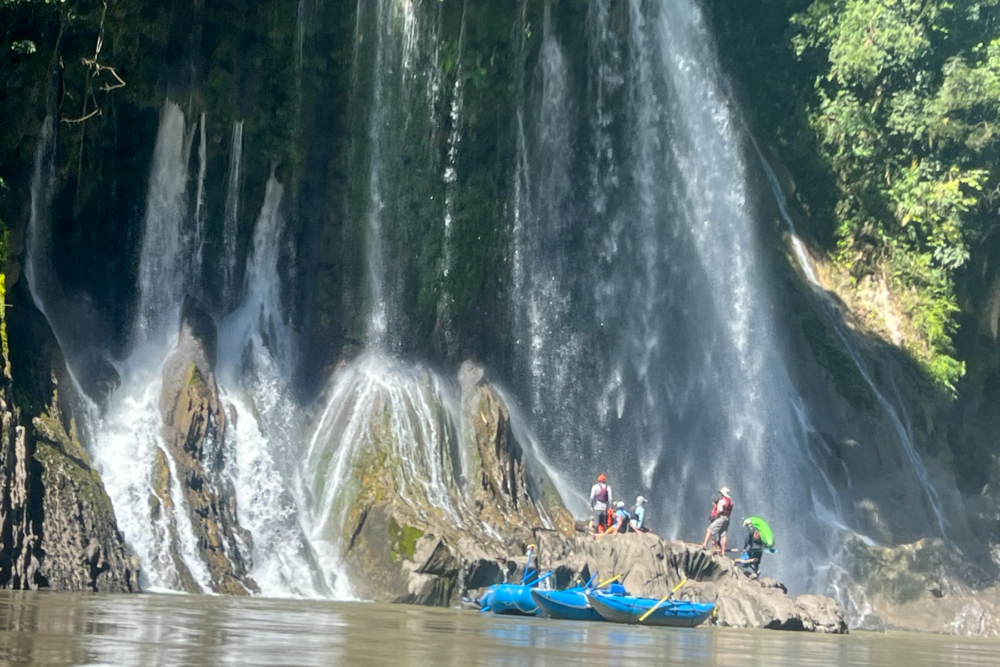
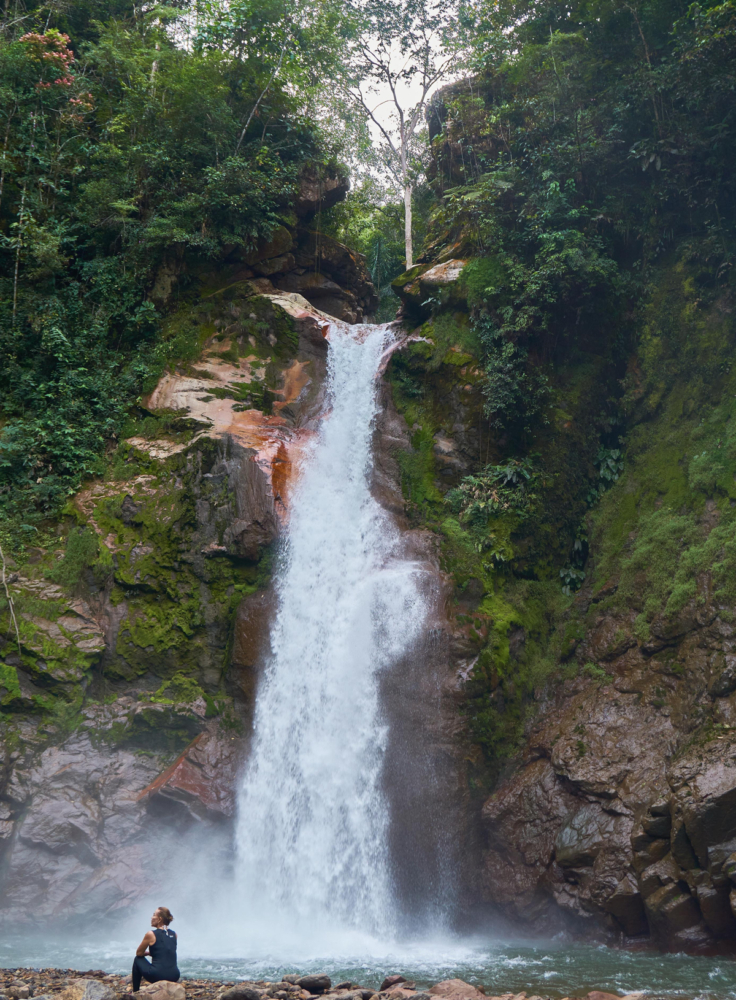
In the morning, we float through the Pongo de Mainique, a sacred site for the Machiguenga people. The gorge funnels the Urubamba through a fissure riddled with more waterfalls than we’ve ever seen. They cascade in from everywhere, straight out of the jungle to the left, right, and cliffs straight ahead. Many harbor coves behind their veils, which we paddle through in showers of spray casting rainbows over our boats, bordered by blooming orchids and ferns.
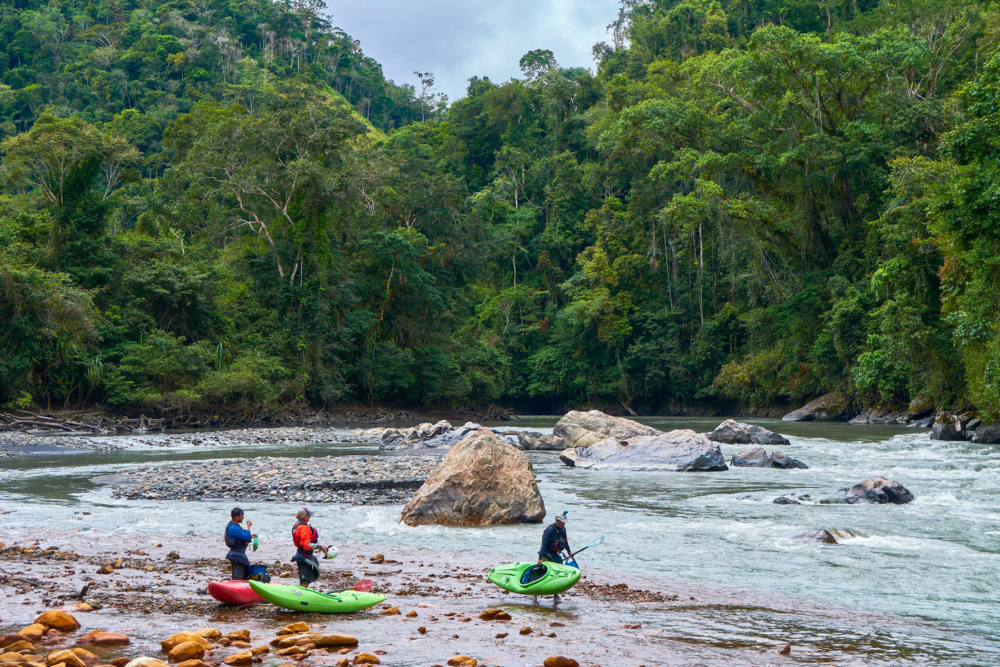
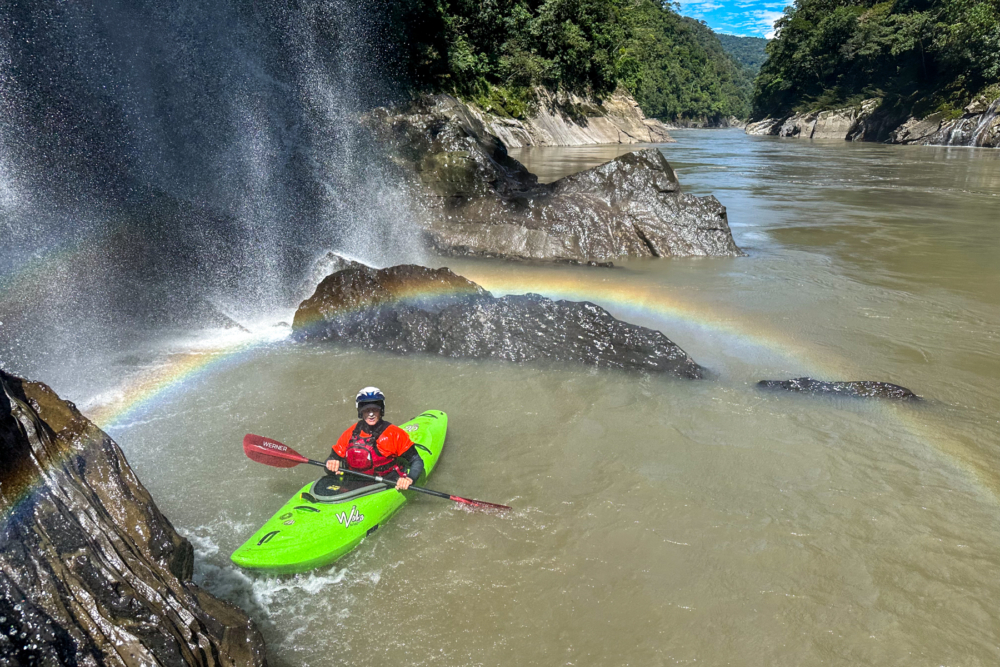
Leo is in heaven, pointing out guans, black-legged partridges, and blue-headed green and military macaws. “Megantoni” comes from “meganto,” meaning “macaw.” Thirty-two species of mammals are also protected here, including the spectacled bear, giant otter, and puma. Add 19 species of reptiles and 32 of amphibians — 12 new to science — and it’s as rich in wildlife as it is waterfalls.
At the bottom of the gorge, we get spit out of the Andes like a grenadilla, or orange, seed in the foothills of the eastern Andes. The water now has only 1,400 more vertical feet to go until reaching the Atlantic about 4,000 miles away (we dropped 2,000 feet in our 60-mile run). Carlos and Maku meet us in the panga at our take-out on a cobblestone beach.
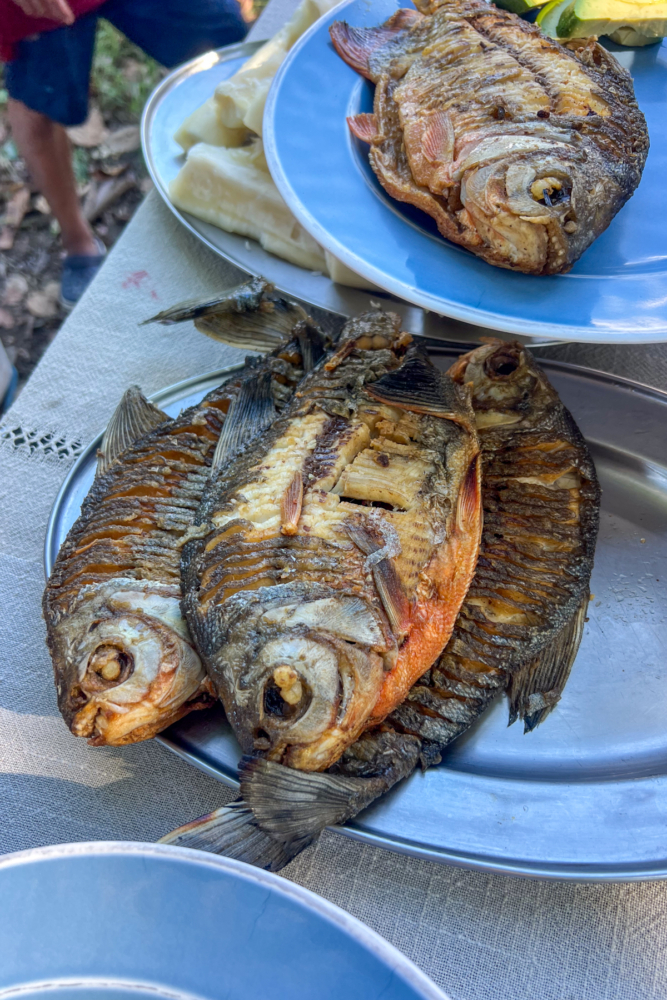
After a lunch of “paco” fish, which Carlos caught and smoked earlier, we break down our gear and load it into his narrow motorboat. Maku hops around our seats as we motor back up through the gorge. Tightening my life jacket, I wonder if Carlos, throttling up wave crests even with our gunwales, thinks about his father at times like this. In a flat section, Maku wraps his tail around the railing and hangs upside-down over the river, dangling his fingers along the water.
Back at camp, Carlos heads off on another shuttle, leaving Maku behind. He looks slighted, butthurt, and wastes no time annoying the dogs, but staying clear of the chickens. At 5 a.m., after fresh coffee from Maku’s grinder, we load the panga and peel out of the eddy, starting our motor first. A few hours later we arrive in Ivochote, where our minivans are waiting. It’s where Carlos got the injured Maku, and children run up shouting his name. Carlos eventually corrals him back into his panga and heads home downstream.
We wave goodbye and pile into the vans for our own drive back over the Andes, our driver once again honking at every turn. Like Carlos, Leo’s kayak, and even Maku, he, too, knows the lines.
***
Editor’s note: For more information or to book your own trip to the Yavero, contact Apumayo Expeditions.
Guest contributor Eugene Buchanan is the former editor of Paddling magazine and the founder of PaddlingLife.com. His work has appeared in the New York Times, Men’s Journal, Outside, National Geographic Adventure and other publications. Eugene lives in Steamboat, Colorado, where he raised his children on the Yampa River. His recent book Yampa Yearnings blends memoir and science to herald waterway preservation and protection. You can find more of his work at www.eugenebuchanan.com.