From the Page to the Big Screen
1:00 am, April 1st, 2024. We clicked the blue button. Sent.
Denisa and I had stayed up all weekend putting the final touches on the manuscript for our book Flow: Women’s Counternarratives from Rivers, Rock, and Sky. Now it was in our publisher’s inbox, awaiting the next steps in the publishing process. I exhaled a breath I’d been holding for two years since we started the project. Later that day, I walked up a nearby hill. Napping in the sun, I dreamed about all the free time I’d have now that the manuscript was complete.
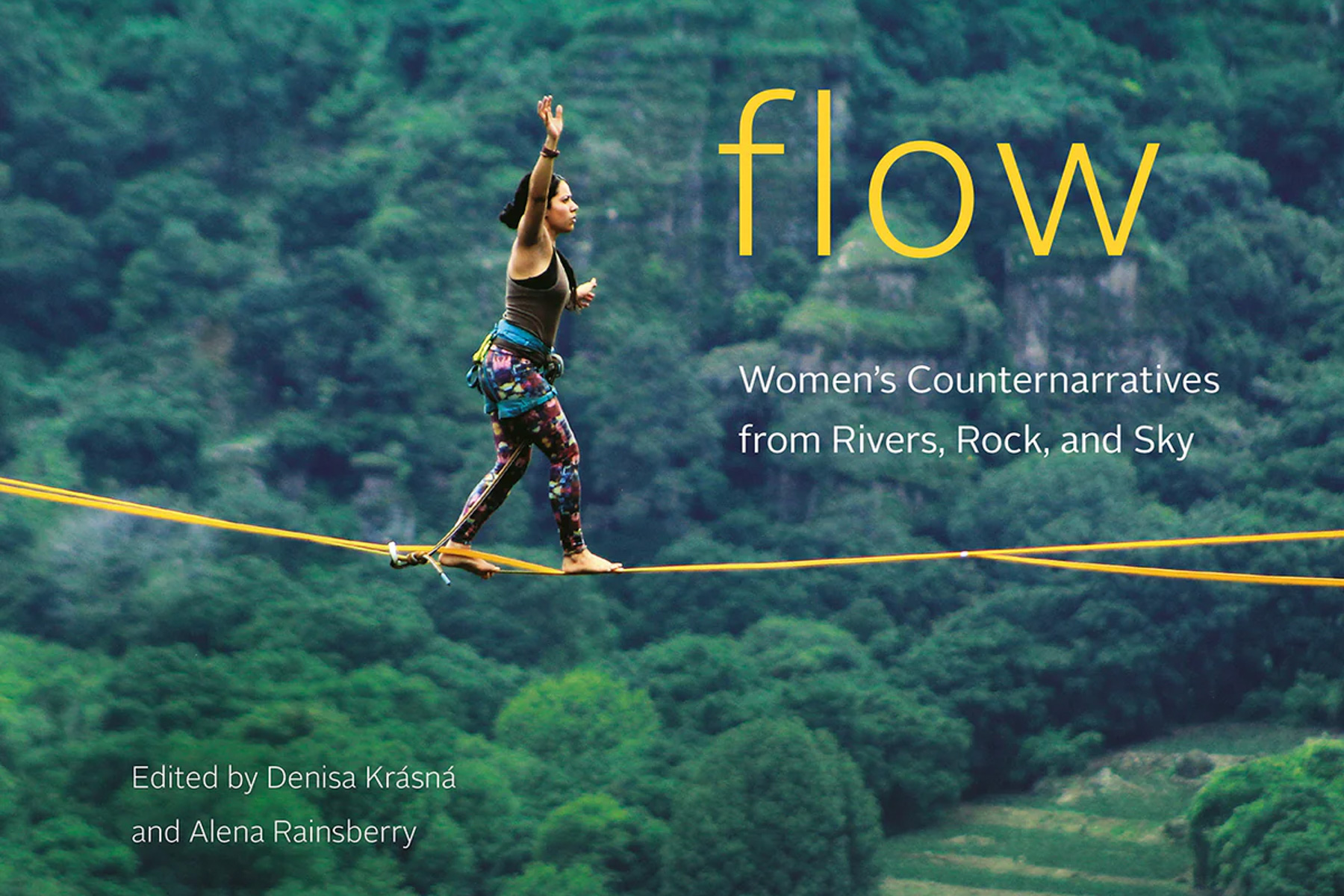
But we got back to work quickly. One of our ideas had been to coordinate a photograph of all three sports at once—a kayaker in a canyon with a climber on the rock face and a highliner above them both. We had found some photos. One showed a highliner above a raft. Another, an aerial silk artist above a kayaker sending a waterfall, but nothing with all three sports happening simultaneously.
We had a location in mind, but the crux would be the timing. Once the kayaker peeled out of the eddy, it would take approximately three Mississippi’s before they were at the bottom of the rapid, leaving the window to capture our dream image extremely short. Everything needed to be timed perfectly.
The more we discussed the shoot, the more we realized that the logistics of setting it up would be just as interesting as the end photograph we imagined. Why not document the process? But if we were going to bring in a director with professional grade equipment, why not film more of each sport and document the stories of the women doing them?
We had a new plan. We would make a full length documentary featuring an athlete from each sport, each in a different continent.
Ecuador
January 18, 2025
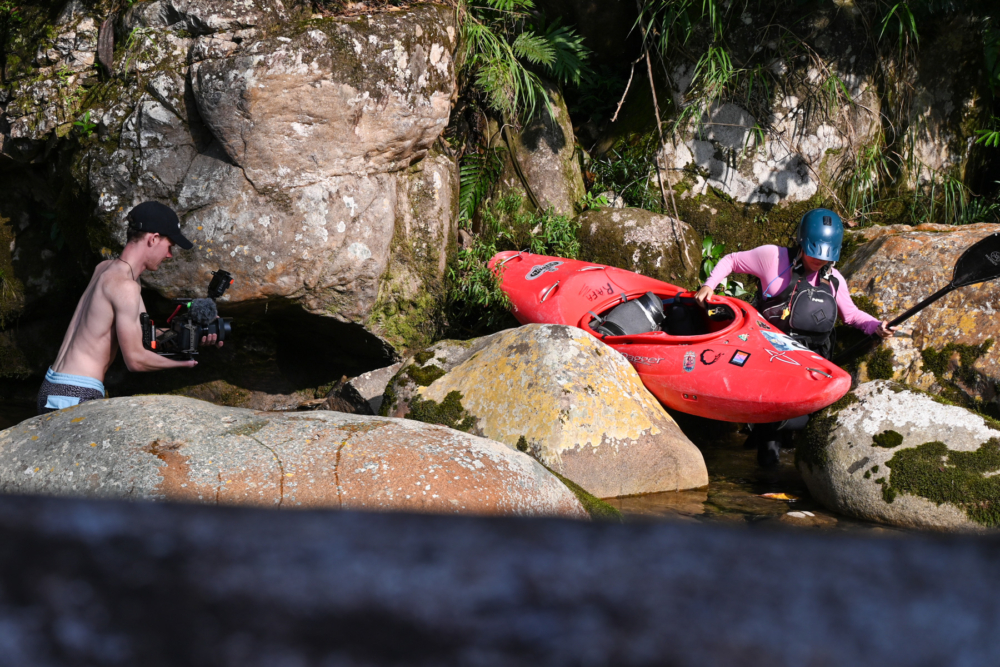
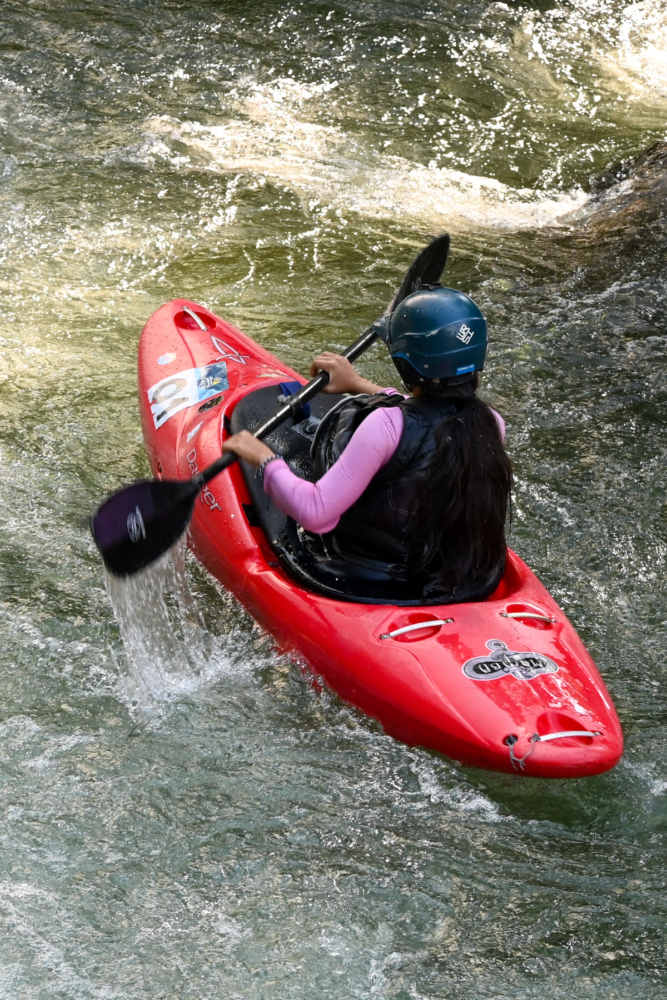
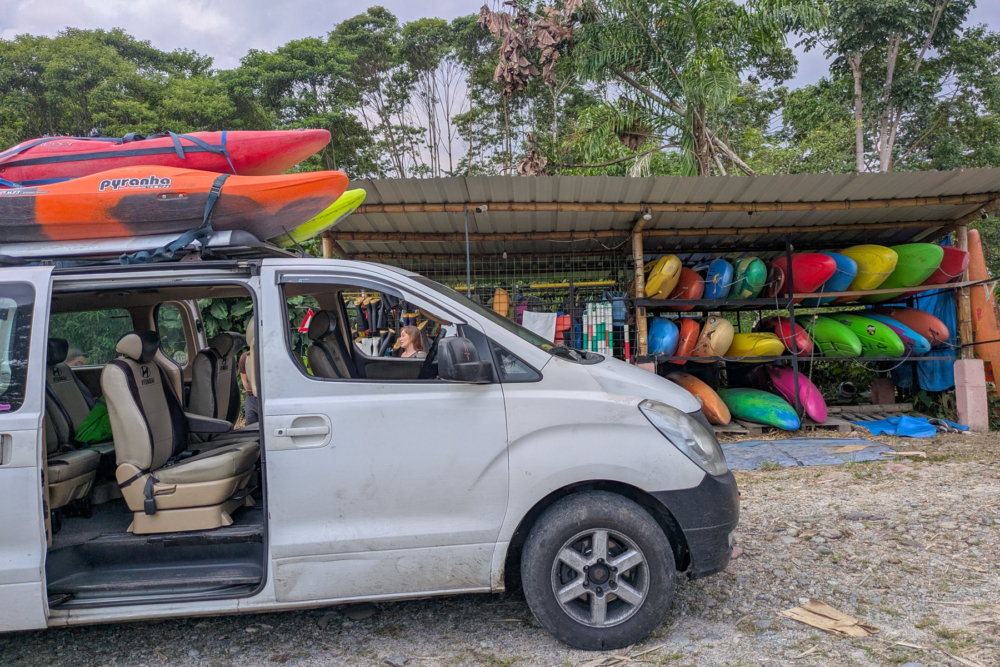
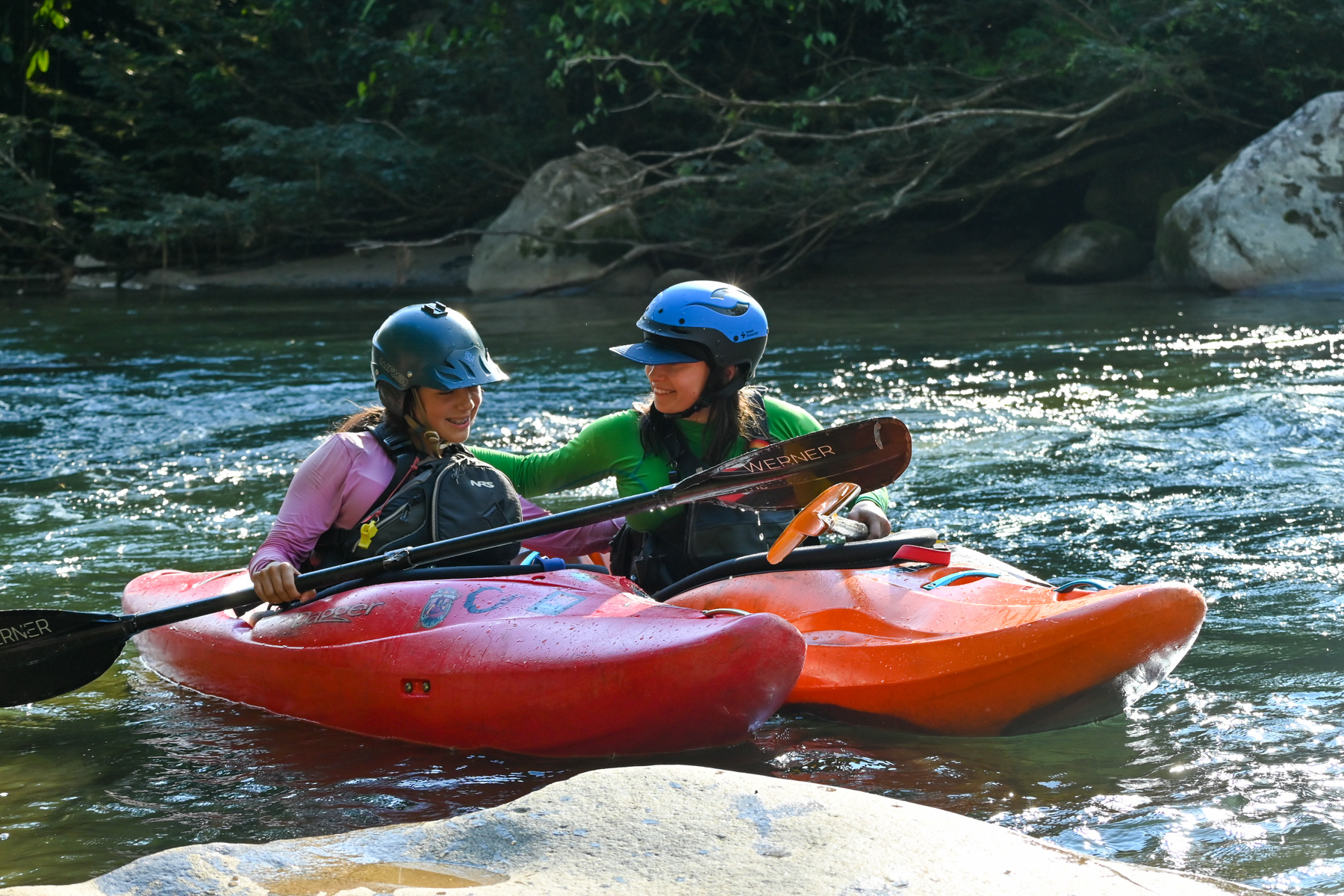
Oh my god, it’s really happening. I walked across the cable bridge on the Jondachi River. The rain had kept me up all night. Not because I was bothered by the raindrops plonking on the metal roof of our temporary jungle home, but because it meant the river was rising. We had limited days to film local teenage kayaker Rafaela Sanchez. She was still a student, and could only join us on weekends. If the water was too high, we would not be able to put on. Rafa, her dad Santiago, some other paddlers, and I hopped into the taxis to check out the river.
The film crew hadn’t known exactly what to make of my claims that we wouldn’t know the river level until we were there. Instead of predictable, trackable gauges, river level predictions in Ecuador are more of an art. Looking at the sky from the hostel in the morning to make a best guess as to where the rain would fall and which drainages would swell that day, assisted by photos posted on Facebook from a bridge here or of the water level on a certain rock there. It’s not an exact science.
Medium-ish. The water was still blue, not the chocolate brown of flood levels, and the rain had tapered to a drizzle. We would be able to paddle. The kayakers started gearing up while the film crew wriggled into the rented wetsuits and matching helmets. With the raft unloaded, we set off.
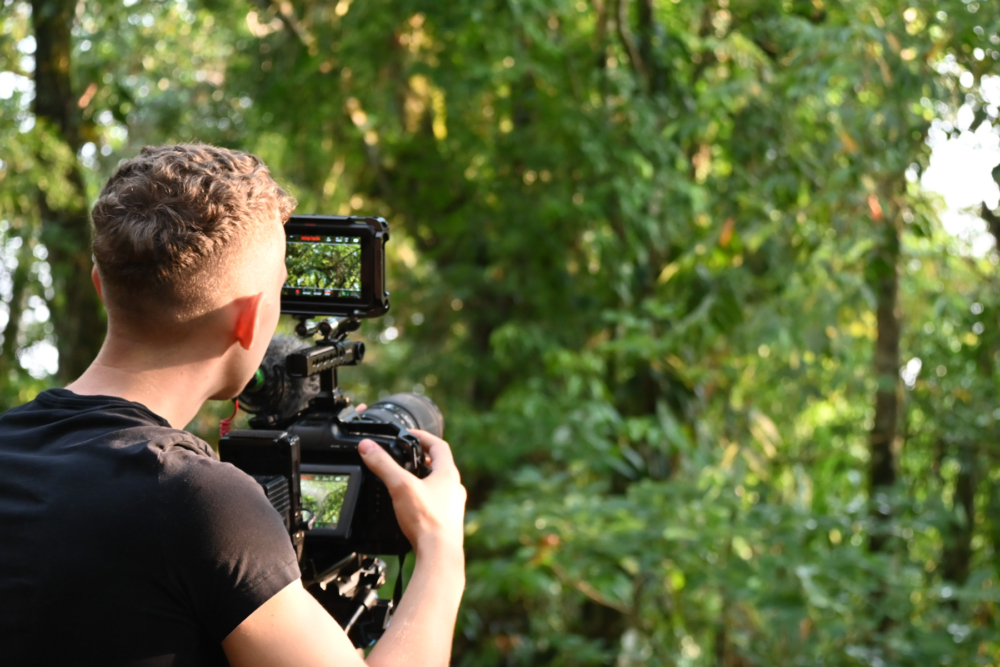
I watched from my kayak as the film crew alternated between paddling and filming Rafa. For some of them it was their first time in a raft, but they quickly picked up the rhythm of paddling together in time. Encased in a waterproof box, the camera was safe from splashes, but the jungle humidity constantly fogged up the lens.
The Wafflemaker
We continued down the Jondachi, passing waterfalls cascading down the green canyon walls to the confluence that joins it with the Hollin river. It was flowing big and brown, a sign that it had received a lot of water overnight and was running high. After the confluence, the canyon opened up and the river widened, giving it much more of a big water feel.
So fun! We laughed as we paddled through the surging chocolate brown waves. I kept glancing at the raft, wondering what the crew thought of the swollen Hollin, noticing the power behind their coordinated strokes.
We paddled until we reached the largest rapid, La Wafflera– The Wafflemaker. Named (so I’m told) for the ability of the hole at the bottom of the rapid to fold a raft in two. Everyone eddied out to scout. The raft was lined down the rapid and the film crew walked around, getting in position to capture a glory shot of Rafa sending the rapid. Each of the six kayakers studied the line that wove through the meat of the holes. At the end, you either had to paddle hard to the right to miss the Wafflemaker, or hit it hard enough to make it through.
Rafa decided to watch the other kayakers go first so I hiked back up to the eddy with the others and got ready. I remembered back to my first time running this rapid, three years earlier on Christmas day. I had been so nervous I trailed just feet behind the paddler in front of me. This time, I cruised through the middle of the rapid but couldn’t quite make it right at the bottom, so I tee-d up to the hole at the bottom and punched it as hard as I could. Good enough. I blinked the sediment-rich water out of my eyes and eddied out next to the raft.
A whistle blow from Rafa indicated the next kayaker started down. I watched as he got caught up in the middle, flipped, rolled up, and dropped into the Wafflemaker with no speed. He started getting tumbled, and I readied myself to chase paddler or gear if necessary. Just then Santiago, Rafa’s father, started down the rapid. He, too, flipped in the middle and dropped into the bottom hole upside down, on top of the other paddler.
The Wafflemaker was a churning mess of boats and paddles and helmets. Soon, both men pulled their skirts and swam. People and gear were everywhere, and we rushed to pick up the pieces, gathering everything as efficiently as possible before it was swept too far downstream.
Some things just can’t be scripted.
A Deeper Story
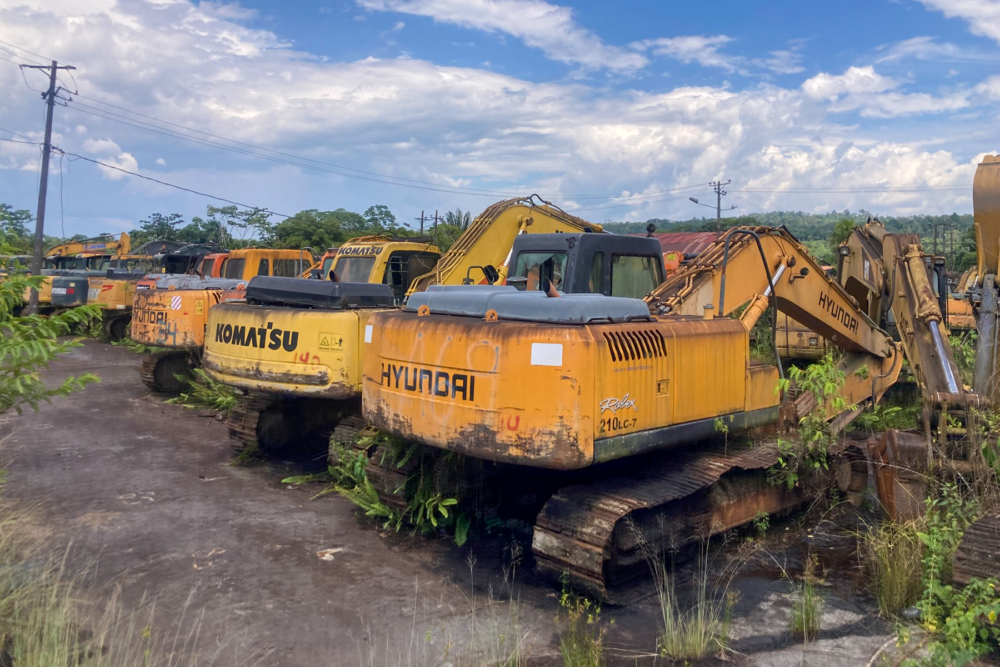
The following day we followed Rafa on the Jatunyacu river and documented the destruction of the river and surrounding forest due to illegal mining. I was shocked to see how much of the river bank had been torn up, transforming sandy beaches into contaminated gravel pits. Excavators crawled everywhere and miners cast us suspicious glances. Every year I had seen it get worse, but this time the river was almost unrecognizable.
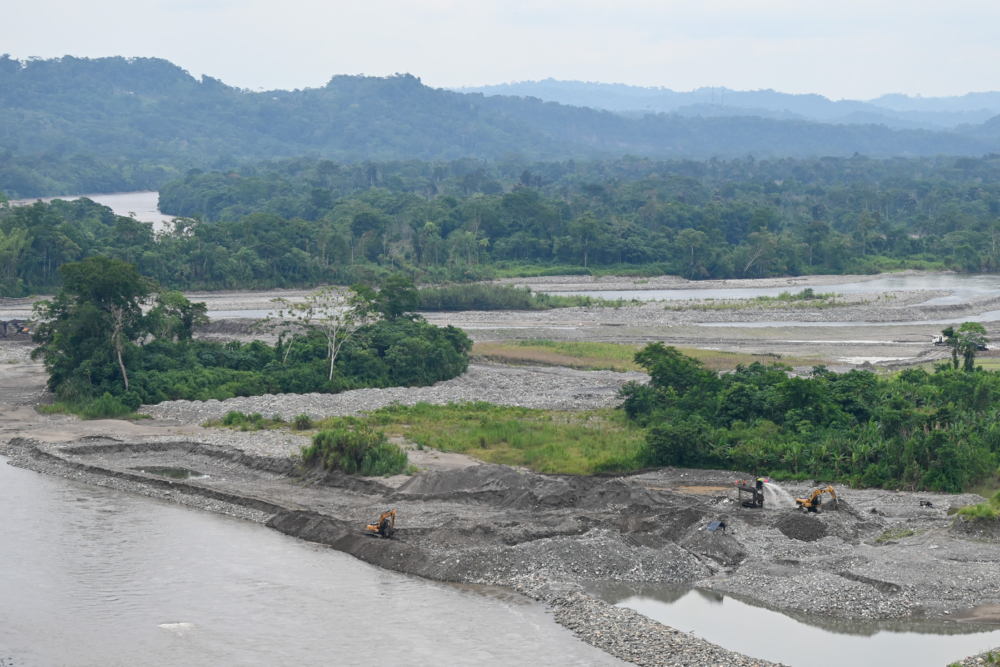
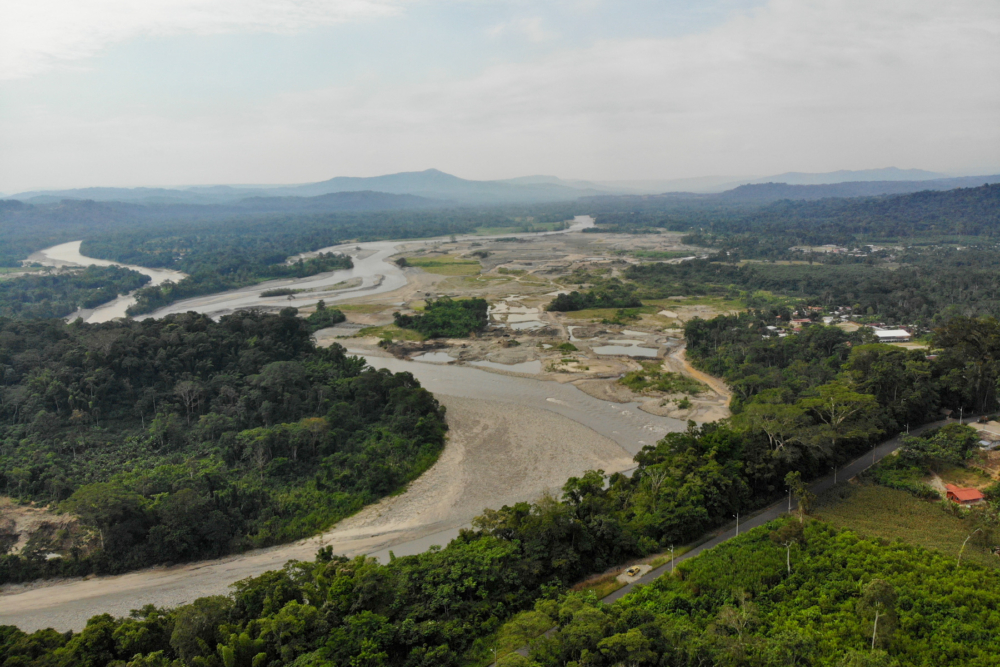
The film crew hiked into each rapid instead of rafting down to keep the lenses from fogging up like the day before. I anxiously waited in the eddies above the rapids with Rafa, Santiago, and her friend Gabriela. Soon, the walkie talkie in my PFD crackled to life: the film crew was in position and the drone was in the air. We peeled out into the current, sometimes only a hundred meters from the mining sites. Thankfully, we made it through the day without complications.
We had all agreed that the awareness about illegal mining was too important to not capture on film. Rafa spoke poignantly about environmental justice and the environmental issues that impact her home regions. She described how the use of mercury in the extraction of gold leaches into the water, poisoning the rivers and directly affecting the wildlife, plants, and people who live along the river. As we paddled, she would pick up trash from the river, already becoming an incredible example to the next generation of local paddlers.
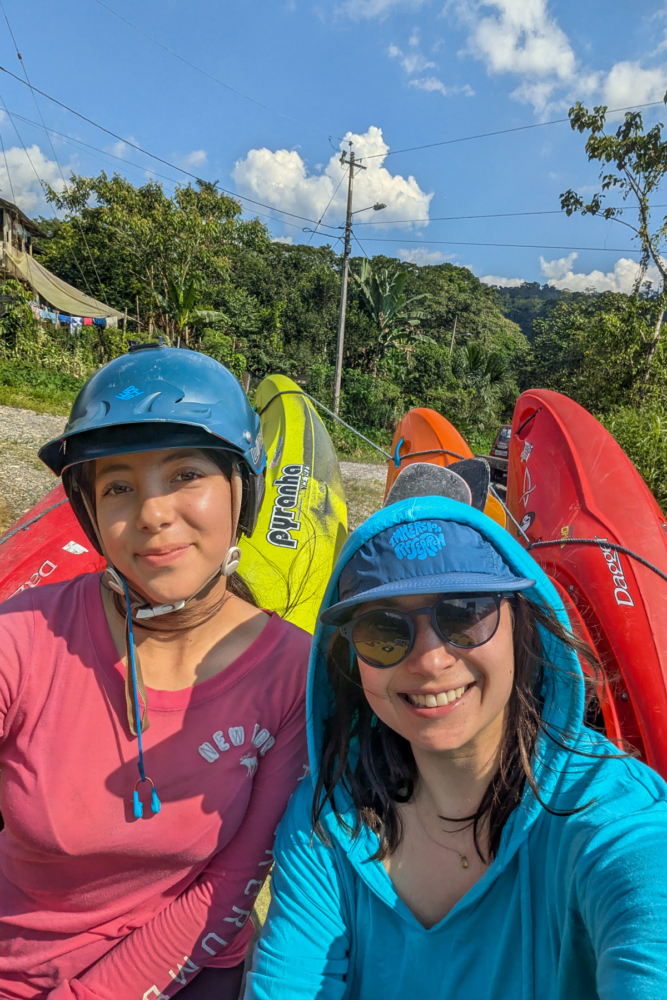
I’d been lucky enough to meet Rafa years three before when I joined a lap with the Kayak Club. She had been 12 years old at the time. Both of us had been kayaking ducklings, only one year into kayaking, and following closely behind more experienced paddlers. Now, she was decisive and confident. My favorite moment on the whole trip was when we paddled just the two of us on the same section of Misahualli River where we’d first met, with her out in front.
Being able to capture part of her story and journey was incredibly special. At the time of filming she was training for her first international slalom competition in France, preparing to be the first junior Ecuadorian woman to compete in slalom kayaking on an international stage. I can only wait to see what goals she sets for herself next, both on and off the river.
Gringos in the Jungle
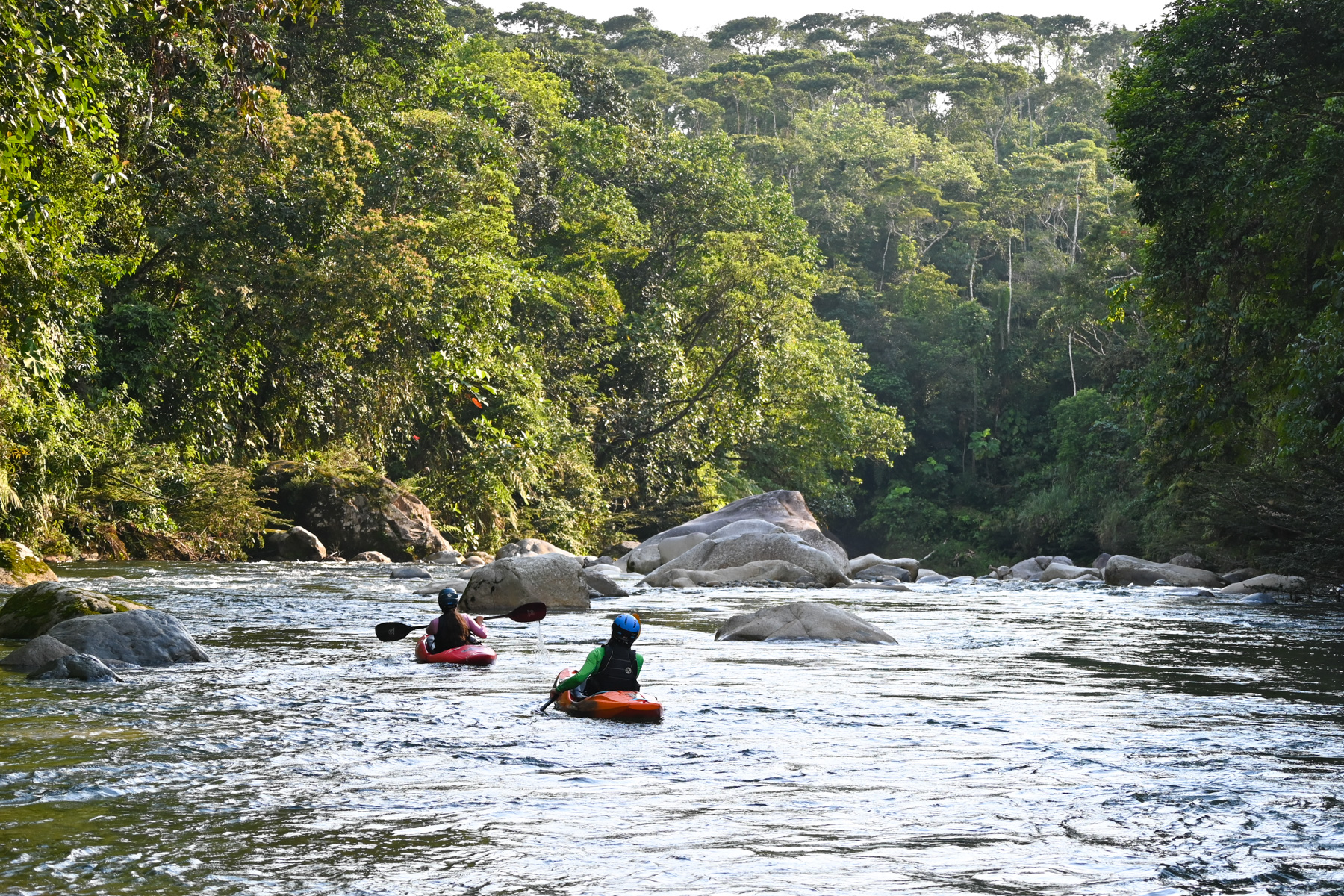
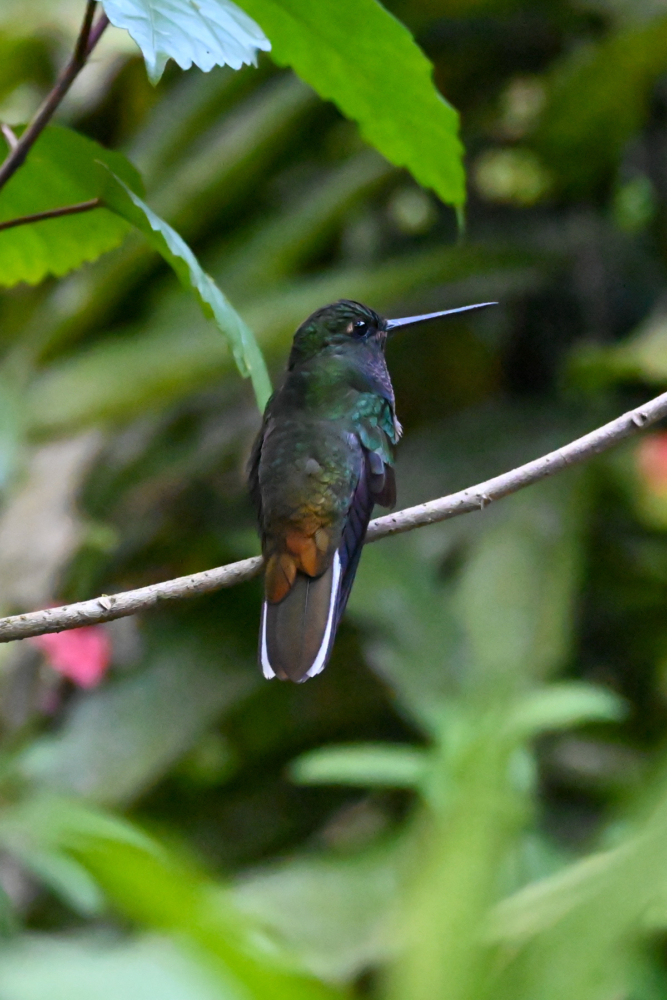
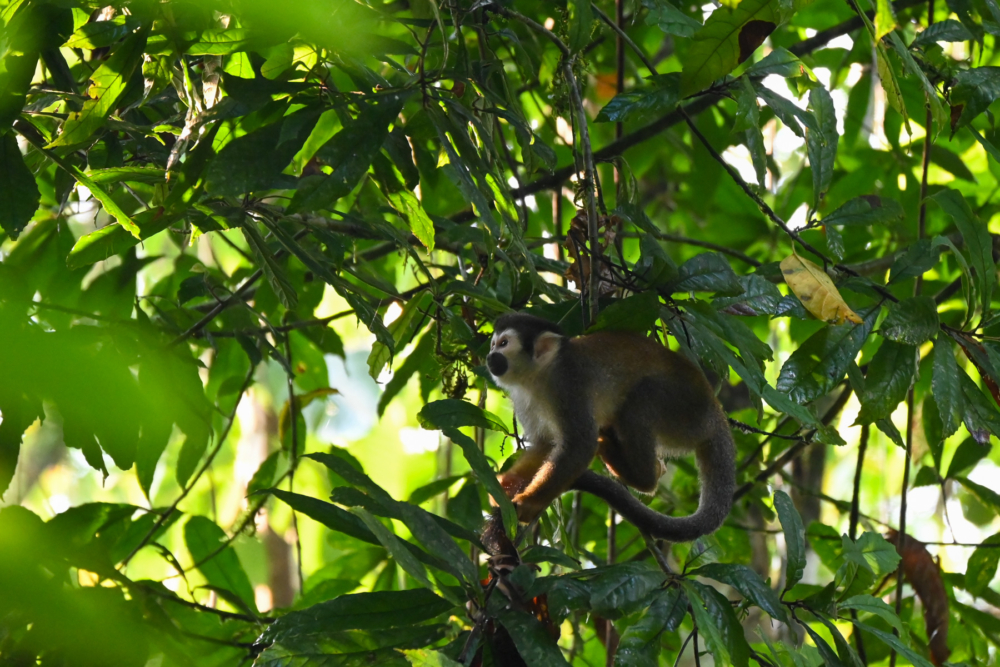
Over the weeks in Ecuador, the film crew and I had long days on the river filming and traveling to capture b-roll footage of the surrounding jungle. We filmed monkeys and hummingbirds and crazy-looking jungle plants. But not all the wildlife was so friendly.
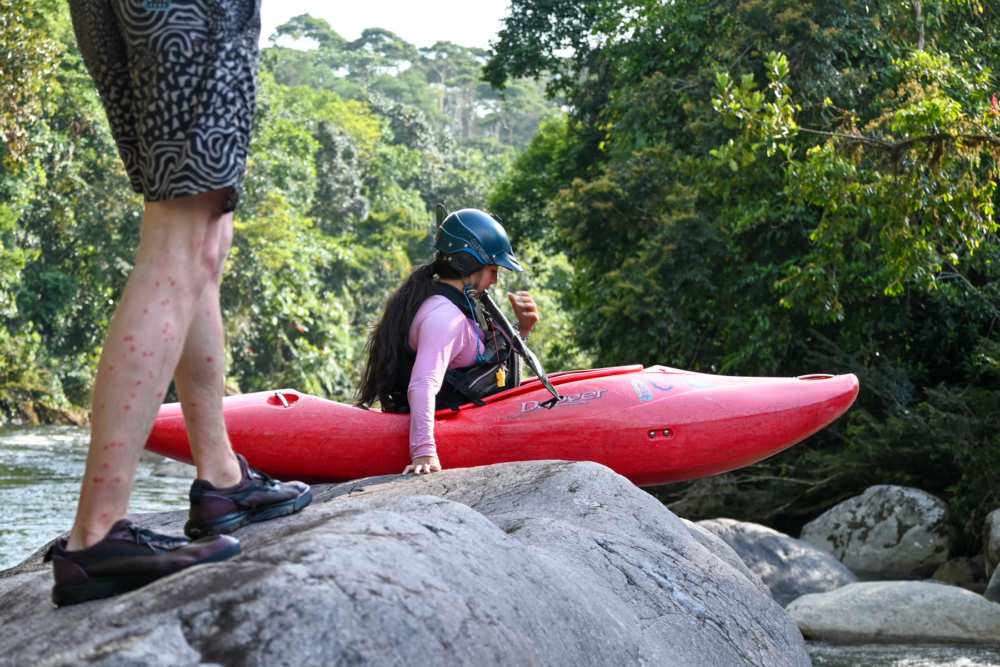
The entire crew became well acquainted with the sandflies. We turned into feasts for the river-dwelling insects, our legs lashed with red dots. In our downtime, we would counting how many we each had on our legs, giving up once we surpassed 80 or so. To the credit of the crew, when it was time to bring out the cameras on the river, there was no complaining, and no compromising of the shots on account of the sandflies.
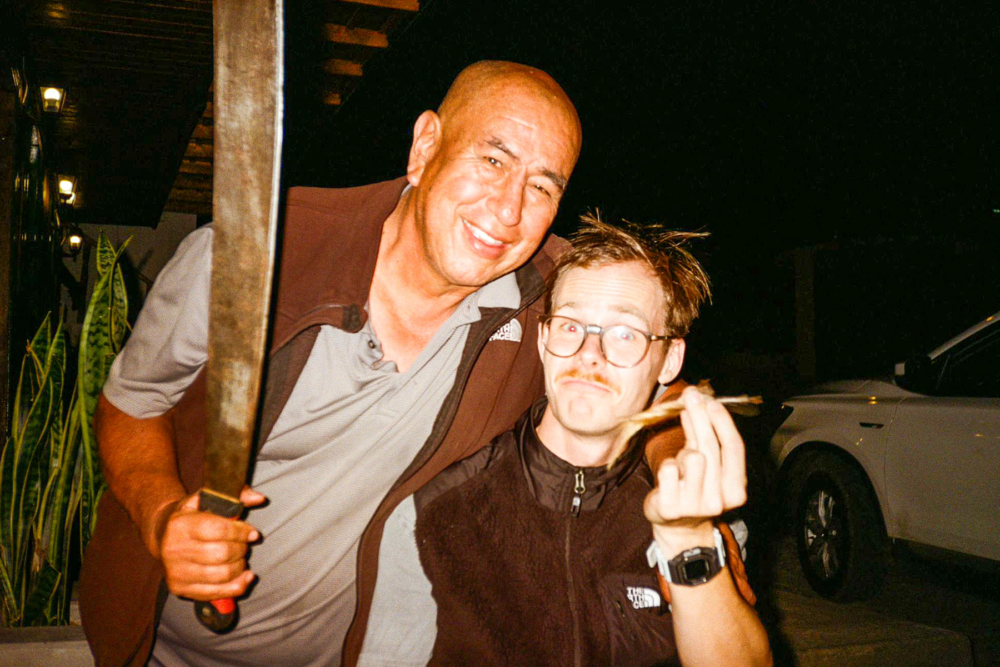
At the end of the trip, I couldn’t resist giving the film crew a taste of the international kayaking scene. I suggested we stay in Baeza on our way out to the airport. As we walked into Gina’s Hostel, Don Viche famously pulled out his machete and housemade tequilla, ready for his classic game. Our director, Povi, stammered “Cheese House, Oyachachi!” Don Viche took it easy on him and gave him a light trim. It seemed a fitting way to end our kayaking trip in Ecuador.
***
Find out what happened with Rafa in Waflerra that day in Flow – The Film, at a limited pre-festival premier screening this June, 2025.
June 3rd – Columbia Arts Center, 7pm | Hood River, OR
June 5th – SIFF Film Center, 7pm | Seattle, WA
June 10th – The Vic Theatre, 6:30pm | Victoria, BC, Canada
***
Editor’s note: Stay tuned for Flow, Part III, an exclusive interview with Rafa Sanchez about kayaking, competing, and her goals for the future. Read the story behind Flow: Women’s Counternarratives from River, Rock, and Sky here.
Guest contributor Alena Rainsberry is an American kayaker who wants to explore rivers all around the world. Introduced to whitewater kayaking following COVID, she quickly fell in love with the joys and challenges of the sport. She is a passionate advocate for increasing representation, getting women into the outdoors, and encouraging people to experience new skills. Alena is from the Pacific Northwest, where she currently lives and kayaks.