Along with 98% of river permit lottery entrants, I was unsuccessful. But unlike most years, I received the emails informing me of the bad news while standing up to my ankles in the Usumacinta River in southern Mexico, rigging boats for a weeklong trip down the legendary Highway of the Maya. Minutes earlier, I’d heard a family of howler monkeys for the first time, their ghostly crescendos (somewhere between an elk’s bugle and an owl’s hoot) carrying through the jungle.
I traveled to the Usumacinta for a river experience that wasn’t too far from home or too costly and would suit my amateur kayaking skills. But the river itself, even after investigating a whirlpool from the fishy side of a kayak, paled in comparison to the entirety of the experience. Imagine a wilderness as idyllic as the Yampa through Dinosaur National Monument but replace desert walls with jungle and the sound of geese with howler monkeys. Then add riverside access to Mayan ruins on par with Mesa Verde and river guides with ancestry going back to the very people who built the ancient cities.
There may be no more vibrant wilderness archeology tour on Earth, and my disappointment in not drawing a single river permit scarcely registered.
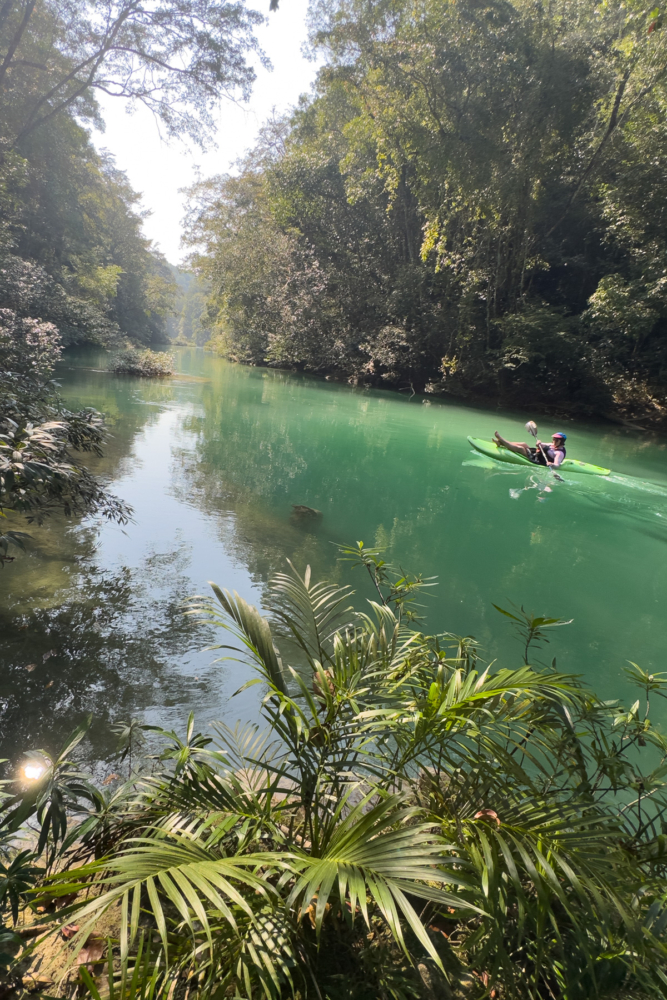
We’d met our guides from Global Grand Canyons in the town of Palenque, situated at the heart of the Usumacinta watershed’s otherworldly electric blue-green tributaries draining the jungle highlands of Chiapas. The outfitter has bases in eight locations on four continents with a Martin Litton-esque mission to use river tourism to help protect waterways threatened by hydropower developments.
Palenque was on track to become one of the world’s epicenters of river adventure. Then, in the late 1990s, a group of banditos started preying on river runners. According to local legend, one group handed over some money and a few semi-valuables (it’s not like river runners travel with Rolexes). The banditos seemed to be satisfied when Machete Jim, a man carrying $15,000 to fund a long stay in Mexico, blurted out, “Take it all!” and handed over a dry bag containing the most cash the banditos had ever seen.
When Rocky Contos, our trip leader and Global Grand Canyons founder, told us the story, one of the other boaters on our trip, Erik Etl, commented, “Not a very brave move for a guy with such a name.”
Had Machete Jim kept it together (or better yet, left his stash with a bank) perhaps the incident would have been little more than a story for a few river rats to tell back home, and the river’s increasing popularity would have continued. Instead, those banditos decided the Usumacinta rafters were the golden goose. For the next couple of years, the banditos robbed multiple groups. Even worse: as hits on subsequent groups yielded few riches, the banditos’ tactics escalated.
Miyaya Urbina, Mexico’s first female river guide, had led over 100 trips down the river by then. Her groups were robbed three times, and the last time, when the banditos’ haul was little more than a few damp pesos, they slashed dry bags and assaulted the boaters, one of them shattering Urbina’s collarbone with the butt of a rifle. A short time later, another outfitter refused to stop when the banditos tried to wave them to shore. A rifle shot hit one of the rafts, deflating it instantly, and a second shot injured a passenger. Urbina shuttered the guide service she had inherited from her dad, who’d started guiding in the 1970s. Five other outfitters did the same, and the Usumacinta’s first chapter of river tourism ended.
In 2010, Contos decided to investigate. With the watershed in the crosshairs of numerous dam proposals over the years, it fit his conservation mission, and over a decade had passed since the bandito rampage. He set off alone and kayaked 340 miles in eight days from the river’s upper tributaries to the Gulf of Mexico. The fishermen and farmers that Contos met along the river were friendly and welcoming. Stunned by the unique blend of jungle wilderness, moderate big-water river running, pristine sandy beach camps, and incomparable archaeological sites, he set about an even more audacious project: a public relations campaign to restore the Usumacinta’s place on the international river runner’s menu.
From the villagers, Contos learned that the banditos had been killed or fled. He hired locals to support a new operation and tracked down Miyaya Urbina, who agreed to manage Global Grand Canyons’ Chiapas base. As private security is common in Mexico, he recruited a motorized security boat to shadow his groups at a respectful distance while providing a strong deterrent to anyone with bandito aspirations. By the time of my trip, in February 2026, Contos’s Global Grand Canyons had been guiding the Usumacinta and its tributaries for 15 years, and it felt like the critical stewardship element of river tourism was returning.
Before blind adventurer Eric Weihenmayer kayaked the Grand Canyon, he struggled to find a guide service in the U.S. that would accommodate his unprecedented learning curve, so he travelled to the Usumacinta with Global Grand Canyons for a less regulated big-water education. With two days of fast flatwater before any rapids, then four days with a maximum difficulty of Class III+, it’s an exceptional schoolroom. While struggling to maintain boat control in the 40,000 CFS current (low water for the Usu), I took heart in Weihenmayer’s boldness.
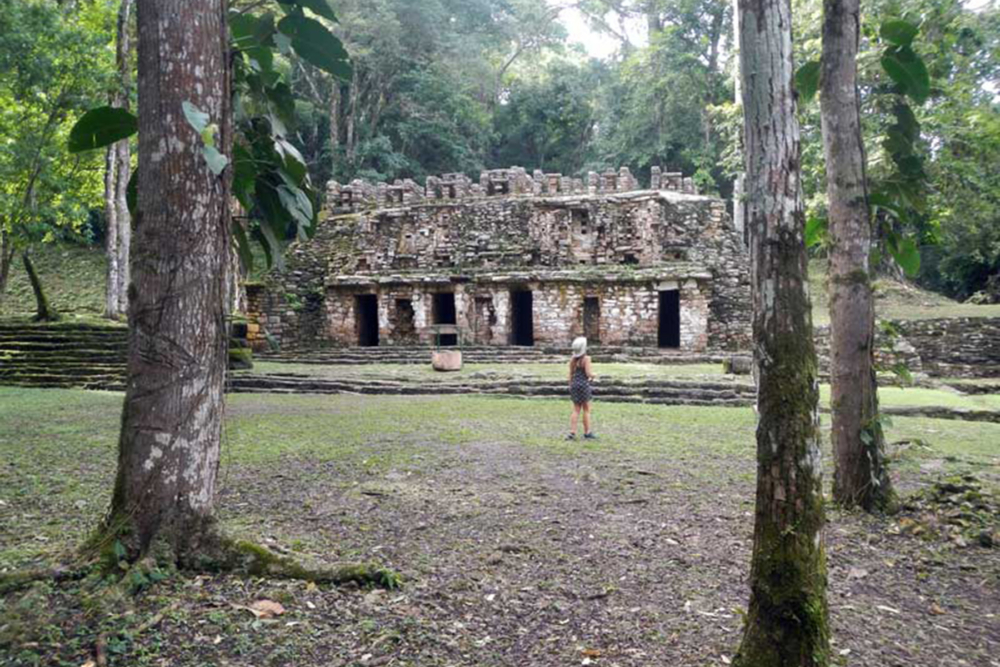
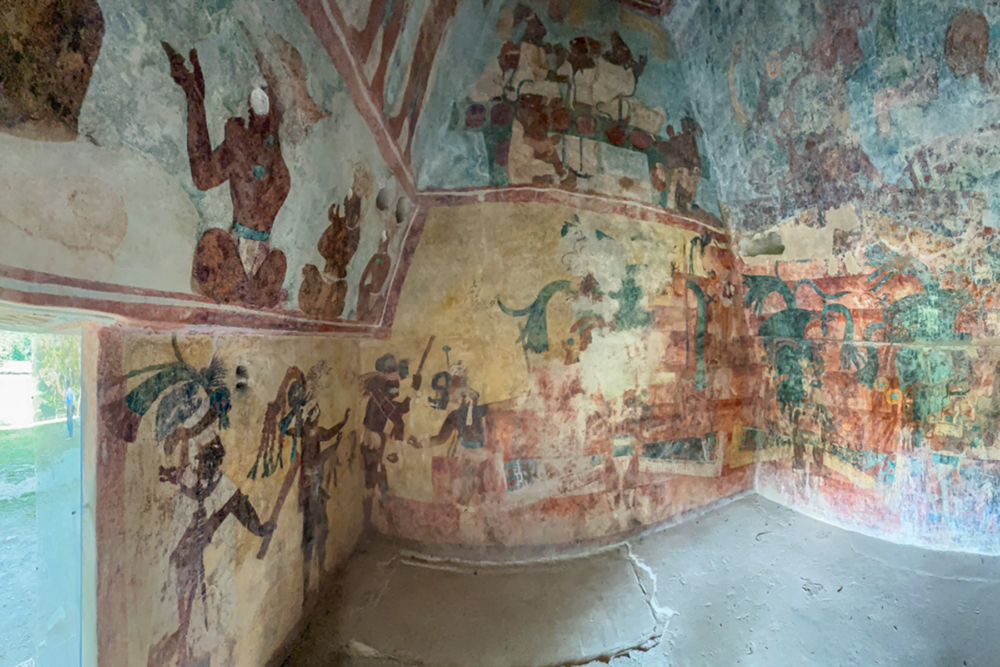
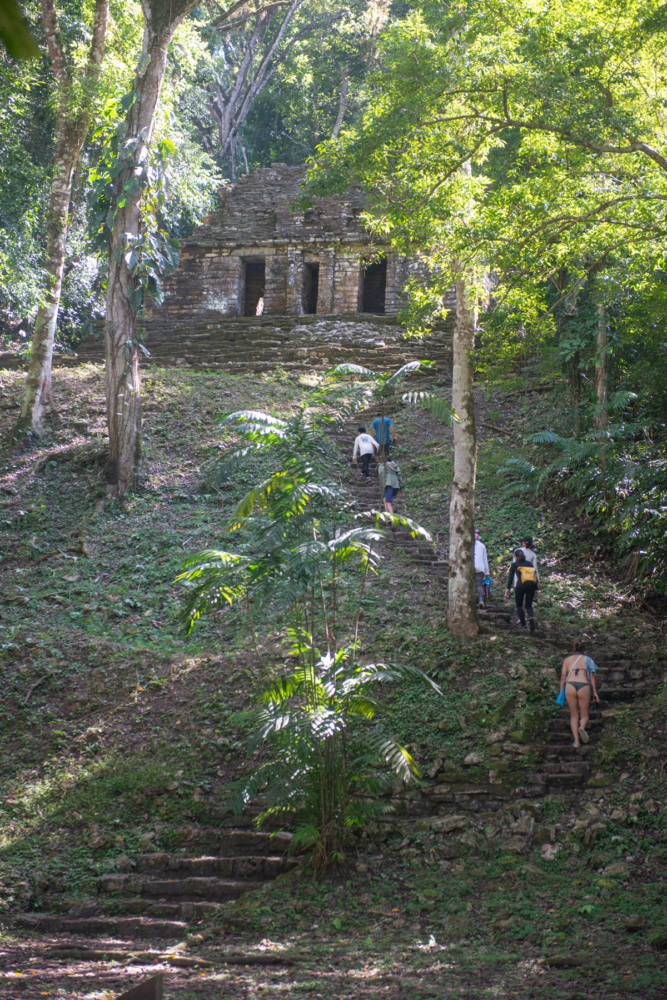
On our second day, we camped on the ancient riverfront steps of the Mayan city of Yaxchilán. En route to the put-in, we’d stopped at Bonampak, a famous road-accessible ruin with brilliantly painted murals, but it wasn’t until we walked through the Labyrinth, a winding, spooky, pitch-black tunnel, and emerged into Yaxchilán’s central plaza, that I felt the Mayan world come alive.
I imagined the city in its prime, a trade hub of waterway commerce perched on an isthmus protruding into the Usumacinta, with intricately carved dugout canoes moored around the perimeter and pyramids decorated with brightly painted frescoes welcoming river travelers. We climbed a 1,500-year-old staircase to reach South Acropolis, the highest point in the city, where my reverie was cut short by thoughts of a reservoir’s rising waters slowly engulfing archeological treasures both known and yet to be discovered.
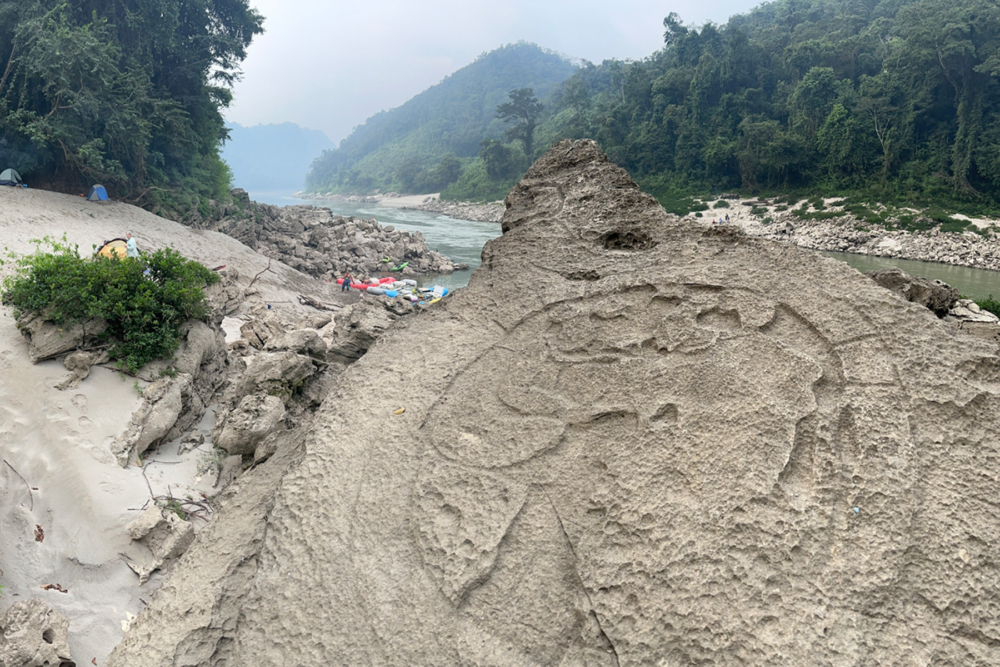
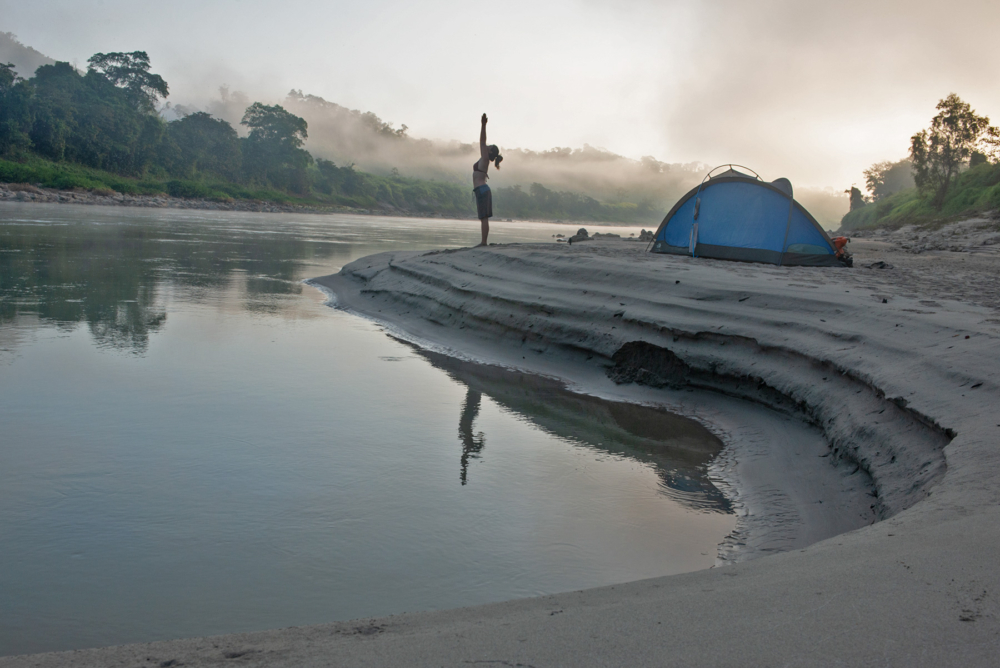
By day three, the Usu’s mood changed, with the karst bedrock narrowing the channel, and every rock protrusion sending boils and whirlpools for hundreds of yards, keeping my hips busy and teaching me much about reading water from the intimate confines of a kayak. Our next archaeology stop was the vast ruins of Piedras Negras, where we camped next to the Sacrificial Rock, a diving board-shaped stone leaning over the river and engraved with a massive turtle, a Mayan symbol of the earth, fertility, and longevity.
That night, after a dinner of chile rellenos, a family of howler monkeys took up residence in the trees above my tent. Their primordial roars, which belie their harmless nature, were used by Jurassic Park sound engineers to design the voice of the venom-spitting Dilophosaurus. I must admit, I took a little longer than usual to fall asleep, envisioning dinosaurs and Mayan warriors emerging from the jungle.
The Usumacinta’s return to its rightful place among the world’s greatest trips couldn’t be timelier. The dismal chances of drawing a top-shelf river permit in the U.S. make it clear that boaters would do well to look south of the border. Hydropower developers are once again eyeing the Usumacinta, and adventure tourism has a way of nudging local authorities toward preservation rather than inundation.
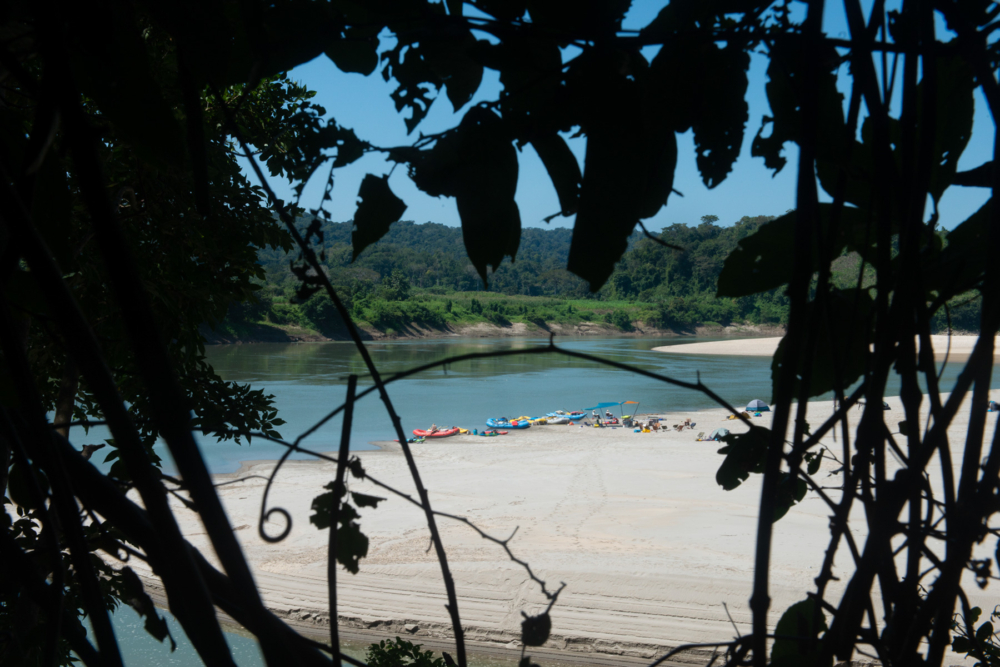
Chiapas is on the up and up, receiving more government investment than any other state and, according to the Mexico Peace Index, is the fourth safest state in Mexico. Day-based tour operators out of Frontera Corozal on the Guatemalan border are again taking tourists to Yaxchilan using motorized lanchas, the long, narrow boats used by locals for all forms of river commerce and travel.
Piedras Negras, however, is harder to reach thanks to a few meaty rapids, so we had the place to ourselves. We spent a layover day wandering the ruins, crawling into a sauna room built about the time of the Roman empire’s collapse, practicing rolls and stern squirts under the watchful eye of Gerardo Arturo Elizondo, one of Mexico’s top kayakers, and feasting on Dutch oven lasagna that would hold its own in Naples.
The following day got splashy and, after a close encounter with the rafts, we stopped in a small eddy to let the bigger crafts pass. As eddy conversations tend to do, ours wandered bizarrely and we started talking about laundry. Gillian Thieroff, a river guide on holiday, said, “Have you ever used dryer balls?”
Still high on adrenaline from bobbing down a rollicking wave train just inches from an oar rig, I said nervously, “I wish I had drier balls.” Laughter is good medicine, and we left the eddy giggling.
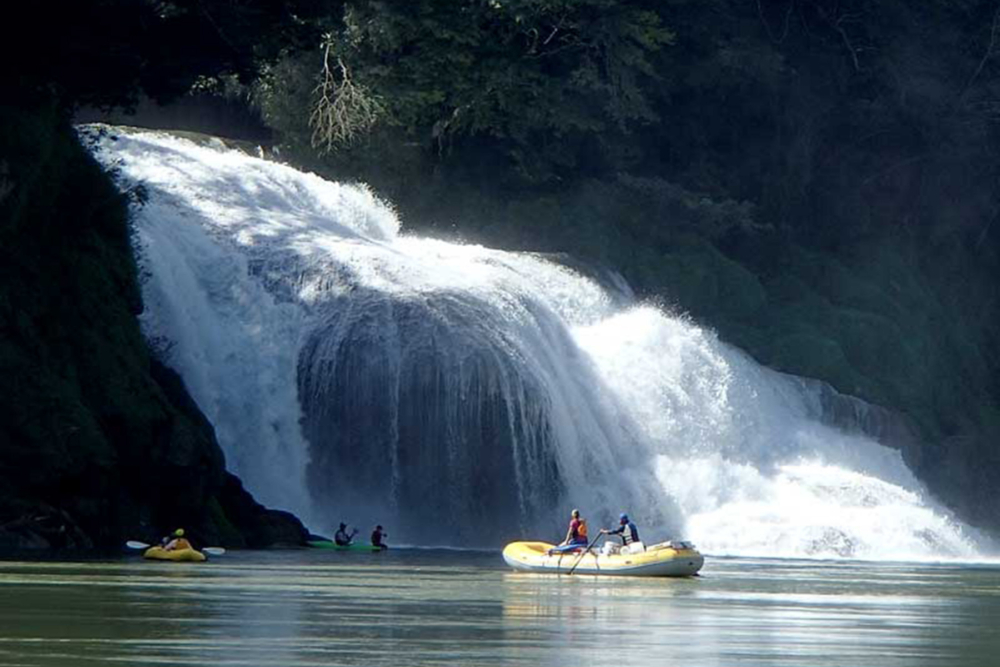
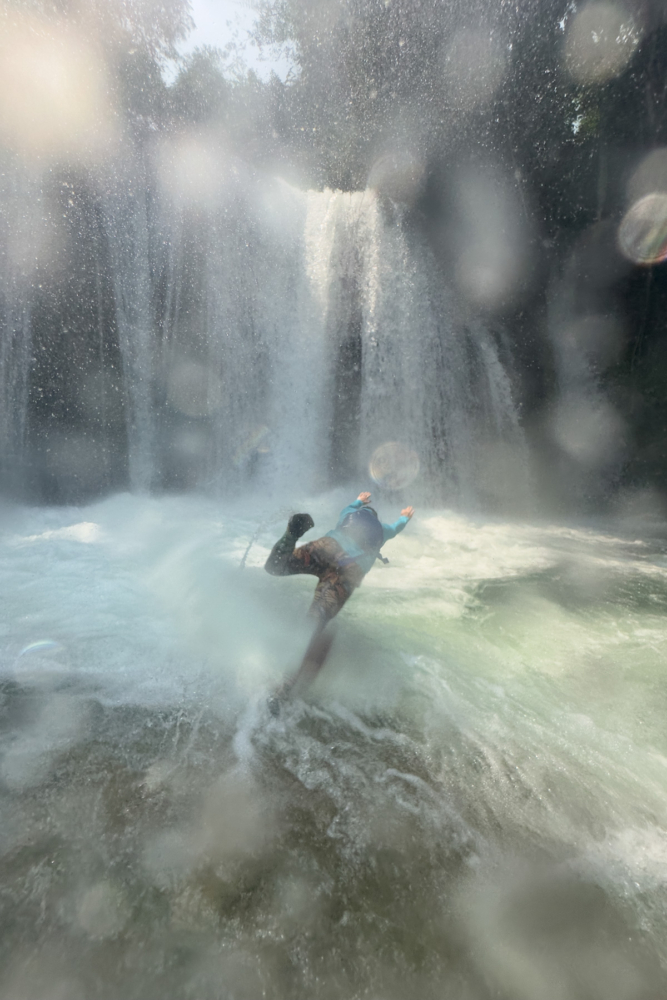
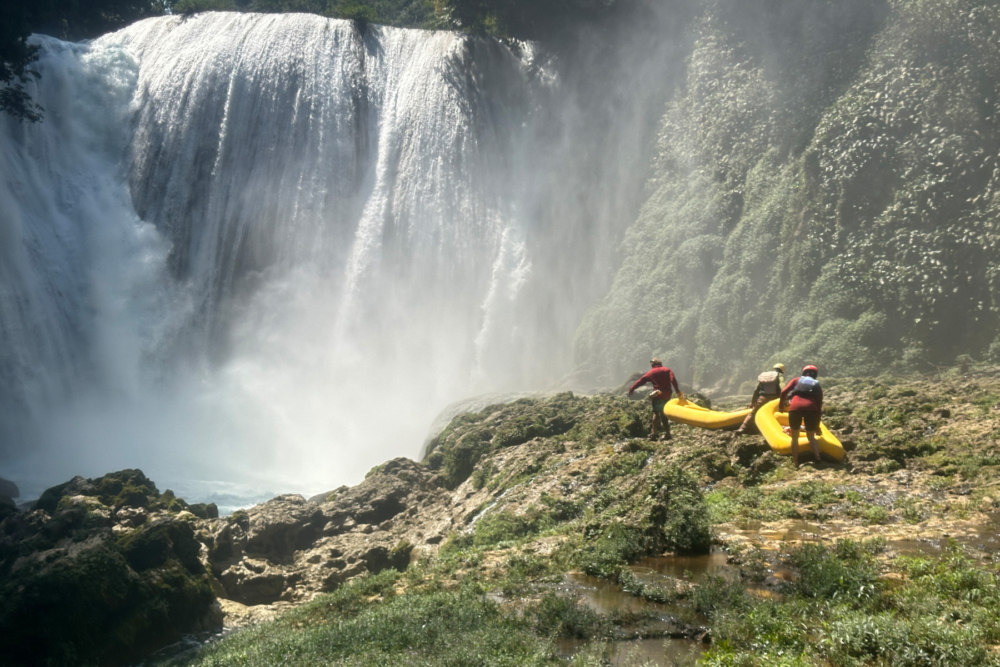
Around lunch, we stopped at Cascada Busilja, a waterfall that wouldn’t be out of place in Tolkien’s elven city of Rivendell. Its turquoise water traces fantastical curved shapes that you’ll only see in rivers with karst bedrock where the limestone precipitates out of the water, growing rock features over time rather than simply eroding them away. We swam behind the waterfall and kayaked out of infinity pools before pushing off downriver.
In the precipitous Cañón del San José, we ran the biggest rapids of the trip. I swerved the wrong direction to avoid an IK and capsized in a massive whirlpool. When my roll failed, Contos reeled me into his raft. There is nothing quite so reassuring as having professional guides waiting in the tail waves while learning to run big water in a tiny boat.
We spent our last night camped at the Site Museum of Pomoná, an interpretive center built in the 1960s to help prevent the Boca del Cerro dam. They mothballed the plan, but dam proposals never die, and the watershed’s natural and archaeological treasures still face risk.
At the take-out, Miyaya met us with smiles and a tostada lunch. Unlike many overrun tourist destinations, where locals are tired of the onslaught, the sentiment I felt in Chiapas was that locals were thrilled to see boaters return. Ours was Global Grand Canyon’s 101st trip down the river since Contos’s solo run and, in 30 years of adventure travel in over 25 countries, I’m not sure I’ve ever felt more welcome.
Back in Palenque, we spent two more days running smaller travertine tributaries of the Usumacinta. After my last breakfast of perfectly ripe mangos and reluctantly returning my rental kayak and paddle, I was ready to retire in Chiapas.
***
Topher Donahue is a fifth generation Coloradan, but a slow learner. After decades of fighting gravity while climbing and skiing in the mountains, he finally figured out that it’s a lot easier to float down rivers. He writes books for a living, often as ghostwriter for other authors, with a focus on adventure, health, and corporate and non-profit culture and history. His work can (sometimes) be found at www.topherdonahue.com or @topher.donahue.