The Most Beautiful Lake in Ontario?
Killarney Provincial Park is one of my favorite places on earth, and this spring I finally got back into it after almost a year off the water. A frozen shoulder kept me sidelined for most of last summer, so this trip was as much about getting back into a boat as it was about the destination.
The destination happened to be OSA Lake, which is a lake I’d somehow never paddled to despite years of trips into Killarney, even though it’s considered by many to be the most beautiful lake in the park. Some go further, calling it the most beautiful lake in the province, and so I wanted to see for myself.
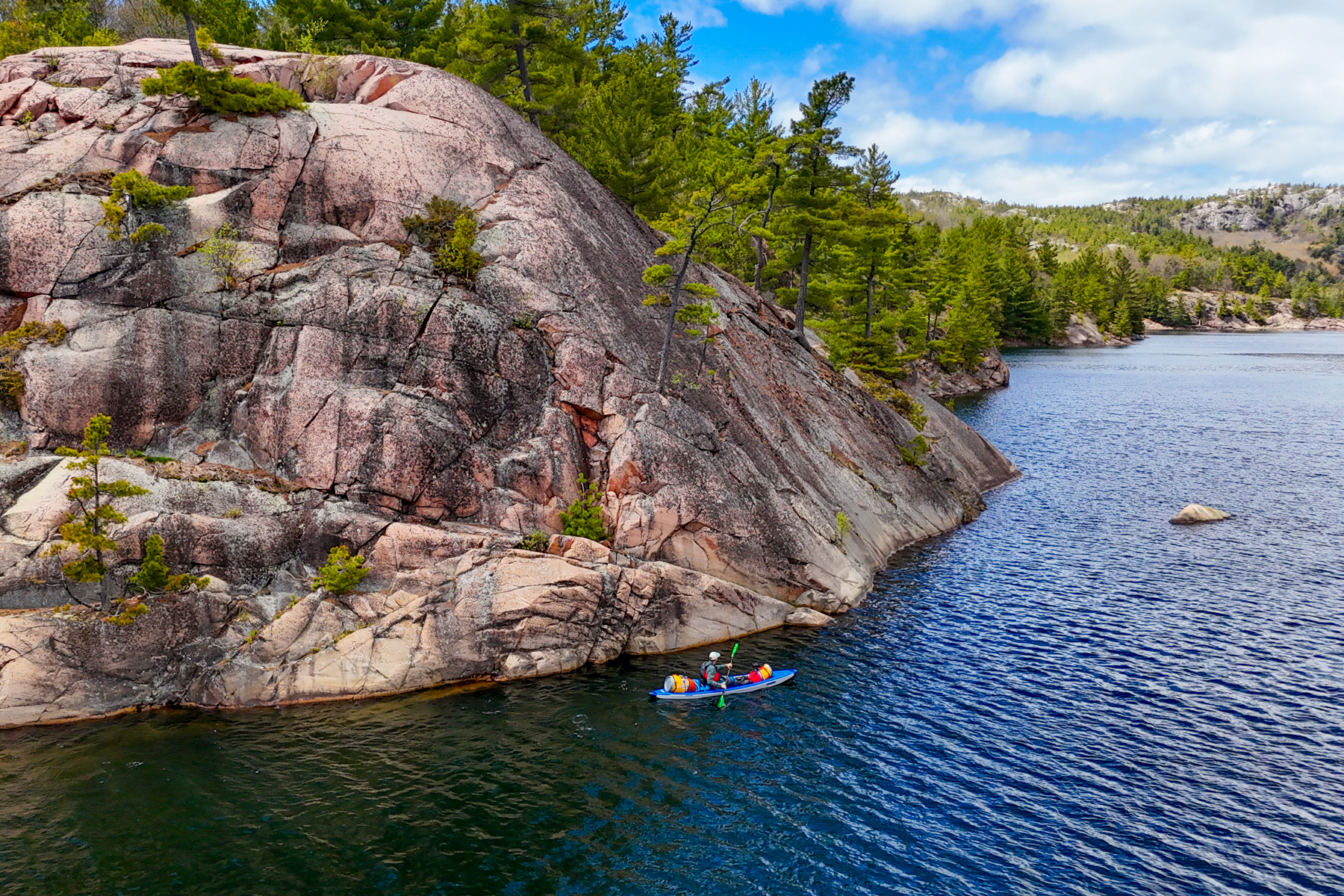
What makes the area even more amazing is that across the road you’ll find Georgian Bay and one of the best freshwater sea kayaking destinations anywhere. Between the park and the bay, you’ve got world-class canoe tripping, world-class kayak touring, and some incredible hiking and backpacking within a few minutes of each other.
My plan for this trip involved three days and two nights in mid-May with the hope of beating the blackflies. I mostly won that bet, but just barely, as the number of bugs grew each day.
The Journey to OSA Lake
The typical route to OSA Lake starts at George Lake, the main access point and campground for the park. From there my route would take me to Freeland Lake → Killarney Lake → OSA Lake. The total distance is about about 6 miles/10 km one-way, and it includes three portages totalling roughly 750 yards/meters. A good first mission back into one my favorite places.
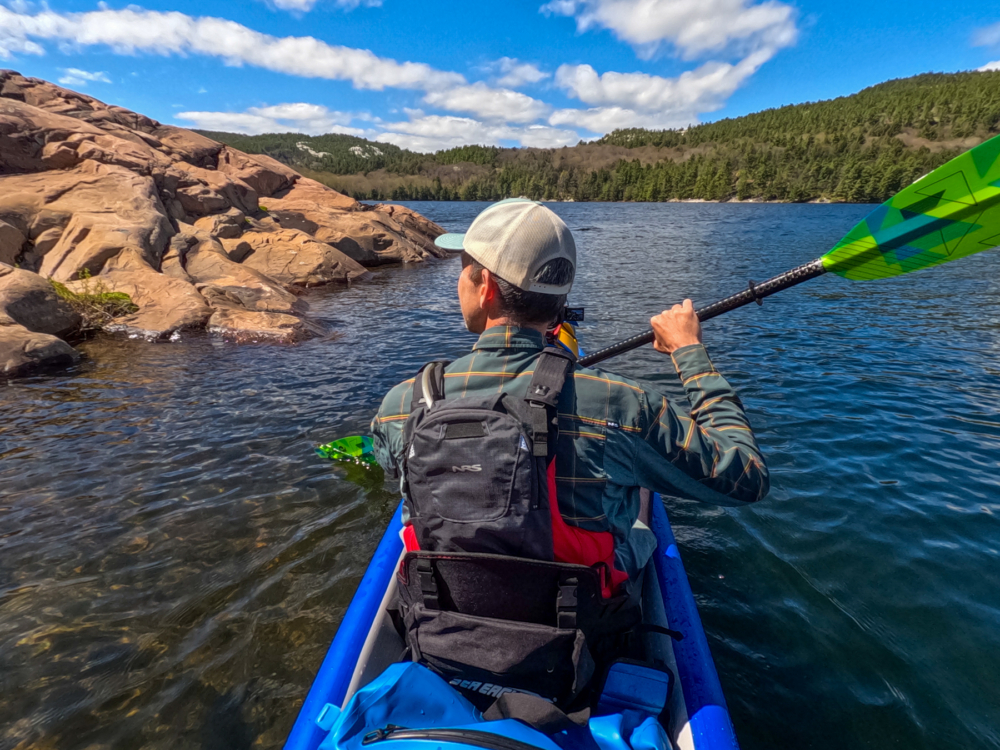
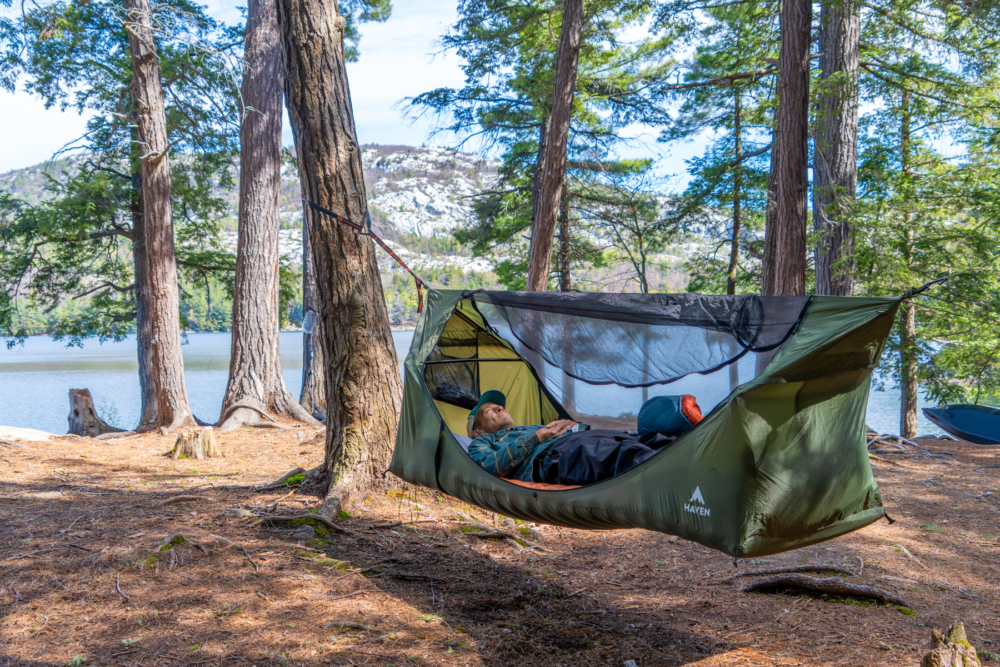
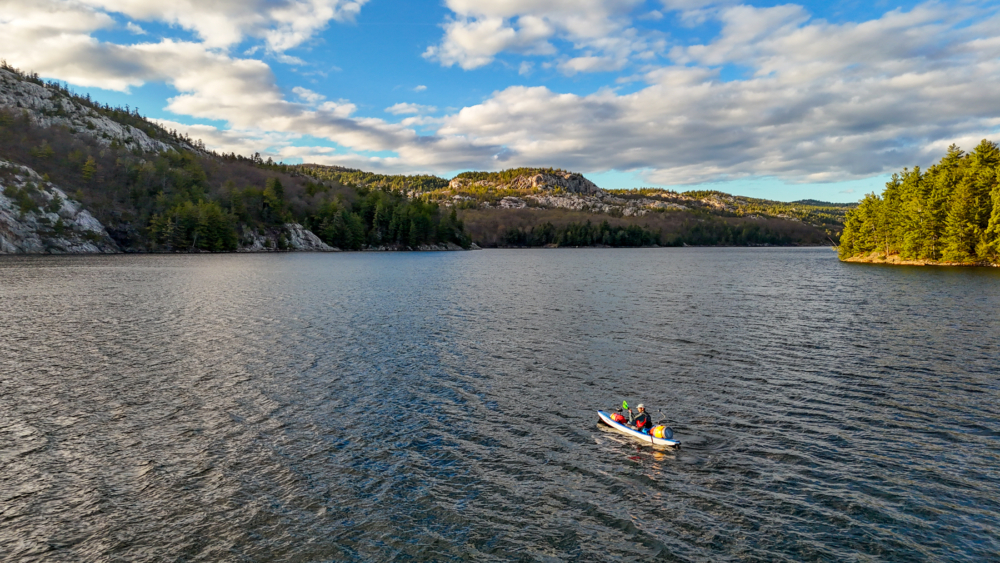
The paddling and portaging distances make it a comfortable multi-day outing. While it’s definitely doable in two days, there are many distractions along the way that make it worth spending an extra day or two out there. In particular, it’s well worth taking the side hike from Killarney Lake up to the Crack, a beautiful stretch of wilderness that ends in a rock scramble and a jaw-dropping viewpoint.
About Killarney Provincial Park
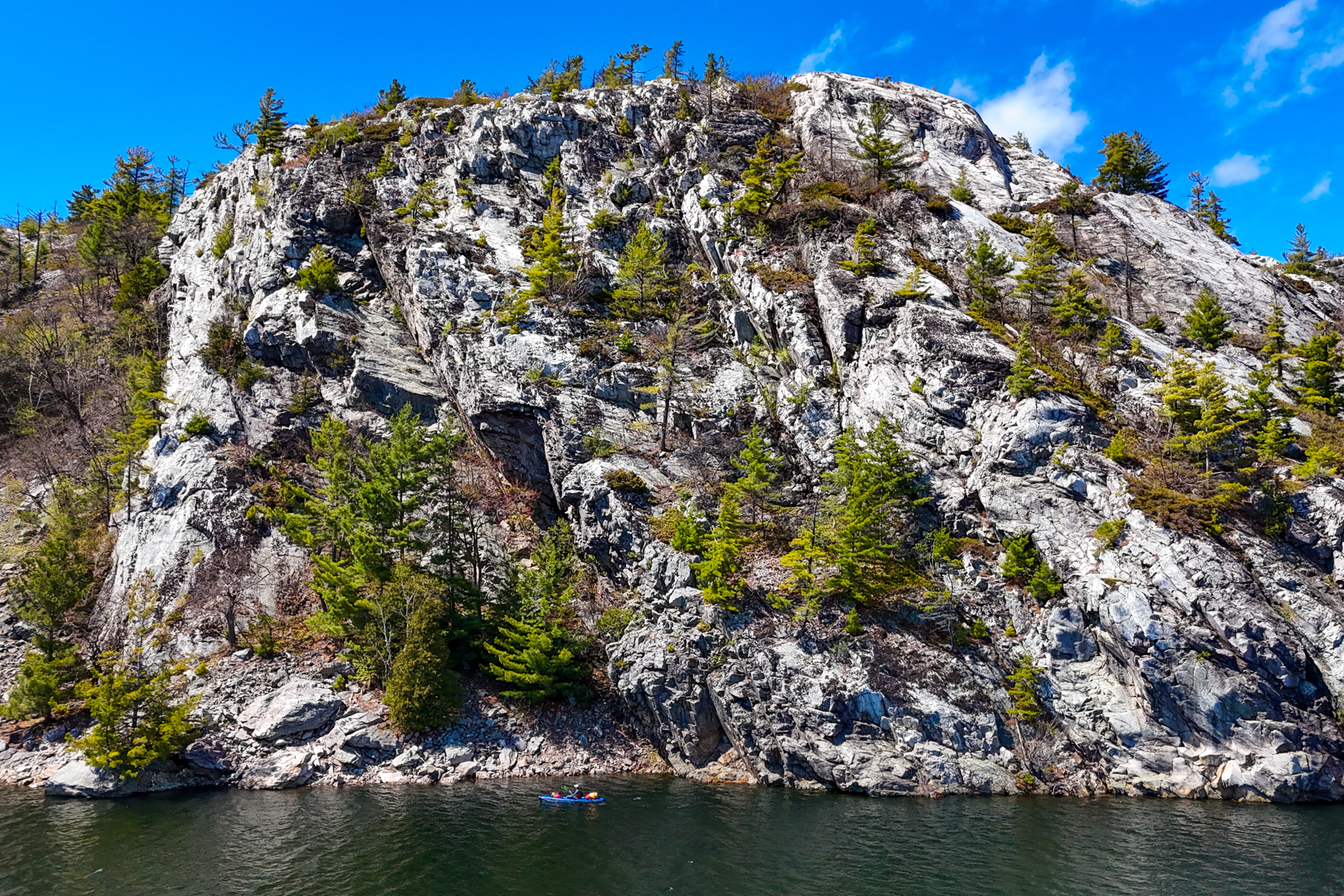
A little context on the park itself: Killarney was established in 1964 after a group of Group of Seven painters, including A.Y. Jackson and Franklin Carmichael, lobbied to protect the area they’d been painting for decades. Standing on the shore of OSA Lake, it’s not hard to understand why they fought for it. The quartzite hills, pink granite shoreline, and turquoise water look almost unreal in person, and it’s why a lot of people call Killarney the crown jewel of the Ontario Parks system.
The park holds more than 50 interior lakes connected by portages, making it one of the best canoe-tripping destinations in the country. For hikers, the 60-mile/100-km La Cloche Silhouette Trail loops through the same mountain range making one of the best kept backpacking secrets in North America.
Timing the Trip
I picked mid-May specifically to beat the bugs, and it mostly worked out. Blackflies usually show up in Killarney sometime between mid and late May, and while I saw more each day, I knew the worst was yet to come. Mosquitoes run on a different clock than blackflies, and don’t become a real problem until mid-June. The blackflies are usually done by early July, while mosquitos start tapering of by the end of the same month. An early-season trip like this one lets you dodge both waves of bugs almost entirely.That said, you don’t need to avoid the park during bug season altogether. You just need to come prepared for it.
When it comes to booking your trip to Killarney, it’s worth remembering that Ontario Parks lets you reserve backcountry sites up to six months out. If you plan on traveling there during a weekend or during the busiest months of July and August, you’ll want to take advantage of this early booking option. Still, last-minute cancellations happen regularly, especially when the forecast turns iffy. So if you’ve got flexibility or an unexpected free weekend, it’s worth keeping an eye on last-minute openings.
Trying Something Different
Instead of a canoe, I brought an inflatable kayak on this trip, to test a theory I had. The boat I choose had an open deck like a canoe, but enjoyed a low seating position and was designed to be used with a kayak paddle to make it easier to paddle solo.
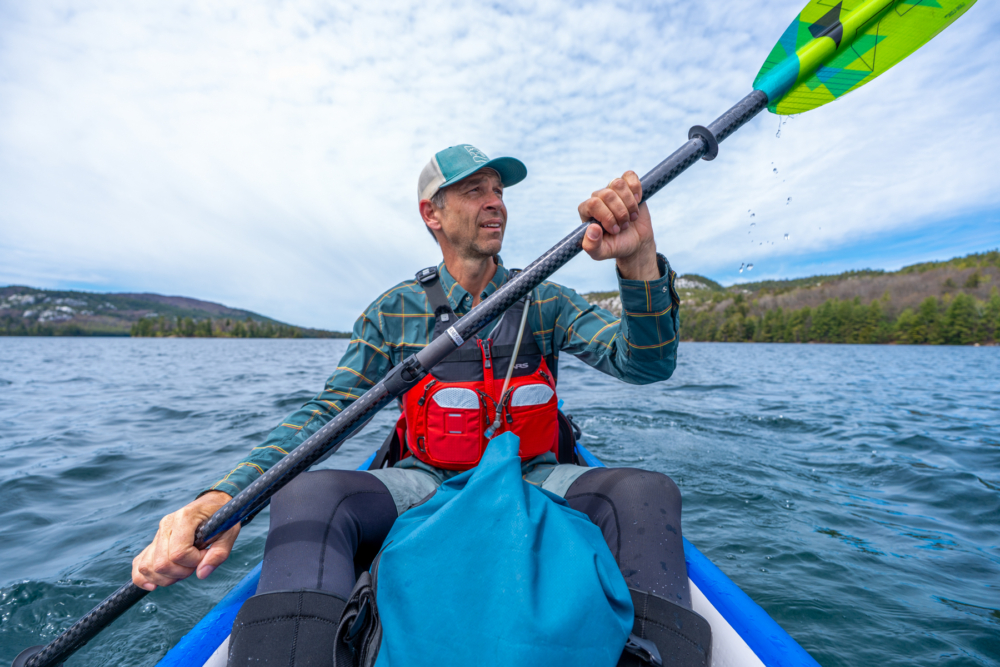
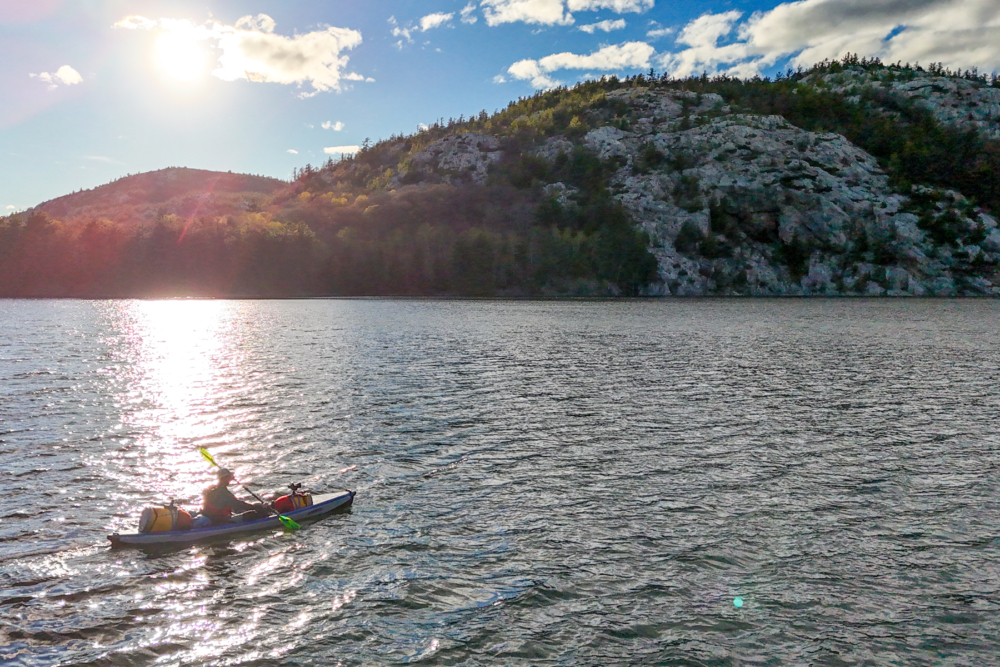
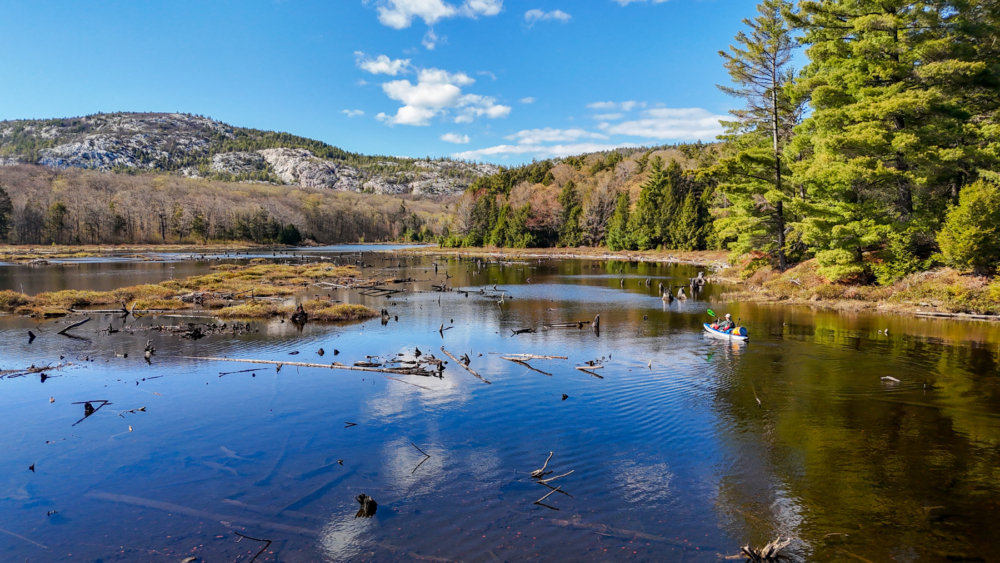
On the water, the inflatable kayak worked great. It had plenty of cargo space to handle a big barrel and small barrel (crucial for food management in area with bears and other wildlife), and it was fast and tracked well over the long flatwater stretches.
On the portages, I simply threw a barrel on my back and grabbed the center handle of the kayak to carry it underarm like a paddleboard. This worked great for the short portages, but I discovered it to be pretty tiring on the longer carry. Then, I yearned for a canoe yoke so that I could carry the boat overhead on my shoulders. Considering how relatively smooth the portage trails were, a kayak cart would also have worked well.
The bottom line is that the inflatable kayak did really well on a classic canoe trip, and it was fantastic to be back out in one of my favorite places. OSA Lake was beautiful, and worth the hard work, but next time I encounter longer portages, I’ll be sure to come up with a different strategy for carrying the boat. I’ll leave it up to you to decide if it truly is the most beautiful lake in Ontario.
***
Editor’s note: Planning a trip to Killarney yourself? Check out Ken’s Paddling Guide to Killarney video on YouTube.
Images courtesy of Heliconia Productions.